
To write letters to the ancient sages was once a noble discipline, a means by which the wise sharpened their judgment and deepened their understanding. This is my attempt to revive the tradition.
Dear Cicero,
Our psyche is founded upon the myths it is convinced of.
This is why what defines a great historian from a mediocre one is that the former tells us about wisdom that events of the past unveil to us, thus guiding us away from the treacherous paths toward glorious journeys for us to pursue, while the latter recounts events in a chronological order devoid of any meaning.
When one speaks to the ancient nations that survived millennia of hardship and peril about their history, one cannot fail to notice that they recount their past as a myth, as a moral story that binds them together. This raises an unavoidable question - is it possible that the mythologisation of their past is the very reason of their survival?
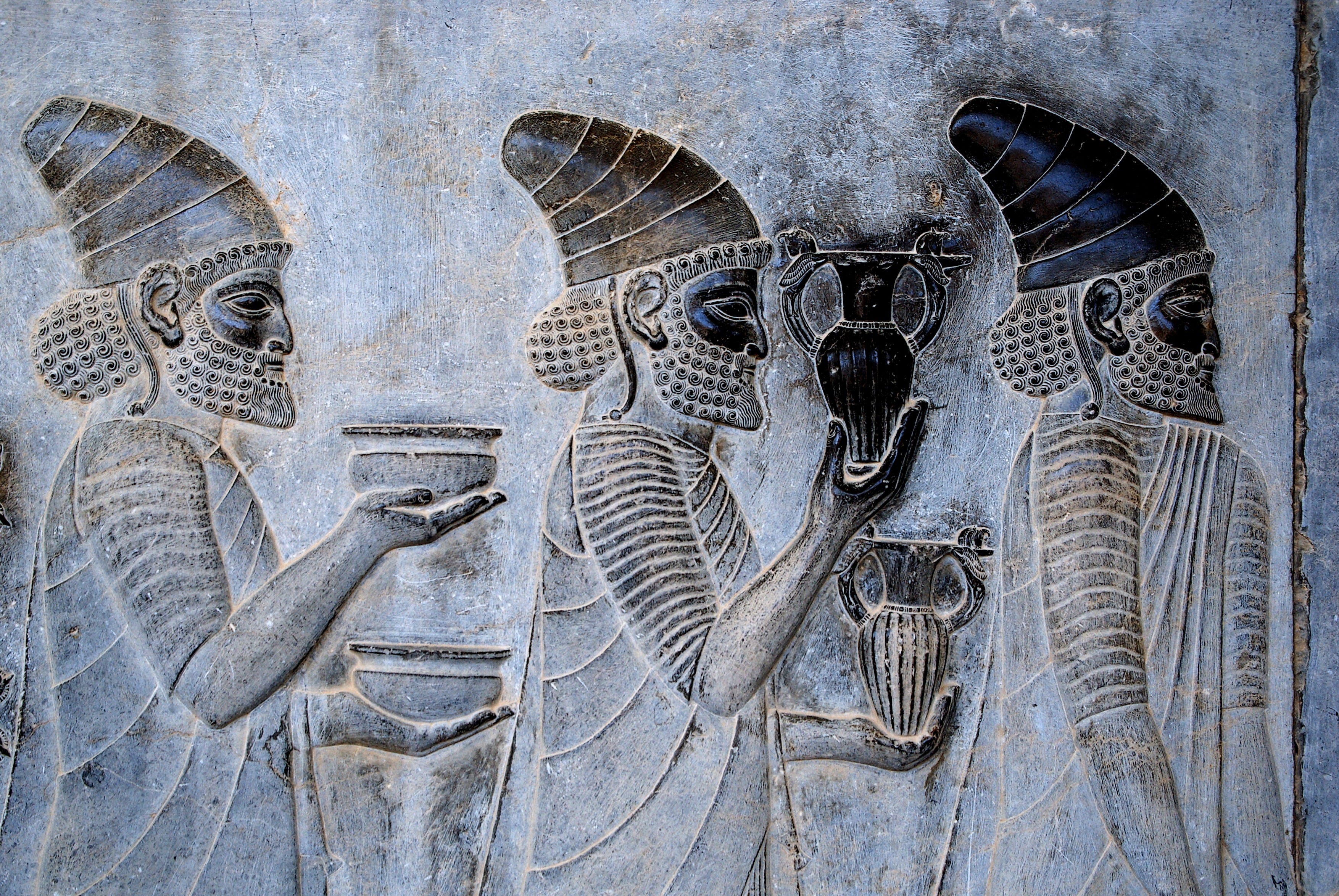
One such nation that mythologises its existence is Persians. I was following your advice in seeking wisdom on pages of history and stumbled upon a curios story told by a historian who is a contemporary of mine about the conspiracy of Darius.
Not even a great king can anticipate events that will follow his own death. King Cyrus was one such ruler—the first great sovereign of Persia. He had two sons: Cambyses and Bardiya. Haunted by the myth of two rival brothers tearing an empire apart, Cyrus, ever far-sighted, sought to prevent this fate. He gave the crown to Cambyses, his eldest, while granting Bardiya one of the most prosperous regions of his empire -Bactria - thus balancing power between the two.
The harmony was maintained for sometime after his death, until Cambyses, who searched for security in the western part of his empire, decided to invade Egypt. The campaign turned to be relatively successful militarily, but a failure politically to Cambyses. He lacked the wisdom of his great father and forgot about his roots during his campaign.
In his own capital, his own noblemen, were wondering if Cambyses remains a Persian at all. This created a great opportunity for his brother Bardiya, but what followed defies imagination, even yours, my dear Cicero, who stood at the very heart of Roman intrigues.
Cambyses realising that his throne is under threat followed the great vein of the Near East - Khorasan Highway - attempting to reach his capital before his brother. Half-way his race, however, he cut his leg on his sword, and died of gangrene putting an end to rivalry beforehand.
He was not the only one of the two brothers who lacked the far-sightedness of their father, Cyrus. For when news of his brother’s death reached Bardiya by then already established as the new king, he believed the threat to his throne had vanished.
They say that there can’t be anything worse than a wounded enemy, for the wound one day will heal, and he will fall on you with even more wrath.
Cambyses was dead, that was certain (for now), but his retinue and noblemen were not ready to give up their claims for power. The key conspirator, the brain behind the plan, but who at the same time wanted to remain in shadows was Darius.
Darius and his seven conspirators chased Bardiya across the thousand mile long Khorasan Highway, asking the merchants and travellers they met en route, about whereabouts of the new king. Their journey was long and hard but fruit they plucked was sweet and ripe.
They say the conspirators entered the fortress with no resistance, for guards were overwhelmed by the rank of the noblemen among the conspirators, when everyone realised what happened it was too late. Darius and his brother entered the room of Bardiya where he laid with a concubine, Bardiya tried to defend himself by the surrounding furniture, but in vain. Darius’s brother stroke the final blow.
This reads like the plot of an epic poem - but the tale doesn’t end there. Darius, in his turn, had to justify his actions, and the myth he devised would go on to captivate conspiracy theorists for centuries, even millennia.
Rumours have been spread across the empire that Cambyses, the eldest brother who died of gangrene, in fact had murdered his brother Bardiya long time ago. The rumours said that Bardiya’s wife discovered that her husband was in fact an impostor, a fake, an evil Magi (a priest).
Who spread these rumours?
We cannot answer this question with certainty but we do know who would be the most interested in them - Darius.
For regicide was the evilest action condemned among Persians, for every Persian, according to the saying, was taught to ride, to fire a bow, and to tell the truth.
Darius’s actions therefore were fully justified. Bardiya turned out to be long dead and evil impostor Magi killed. Cambyses was not deprived of guilt either, for he ordered the murder of his own brother, therefore committed regicide.
Needless to say, my dear Cicero, that it was Darius who ascended to the throne of Persia, after this incredible conspiracy.
It would take centuries to unravel the truth and dismantle the myth with which Darius captivated an entire population. But this tale reminds us, yet again, that empires, reputations of great men and women, and even the very identity of a civilisation can be founded on illusion, shaped by cunning minds and sustained by narrative rather than truth.
According to the legend, it was Bardiya’s wife who uncovered the deception. She noticed that her husband’s ears were intact, though everyone knew that the real Bardiya had his ears cut off by order of Cyrus long time ago. This tiny detail, passed through whispers of the court served as the proof that the man Darius killed was not Bardiya at all but an impostor.
And yet, if the claim were so clear, why was the body buried in such a rush and hidden from public sight?
As always - confide tibimet!
No posts
Comments
Nothing yet. Say the first thing.
Sign in to join the conversation.