

“Every stranger and beggar comes from Zeus.”
— Homer, The Odyssey, Book VI

Hello fellow-traveller,
Welcome to the Odyssey read-along. Here’s the schedule for you to navigate through this story.
This post, and the ones that will follow, are divided into sections so you can easily follow the text and re-read passages. It does not matter what translation you use — the lines should be the same, although translated differently.
This is the second post in the series, if you’re curious about what happened before, please feel free to read the previous weeks’ instalments.
In this journey, I am both an Odysseus and a Telemachus. I might get lost and get stuck on Calypso’s island, yet at the same time, like Telemachus, I need to awaken to act. These are the notes of a fellow-reader, not a scholar.
I’ve just released an interview with Emily Katz Anhalt, a Professor of Classics, discussing how we should read The Odyssey. You can listen to it here:
I hope you will enjoy it.
Book 5 The gods hold council again and Hermes is dispatched to Calypso’s island with orders for Odysseus’s release — Calypso yields, weeping, and frees the man she has kept seven years — Odysseus fells trees and builds a raft alone; he sails seventeen days by the stars — Poseidon, returning from the Ethiopians, sees him on the sea and sends a catastrophic storm — The raft is wrecked; the goddess Leucothea gives Odysseus her veil and he swims for two days — He drags himself ashore on the island of Phaeacia, buries himself under leaves, and sleeps
Book 6 Athena visits the Phaeacian princess Nausicaä in a dream and sends her to the river to wash linen — Odysseus emerges from the undergrowth, naked and salt-caked, before the terrified girls — He speaks carefully, comparing Nausicaä to a young palm tree, and wins her compassion — She gives him clothes and food and directs him toward the city, warning him to approach her mother Queen Arete first
Proofread by Lisa Statler

Perhaps the most frightening prospect in human life is to be so concealed, so profoundly hidden, and so sedated by comfort that even the gods forget you.
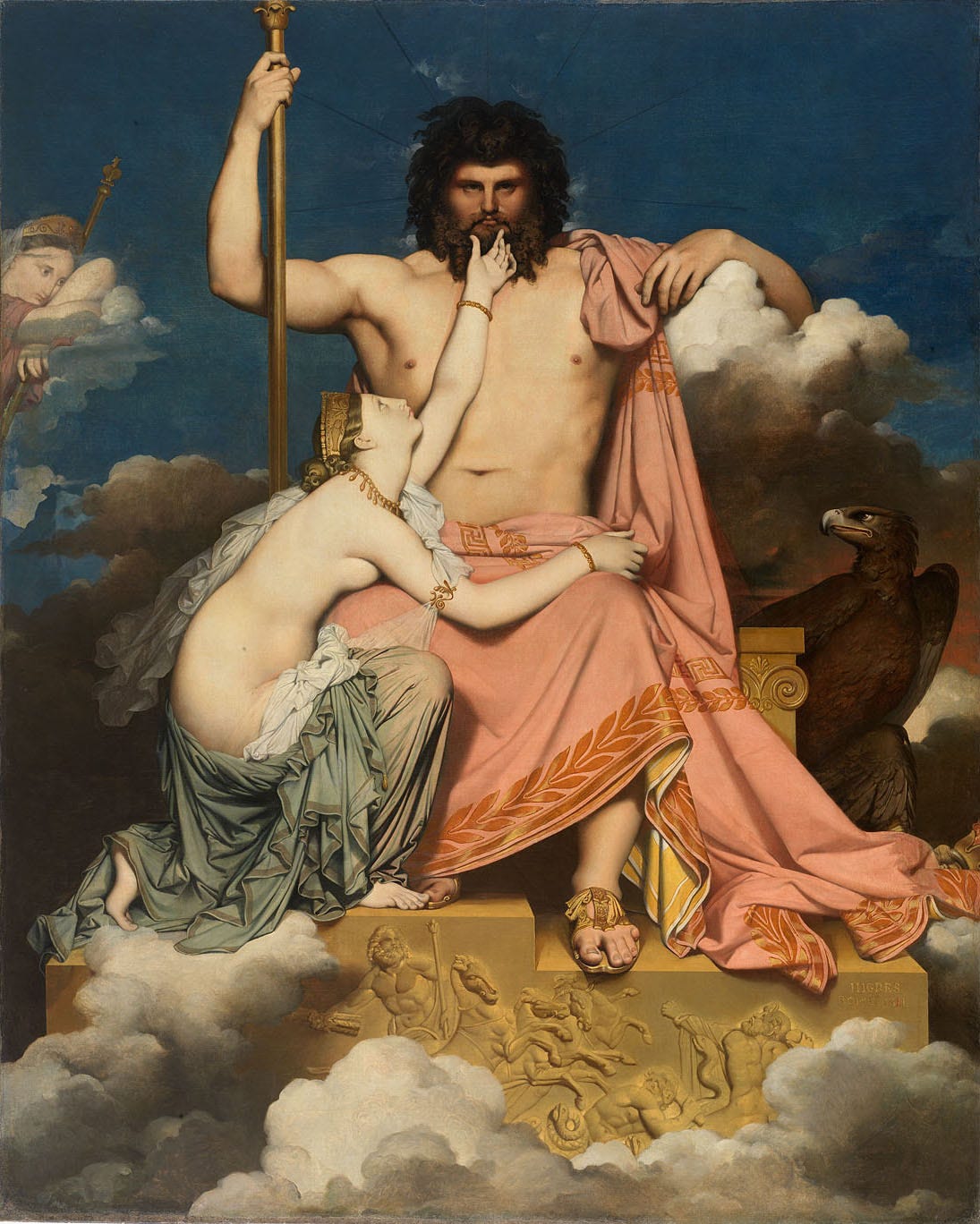
We begin the story of Odysseus at a moment on Mount Olympus where Athena must remind Zeus and the other deities that Odysseus even exists. She describes him stranded and suffering, posing a fundamental question to Zeus: If a just man can suffer this much and still be forgotten, why should anyone in the world strive for justice at all?
My reader might have noticed that Athena does not tell Zeus to assist Odysseus because of his cunning intellect, or valour, but she invokes Odysseus’ fairness as a king, as a father, as a husband.
It seems that even gods sometimes must be reminded of the moral structure of the universe, that they cannot punish virtue and reward nothing.
Odysseus’ journey begins not on the sea, but in the divine mind. It is moving to consider that the Odyssey starts with the gods ‘remembering’ us. It leads one to wonder: are these forces, like Athena, always there to recall our existence even when they seem to have moved on? We find ourselves in desperate situations, much like Odysseus, but is it because the gods have forgotten us, or because we have forgotten the existence of the divine ideal?
This brings us to a crucial question: Who abandons whom first?
Does divine abandonment lead to our desperation, or do we bring it upon ourselves? In the opening scene of Book I, Zeus argues that mortals unfairly blame the gods for their misfortunes, when in reality, humans are responsible for their own ‘reckless ways’.
Perhaps the reason Odysseus remains ‘concealed’ and seduced by Calypso for seven years is that he, for a moment, abandoned the gods first. It is possible that his own lapse in memory or devotion is what left him stranded on Ogygia.
It is possible that the answer to the crucial question of “Who abandons whom first?” might be answered by no one else, but by the nature of Hermes - the divine messenger.
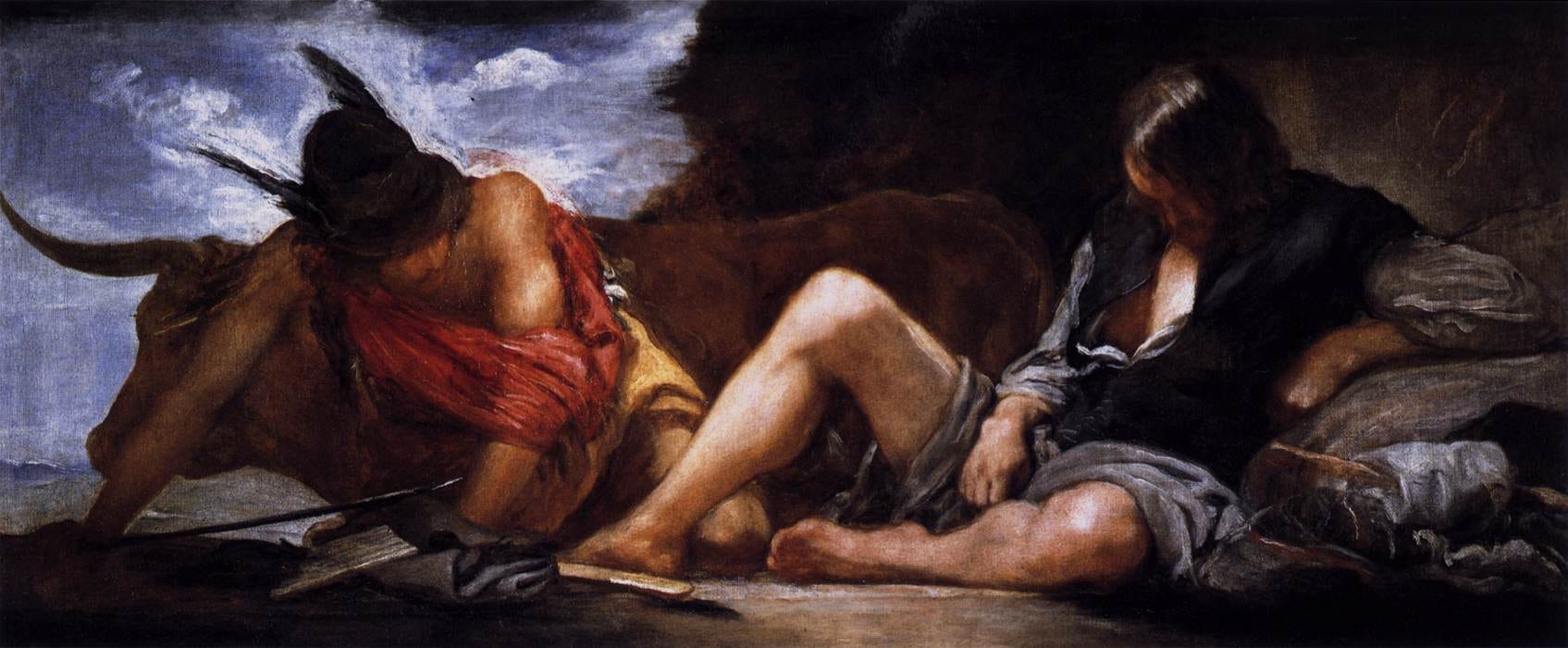
To understand the communication between gods and mortals, we must look at Hermes, the divine messenger. He possesses a golden wand with a dual purpose: it can enchant the eyes of men into deep sleep or awaken us from it. This reveals that divine communication is not merely about moving a message from point A to point B; the very nature of the message and the state of the one receiving it, matters. The presence of the gods can either dull our senses or startle us into a new state of being.
Let me draw my readers' attention to Zeus's specific instructions to Hermes in Book 5. He decrees that there will be no divine escort and no ship provided by the gods for Odysseus’s return. Instead, Odysseus must construct a makeshift raft, lashed together by his own hands, and sail it through intense suffering. Zeus foretells that only on the twentieth day will the hero reach Scheria, the land of the Phaeacians—a people who are close kin to the gods and who will treat him with royal honor.
Comments
Nothing yet. Say the first thing.
Sign in to join the conversation.