
In my last post, which went live over three weeks ago, I wrote about how the use of “should” can be a sign that we’re gaslighting ourselves. I also wrote that I hoped to post Part 2 on the problem with “should” the following week. Then a funny thing happened: the “should” demon kicked in and I froze! I couldn’t get anything written.1
One of the reasons I froze up is because it turns out there’s A LOT to say about “should,” and I can’t get to it all in one post (and this one is long as it is). But that connects to one of the big issues to be aware of when we say “should”:
If you say you “should” be or do something, and then you can’t, there’s a good chance there are a lot of obstacles under the surface that you’re not aware of (yet).2
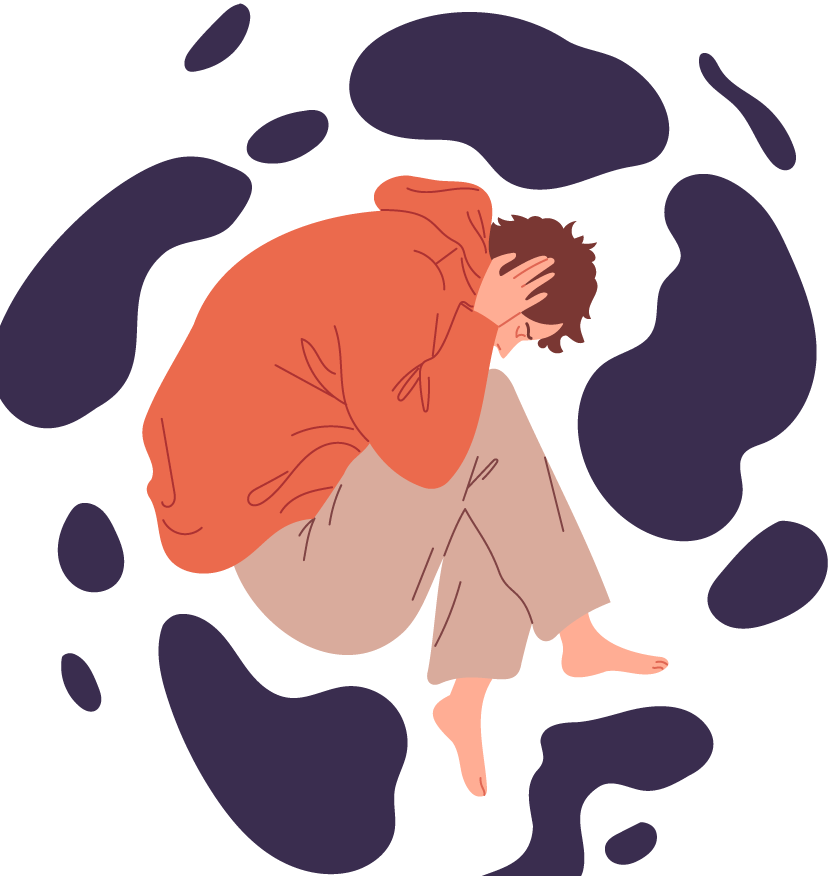
For a couple of weeks, I kept thinking, “I should write this post. But there’s so much to say. I can just cover one topic, and then write more later.”
So I would sit down to write about one problem with “should,” and then I would realize that I couldn’t cover that component without also explaining another issue. Then I would realize there were three others I should also bring up that were all connected. Then I decided I should start with personal examples, but nothing coming to mind seemed like examples that would resonate with others. Hours gone, and I still hadn’t written a word about that first problem I sat down to write about.
I was overwhelmed, and I went through this process so many times over the last couple weeks.
I finally stepped back and realized I was succumbing to a classic “should” problem: The list of things that we “should” be doing is never-ending.
This is bad enough for healthy people, but if you’re dealing with a chronic illness, your “should” list compounds. It gets bigger and bigger the longer you’re sick. The “shoulds” aren’t just about things you should be doing either: they also revolve around everything about you that “should” be better or that you “shouldn’t” be feeling.
I’ve barely done anything, so I shouldn’t be so tired. Everyone else is able to function so I should be able to too. I shouldn’t be feeling these pains. I shouldn’t be feeling so lightheaded. It’s not that hard to just make dinner, so I should be able to at least do that. I should be able to run my own errands. I should be able to just feel my emotions as they arise. I shouldn’t need so much extra time to process things. I should be tougher. I should be able to read a freaking article. My brain is not functioning like it should. My immune system should work better than this. I should be able to eat more foods. Or, I should be better about avoiding these foods because my body can’t handle them (but it should be able to).
When I was sick, the “shoulds” didn’t stop, and they were devastating. They came on so thick and frequently that they became background noise that I wasn’t even aware of. I just felt constant shame. It was beyond overwhelming, and now, looking back, I can see how much havoc that wreaked on my overwrought nervous system.
Our bodies can easily end up in a freeze state if we’re overwhelmed, and that was definitely the case with me and all the “shoulds”.
Based on how I’ve heard other people with long covid and other conditions talk, I get the sense this a problem so common and so ingrained that few of us are aware of how devastating that word has become for our health.
Something I’ve realized very recently is that “should” often stems from not having learned how to prioritize my needs and preferences. When I say that I “should” do something or I “should” be something, that’s often a sign that it’s not actually a priority for me. “Should” always seems to arise when I reject what my true self wants, and instead, I prioritize what external voices tell me are important.
I realized this first with dishes, which are my nemesis. Dishes haunt me as something that I “should” do, but can’t bring myself to do very often (my very kind and generous husband gets stuck doing a lot of dishes, which also triggers a shame/should loop, but more on that below). Recently, though, I was staring at a pile of dishes that I “should” be doing, and I suddenly realized that I was bitter because there were other things that I wanted to do instead, especially related to writing, but I didn’t believe I was allowed to prioritize the things that were important to me.
I didn’t believe I could prioritize myself and my needs because I had been taught there was a proper time and place for the things that I wanted, and that was after I had done everything that I should do.
Sleeping and resting enough, reading, getting out into nature, nourishing my soul with art and writing, enjoying a sunny day—these were all things I could do after I did things I “should” do, like work, chores, anything else my family wanted to prioritize, anything else my friends wanted to prioritize, anything I “should” be doing to be healthy (exercising at a gym, sleeping during certain blocks of time, sticking to a meditation schedule, etc).
This is also deeply ingrained in our culture. I believe that rejection of self and an inability to prioritize our own needs is one of, if not the, root cause of a lot of chronic illnesses. I also believe this is a societal problem rather than an individual one: society tell us how we “should” be, and our bodies shut down because we’ve denied ourselves the things we need to thrive.
(The techniques I used to get healthy all helped me learn how to tap into my true self and my true wants and needs more often. It’s been revolutionary, and I’ll write about this more in a future post.)
As I’ve gotten better at prioritizing things that are actually important to me and putting my own needs first, I’ve noticed that the “should” voices have quieted down. Instead, I find myself saying things like, “Oh, that needs to be done. I can do that quickly.” Or “I want to do this.” Or “I can get to that after I’ve done [some thing that’s actually important to me].” Though, as evidenced by my attempts with this newsletter, I still clearly battle the “should” voices.
Rejection of self is another reason that the use of “should” triggers our fight/flight/freeze/fawn response: it’s an internal attack against ourselves, and our nervous system has no choice but to go on the defensive.
So often, if there was something that I “should” do, but couldn’t, it was because there were underlying repressed emotions that would get triggered if I did that thing.
Dishes, my nemesis, are an amazing example of this. One day, about a year ago, I felt like I should do dishes. I instantly felt a physical reaction to the dishes—I could practically feel my body freeze up, and moving felt like I was trapped in molasses. It was like my body was trying to override my mind and stop me from moving. This was actually common. I often can do dishes for a few minutes, and then this physical response occurs, and I stop. But in that moment, I decided to overpower the urge and push through the resistance. I began emptying the dishwasher, and within minutes, I was sobbing uncontrollably. I had a big, ugly crying session that lasted at least 45 minutes, and I was too exhausted to do anything for hours after.
To this day, I still don’t really know the source of that episode (though I do have theories), but I learned an important lesson: my resistance to dishes went a lot deeper than just not liking the chore.
While I was sick, I was unaware of just how overwhelming my repressed emotions were and how dramatically my body was resisting doing anything that might unleash a flood of emotions. And I was overwhelmed by all the things I “should” be doing.
Again, looking back, I can see now that every little “should” statement came with a tremendously large emotional burden. To make matters worse, that emotional burden was paired with overwhelming shame.
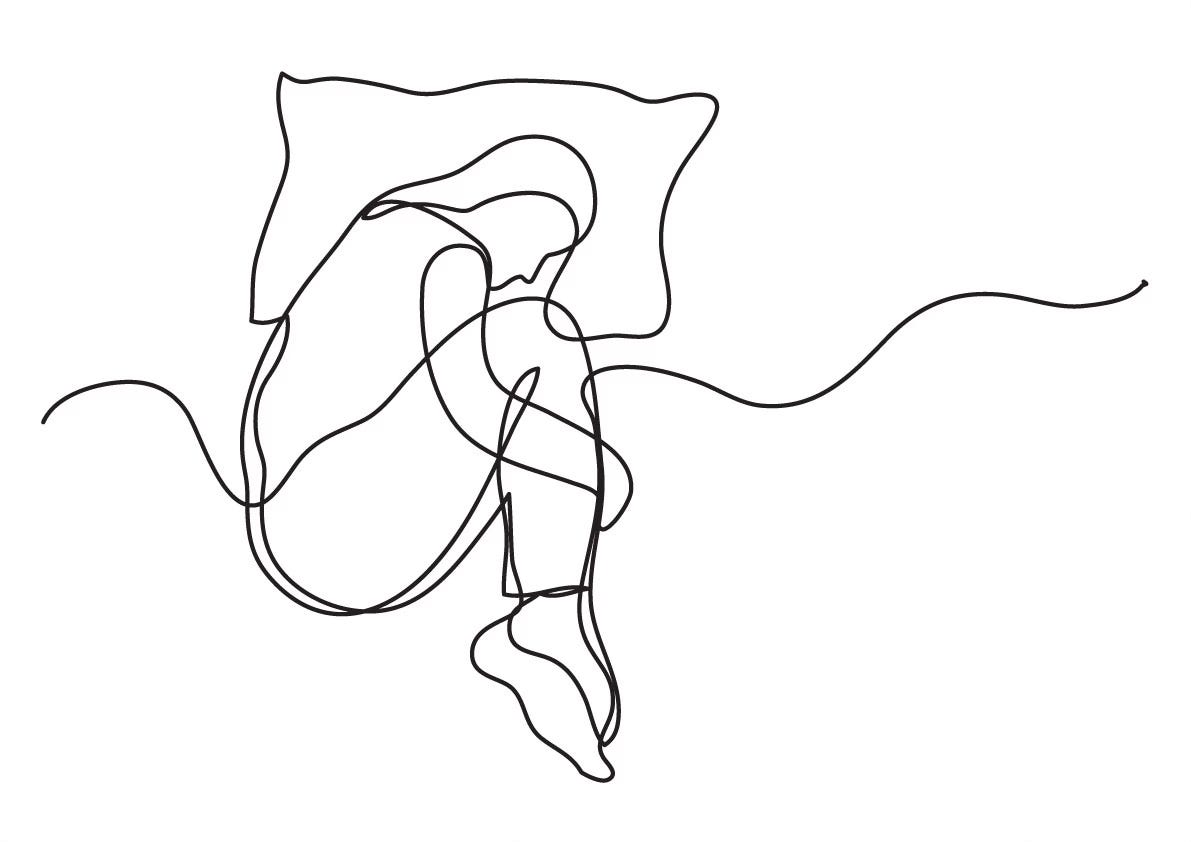
If an inner voice said that I “should” do something or that I “should” be something and then I couldn’t follow through on that, it was because I was overwhelmed and/or rejecting my true priorities and/or subconsciously repressing old emotions. Every one of those actions can trigger fight/flight/freeze/fawn or even trigger you into a full shutdown.
This is especially the case if you start to feel shame about not being able to do something that you “should” be able to do.
As I’ve mentioned in a few posts, there are some researchers who argue that shame is not just an emotion, but it is also a freeze response. Shame is the fear of rejection from the group. If taken to an extreme, rejection by a group could lead to death.
Take a moment to consider that. If you say that you “should” do or be something, and then you can’t do it, that can trigger a shame response. At that point, the word “should” is literally triggering a fear of death, immobilizing you in a freeze response.
Once a fear response has been triggered all sorts of chemical responses start to take place in your body. Other bodily systems (like your immune system, your digestive system, your endocrine system, etc.) start to slow down so that your body can send all of its resources to dealing with this threat.
To me, it just makes sense that this fear response could be the root of a significant number of chronic health issues, especially things like food intolerances, IBS or long covid. This might seem like an extreme bodily response—chronic health problems just for thinking that you “should” be able to do something?
However, when you consider all of the “shoulds” and all of the repressed emotions and all of the overwhelm that has piled on for months, years or even decades, it’s no wonder that our bodies go into a shutdown mode and can’t function as well.
We can end up in a constant state of shoulding and shaming ourselves, which is devastating for our health.
All of this is bad enough when we’re aware that we’re telling ourselves “should,” but this response can become so automatic that it occurs subconsciously.
For example, I might walk into the kitchen and just feel my chest and stomach tighten up at the sight of dishes, but I don’t have any conscious thoughts about whether I should clean up or not. This is something I find happens a lot in front of mirrors. The critical voice that thinks I should weigh less or that my skin should be better—that voice doesn’t even need to make itself heard anymore. My body cringes and clenches up automatically.
When I was sick, this happened all the time. It was so constant, I had no idea it was happening. It was so subconscious that I wasn’t even aware of my body tensing up.
So what can you do?
1) Practice self-compassion. Self-compassion is the antidote to so many societal ills. When you’re compassionate with yourself, you can start to silence the “should” voices and start to regain access to your true wants and needs.
2) Recognize and acknowledge when you’re shoulding on yourself. Shame hides in shadows, which means a lot of “shoulds” hide there too. Witnessing, acknowledging and accepting your shame is one of the quickest ways to ease it. As you do this with the “shoulds” that you’re aware of, your body will start to feel safe enough to let other “shoulds” rise to the surface of your awareness. It can take time, but as you work through layers, you’ll recognize the “should” voice more readily.
3) Get curious. As soon as you realize you’ve said “should,” pause and consider what happened. How did it feel in your body? Did you feel a tightening in your chest? Did you feel some other physical resistance to the thought? Did you start to feel sick or in pain? Did you get overwhelmed by a thought spiral of all the other “shoulds”?
Then you can get even more curious. Why did you have this response? Is there something going on under the surface? Do you have it in you to push through and see what emotions might arise (only do this when you feel comfortable dealing with the emotions)? Can you spend some time doing a JournalSpeak session to go deeper into the experience? Is there something you’d rather prioritize but you don’t feel comfortable doing so? If that’s the case, why don’t you feel comfortable with your preferred priorities?
Or perhaps you just did what you thought you should do, and you moved on with your life? If you easily accomplished your “should” statement, then it was likely something that your true self wanted to prioritize. In that case, all is good. For all other instances of “should”…
4) Practice acceptance and more self compassion. The first step toward change is, ironically, accepting something as it is. The steps above should help lead you to acceptance, but remember to tell yourself that wherever you’re at is okay. And mean it. Get really compassionate with yourself and with accepting who you are and where you are at this stage in your life.
A funny thing happened after I got the first draft of the above text written. I glanced toward the kitchen and thought, “Bah. Whatever. I can get some dishes done.” I froze for a moment and thought of how horrific that would be, and then that feeling passed and I was back to, “Meh. I can do it.” And I did. I finished all the dishes that still needed to be cleaned (my husband had already done a lot, but there were still some, mostly mine, that needed to be hand washed).
This has been consistent with my explorations of “should” so far. Once I identified the underlying obstacles that kept me from doing something, and then I worked through those obstacles, I found myself looking at things that should be done and thinking, “Yeah. Whatever. I can get to that now and just get it done.”
This has especially been the case more recently as I’ve gotten better about prioritizing the things that are important to me first (e.g. I got enough writing done on my draft that the dishes were no longer an obstacle to things I wanted to prioritize).
You might notice that those phrases I tell myself are also similar to common suggestions to reframe things that you “should” do as things that you “can” do.
Saying that you “can” do something eases a lot of the pressure that “should” can inflict—there’s rarely shame associated with saying that you can do something. So simply reframing a “should” statement as a can statement may help.
Additionally, thinking about the outcome you want can help you reframe a “should” statement. Instead of saying, “I should clean this room,” you might try, “I would be so much happier and relaxed if this room were clean.”
1) If you try to reframe a “should” statement but you’re still resistant or your body is still saying no, then you probably want to start looking at what some of the underlying causes of that resistance might be. You probably want to try moving through the four steps in the previous section.
2) You might need to reframe your goal. Is what you think you “should” be or do even the best thing for you? For example, if you think you “should” be able to take a simple walk around the block, but doing so would trigger PEM, then reframing that to say you “can” take a walk may be more harmful than helpful.
Instead, you might want to reframe the goal to consider other activities with similar benefits that are more doable. A walk may not be doable, but maybe you could sit on a porch in the sun for a little while. Maybe you could do some light stretching in bed.
This is a good time to ask what outcome you really want, and then see if there’s another way to move toward that outcome.
Thanks for reading The Healing Pathways! This post is public so feel free to share it.
A lot of other life things happened too, which didn’t help. But yes, I’ve been sitting here with a “should” demon on my shoulder, making me feel guilty for a couple weeks.
All images are from Adobe Stock.
No posts
Comments
Nothing yet. Say the first thing.
Sign in to join the conversation.