
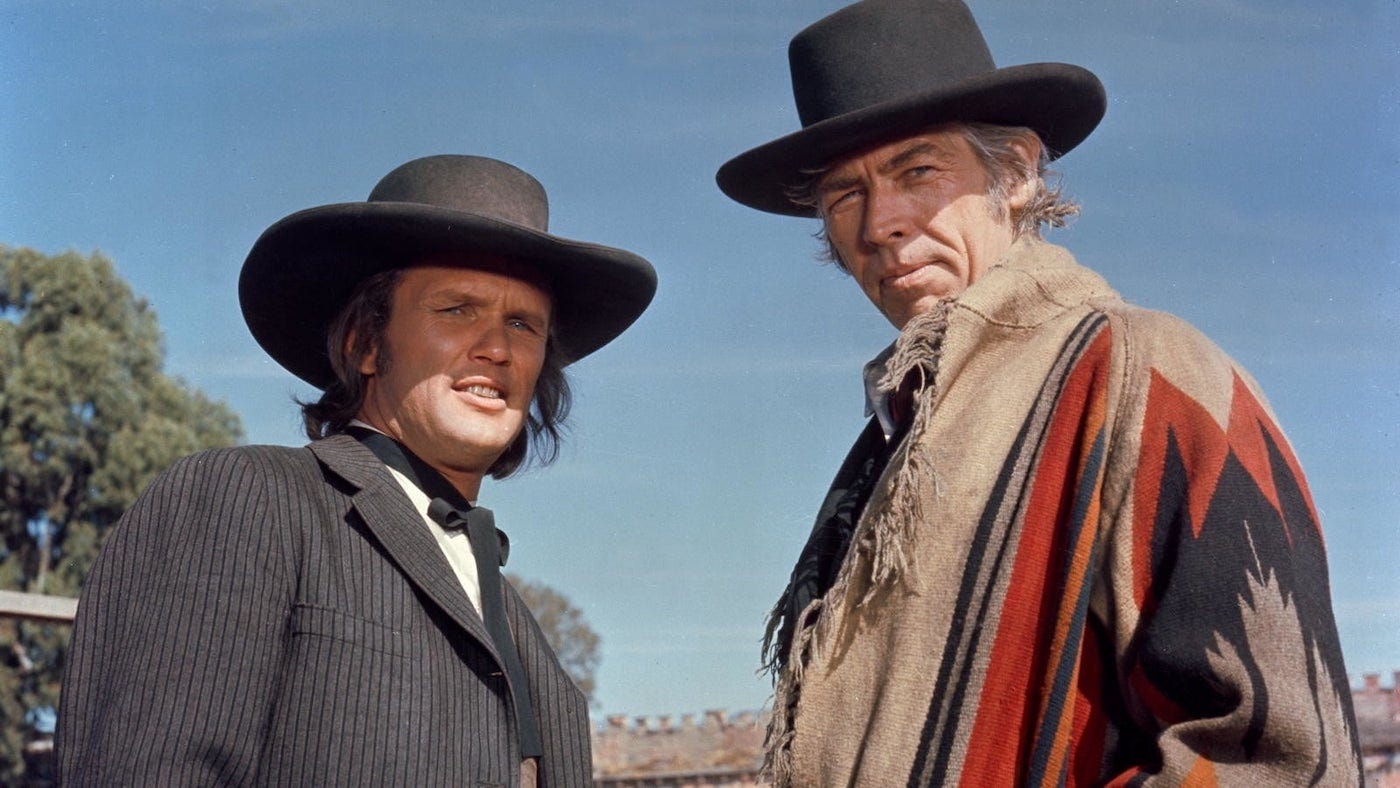
Sam Peckinpah’s Pat Garrett and Billy the Kid is the gold standard of underdog movies. Critically reviled, a box office failure, and a studio-recut disaster, it’s taken years for its true status as a revisionist Western classic to be revealed.
Starring a remarkably beardless Kris Kristofferson, and a quiet, bespectacled Bob Dylan, and a sun blistered James Coburn, it’s a doozy of a tone poem about the crumbling old West and what we do to sleep at night with the choices we’ve made. It’s about honor, even if what you’re doing isn’t exactly legal.
Not to mention a host of incredible character actors, everyone from Jack Elam to Slim Pickens, Jason Robards to Richard Jaeckel. Director Sam Peckinpah’s stinking, drunken mitts are all over the picture, from Harry Dean Stanton’s slouch to the chickens getting their heads blown off to sweet, poetic moments followed by gouts of violence.
The first question is, which version are you gonna watch? There are three, and they’re pretty different.
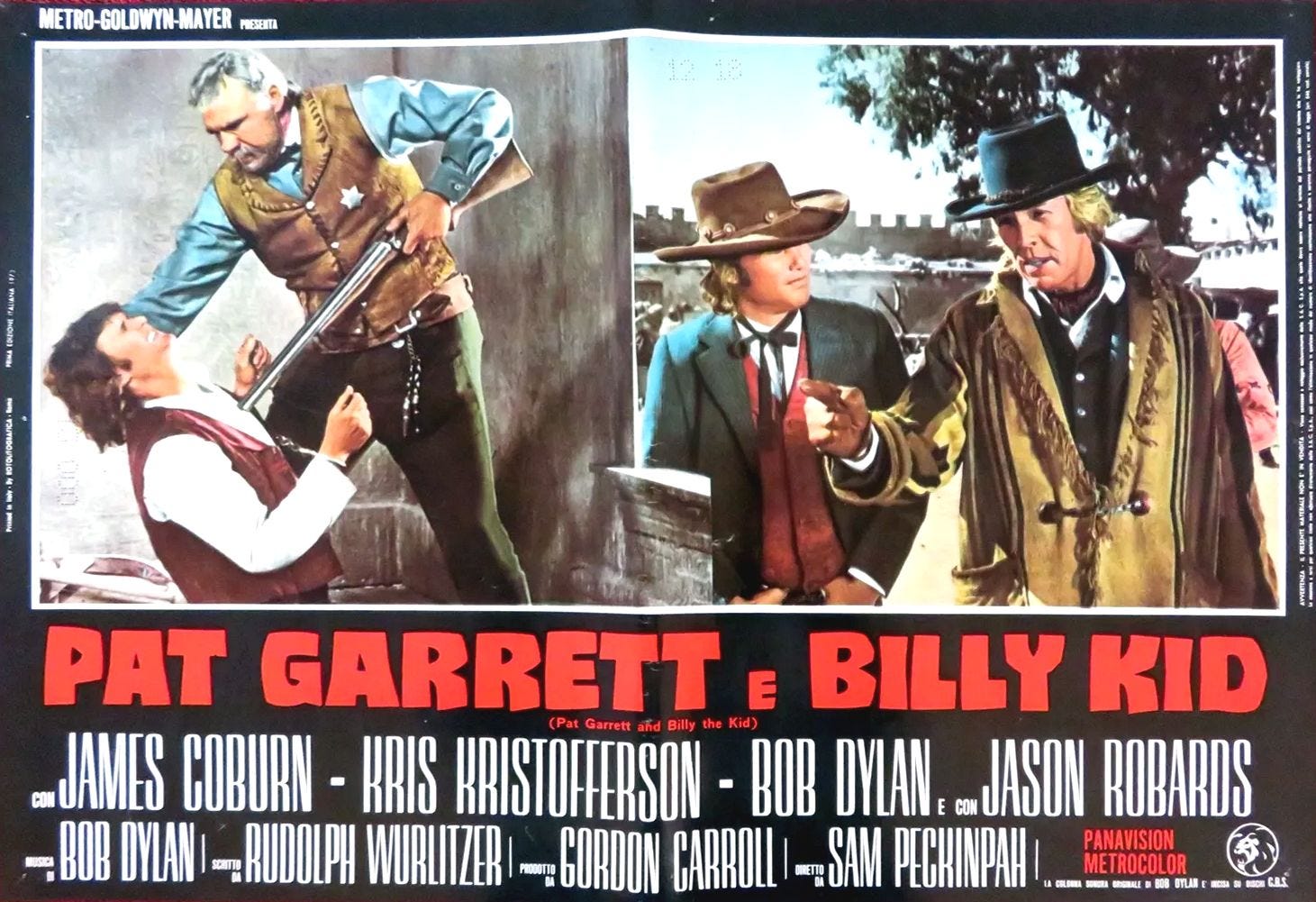
The melancholy story of the film, such as it were, is more of a picaresque rambling toward an inevitably tragic end. William H. Bonney - Kris as Billy the Kid - is patron saint of a gang of unwashed character actors. James Coburn is his old friend Pat Garrett, hired by oil barons to rid the county of the Kid.
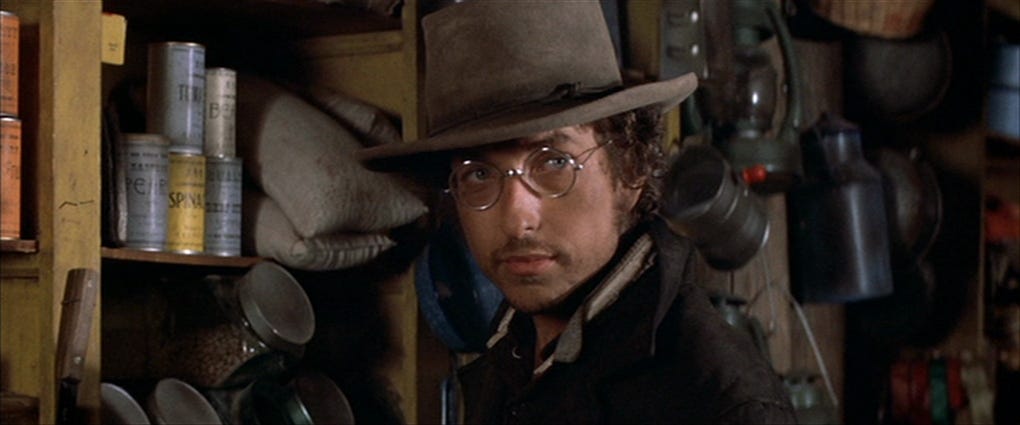
There are shootouts and drunken revelry and Bob Dylan reading canned vegetables aloud along the way.
For as sad as the movie is, it’s also bitterly funny. Only Peckinpah would cast Slim Pickens and then have us watch him slowly die, gut-shot, by the river, his wife crying next to him, as “Knocking On Heaven’s Door” plays dolefully.
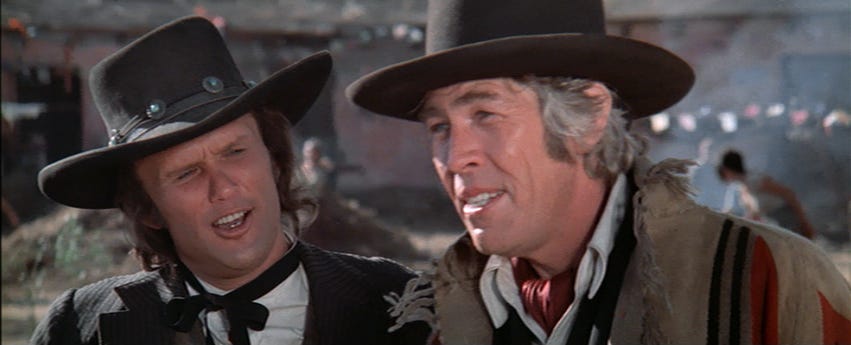
A recurring theme of the film is the friendship between Billy and Garrett, despite the impending doom. “Why don’t you kill him?” asks one of the Kid’s followers.
“Because he’s my friend,” croaks Kristofferson.
Peckinpah viewed money, represented by encroaching civilization in the old West, as the root of all that corrupts. In the earlier Ballad of Cable Hogue, we get 90 minutes of hilarity, and then a car strikes and kills the hero. End of movie.
Peckinpah had good reason to hate money. Every time the bearers and guardians of it got involved in his movies, his artistry suffered. Leaving his severe alcoholism aside, the evidence is clear – the studio fucked up his movie.
Let’s actually talk about the alcoholism for a minute. Making this film, which has a drunk’s giddiness and a hangover’s mournful regret, sometimes right next to each other, Peckinpah reportedly had to have a tumbler of vodka in the morning to stop the shakes. And according to some of the Kristofferson material I’ve read, he was pretty much useless by mid-afternoon, unable to remember which scene they were shooting.
At one point, Kris had to retrieve a pistol Peckinpah was firing wildly, lest he shoot one of the cast members.
And at a preview screening of the dailies, Dylan and Kris watched in horror as Peckinpah mounted a folding chair and pissed on the screen, as the camera was out of focus, ruining the shots.
But yet, they managed to get the footage they required.
MGM president James T. Aubrey Jr. was known as “The Smiling Cobra,” and was hired by Kirk Kerkorian in 1969 to manage the crumbling studio. Kerkorian was leveraging studio assets to build an MGM-themed casino in Las Vegas. Aubrey’s mandate was the staunch the bleeding.
Cobun just called him “That Motherfucker,” after Aubrey slashed the budget, shortened the schedule, and refused the services of a camera mechanic after footage on many of the master shots was discovered to be out of focus (see Peckinpah urinating above).
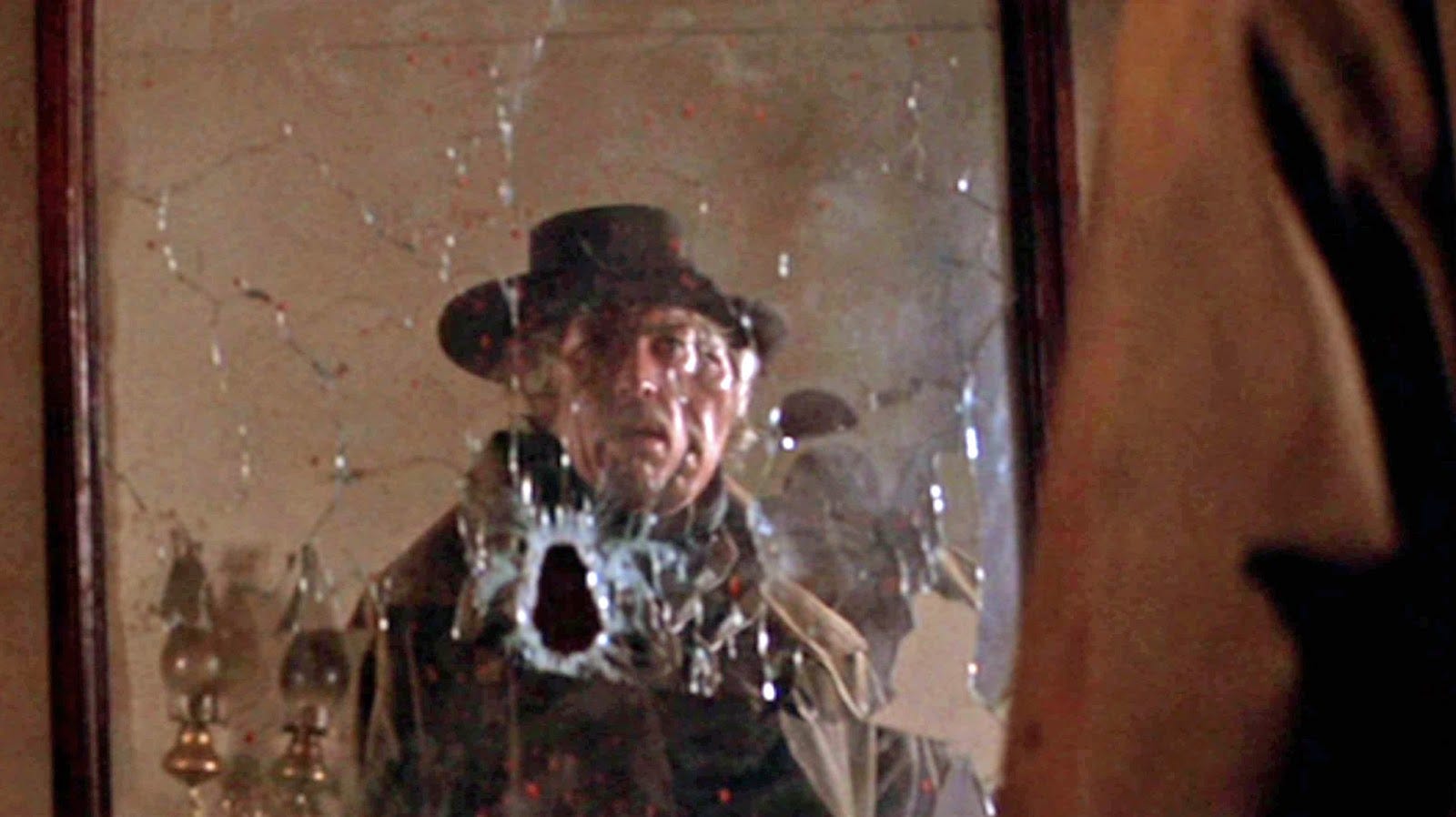
“We found out halfway through the shoot that most of the masters we had shot were out of focus,” Coburn recounted. “We were using five or six cameras at once and we didn’t have a camera mechanic because MGM wouldn’t pay for one!... It turns out the flange in the camera was off by one one-thousandth of an inch... So we tell Aubrey that we have to re-shoot all these masters. He says ‘You’re not gonna re-shoot anything. The audience isn’t gonna know the fucking difference!’”
The crew shot weekends and evenings to get the footage they needed, somewhat miraculously.
Thanks for reading Ghosts In The Machine! This post is public so feel free to share it.
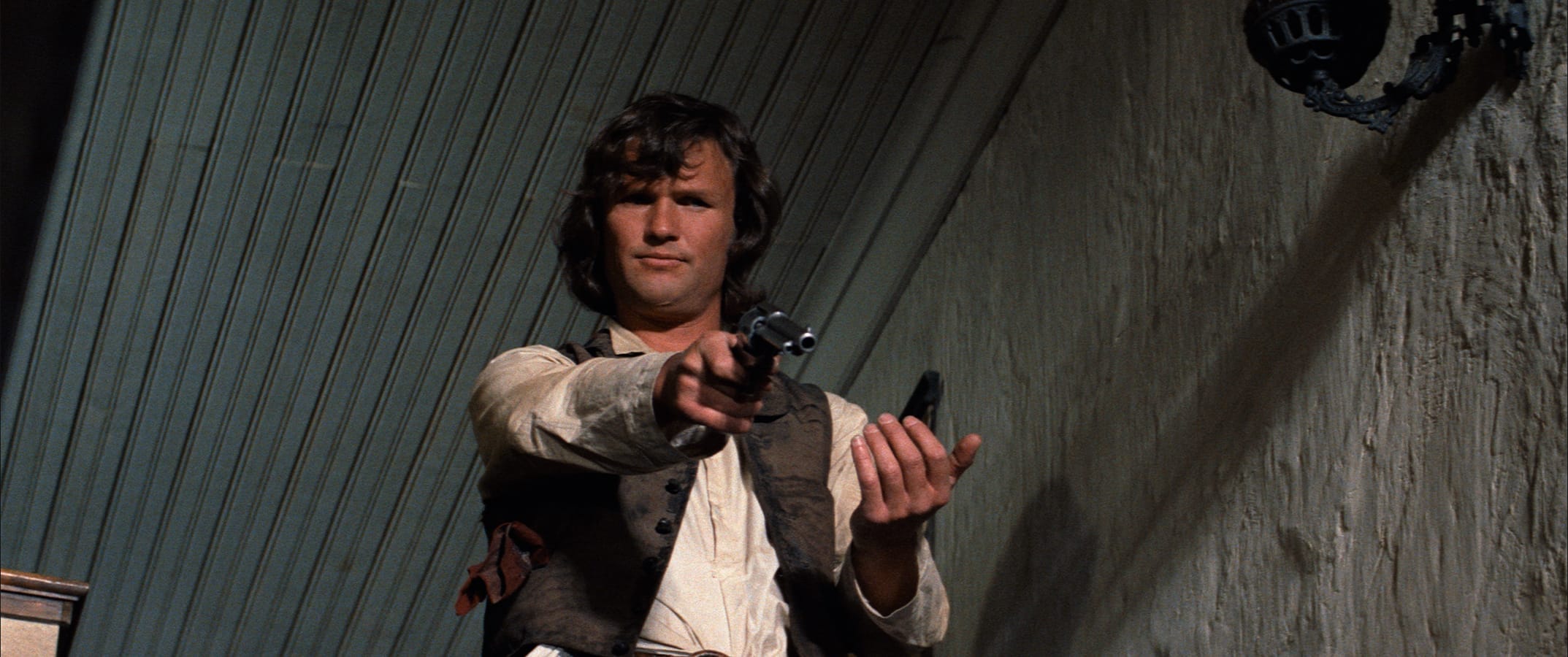
I’m going to talk for a minute about Kris Kristofferson.
In 1999 or so I started to think about doing a tribute record to Kris. He was and is one of my favorite songwriters.
The last song on that tribute record was Borderlord, written by Kris and Stephen Bruton, and performed by Stephen. Bruton was Kris’s guitar player for years, also played with Bonnie Raitt and many others.
What I didn’t know was that Stephen would pass on shortly after I moved to Austin, and, in a weirder twist of fate, I would wind up running my startup Otter Network out of his old studio, graciously hosted by his widow Mary, a lovely and generous photographer.
Matt Clark taught acting classes out of that same studio, and they used our video software to shoot a series of shorts on YouTube.
Matt passed away a few weeks ago. Matt plays Deputy JW Bell in Pat Garrett and Billy the Kid, He watches Billy shoot Sherriff Bob Olinger (R.G. Armstrong) with a shotgun loaded with dimes. Billy says, in one of the film’s simultaneously lightest and darkest moments, “Keep the change, Bob.”
It was a treat seeing Matt at the studio, a marker on a throughline of life, career, and my favorite movies.
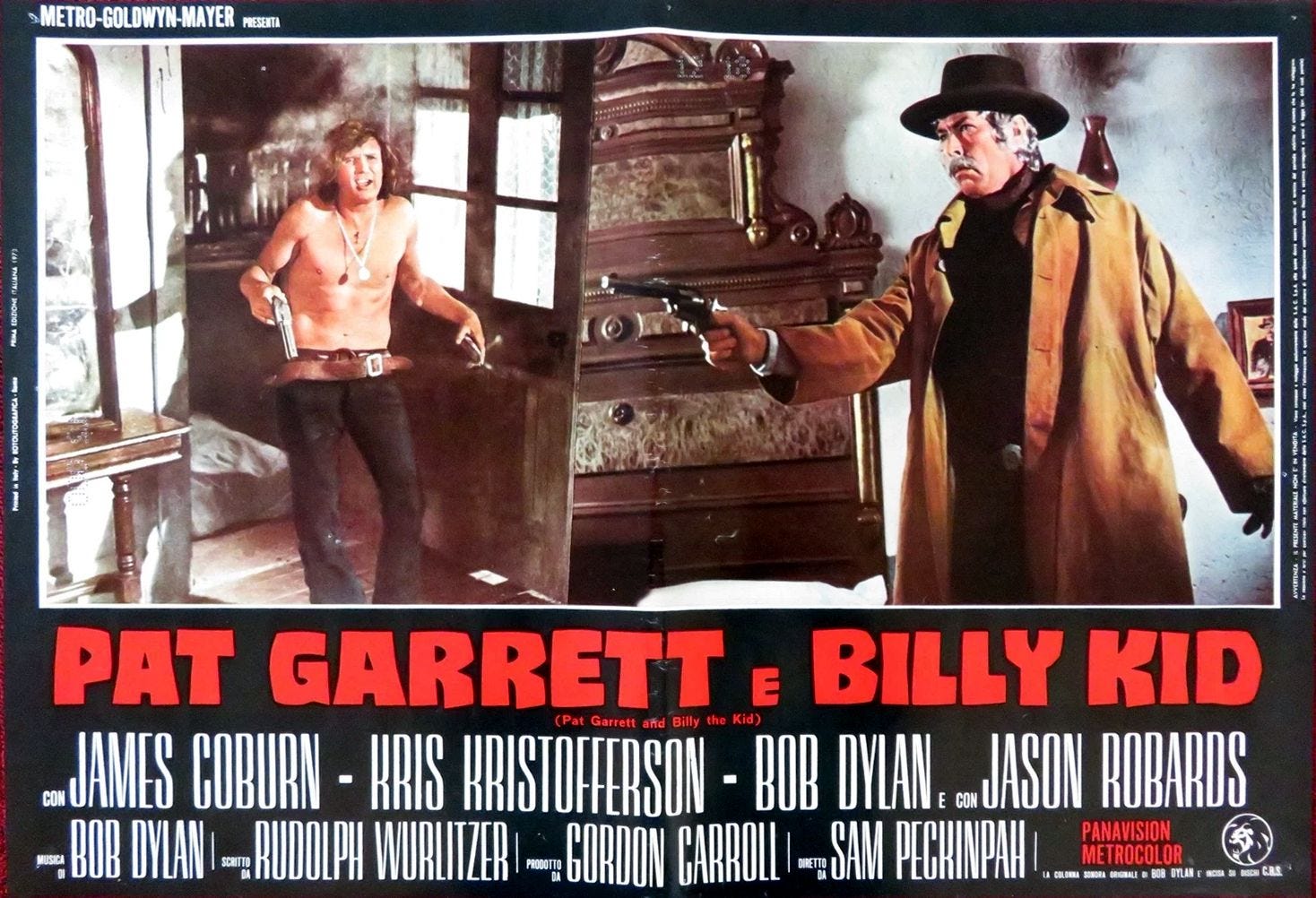
With the release in 2024 of a Criterion 4K edition of the film, you can finally see the various versions that have emerged since a 2005 Special Edition DVD.
There’s the theatrical version, cut by the studio down to 106 minutes, and missing key elements, which was disowned by Peckinpah. It has the general spirit of the film, but not the shambling majesty of the other two versions.
There’s the Turner Special Edition, which was assembled in 2005 from a Turner 1986 recut of the film, along with missing scenes. This is the version that’s been widely available in the ensuing 20 years.
And there’s the 50th Anniversary cut, which Peckinpah scholar Paul Seydor and original film editor Roger Spottiswode edited for the Criterion edition, which is meant to hew closest to Peckinpah’s original intent and notes.
A “Preview” cut was snatched by Peckinpah and allies from an MGM screening, and some of that footage makes it into the 50th Anniversary edition.
I strongly recommend watching either the special edition or the 50th Anniversary cut, should you find yourself with the choice.
I have seen the film enough times in various versions that I cannot remember which one has the fateful James Coburn line, “What you want, and what you get, are two different things.”
A fitting subtitle for the film.
This is Ghosts in the Machine. Thanks for reading. If you feel like making this thing possible, you can use the Buy Me A Coffee link below, or become a paid subscriber. I write this every week, give or take. You can reach me at nick@nicktangborn.com
Comments
Nothing yet. Say the first thing.
Sign in to join the conversation.