
Réka's body is warm. Soft. Giving. Everything a woman's body is supposed to be, and I try. I try to make this what I want. Her hands trace my back, and I feel her skin, her scent, her weight beneath me — and I search for what I found in Tibor's body. That recognition, that lightning, that home. It isn't here. Only silence. Only a body that is gentle and a heart that is honest and mine, which lies.
I cannot enjoy it. Not like that. Not deeply, not truly. But Réka knows she is the first woman in my life, and I don't want to hurt her. I don't want her to feel she is not enough. That she is insufficient. Because this was never about her. It was never about her. It was about me, and what I cannot give her.
I pretend. I tense my body, my voice, my face. I play the lover, and I hope the dark swallows what is missing from my eyes. Réka believes me. Or perhaps she doesn't, but she doesn't ask. Because she receives something too — a body that holds her, a voice that whispers in her ear, a hand that holds hers at night. And I receive something as well. Safety. Visibility. A life the outside world understands.

We have sex often. Réka desires me, and I yield. It isn't unpleasant — that isn't the word. It's more like eating a meal that isn't what you craved, but you're hungry, and someone cooked for you, and you don't want to wound them. You eat. You say thank you. You are full. But in your mouth lingers the taste of what you never received.
I wrestle with myself. Am I bisexual? The word circles in my mind, and I try to measure it against myself like a garment that might fit, might not. But it doesn't fit. Not because Réka's body isn't beautiful, isn't good. But because what is missing is not gender. Not male or female. It's truth. The truth that when Tibor looked at me, I existed. Completely. Here, beside Réka, I play a role. I play it well, but it is a role.
And yet. And yet there is something I gain. After my grandmother, Réka is the only person who cares. Who asks if I've eaten. Who wraps me in blankets when I'm cold. Who watches me sleep and wants nothing in return — only that I am here. I cannot throw this away. I do not dare throw this away. Because what comes after? What if I release the only hand that holds me, and behind me there is no one?
I am gay. I know it. I have always known. But beside Réka, I don't have to hide. The outside world sees us — a man and a woman, holding hands, smiling. They accept. They love. They don't brand me. They don't whisper behind my back. They don't look at me as if I'm sick. This is the normalcy society distributes, and I wear it like a coat that isn't mine, but it's warm, and it's winter outside.
There is no terror. No fear of being discovered. None of that clenching in the stomach when someone stands too close, looks too long, asks too deeply. Beside Réka, I am free — but this freedom is false. This freedom I feel is, in truth, a cage made of gold. Outside, you are free, but inside, you bury who you are. You inter your otherness, and you say a prayer over its grave, and you hope it does not rise.
I suppress my otherness. I try to live normally. Because this is normal. This is what the world expects. Man and woman. Ring. Child. House. This is the pattern, and I step into it like a line, and I wait for my turn, and I receive what everyone else receives. A normal life. Acceptance. Love.
Only the acceptance I receive does not accept me. It accepts the one I present. The man who holds Réka's hand, who smiles for the photographer, who says "we" when "I" would be correct. And the love I receive is love projected onto a screen, not the wall itself.
Time passes. Months, years. I accepted myself — or rather, I forced acceptance upon myself, like a shoe that pinches but I wear it, because barefoot is worse. I forced myself. That word is more precise. Violence. Not external, not visible, but internal, silent, daily violence I commit against myself, every morning when I rise and smile and say it's good, it's good, it's fine.
Réka loves. I see it, feel it, know it. She loves honestly, deeply, truly. I perhaps love her too — but not the way I loved Tibor. Not with that all-consuming, terrifying, elemental force that Tibor revealed to me, that showed me what love means. I love Réka the way I love light coming through a window when I'm cold. I'm grateful for it. But it isn't the light I would have chosen, had I been allowed to choose.
And then Réka becomes pregnant.
Shock.
The first feeling isn't joy. It isn't fear. It is emptiness. As if someone opens a door in a room that was dark, and the light doesn't liberate — it blinds. I stand on the threshold, and I don't know whether to step forward or back.
Another chain. Another coercion. Another bond that ties me to this life, this role, this face I have put on. A child. My child. A life that comes from me and Réka, that will be born into this lie, that will grow up in this silence, where the father smiles and does not say who he is.
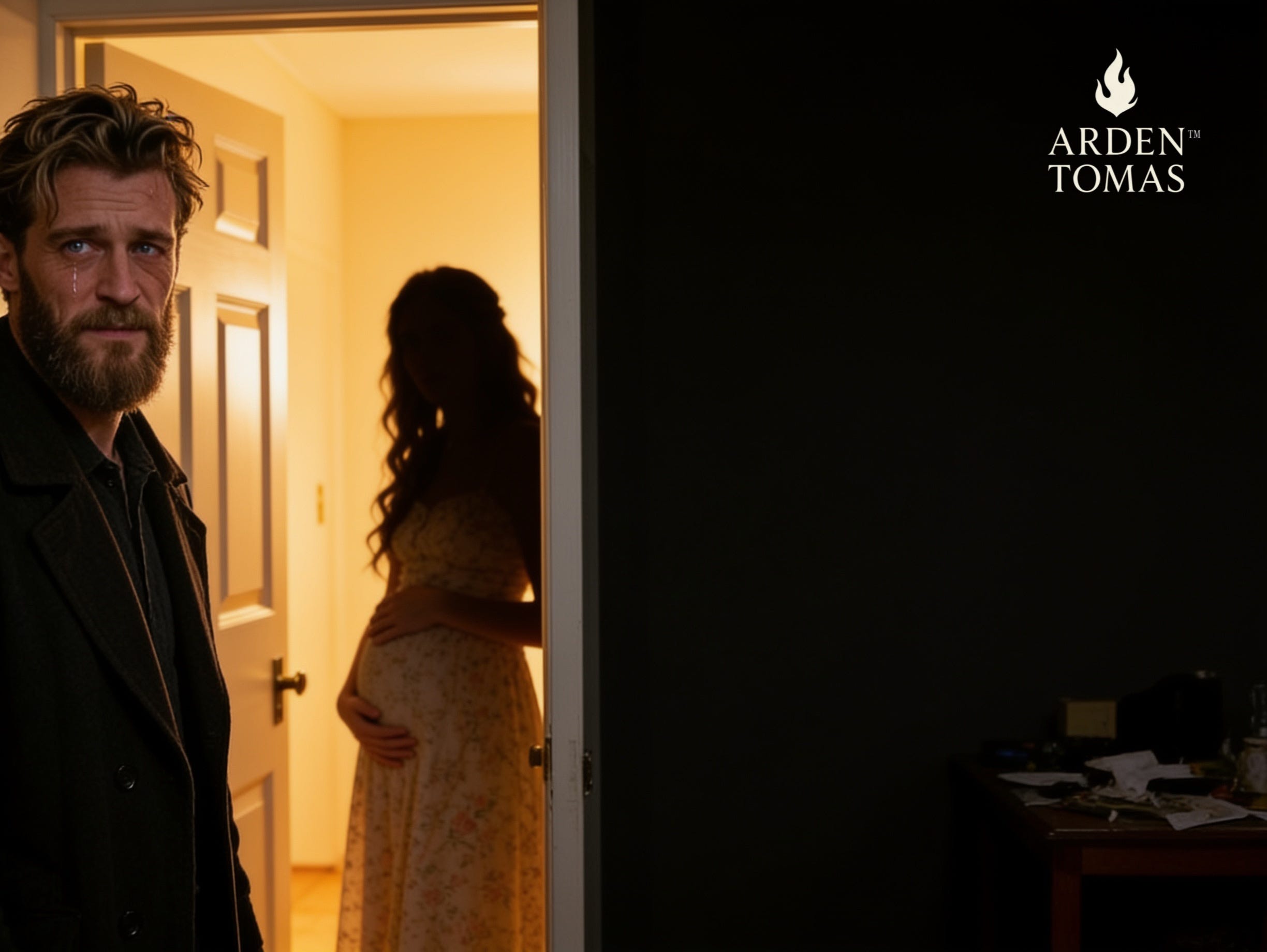
Or — and this is the other feeling, arriving simultaneously, refusing to leave — is this a trap? Not Réka's trap. Not conscious, not malicious. But life's trap. The trap of circumstances. Of what was said and what wasn't. Because Réka said the doctors told her she couldn't have children. That's why we didn't use protection. That's why we didn't think. And now, despite everything. And I don't know what to do with this information, because I don't want to believe I was manipulated. I don't want to believe the one person who cares about me lied. But the question is there, and it won't leave.
And meanwhile — deeper, where the real me lives — I am mad with joy. Mad, because I will have a child. Because this life, this small life, is mine. Because I want this. Because my body, which lies to Réka, does not lie to this child. Because when I think of small hands, small eyes, a small heart — something moves inside me that is truer than anything I have felt before. And this is the most painful thing: that the honest joy is there, but it isn't enough. Because beside it is the other feeling. The coercion. The chain. The how long can I endure this?
Because how long? How long can I live without being? How long can I love without loving? How long can I be a father while burying who I am? How long can I bear this duality, this splitting, this silent, daily violence against myself?
Réka doesn't see the honest joy on my face. Not the way she should. Because two feelings are fighting on my face, and I cannot hide one from the other. I am happy — and terrified. I love this child — and I fear the life I am bringing them into. And Réka looks, and she sees something is wrong, but she doesn't know what. Perhaps she doesn't want to know.
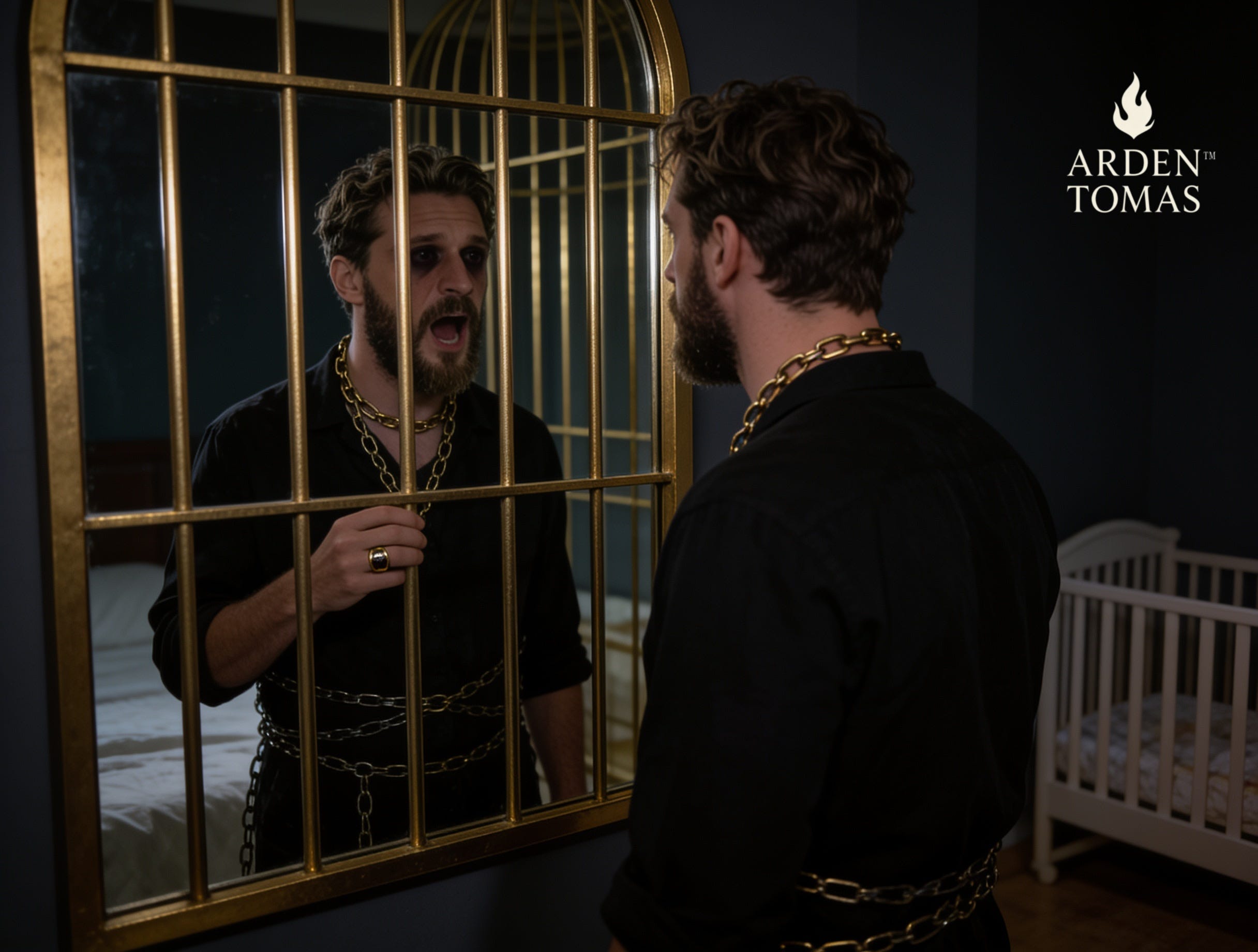
I was used. This word is bitter, and I don't want to say it, but it's there. Réka knew — or perhaps she didn't, perhaps she truly believed the doctors, perhaps it was genuinely a surprise — but the result is the same. I stand here with a chain around my neck, and at the end of the chain is a child I love and a life I did not choose. And even if it happened with good intentions — if Réka's heart was pure, and the doctors were wrong, and fate wanted it this way — the result doesn't change. I am not free. I never was. I only chose which cage I wanted to live in.
And now a child is coming, who will be born into this cage.
And I am mad with joy for them.
And this duality will be what kills me.
Get an exclusive 45% off an annual subscription 🏳️🌈

Comments
Nothing yet. Say the first thing.
Sign in to join the conversation.