
Convened by David McEwan of Unit 38, the second night of POST PRESS was devoted to the history and legacy of the Community Technical Aid Centre movement which emerged in the UK in the late 1970s. David had invited contributors from present day organisations that he saw as inheritors of the spirit of the CTACs, among whom was Aska Welford of House of Annetta. Here, Aska describes this unique facility - a social centre and space for learning and action around spatial justice, based in a building from 1705, just off Brick Lane in East London:
The neighbourhood has a very special legacy, stretching over centuries as a place where new migrants have made home in the UK: from the French Huguenots, to the Irish, to Eastern European Jewish communities, to the Bangladeshi community in the twentieth century.
With those communities came many different social movements: early trade union organising, squatting, anti-fascist and anti-racist demonstrations on the street. It was in that context of slum clearance and squatting, and of saving the building in the late 1970s, that Annetta Pedretti came to take ownership of the house.
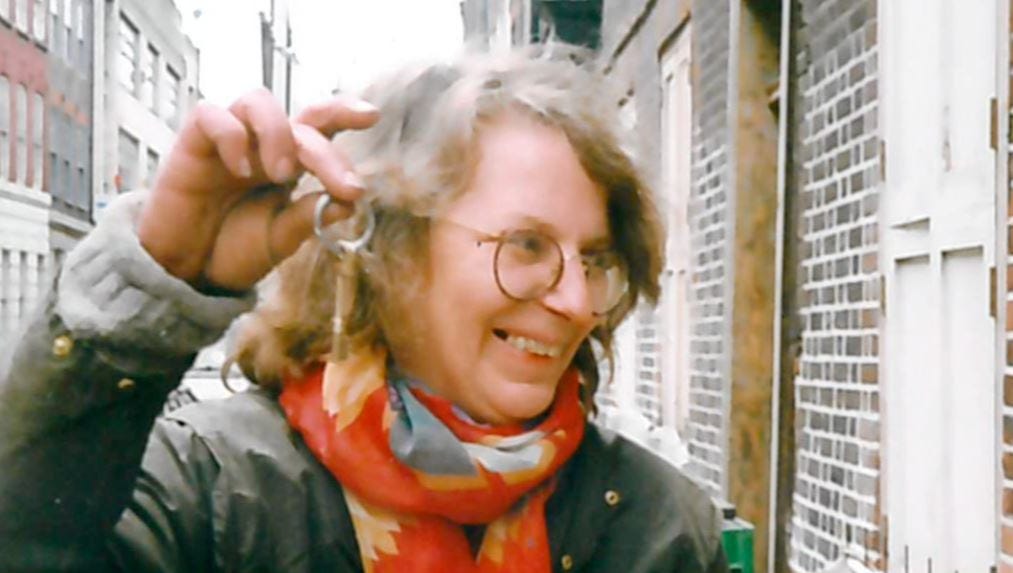
Annetta Pedretti (House of Annetta)
Annetta was part of an Architectural Association legacy. Brian Anson, one of the founders of the Architects’ Revolutionary Council at the AA, was part of that world, and Annetta herself had studied at the AA. We have some of her student projects in our archive. One of them is an amazing board game with cards labelled “Don’t Crush”. It sets out the disputes and tactics that different parties might use when dealing with the pressures of urban development around them. Her student work gives a glimpse into the world of late-1970s London.
Similarly, one of her friends, another AA graduate called Kay Jordan, had come to live in Spitalfields in the 1970s as a student. There was a whole practice of studios taking root in different communities: working directly with them, and redistributing resources in a hands-on way. That is how Kay Jordan first came to Spitalfields, and I will come back to her later.
Annetta definitely was not a community architect. She did not fully qualify. I have not either. She was also very committed to the house as a project that lasted for decades. One of her neighbours joked that he would see Annetta repairing one brick a year on the façade. She did not offer architectural services in a conventional way, but she was a very active campaigner. She was deeply committed to local anti-demolition campaigns and to opposing Crossrail, which would have driven destructive tunnels through the area.
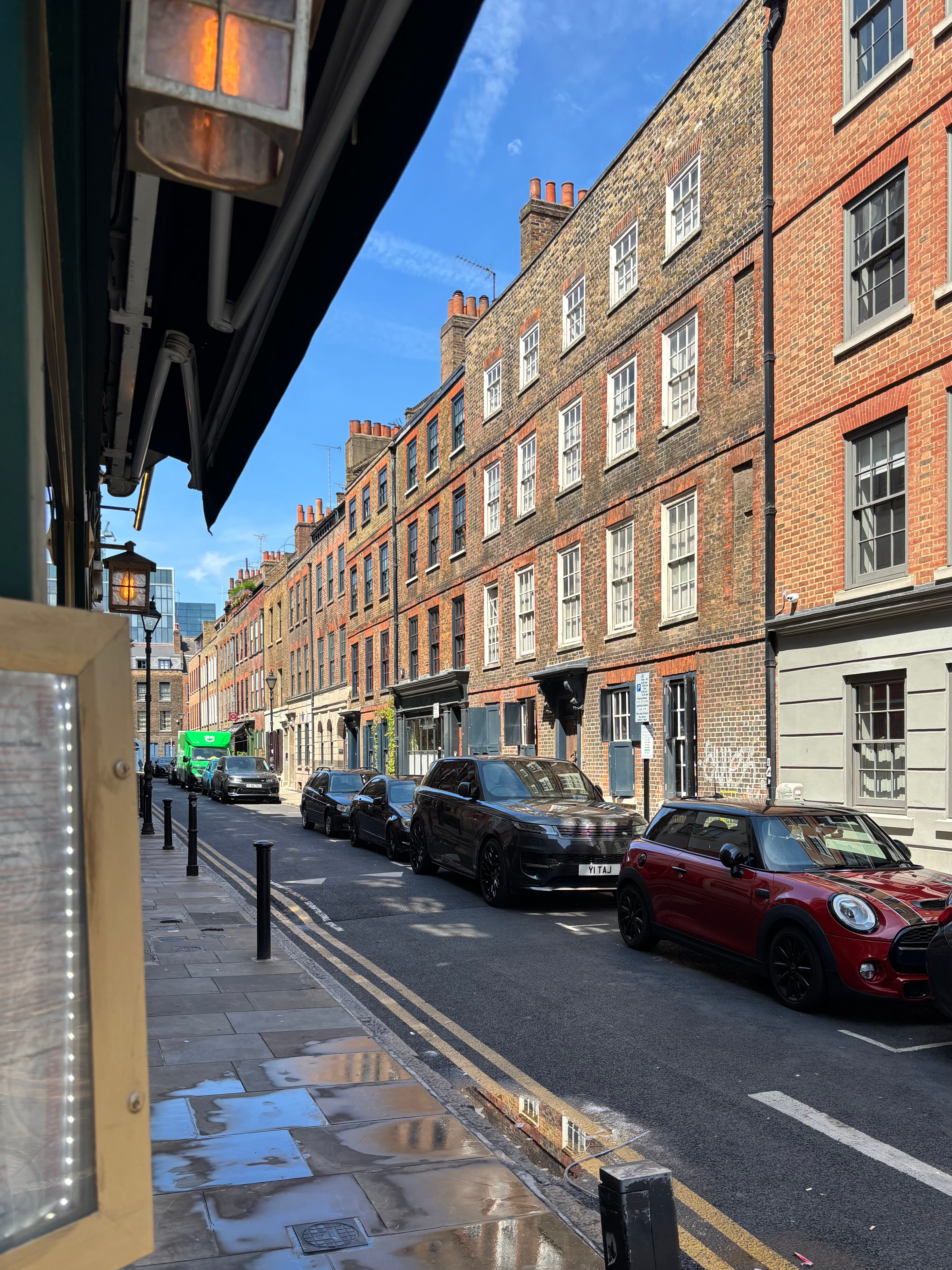
House of Annetta (second right) on Princelet Street (Ellis Woodman)
Annetta passed away in 2018. When she died, her family, in recognition of her politics and her relationship to space, gave the building and its contents to a Swiss foundation, Stiftung Edith Maryon. The foundation’s mission is centred on the way the extortionate value of land makes social good impossible. I think that is another piece of the puzzle in terms of the disappearance of community technical aid, and the changing landscape we are in now: the relationship to land ownership.
Over the past six years, each summer, we have been figuring out what this building can be as a resource in this particular neighbourhood, under this very specific ownership condition. The foundation will never sell. We have been supported for five years by people across its network of around 150 other projects, helping us to get something started.
The long-term plan is to use the repair and refurbishment of the building as a way to learn skills. How do we retrofit? How do we do carpentry, plastering, plumbing and rewiring? The aim is not only to repair this one very specific, very dilapidated building, but also for cohorts of learners to take those skills into other community spaces: perhaps across East London, perhaps further afield.
We have set up one stage of that this year through a sibling organisation called Living Constructions. It is based on one of Annetta’s principles: living books. As well as being a builder and architectural designer, she was an artist and publisher, and she had this idea of living books as something based on process, dialogue and response. We are trying to embody that in our ways of building.
At the moment, we are on site building what I think will be London’s first community-owned, wheelchair-accessible LGBTQ+ pub and performance space. We are working with an amazing campaign group called Friends of the Joiners Arms. They have been going for 11 years, since the closure of their pub, the Joiners Arms, on Hackney Road.
We run learning sessions every Wednesday, so people can drop in and learn how to plaster with us, or do something else. Fingers crossed, the space will open in just a few weeks, in the middle of summer, hopefully around Trans Pride.
The long-term ambition is that Living Constructions becomes an organisational vehicle that can raise money, hold insurance and build experience in order to do more of this construction work: both at House of Annetta and in support of other community projects. We have a few things lined up that we hope we can make happen.
One of the things we have learned from working with Friends of the Joiners Arms is that, yes, we bring technical knowledge about building things, submitting plans for building regulations, and interfacing with the built environment. But we also lend our expertise in other ways: negotiating with landlords, writing difficult letters, working on funding applications, and leveraging our networks. So much of that is part of our role too. I feel that this is the legacy of the technical aid centre. It is not just: here is a drawing. It is about being in relationship, and working towards a shared goal with whatever resources you have to hand.
I do not want to forget Kay Jordan. She is still a bit of a mystery to me, and I am trying to learn more about her. Last summer we got a knock on the door, and that is one of the great things about having a physical space. You are interrupted all the time. A woman arrived; we found out her name was Flora. She was in tears. She had worked with Annetta and Annetta’s friend Kay in the 1990s.
Kay was a member of the RIBA Community Design Group and was quite critical of it. She had trained as an architect at the AA and worked for decades, until her death in the mid-2010s, as a community architect. But instead of setting up a technical aid centre, she set up organisations. Through those organisations, she was able to establish and protect thousands of square metres of commercial, office and workspace around Brick Lane and Banglatown from gentrification and rising land values.
I really want to know more about Kay Jordan. I found out that the nursery I went to was designed by her — not only its spatial design, though I remember interacting with some of the cupboards, but also the way the nursery was nested within a migrant women’s centre. It offered childcare, but also English lessons and workshops in garment manufacturing.
That network of things feels really utopian. It suggests what technical aid centres could be, and what kinds of projects become possible when communities are empowered not only through access to experts, but also through security over land and access to money.
The final thing I wanted to mention about Friends of the Joiners Arms, because they are really special, is that they managed to raise £200,000. That is not enough to buy a building, but it is enough to pay for construction work and design services. I think that is another hinge point. If we want more technical aid to happen, we need to figure out the money problem.
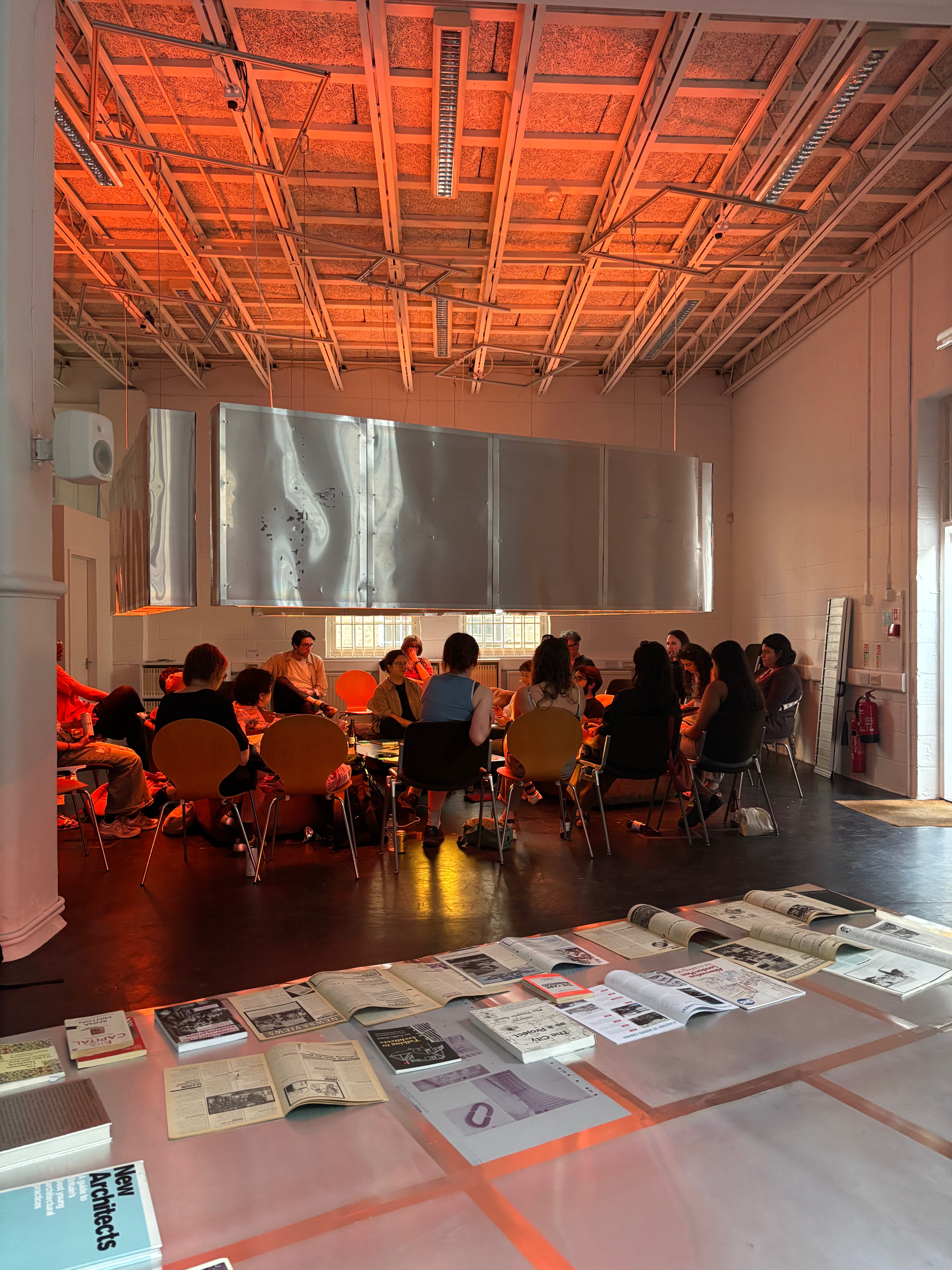
The evening included a presentation of Community Action magazine and other material relating to the Community Technical Aid Centre movement. (Ellis Woodman)
No posts
Comments
Nothing yet. Say the first thing.
Sign in to join the conversation.