
This newsletter for the week of June 1 looks at Out There: New Architecture Across America, a survey of 50 US architects by Robert Ivy, Cathleen McGuigan and Peter MacKeith, released this week by Merrell Publishers. Their hefty book has a foreword by Arkansas architect Marlon Blackwell, so the book from the archive is his equally hefty monograph from 2022, Radical Practice. In between are the usual headlines and new releases. Happy reading!
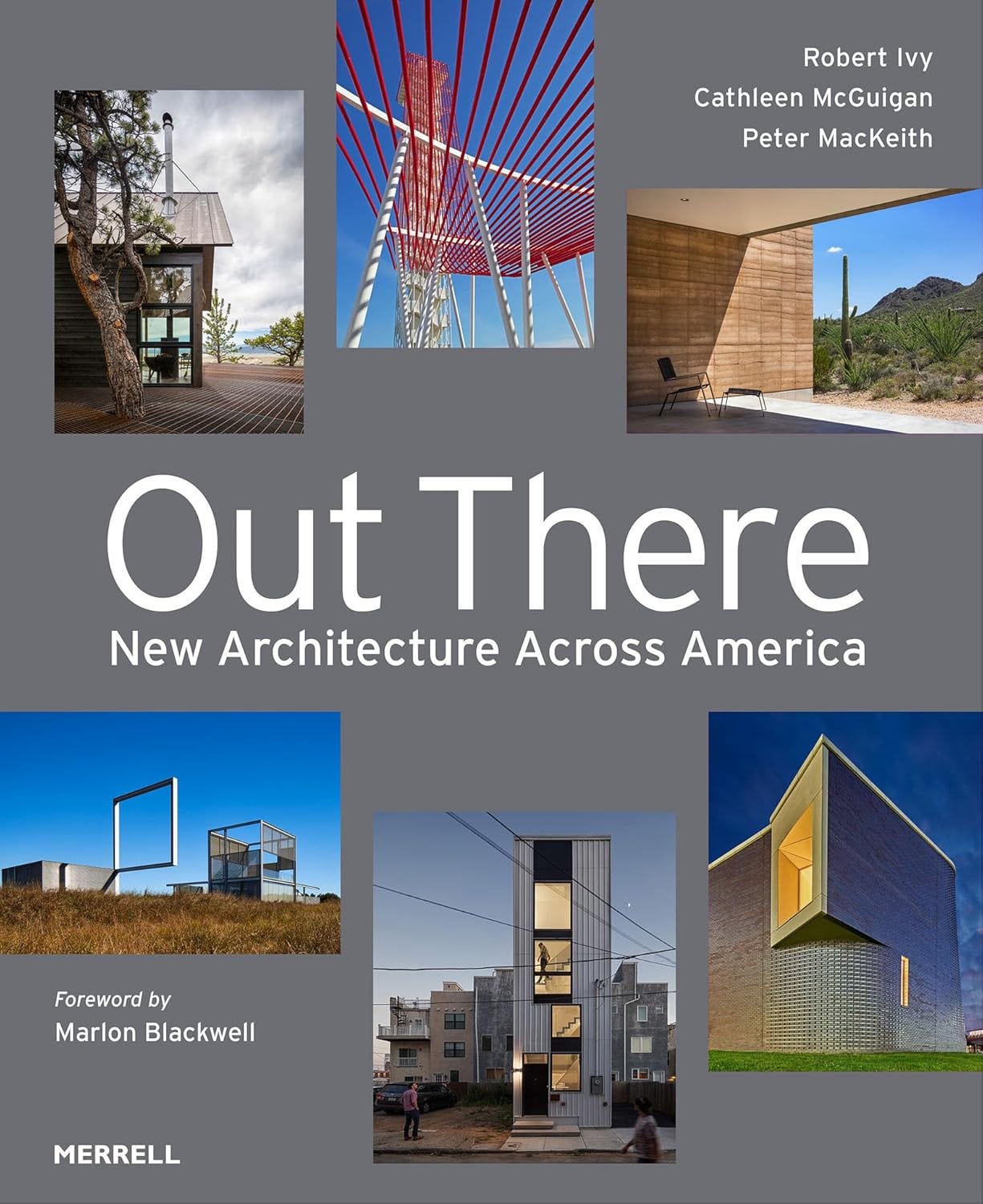
Out There: New Architecture Across America, by Robert Ivy, Cathleen McGuigan and Peter MacKeith (Buy from Merrell / from IndiePubs [now 25% off] / from Amazon / from Bookshop)
Twenty-five years ago, during Robert A. Ivy’s tenure as editor in chief of Architectural Record, the magazine’s February 2001 issue was released under the theme “Out There.” Prefaced by an interview with Samuel Mockbee—aka “Sambo,” the architect, Rural Studio co-founder, and 2000 MacArthur grant recipient—the issue was highlighted by six projects capturing “Architecture Outside the Centers of Fashion,” as the issue was subtitled. In addition to Marlon Blackwell’s Keenan TowerHouse in Fayetteville, Arkansas, which graced the cover, the featured projects were designed by Brian MacKay-Lyons, Huff+Gooden, Bart Prince, Elizabeth Wright Ingraham, and Frank Harmon.
Although focusing on the work of North American architects outside of New York, Los Angeles, and Chicago must have been appealing to many of the architects subscribing to Record at the time, many of whom no doubt worked outside of those metropolises, the gap between that “Out There” issue and its extrapolation into a hefty, 500-page tome also carrying the same name is hinted at by the fact Ivy’s editorial in the issue is devoted to marketing, not the regional architecture found in Arkansas, Nova Sotia, Colorado, New Mexico, and the Carolinas. (The first of a three-part series on marketing for architecture firms rather in that issue, but still…)
Even if Ivy didn’t know the full weight of what he was presenting at the time, the fostering of “out there” work in the pages of Record makes it logical that he would be joined by Cathleen McGuigan, his editorial successor at the magazine, and Peter MacKeith, the outgoing dean at the Fay Jones School of Architecture and Design at the University of Arkansas, to survey fifty American practices working, in his words, “‘out there,’ where architecture meets the people.” A trio of essays by each preface the alphabetical survey of the 50 firms, whose profiles were written by them and three more contributors: Beth Broome, Clifford Pearson (both contributing editors to Record), and Jonathan Boelkins, who was formerly the studio director of Marlon Blackwell Architects. Rounding out the whole is a foreword by Marlon Blackwell himself, the February 2001 cover architect but now considered a “forebear” (per McGuigan’s essay on him and others) to the predominantly younger architects in the pages of Out There.
Although Blackwell seems to be, in addition to Ivy and Record, one of the pieces forming the backbone of Out There—in addition to the above points, it should be noted he taught at University of Arkansas for 33 years—one can go back further in time to architect E. Fay Jones, the Arkansas architect who won the AIA Gold Medal in 1990 and is best known for the design of Thorncrown Chapel, to find some “Out There” roots. MacKeith describes Jones, who would seek commissions no more than a day’s drive from his home in Fayetteville, as “one of the true antecedents of the ‘forebears’” like Blackwell, given the way he “asserted the same purposes and commitment to place throughout his career.” Put another way, one can find a through line from Jones to Blackwell to modus studio, which also practices in Arkansas, plus the other 49 Out There firms. That Ivy authored an excellent 1992 monograph on Jones and the late architect is celebrated in the name of the school where Blackwell taught and MacKeith has served as dean doesn’t hurt my argument.
But Out There is much more than Architectural Record and Arkansas connections. The book’s subtitle, New Architecture Across America, hints at how it is a sweeping survey of architecture across much of the United States in the 25 years since that issue of Record. Opening the book to the map that lists and locates the 50 practices, I immediately thought back to the “50x50 - 50 States in 50 Weeks” Building of the Week feature that I curated for World-Architects back in 2013. It looked, in alphabetical order, at one recent building in each state—from Rural Studio’s Safe House Museum in Alabama in January to Carney Logan Burke Architects’ Butte Residence in Wyoming in December. While the effort was difficult at times, as in states like Alaska, a state missing from Out There, it connected me to architects “outside the centers of fashion” and made me discover and appreciate some of the regional aspects of the buildings they were designing.
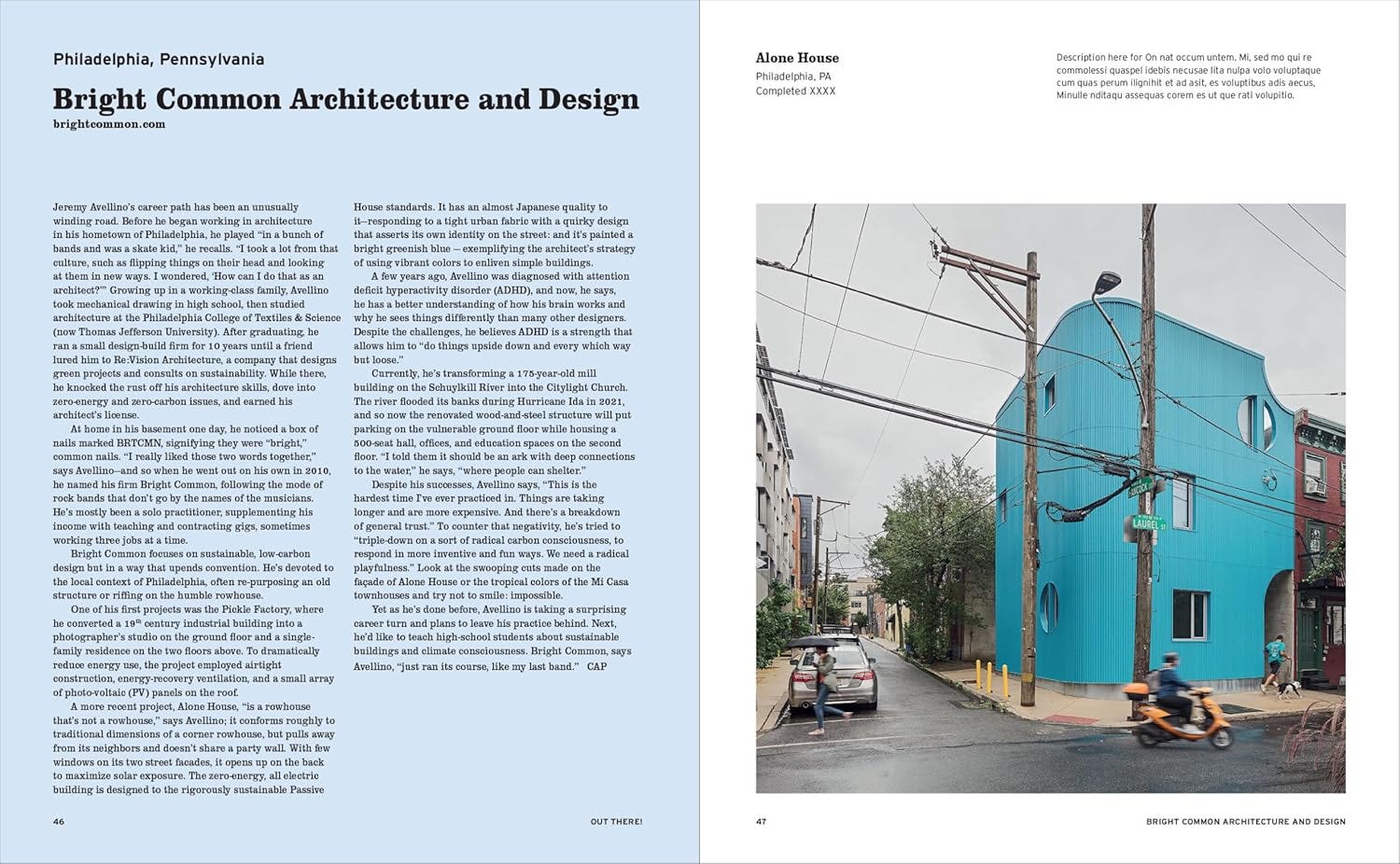
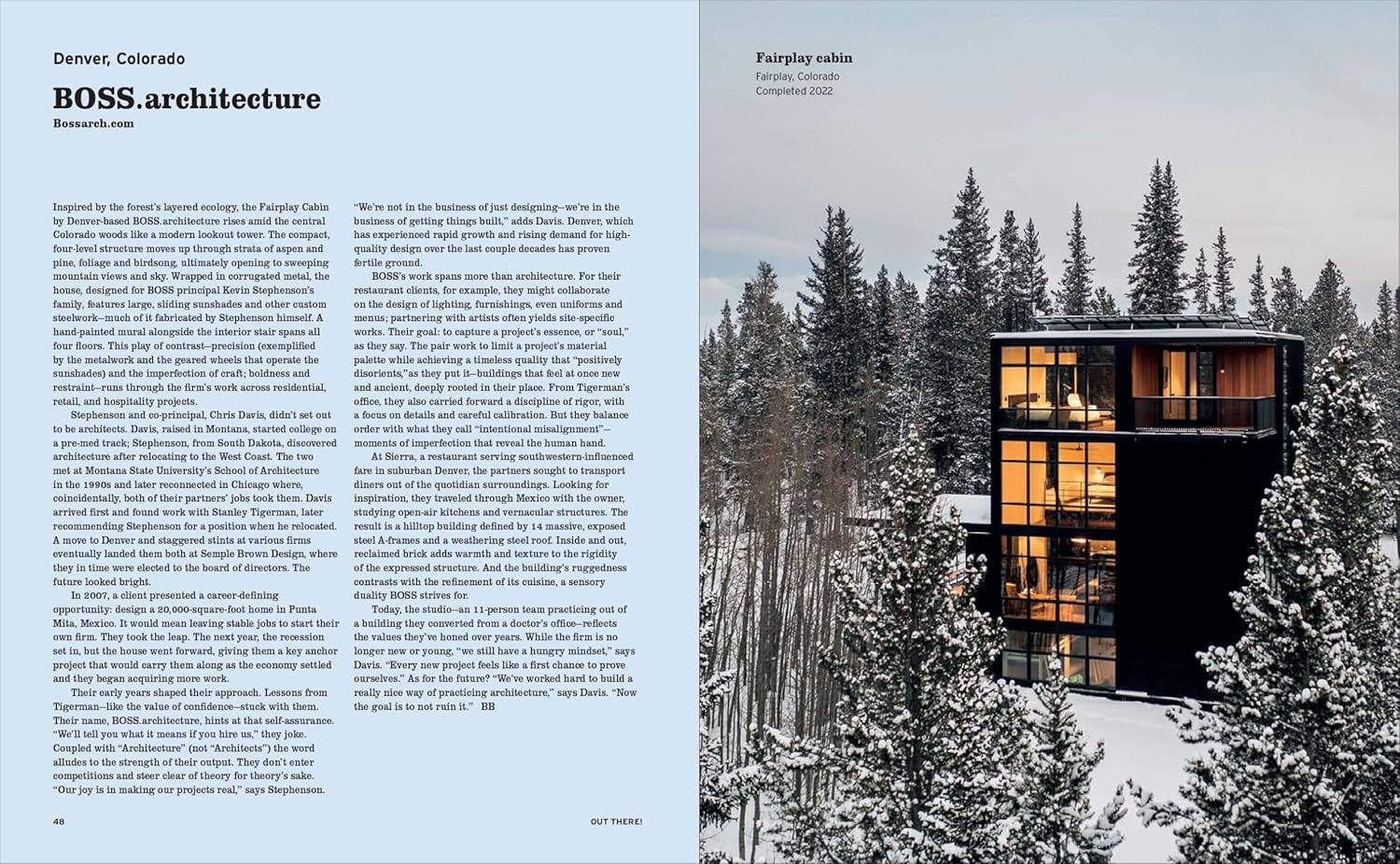
While Ivy, McGuigan, and MacKeith don’t take such a strongly (and restrictive, I’ll admit) structured approach to their survey—they hit all but 16 of the 48 contiguous states on their US map—their list of 50 firms is commendable and the work presented is high quality across the board. There are numerous firms that are well established and have extensive portfolios (Aidlin Darling Design, archimania, Brian Healy Architects, Duvall Decker Architects, LEVER Architecture, Miró Rivera Architects, Rand Elliott Architects, Salmela Architect), but also ones that are new even to me (ARCADE, BAU_Butzer Architects and Urbanism, Belinda Stewart Architects, BOSS.architecture, candid-works, EVOKE Studio Architecture, NICK DEAVER JES DEAVER architecture, Renée del Gaudio Architecture, Rhotenberry Wellen Architects), as well as a few firms found in LA, NYC, and Chicago (Bestor Architecture, Mariene Imirzian & Associates Architects, ARCHITECTUREFIRM, Worrell Yeung, Studio Dwell Architects). The last group were included, according to Ivy, “to test the model—if you will—of metropolitan practices that sometimes veer into specific geographies.”
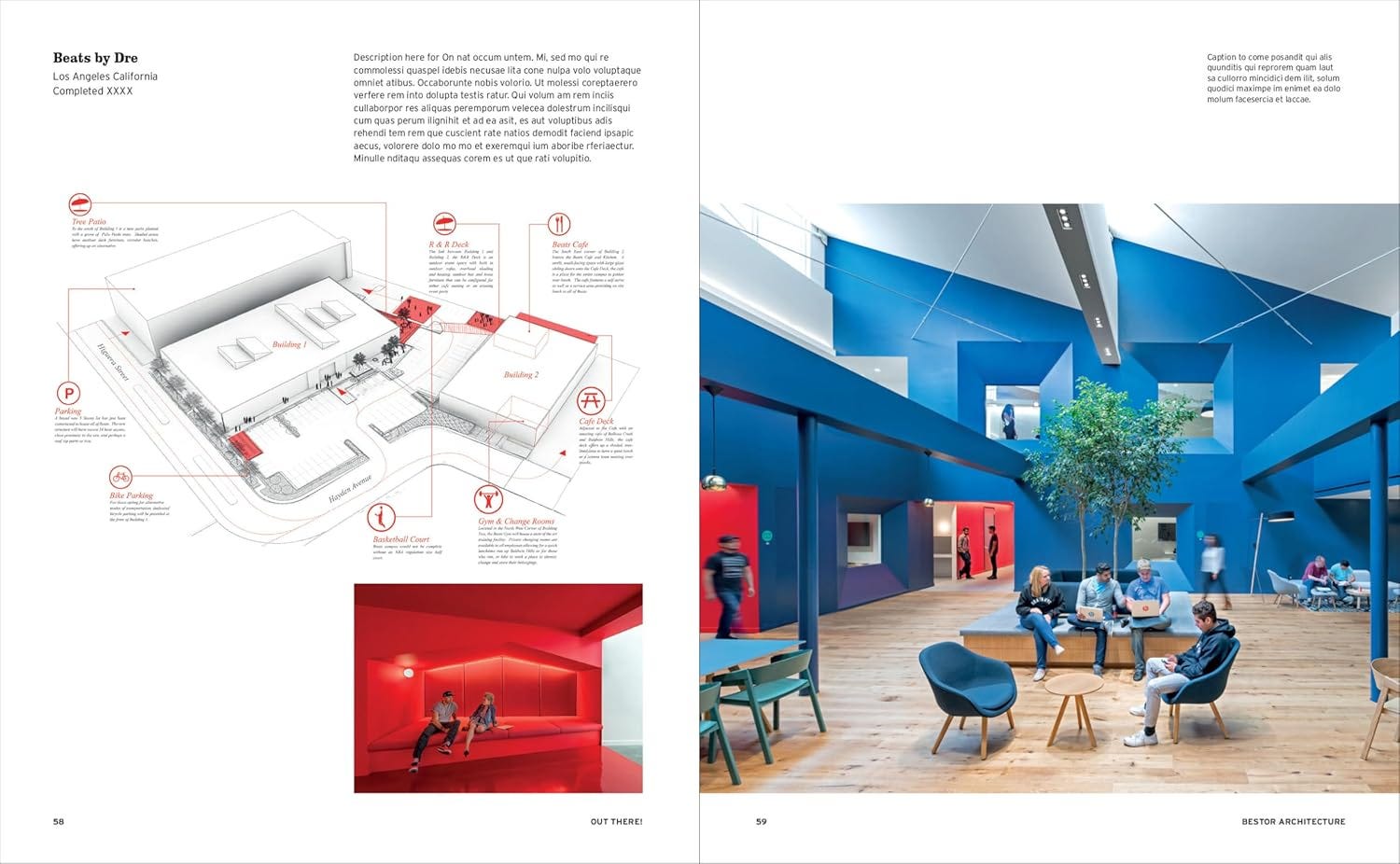
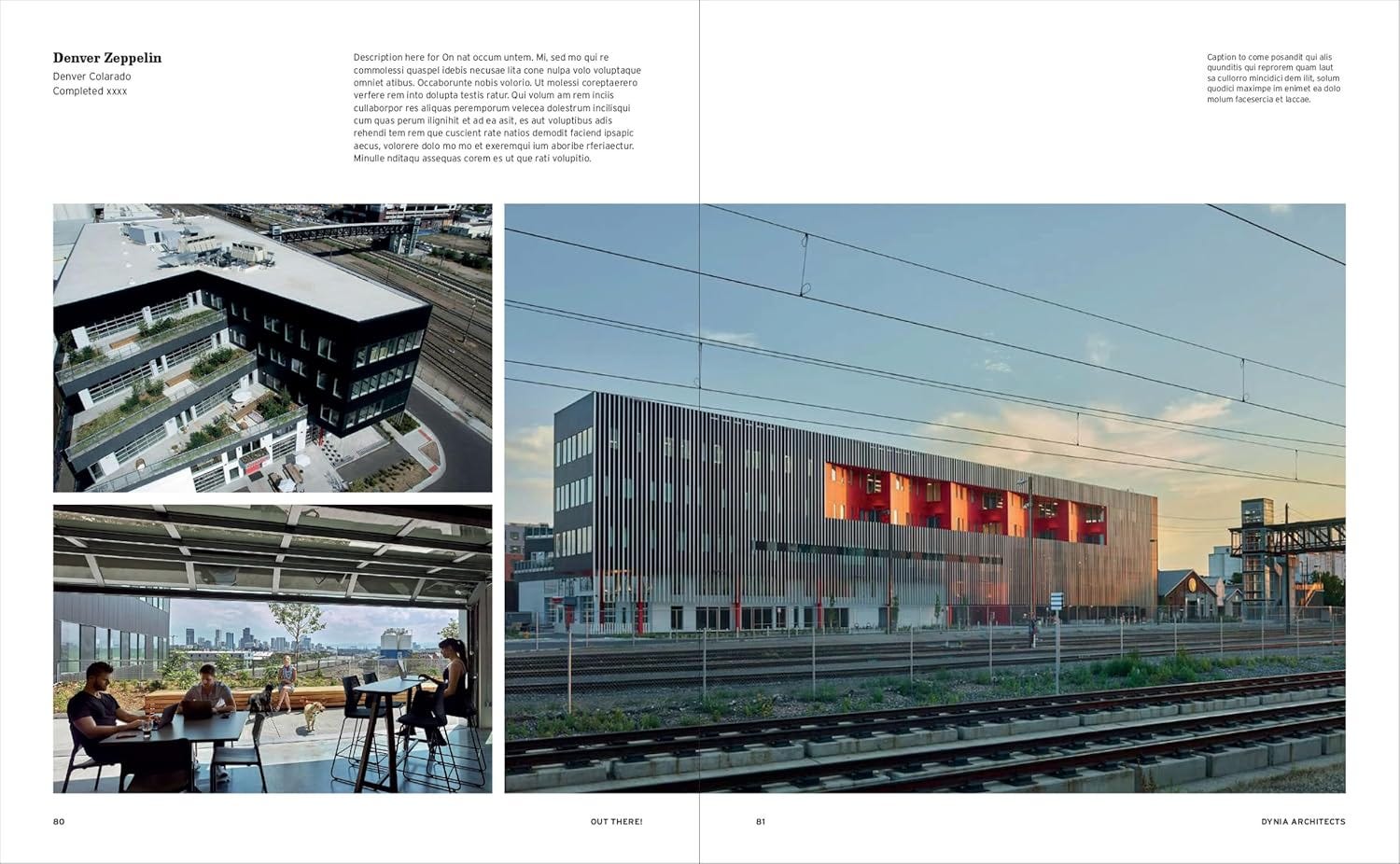
The presentations for the 50 firms are consistent: a one-page narrative by one of the six contributors (on blue background, as in the spreads above) followed by between two and six projects documented in photographs, occasional drawings, and brief descriptions. For the most part, the selection of buildings (only one project among the 170 is unbuilt) is exceptional, but also tying the whole together are the narratives that are considerably better than a lot of what passes for writing in architectural surveys these days. Based on firsthand interviews/studio visits, the narratives foreground what make the practices worthy of inclusion while making the book an enjoyable read—even if it is not a book meant to be read cover to cover.
The biggest downside to the book is its size: 9.5 x 11.5” pages, nearly 2” thick, weighing nearly 7 pounds. Perhaps the authors and publisher were trying to make a statement, equating size and importance, but I’m not convinced the book would have been less effective or impressive with a small paper size and more lightweight paper—two commendable traits in publishing today, when we should be doing more with less. To me, Out There: New Architecture Across America is more impressive for the work contained within rather than its coffee table book size and heft.
(In the United States; a partial, curated list)
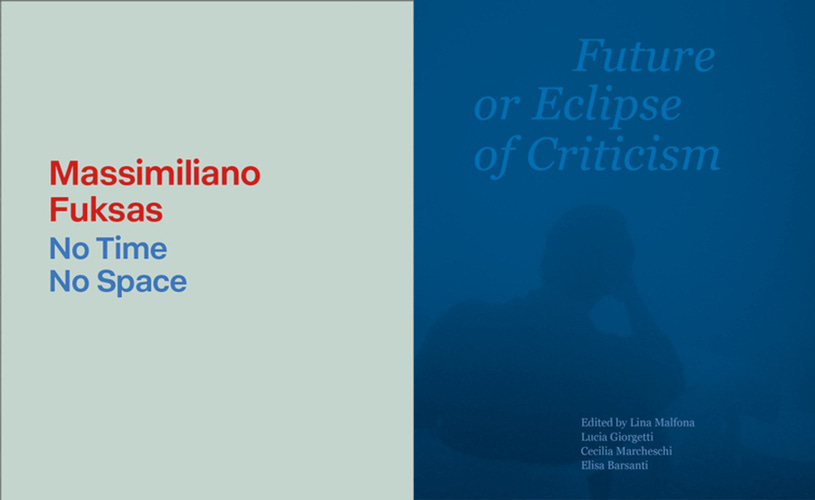
No Time, No Space, by Massimiliano Fuksas (Buy from Actar / from Amazon / from Bookshop) — “This book presents a rich collection of ideas, concepts, and intentions, stripped of any context, scale, or other details that might limit their expression.”
Future or Eclipse of Criticism, edited by Lina Malfona, with Lucia Giorgetti, Cecilia Marcheschi and Elisa Barsanti (Buy from Actar / from Amazon / from Bookshop) — “Has architectural criticism disappeared for good or has it adapted to the pressures, exigencies, and fashions of the present? … In fact, in a cultural landscape stuck between the horizontality of social media and the verticality of powerful cultural institutions, research centers, think tanks, museums, and biennials, the heroic figure of the critic has been replaced by the more appealing one of the architectural journalist and curator.”
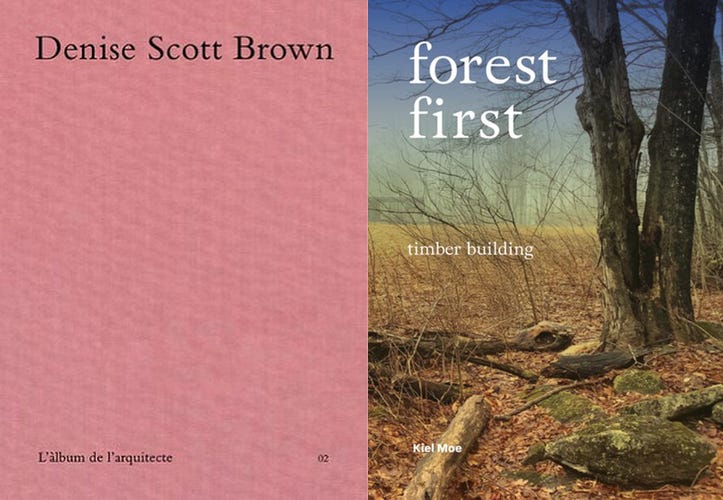
Denise Scott Brown: The Architect’s Album 02, edited by María Pía Fontana (Buy from Actar / from Amazon / from Bookshop) — “A visual journey through Denise Scott Brown’s 1955 honeymoon in Illyria, a region of the Balkans between Albania and the former Yugoslavia, with her first husband, Robert Scott Brown.”
Forest First: Timber Building, by Kiel Moe (Buy from Actar / from Amazon / from Bookshop) — “This book puts the forest first and offers a detailed immersion into forest history, forest stand dynamics, forest ecology, forest-building carbon dynamics, and possible future forest trajectories as the pretext for thinking about timber building technics.”
Full disclosure: As an Amazon Associate, AbeBooks Affiliate, and Bookshop.org Affiliate, I earn commissions from qualifying purchases made via any relevant links above and below.
Michael J. Crosbie reviews Michael Murphy’s Our World in Ten Buildings: How Architecture Defines Who We Are and How We Live. (Common Edge)
Maria Mitsoula unboxes Records of the Sixth Somewhat Annual Meeting and the thematic issue of AD Reimagining Architectural Drawing: Print and Process. (Drawing Matter)
Elias Baumgarten has good things to say about Reprise – Aita Flury, Works 2005–2025, the monograph on the Swiss architect. (World-Architects) Full disclosure: I edited the English translation of Baumgarten’s original German-language review.
Lloyd Alter unpacks some old architecture and design magazines—a House and Home from 1952, an Architectural Forum from 1963, and a Progressive Architecture from 1972—from his library. (Carbon Upfront!)
“High Density Living, 2000 Years Ago: Inside the Roman Apartment Building,” an excerpt from Stefan Al’s Dwelling on Earth: The Past and Future of the Places We Call Home. (Common Edge)
A hefty book with connections to Out There is Radical Practice: The Work of Marlon Blackwell Architects, which was edited by by Peter MacKeith and Jonathan Boelkins and released by Princeton Architectural Press in 2022. Below is the text from my August 2022 “brief”:
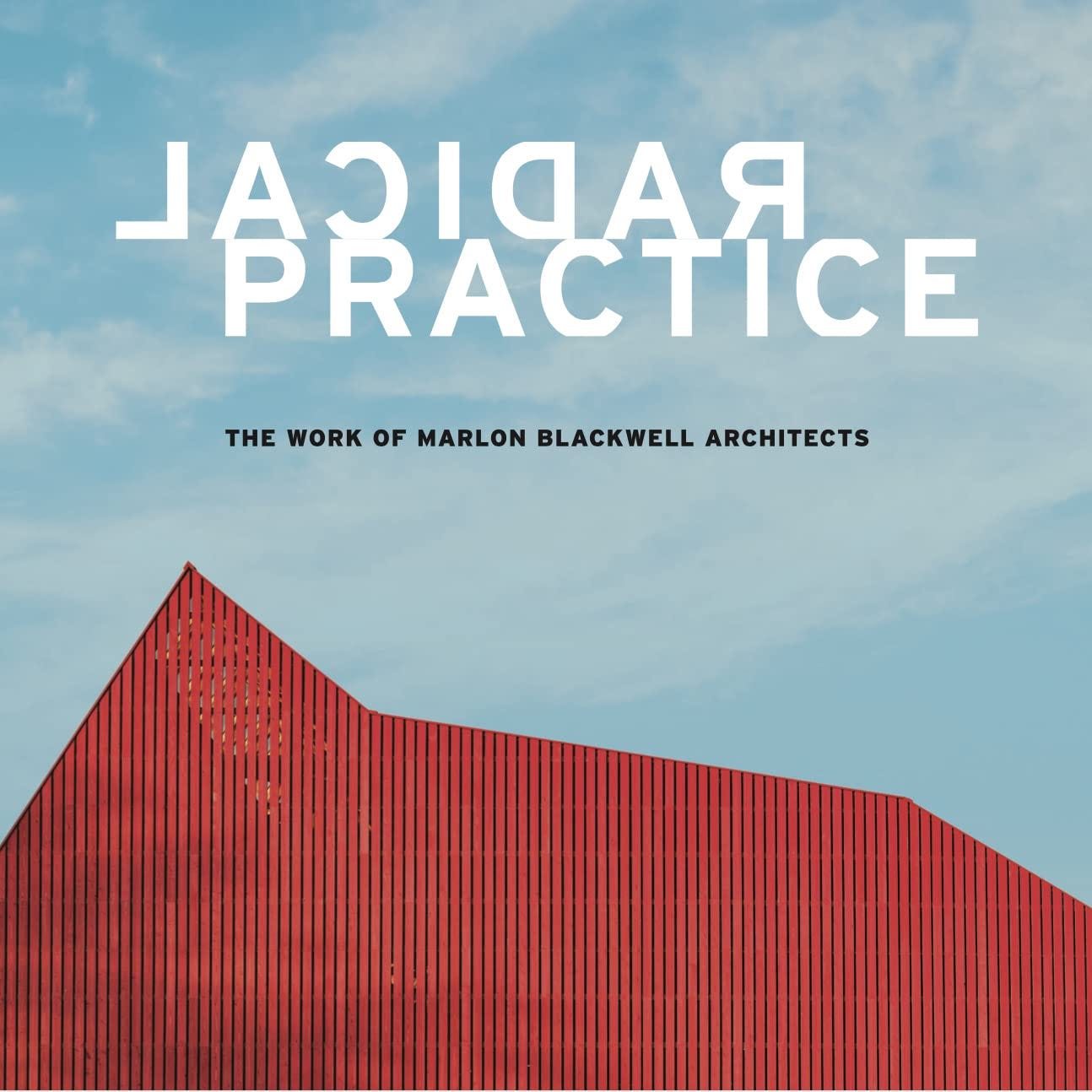
What comprises a “radical” practice? Is it designing buildings that appear radical, akin to the angular red shape on the cover of this hefty monograph? Or is it veering from the norms of practice through, for instance, employee ownership, or by recommending to clients that they reconsider building a project because it might do ecological harm? One hint to the term’s application to the practice of Fayetteville, Arkansas’s Marlon Blackwell Architects can be found in an essay by Robert McCarter in which he references a text by Frank Lloyd Wright from 1930: “Radical, meaning ‘of the roots.’” Although McCarter is writing about St. Nicholas Eastern Orthodox Church in Springdale, Arkansas, this quote points to a couple of things: Blackwell staying put in Arkansas, rather than decamping for one of the coasts or a big Midwestern city like Chicago; and his ability to create buildings that tap into the vernacular of a place but are dramatic, contemporary updates cognizant of changing societal needs.
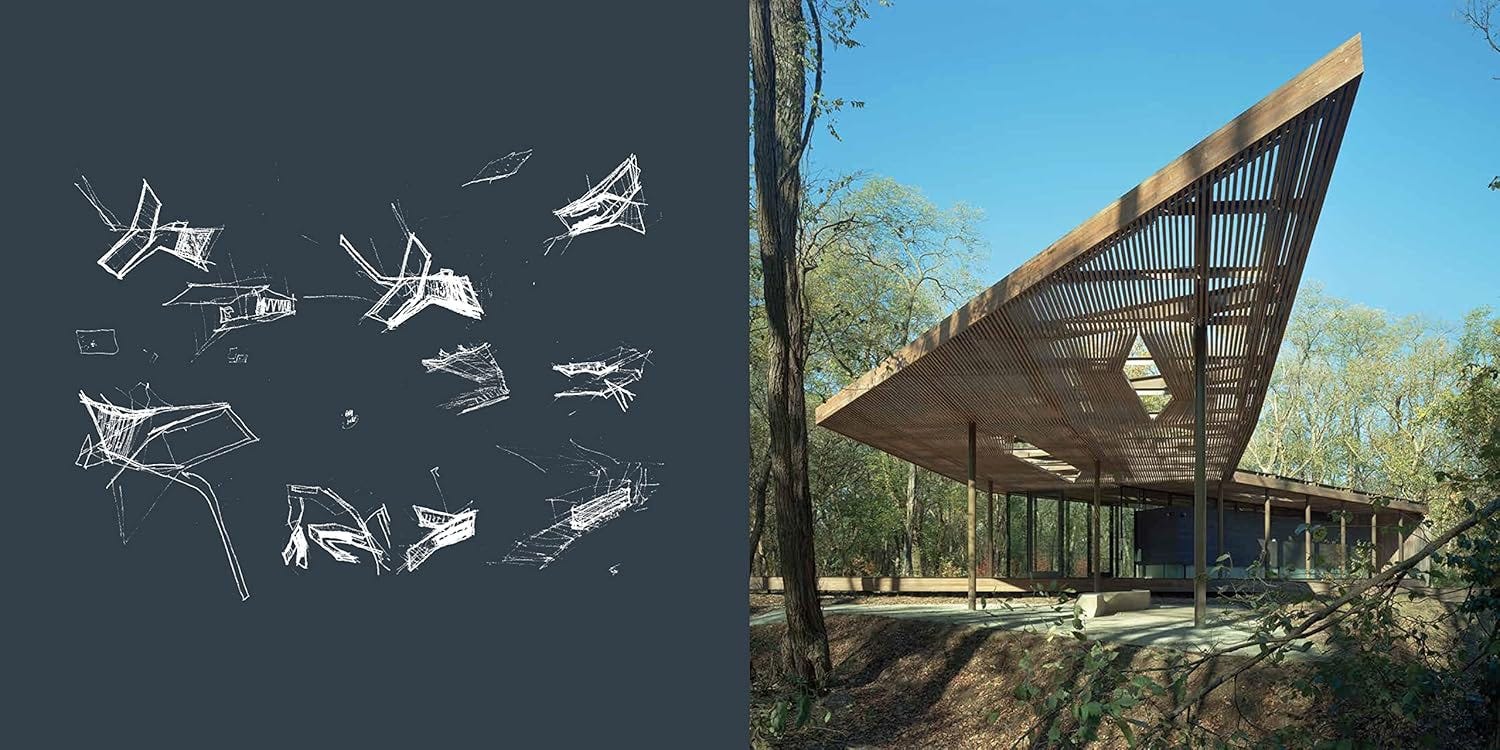
McCarter’s text is one of fifteen essays that are inserted between the thirteen projects completed over roughly the last two decades. The alternating text and projects give the monograph a definite rhythm, one that is reinforced by a consistent structure for the documentation of the projects: a spread with text on a red background signaling the radical nature of the project (e.g., “Radical Site” for the Ruth Lilly Visitors Pavilion, the project pictured above); two pages of inspiration, mostly of nature, vernacular buildings, and notable buildings photographed by Blackwell; followed by the usual descriptive text, drawings, and photographs — lots of photographs. Most monographs are marketing, and Radical Practice is no different. But the solid list of contributors offering up some praise (among them are James Corner, Brian McKay-Lyons, Guy Nordenson, and John Ronan), as well as the insertion of photographs of the rural South by Tim Hursley between the projects and essays, among other pieces, make this book very hard to resist for fans of Blackwell’s buildings.
Thank you for subscribing to A Weekly Dose of Architecture Books. If you have any comments or questions, or if you have your own book that you want to see in this newsletter, please respond to this email, or comment below if you’re reading this online. All content is freely available, but paid subscriptions that enable this newsletter to continue are welcome — thank you!
— John Hill
No posts
Comments
Nothing yet. Say the first thing.
Sign in to join the conversation.