
This newsletter for the week of July 20 takes a look inside Ikebana & Other Infidelities and two other books made by Venice, California-based designer Coy Howard over the last decade. The book from the archive sticks to Southern California, with A New Sculpturalism: Contemporary Architecture from Southern California from 2013. In between are the usual headlines and new releases. Happy reading!
Book of the Week
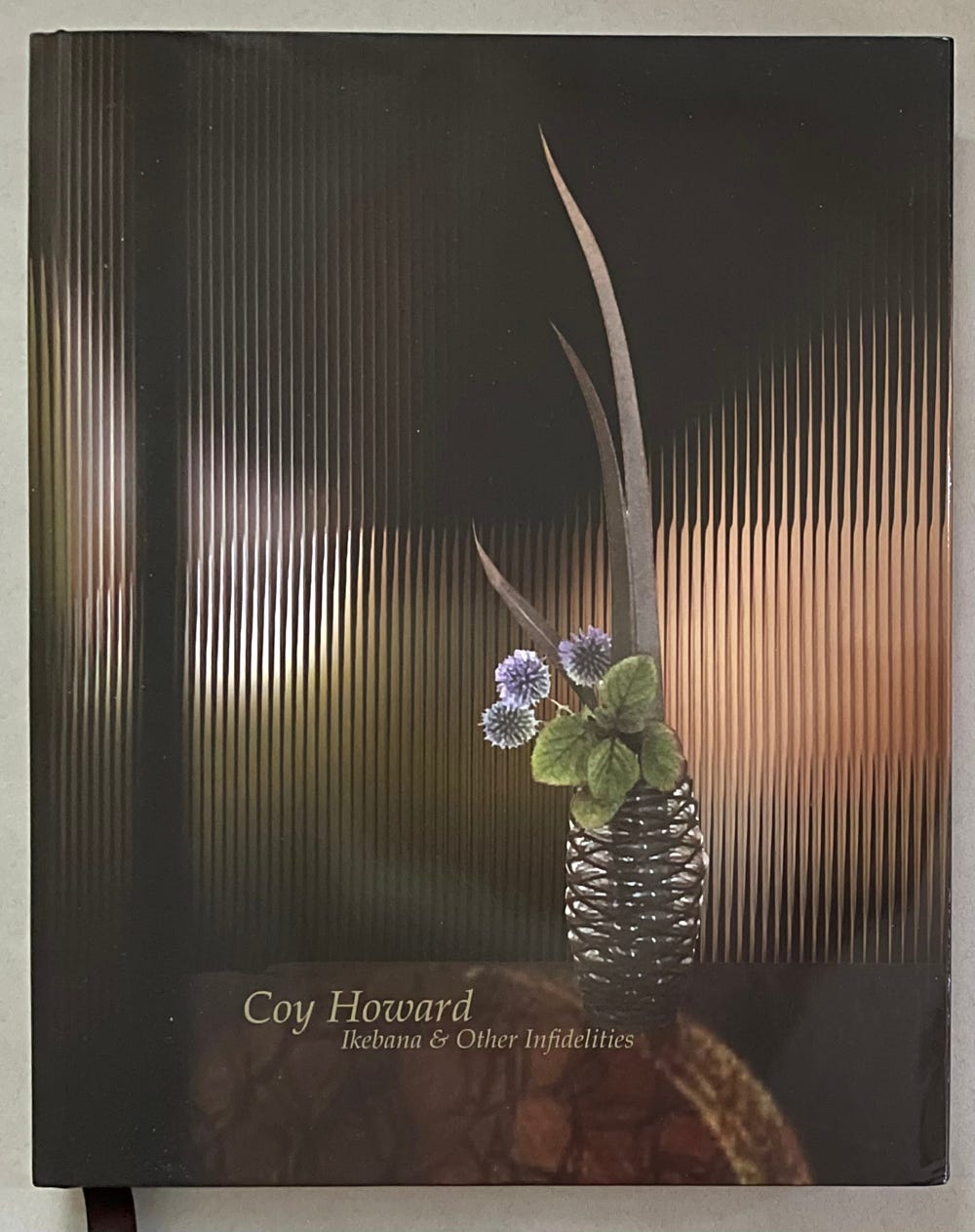
Ikebana & Other Infidelities, by Coy Howard (This 2025 book and its two predecessors—The Thickening of Time and The Silhouette of Feeling—can be bought from Hennessey + Ingells, via AbeBooks.)
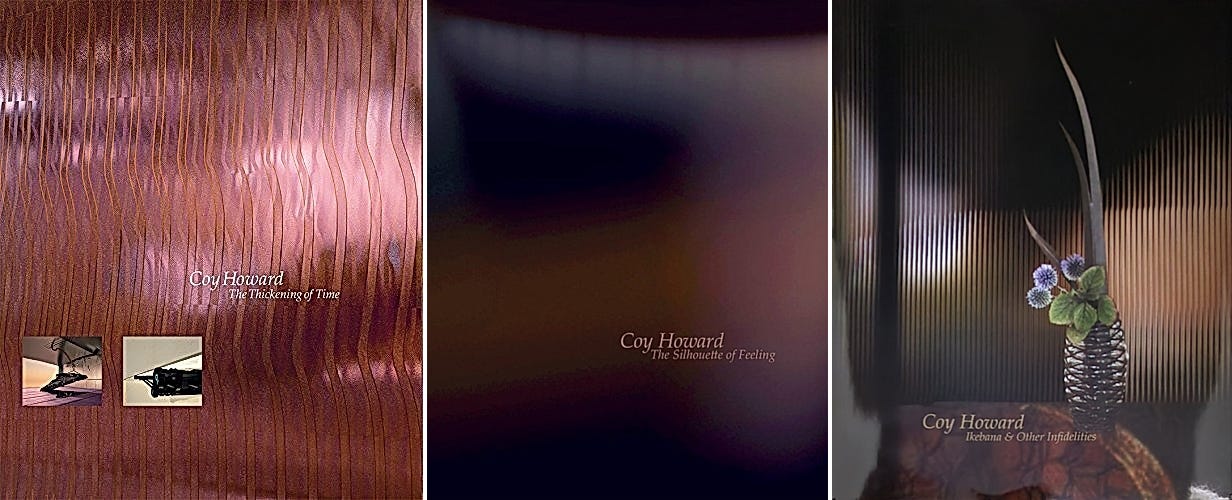
What is the architectural equivalent of a haiku? I’m far from an expert in poetry, much less Japanese poetry, but that thought came to mind when thumbing through the trio of coffee table books made by Coy Howard over a ten year span: The Thickening of Time (2015), The Silhouette of Feeling (2022), and Ikebana & Other Infidelities (2025). In dark images drenched with sensual implications, the books respectively document Howard’s residential architecture, furniture designs, and … well, flowers, but I’m not really sure why. While the first two books blur the physical and the digital to create stunning, occasionally abstract images on the page, their subject matter remains in grasp, if fleeting at moments. Ikebana & Other Infidelities, on the other hand, goes so far as to feel, not like a representation of designs, but like an entirely imagined realm created for and limited to the page. Put another way, the books move from representations of space, object, and material in the first two to pure floral and visual poetry in the last.
In a now famous photograph taken in 1980, a group of seven young Los Angeles architects (and a dog) posed on a chilly-looking Venice Beach for photographer Ave Pildas, for a short story by Joseph Giovannini that would run in Interiors magazine. The LA architects in the photo and article were Frank Gehry, Thom Mayne, Eric Owen Moss, Craig Hodgetts, Frederick Fisher, Robert Mangurian, and Coy Howard. While Gehry, Mayne, Moss and, to a lesser degree, Hodgetts would become familiar names far beyond the Southern California scene, the others remained more focused on the region, at least in terms of impact and exposure. Howard’s greatest contribution appears to have been via teaching: in the Environmental Arts Program at Otis College of Art and Design and the undergraduate program at SCI-Arc, both of which he has directed. As such, it is difficult to look at the images in these three books and connect them with projects that might have gained exposure through more straightforward representations—something that could have happened with, say, artistic photos of Gehry’s Disney Concert Hall or a collection of Mayne’s “sculptural drawings.” This, in turn, helps Howard’s images to stand simply on their own.
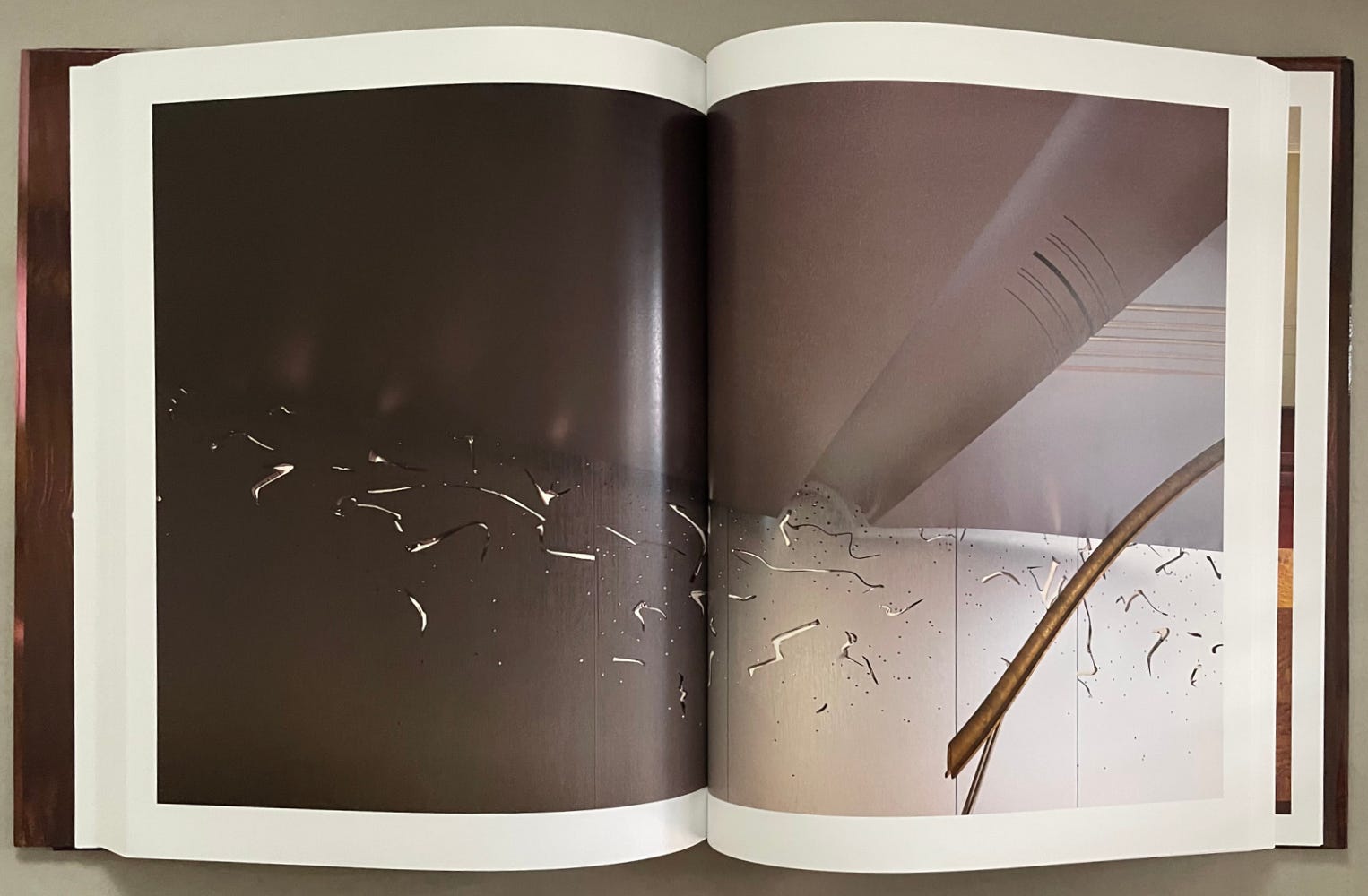
Of this apparent architectural trilogy, the first book—The Thickening of Time, published by SCI-Arc Press in 2015—is the most straightforward. It presents three villas in three cities (Tokyo, Los Angeles, New York) and is accompanied by three critical essays, by Jeffrey Kipnis, Dr. George Rand, and Larry Rouch. The later books would eschew essays, focusing squarely on enigmatic images, but such images are in abundance here too. Howard, in his introduction, describes the images as “photographic framing of perspectival fragments, not as views so much as glimpses.” He describes each villa as “a cryptic code of visual braille, a rebus, on the deep culture of place,” even though the respective cities (places) are nowhere to be seen. While the images blur the physical and the digital, the real and the unreal, the New York villa—the Max Palevsky Residence—is most certainly built, but the “glimpses” of it meld with the uncertain realities of the other two villas in the way they describe the feeling of the villa’s spaces and its textures rather than the shape of its spaces or layout of its rooms, as one might grasp in other architecture monographs.
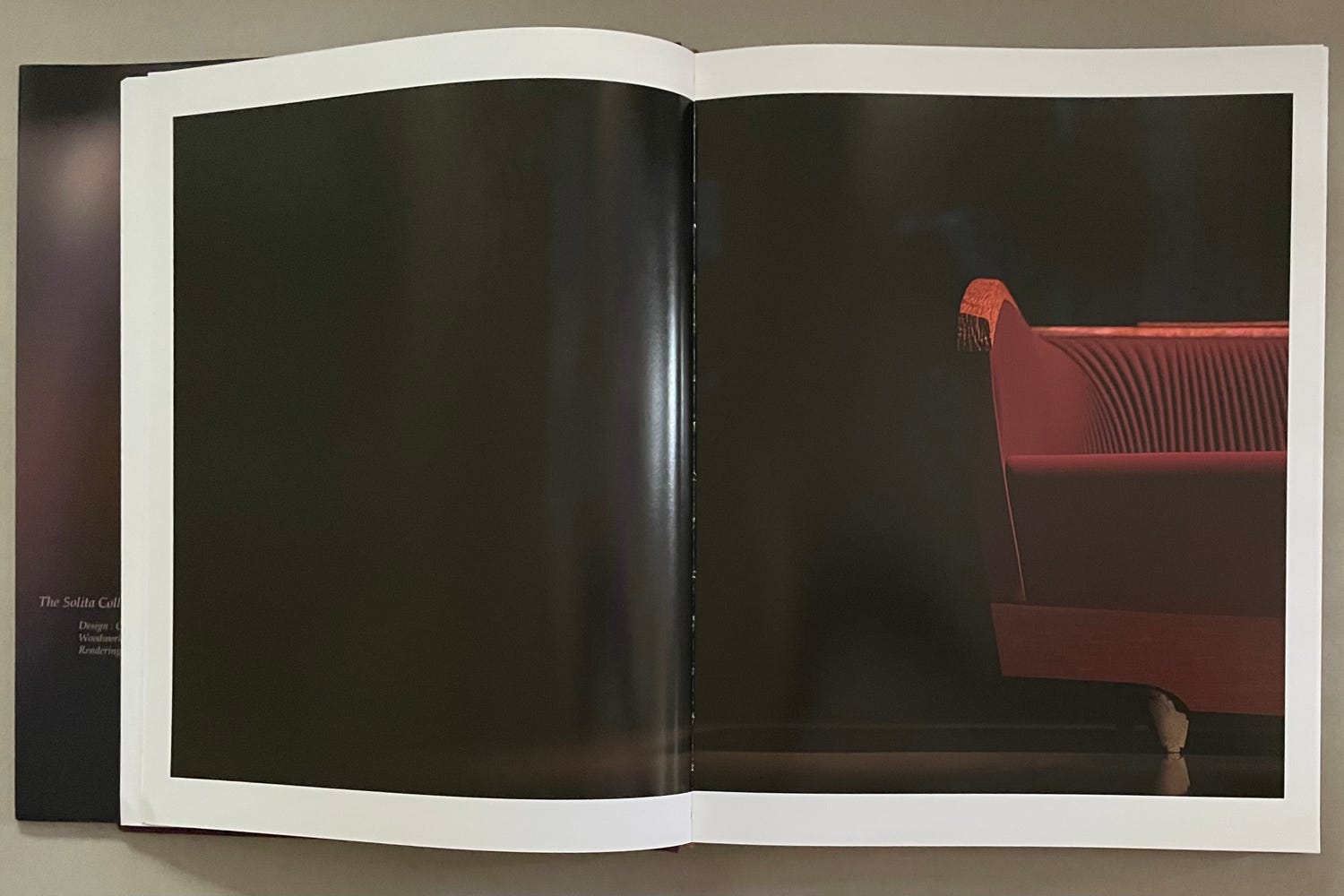
The second book—The Silhouette of Feeling, published by SCI-Arc Press in 2022—presents Howard’s line of furniture, called the Solita Collection, in three categories: sofas, lights, and tables. Featuring one object after another with names, materials, and dimensions indicated, the book could be seen as a 350-page catalog—if not for the fact the photos (done with Omar Busbait) depict just fragments of the pieces of furnitures, sometimes giving more real estate on the page to background than object. Even the image wrapping the front and back covers reveals nothing about the book’s contents. So, like the first book, The Silhouette of Feeling elevates feeling over form, saying as much in the title. Still, one gathers a sense of the sensuality and craft via the photos of the real and imagined furniture, while the lush backdrops create a mood that pervades the book while also hinting at the kinds of ascetic spaces one would need to create in order to suitably live with the furniture Howard has designed.
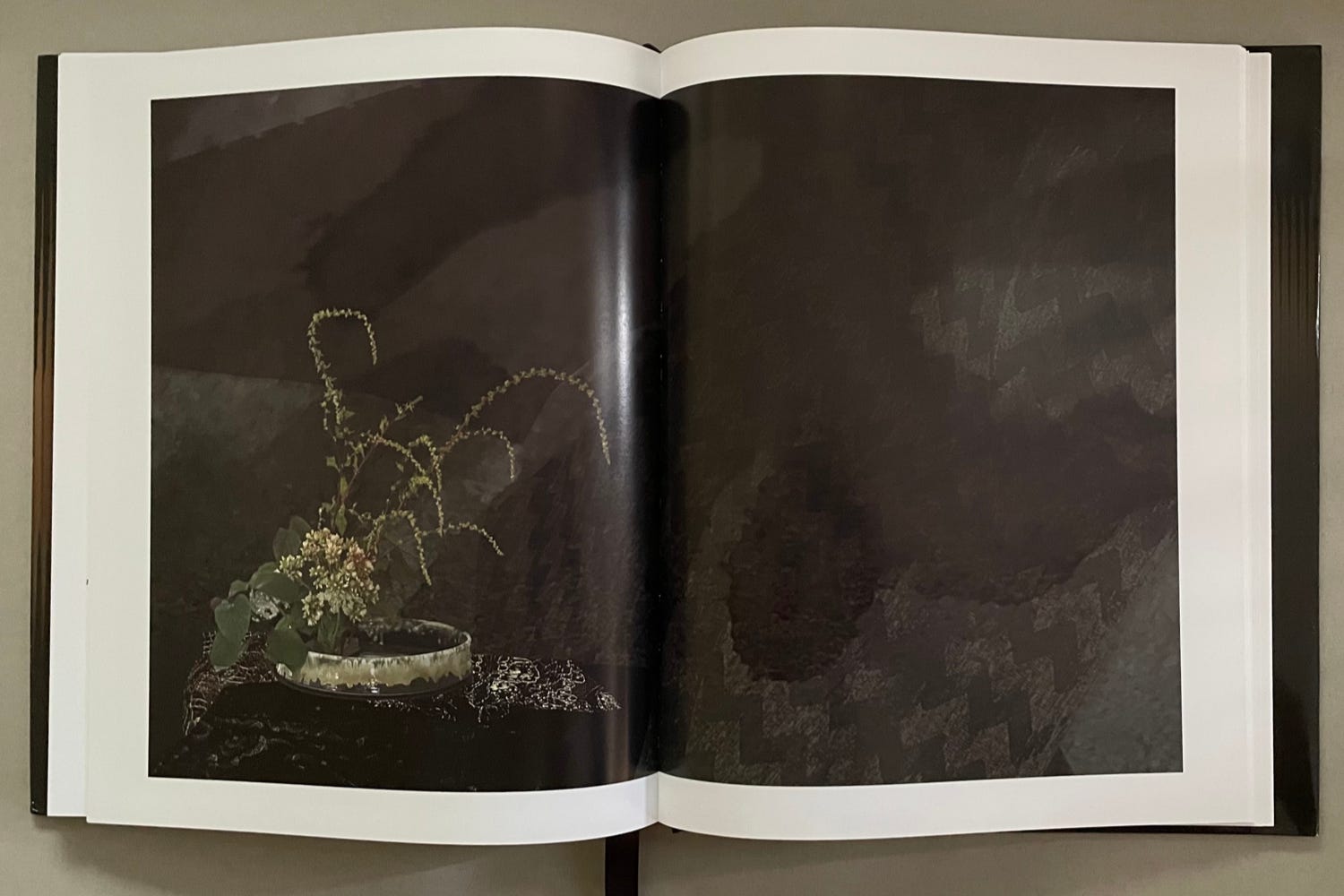
The third book in Howard’s apparent trilogy is Ikebana & Other Infidelities, published last November by SCI-Arc Press and celebrated earlier this year. If the first book applied the designer’s dark, sensual aesthetic to residential designs and the second to furniture, the latest finds nearly 200 pages of arrangements: of flowers in vases on furniture in rooms. The images are painterly in their colors, lighting, and framing—carefully and beautifully composed standalone images that defy meaning beyond appearance. In praising the book, Hernan Diaz Alonso, former director of SCI-Arc, describes the images “like riddles that never quite want to be solved.” Similarly, architect and educator Christopher Aykanian asks if the book is “a catalog of simple flower arrangements, or are my eyes wandering through collages of pulsating flowers as they emerge from darkened dream states…?”
As I look at the arrangements, it seems that, if anything, meaning in them is personal rather than universal, colored by experience, taste, and other factors; though I also see them as antidotes to the onslaught of images courtesy of endless scrolls in Instagram, TikTok, and other social media apps, and to the eclectic conformity of generative AI. Howard’s images (done with Dewan Li) are static and calm, with the large and saturated backgrounds free of details as important as the carefully arranged flowers themselves. The images invite people to slow down, stop, and look—really look. While the arrangements are the product of Howard’s design process, in regard to immersive looking they might also be inspiration for others, for people who need to tune out the world of distractions and focus on something quiet and beautiful.
Books Released This Week
(In the United States; a partial, curated list)
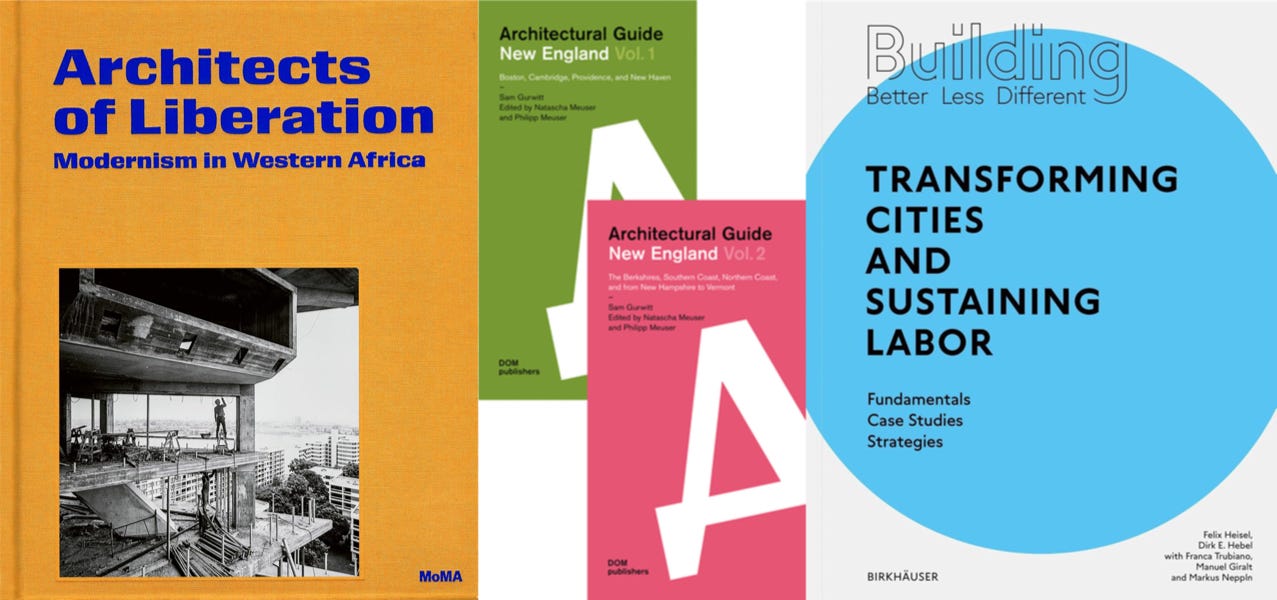
Architects of Liberation: Modernism in Western Africa, edited by Martino Stierli, Ikem Stanley Okoye and Mallory Cohen (Buy from MoMA Design Store / from Artbook/DAP [distributor for MoMA] / from Amazon / from Bookshop) — “Architects of Liberation: Modernism in Western Africa focuses on seven western African nations—Benin (Dahomey), Cameroon, Côte d’Ivoire, Ghana, Nigeria, Senegal and Togo—and illuminates the ways in which architects sought to adapt, adopt or reinvent the idiom of modernism for their specific cultural, political and economic purposes.”
New England Architectural Guide (Vol. 1: Boston, Cambridge, Providence, and New Haven; Vol. 2: The Berkshires, Southern Coast, Northern Coast, and from New Hampshire to Vermont), by Sam Gurwitt, edited by Natascha Meuser and Philipp Meuser (Buy from DOM Publishers / from Amazon / from Bookshop) — “Two volumes, one region: from Boston’s civic and academic institutions to coastal landscapes and post-industrial sites, this 650-page title maps the full spectrum of the built environment in Connecticut, Maine, Massachusetts, New Hampshire, Rhode Island, and Vermont.”
Building Better - Less - Different: Transforming Cities and Sustaining Labor, by Dirk E. Hebel and Felix Heisel (Buy from Birkhäuser / from Amazon / from Bookshop) — “Sustainability is to become the guiding principle of social action and economic activity. At the same time, its implementation is far from clear. In no other field can this be better observed than in architecture. Each volume of Building Better – Less – Different explores two areas of sustainability. The third volume combines the topics labor and city.”
Full disclosure: As an Amazon Associate, AbeBooks Affiliate, and Bookshop.org Affiliate, I earn commissions from qualifying purchases made via any relevant links above and below.
Book News
Domus selects 15 architecture and design books to read this summer—books that “invent new genres, stretch existing vocabularies and propose different ways of thinking about design.” (Domus)
Trend Hunger highlights the fifth monograph from Archi-Tectonics, Monsters and Mutants: Explorations in the Architecture–Nature Continuum. (Trend Hunter)
John Pardey “enjoys a lyrical tour” through Thomas Bo Jensen’s compendium of the paintings, sculptures and buildings of Danish artist, poet, sculptor and film maker Per Kirkeby. (Architecture Today)
From the Archives
Although the review on my old blog does not mention him, one among the few dozen architects featured in A New Sculpturalism: Contemporary Architecture from Southern California, the catalog accompanying the 2013 MOCA exhibition of the same name, is Coy Howard. Hence I’m copy-pasting my review here.
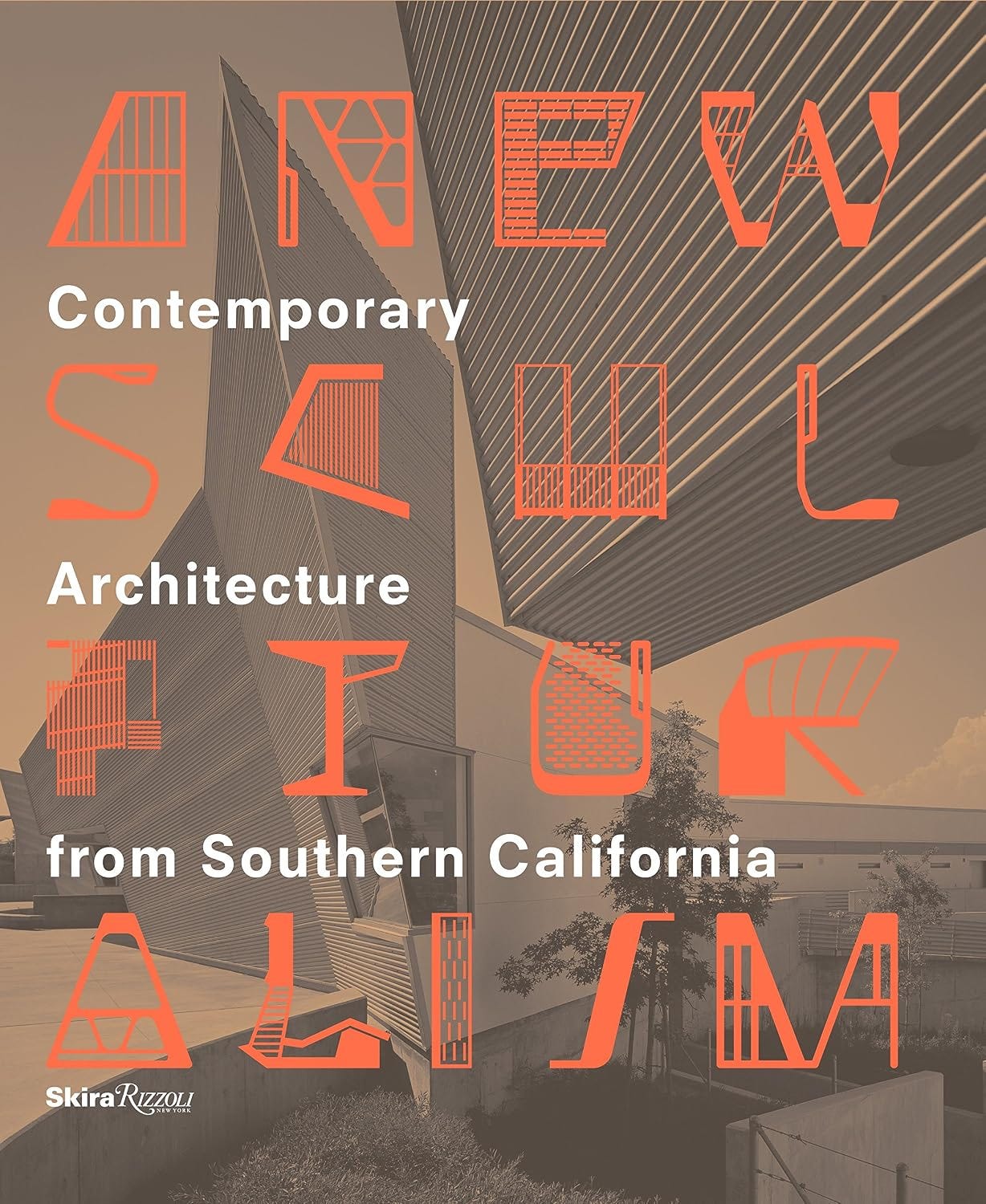
Even before opening at the Museum of Contemporary Art (MOCA) in Los Angeles, A New Sculpturalism was getting scores of press when Frank Gehry pulled out of the show, citing a lack of intellectual depth in the show. Cries of “No Gehry = No Show” followed, but Gehry eventually relented (to Thom Mayne, reportedly) and rejoined the show a couple weeks before its revised start date in mid-June. Press also focused on the exhibition’s large budget—it received a $445,000 grant from the Getty, the most of any component of Pacific Standard Time.
Yet I had received the companion book well before the controversy and the opening of the exhibition, a signal of how publications and exhibitions are strongly wedded these days (it’s close to impossible to have one without the other)—but also how they are produced relatively independently from each other. The focus of the book, like the show, is on the architects that have reshaped Southern California and become some of the most influential practitioners and academics (a two-page spread at the back of the book actually maps the teaching engagements of the various architects) on a global scale: Frank Gehry, Thom Mayne, Eric Owen Moss, Michael Rotondi, Greg Lynn, Neil Denari, Michael Maltzan, and lots of others. Photographs of their projects are the majority of the visual material in the book; only renderings of proposed pavilions by emerging architects in and around LA allude to the physical reality of the exhibition.
The architects are presented through photographs of completed buildings (no renderings of in-progress projects) in Southern California and beyond. Their order in the book is apparently random; my best guess is age, since it starts with Gehry and ends with Ball-Nogues. But given the purely visual presentation, curator/editor Christopher Mount’s introduction and the four essays interspersed between the architects (by Margaret Crawford, Johanna Vandemoortele, Sam Lubell, and Nicholas Olsberg) are especially important. A standout of these is Vandemoortele’s “conversations with clients in Southern California.” If the region is (still) seen as a bastion of what Eric Owen Moss calls “perpetual experimentation,” then the openness of clients to allow architects to do so with their money is required. Or to put it another way, you can’t have any “new sculpturalism” without somebody paying for it.
Thank you for subscribing to A Weekly Dose of Architecture Books. If you have any comments or questions, or if you have your own book that you want to see in this newsletter, please respond to this email, or comment below if you’re reading this online. All content is freely available, but paid subscriptions that enable this newsletter to continue are welcome — thank you!
— John Hill
Comments
Nothing yet. Say the first thing.
Sign in to join the conversation.