
Dear all,
For years, the debate centered on whether digital assets would become part of the financial system. This week’s developments suggest a different question is now taking shape: who will control the infrastructure that powers it?
Governments are exploring stablecoins to solve payment challenges. Banks are expanding their digital asset teams. DTCC has completed its first live tokenized securities transactions, and companies are beginning to generate meaningful revenue from blockchain-based businesses. Even the reported Stripe-PayPal deal is not just an acquisition story. It reflects a broader race to build the payment and settlement networks that could underpin the next generation of financial services.
Taken together, these developments reinforce a trend I’ve been watching for some time. Digital assets are increasingly becoming part of the financial infrastructure behind payments, capital markets, and corporate finance.
As always, I’ve highlighted the developments I believe matter most for institutional investors below.
Vanessa Grellet, Managing Partner, Arche Capital
Bolivia weighs recognizing stablecoins as dollar shortage deepens
Bolivia is evaluating a regulatory framework that would allow Tether’s USDT to function alongside the boliviano and the U.S. dollar for payments, savings, and trade as the country confronts a prolonged shortage of foreign currency reserves. The proposal follows the lifting of Bolivia’s cryptocurrency ban in 2024 and reflects a broader effort to integrate digital assets into the formal financial system while maintaining anti-money laundering safeguards. If implemented, the initiative would represent one of Latin America’s most significant stablecoin adoption efforts, underscoring how dollar-backed digital assets are being viewed as practical financial infrastructure in economies facing currency instability.
Bank of America appoints two digital asset executives
Bank of America has appointed Sonali Theisen as Head of Global Digital Assets Platform and Kevin Milsom as Head of Platforms AI Transformation, signaling a more coordinated push into digital assets. Theisen will work alongside Global Head of Digital Asset Transformation Adam Dixon to oversee initiatives spanning tokenized deposits, stablecoins, digital collateral mobility, and crypto settlement and custody. While Bank of America has taken a more measured approach than peers such as JPMorgan, Citi, BNY, and State Street, the new leadership structure suggests the bank is positioning its payments, treasury, and corporate banking businesses to play a larger role in digital assets.
DTCC completes first live tokenized securities transactions
The Depository Trust & Clearing Corporation (DTCC) has successfully completed its first live production transactions using tokenized stocks, ETFs, and U.S. Treasurys, demonstrating how blockchain-based representations of traditional securities can function within existing market infrastructure. The exercise brought together leading banks and asset managers, including Goldman Sachs, JPMorgan, BlackRock, and Vanguard, to test tokenized assets across collateral management, securities settlement, and other market workflows. The development marks another step toward integrating tokenization into the core infrastructure of global capital markets.
Securitize and Cantor expand tokenization into public markets
Securitize and Cantor Fitzgerald are developing infrastructure to support tokenized initial public offerings and follow-on equity offerings within the existing U.S. securities framework. By combining Securitize’s tokenization platform with Cantor’s capital markets expertise, the partnership aims to bring blockchain-based issuance to public equities while remaining fully compliant with current regulations. If adopted at scale, the framework could modernize how companies raise capital by enabling faster settlement and broader investor access, bringing tokenization closer to the heart of public markets.
Ethereum staking emerges as a corporate revenue stream
Bitmine Immersion Technologies generated $45.7 million in quarterly revenue from Ethereum staking, highlighting how public companies are beginning to monetize digital asset holdings despite adverse market conditions. Following the launch of its institutional staking platform earlier this year, staking accounted for 98% of the company’s revenue as it expanded validator services for both its own treasury and external clients. The results underscore a broader shift in which Ethereum is increasingly viewed not only as a treasury reserve asset but also as infrastructure capable of generating recurring income for corporate balance sheets.
Institutional investors stay committed despite a more cautious market
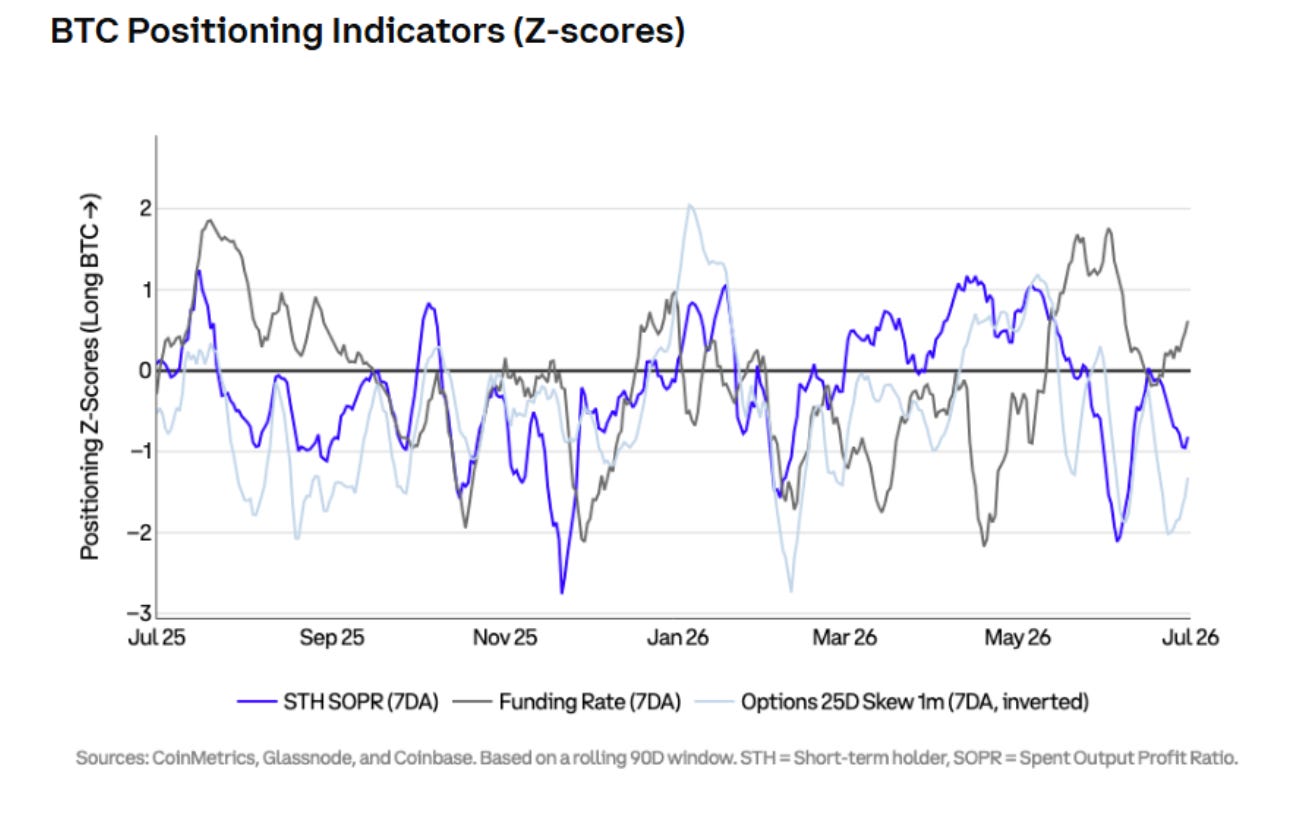
Digital asset markets entered the second half of the year with institutional investors taking a more defensive stance, according to Coinbase Institutional’s latest Crypto Market Positioningreport. While leverage declined and investors increased downside protection, Bitcoin market liquidity remained resilient, and institutional activity continued to concentrate in the largest digital assets. The report suggests that professional investors are recalibrating risk rather than retreating from the asset class.
Trading activity rises as leverage comes off
One of the report’s most notable findings is the divergence between higher trading volumes and lower open interest. Daily spot, perpetual futures, and options volumes all increased month-over-month, while open interest declined across perpetual futures, term futures, and options. Rather than adding new leveraged positions, institutions actively reduced exposure, unwinding much of the leverage that had accumulated over previous months.
The shift was evident across multiple indicators. Bitcoin funding rates remained positive but weakened throughout June, Ethereum funding turned negative, and short-term holder SOPR fell further below one for both assets, indicating that recent buyers were increasingly realizing losses.
Despite the more cautious backdrop, investor demand showed early signs of stabilizing. According to Deutsche Bank, digital asset ETFs recorded $281.8 million in net inflows in the week ending July 11, the first positive weekly flows since the second week of May, with Bitcoin and Ethereum funds accounting for the vast majority of new capital.
Capital is flowing toward quality
While overall positioning weakened, Bitcoin continued to demonstrate characteristics institutional investors value most: liquidity and market depth. Coinbase found Bitcoin order-book depth shifted to the bid side for the first time in months, indicating stronger buy-side demand even as investors reduced leverage. By contrast, Ethereum order books remained modestly tilted toward sellers, reflecting more cautious sentiment.
The divergence extended beyond the two largest digital assets. Altcoin open interest dominance remained in the historically depressed 0.6–0.7 range, while altcoin market capitalization continued to contract, signaling that investors are pulling capital from more speculative areas of the market. For institutional allocators, the trend reinforces the importance of a defensive posture.
In periods of heightened uncertainty, capital typically migrates toward assets with the deepest liquidity, strongest regulatory footing, and most developed market infrastructure. Bitcoin and, to a lesser extent, Ethereum continue to occupy that role, while risk appetite for smaller digital assets remains subdued.
Bottom line: The latest positioning data suggests institutional investors are shifting from return-seeking to capital preservation. As leverage declines and capital rotates away from speculative altcoins, maintaining exposure to the most liquid and institutionally established digital assets may offer a more resilient strategy until market sentiment and macro conditions improve.
Could Stripe and PayPal create a stablecoin payments powerhouse?
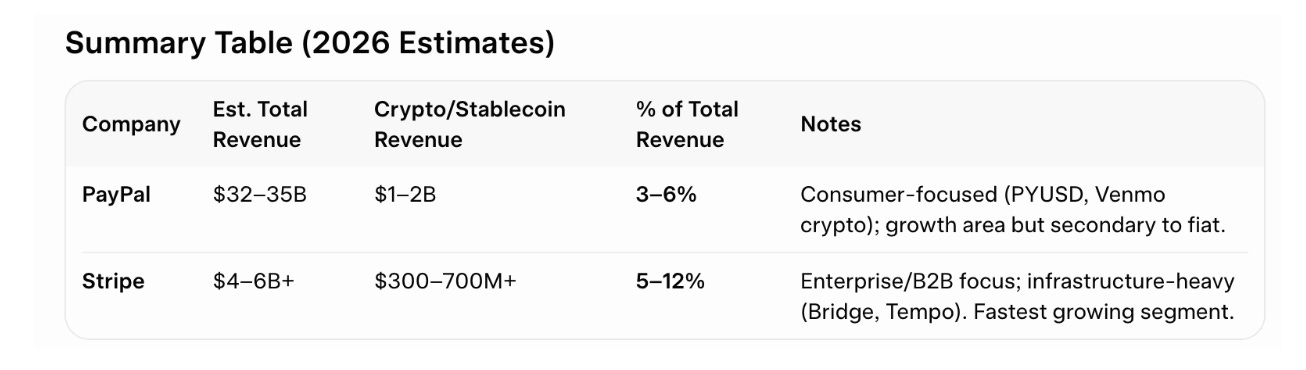
A reported joint bid by Stripe and Advent International to acquire PayPal for more than $53 billion could reshape the global payments landscape while accelerating the adoption of stablecoins. Although discussions remain preliminary, the proposed combination would unite Stripe’s payments infrastructure with PayPal’s consumer ecosystem, creating one of the world’s largest digital payments platforms.
A strategic combination
The proposed transaction values PayPal at approximately $60.50 per share, a roughly 28% premium to its pre-bid trading price. Stripe and Advent would each own 50% of the combined company.
The strategic rationale extends beyond scale. Stripe has invested heavily in stablecoin infrastructure through its acquisition of Bridge and the development of new payment rails, while PayPal has focused on consumer adoption through Venmo, merchant payments, and its PYUSD stablecoin. Together, the companies would combine enterprise-grade payments infrastructure with one of the world’s largest consumer payments networks.
Stablecoins become payments infrastructure
Neither company derives most of its revenue from crypto today, but both increasingly view stablecoins as a long-term growth opportunity. A combined platform would pair PayPal’s consumer and merchant distribution with Stripe’s global developer ecosystem, potentially accelerating stablecoin adoption for cross-border payments, merchant settlement, and treasury management.
For institutional investors, the broader significance extends beyond the potential acquisition itself. The transaction highlights how competition is shifting from issuing digital assets to owning the infrastructure and distribution networks that power digital payments.
Bottom line: If completed, the acquisition would represent more than payments industry consolidation. It would combine one of the largest consumer payment platforms with a leading payments infrastructure provider, positioning the combined company to play a central role in the next generation of stablecoin-powered financial services.
Coming this October
My new book, Digital Assets and Crypto for Investors, is now available for preorder. Learn how to evaluate digital assets, manage risk, and build a diversified portfolio with a practical framework developed from more than 20 years in traditional and digital finance. Preorder your copy on Barnes & Noble and Amazon.
No posts
Comments
Nothing yet. Say the first thing.
Sign in to join the conversation.