
You’ll never see Surah 33 the same … Surah 33 is Surah Al-Ahzab. It is about the most dangerous battle in Islamic history. After just over five years in Medina, and the thirteen harsh years of struggle in Mecca before that, everything seemed to be on the verge of total collapse. An alliance of ten thousand soldiers was marching to wipe Islam off the map. It was an existential battle.
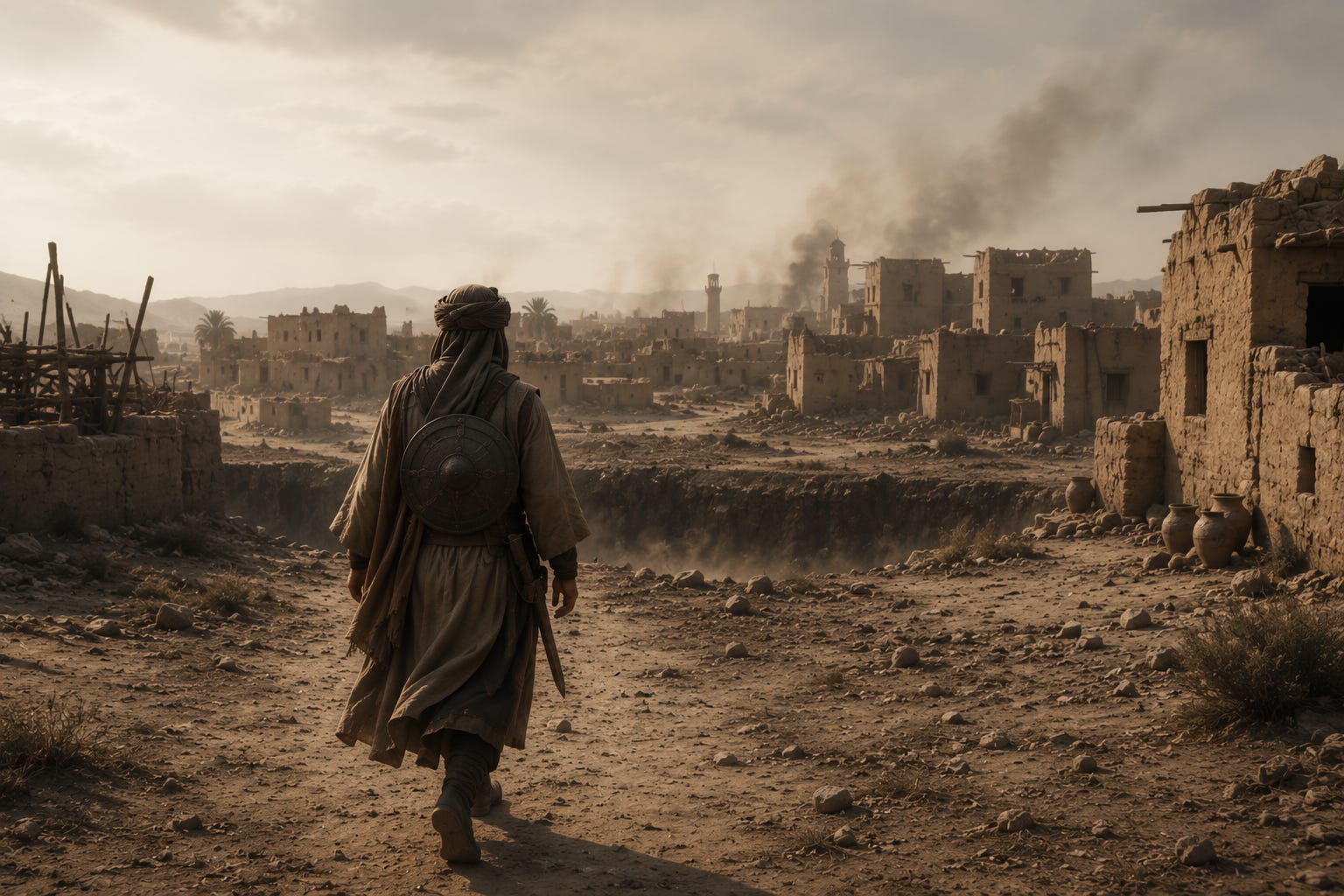
The Muslims were so outnumbered they couldn’t even fight a standard battle. They survived only because of Salman Al-Farsi’s ingenious idea to dig a massive trench to seal the city. They exhausted every bit of their energy frantically digging it, then spent whatever strength they had left guarding it, all while battling severe hunger, freezing cold, and fear.
The siege was an absolute existential threat. The Quran literally calls it a “severe earthquake.”
هُنَالِكَ ٱبْتُلِىَ ٱلْمُؤْمِنُونَ وَزُلْزِلُوا۟ زِلْزَالًا شَدِيدًا
“There the believers were tested and shaken with a severe shaking”.
But if you read Surah Al-Ahzab, which is the chapter revealed about this exact crisis, you’ll notice something, interesting .. shocking even. Out of 73 ayat, the Battle of the Alahzab takes up just 16 ayat!! Even the treason of Banu Qurayza, a devastating backstab during the height of the siege, gets only two ayat!! The most dangerous threat to the existence of Islam at the time was described in only 16 ayat!! So, what actually dominates the rest of the Surah? What could possibly be more dangerous or more important than this?
You might not believe it, but it’s social reform.
The vast majority of the chapter is focused on dismantling deeply entrenched cultural habits and customs. It deals with the hijab, boundaries between men and women, abolishing old traditions like formal adoption, and confronting the hypocrites who weaponized these cultural shifts to stir up outrage and smear the believers.
Think about it. Breaking a society’s stubborn traditions took up more space and required far harsher divine warnings than a literal army at the gates!!
Consider becoming a free or paid subscriber for more reflections like this, insha’Allah.
Because of this, Surah Al-Ahzab contains some of the sternest, most uncompromising ayat in the entire Quran. It turns out that confronting the status quo within your own community is heavier and more difficult for the human soul than facing swords on a battlefield.
This tells us without any shred of a doubt that inner social problems that can dismantle the values of our society and puts bad habits and customs above the rulings of Islam can actually be MORE DANGEROUS and MORE DEVASTASTING than actual enemies at our doorstep.
The Surah is packed with intense directives. It constantly reminds the believers that Allah sees their internal intentions. It threatens the hypocrites who spread rumors with exile and curses. Inner threats which you cannot direct see and recognize are far more dangerous than an enemy that you can see, recognize and fight.
Most strikingly, it gives heavy, direct warnings to the Prophet (ﷺ) and his household. It tells his wives they are not like other women and will face double the punishment for clear immorality. It tells the Prophet (ﷺ) himself not to let social pressure or embarrassment stop him from breaking old taboos:
وَإِذْ تَقُولُ لِلَّذِىٓ أَنْعَمَ ٱللَّهُ عَلَيْهِ وَأَنْعَمْتَ عَلَيْهِ أَمْسِكْ عَلَيْكَ زَوْجَكَ وَٱتَّقِ ٱللَّهَ وَتُخْفِى فِى نَفْسِكَ مَا ٱللَّهُ مُبْدِيهِ وَتَخْشَى ٱلنَّاسَ وَٱللَّهُ أَحَقُّ أَن تَخْشَىٰهُ ۖ
And [remember, O Muhammad], when you said to the one on whom Allah bestowed favor and you bestowed favor, “Keep your wife and fear Allah,” while you concealed within yourself that which Allah is to disclose. And you feared the people, while Allah has more right that you fear Him.
The Prophet didn’t need these warnings to face physical swords, but divine reinforcement was necessary to face the overwhelming, suffocating pressure of social backlash. Yet, despite the immense weight of this societal burden, the Prophet (ﷺ) immediately submitted to Allah. He did not let the fear of public outcry stop him. Fortified by Allah, he executed the divine command and shattered a deeply entrenched taboo, proving his absolute courage in both the battlefield and in societal reform.
So what’s the lesson for us?
Seeing how heavily this burden weighed .. even requiring Allah to fortify the best human being to ever live, reveals a profound reality about human nature. For the rest of us, it is entirely possible for a person to be incredibly brave when fighting an obvious, external enemy, yet completely paralyzed when it comes to standing up to the harmful habits of their own family, friends, and society. You can be fearless in the face of death, but suddenly hesitate when it comes to disrupting the comfortable norms of the people you love.
True courage isn’t just about fighting the enemy outside. It’s having the spine to fix what’s broken inside, unswayed by the weight of tradition, the love of a friend or even family, or the fear of what people might say.
This article was inspired by a blog post by historian Mohammad Ilhami.
Comments
Nothing yet. Say the first thing.
Sign in to join the conversation.