
**For the new subscribers**: My name is April Sopkin. I’m a lifelong writer, reader, thrifter. I’m just entering midlife and have four stepsons who are just entering adulthood. My husband and I thought we were going to adopt but that journey has come to an end; instead, we’re on the cusp of being empty-nesters. I’m writing a book, a short story collection about women and friends and lovers making trouble for themselves, often through the desire to be more than one thing in their lives. I’m also a teacher and vintage dealer and I write about the complexity of that workload. More about me and Something Out of Nothing here.
**If this issue gets cut off in your email, be sure to click through to access the whole thing!**
First, it was Paris.
Most years, the week of Thanksgiving is when my husband and I take a trip, just the two of us. We don’t care about the holiday. We only care about the time. And this year—as two teachers pushing through an absolutely sluggish fall with more administrative demands than ever—we were doubtless in our desire to escape on a well-earned vacation.
First, it was Paris. But the discount airline we’d booked with pulled out of the U.S. market. Then, it was a road trip up the California coast. But the government shutdown and possibility of major flight issues was a hypothetical-enough nightmare, so we pulled the plug on that plan ourselves.
I don’t remember which one of us asked the question—Should we just stay home?—but the moment the words were spoken, it was the obvious preference. No logistics. No schedule to keep. No expectations. We could rest, “waste” time, never get out of our pajamas, make plans and blow them off. And we did.
Everything and nothing.
Unstructured time still has a rhythm: my body and mind idly moved from task to task, without consideration of or motivation toward finishing anything. I sewed, read, watched TV, threw laundry in the wash (then forgot about it), thrifted, processed inventory and re-styled the vintage booth my mom and I share. The days were full but had no deadlines (as a teacher, again, this kind of loose progress is a rarity); it was a magical combination of everything and nothing—everything a possibility and nothing an obligation.
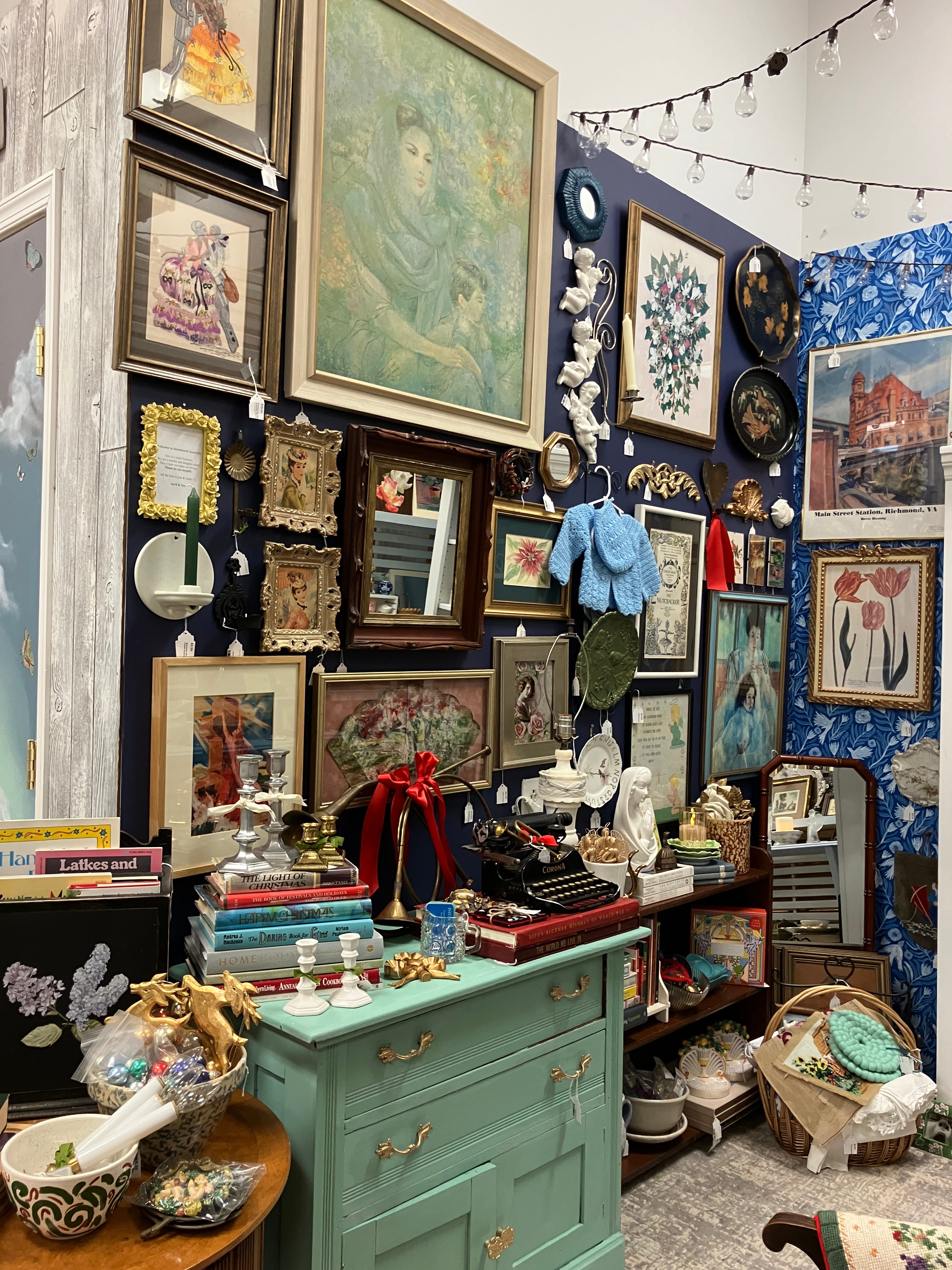
Early in the week, my stepsons came home to help us decorate the Christmas tree. Yes, it was early but for logistical reasons this was the only time to make it happen between the six of us. I prefer a real tree but we kept it simple and brought the fake one down from the attic. Every year, and this was no different, the boys (now between 17 and 22) pick up ornament after ornament and dangle it in front of their eyes, squinting into the past: specifically, the decade or more of photo ornaments gifted by their grandparents, demonstrating the tender evolution of smiling little boys with crooked or missing teeth, then a long streak of flashy braces, then the restrained, post-braces, smirking older teenagers with the flat, impatient gaze directly at the camera.
It wasn’t long ago that the boys used to hide these particular ornaments along the back of the tree or hang them too low to notice. This year, though, they created a photo gallery: dead center, right at eye-line, all the photo ornaments jumbled together.
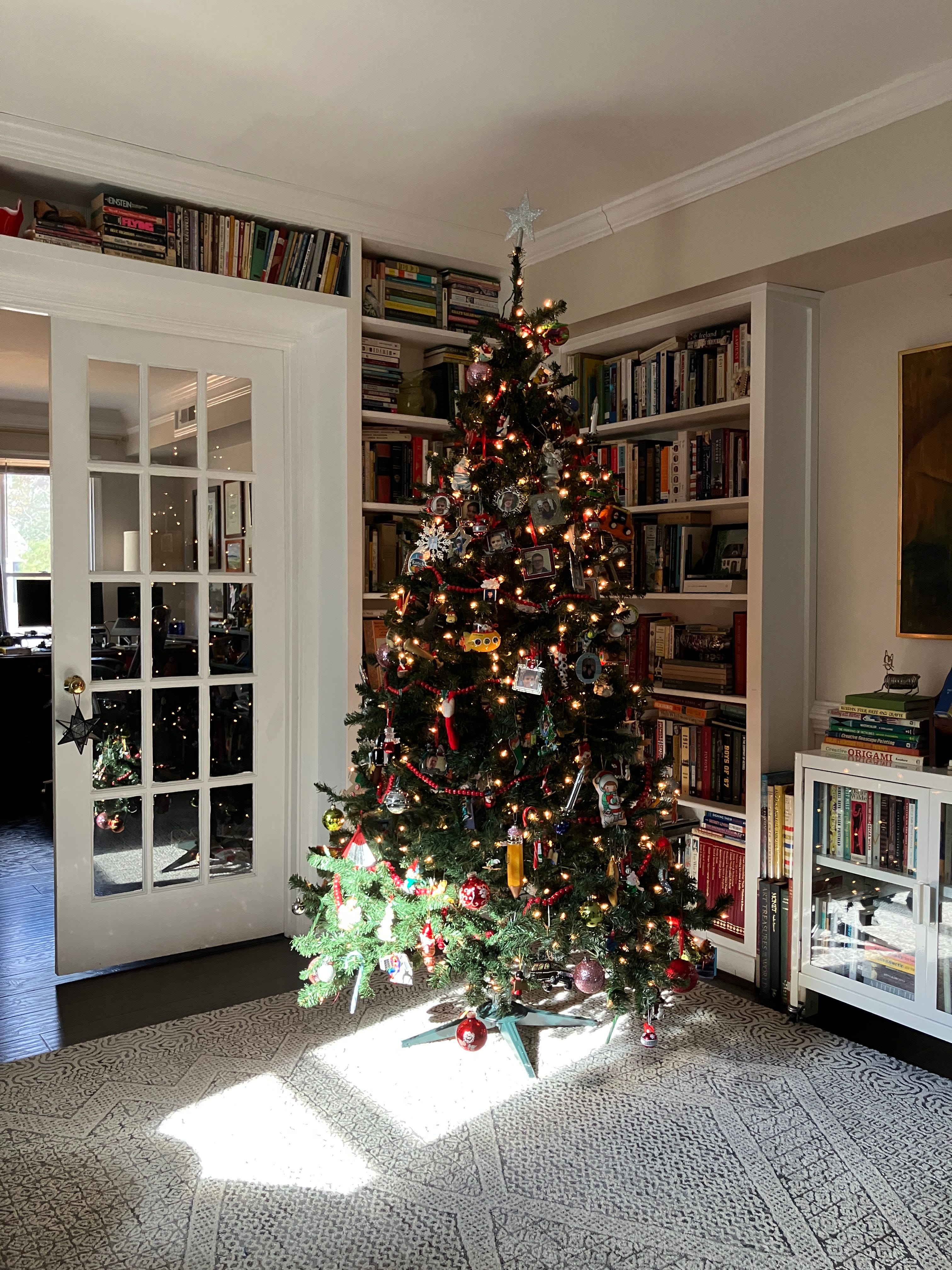
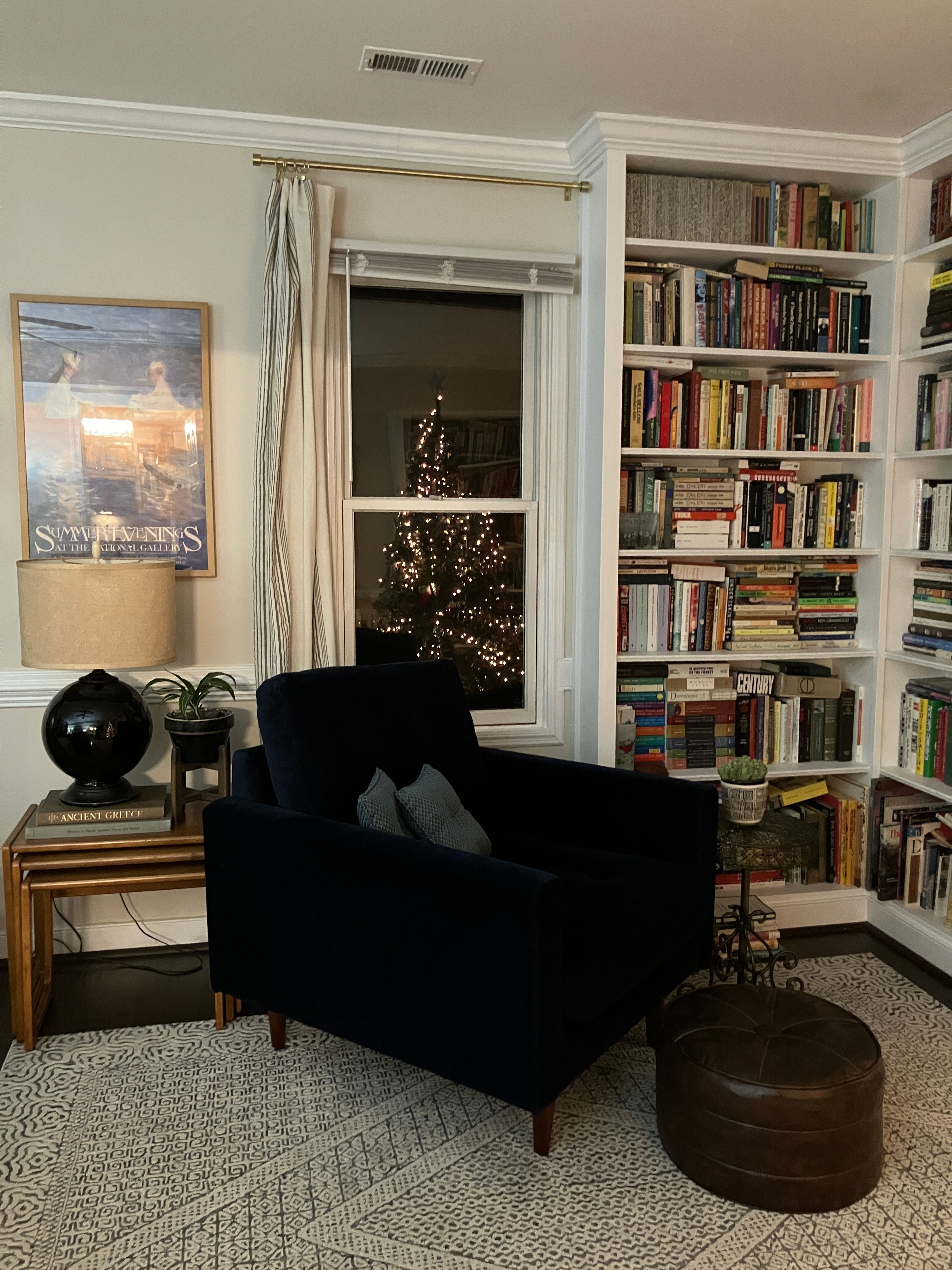
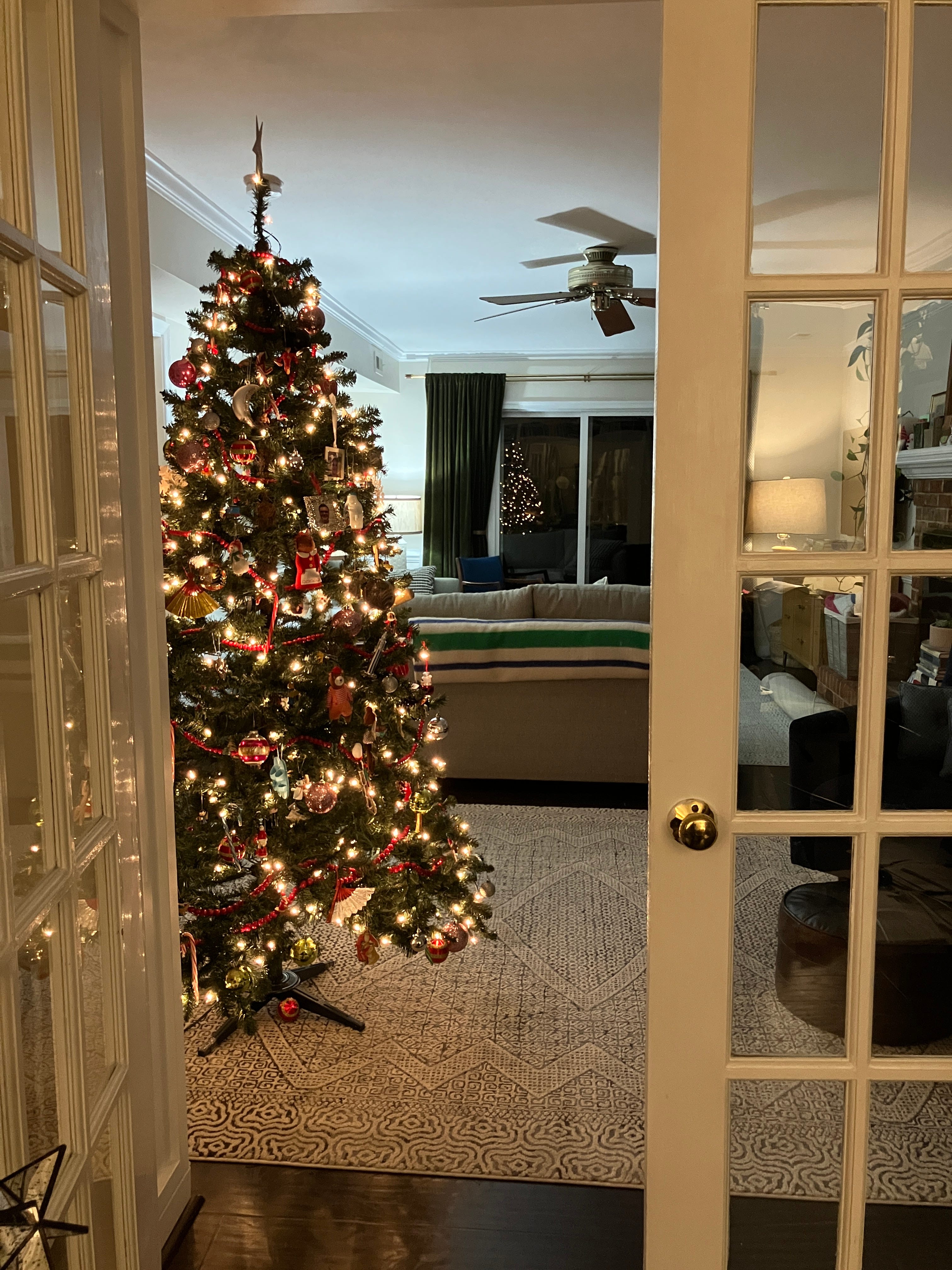
For the rest of the week, every morning, I opened the curtains around the house per usual and also turned on the tree—it was a spectacle that I couldn’t stop admiring, particularly the way the tree reflected in the windows as the day’s light shifted.
I grew up in a house with an abundance of holiday decorations. Years and years of ornaments on a real tree, wreaths and lights affixed to the porch, and a string of bells looped around the front door knob, jangling loudly every time someone came by the house. My mother played Christmas music for weeks. When I left home and entered my own life, it didn’t occur to me to continue this cycle, or create my own. It wasn’t until my mid-thirties, with my husband and stepsons, that I returned to the significance of traditions and rituals in a family.
Associative waves of thought.
Over the week of Thanksgiving break, one of the steadiest rhythms was the hours I spent on the couch, sewing and watching niche content on YouTube. (I also binged a lot of Antiques Roadshow, which I’m convinced is the most soothing show to watch in our dumpster-fire times. Highly recommend for your nervous system.)
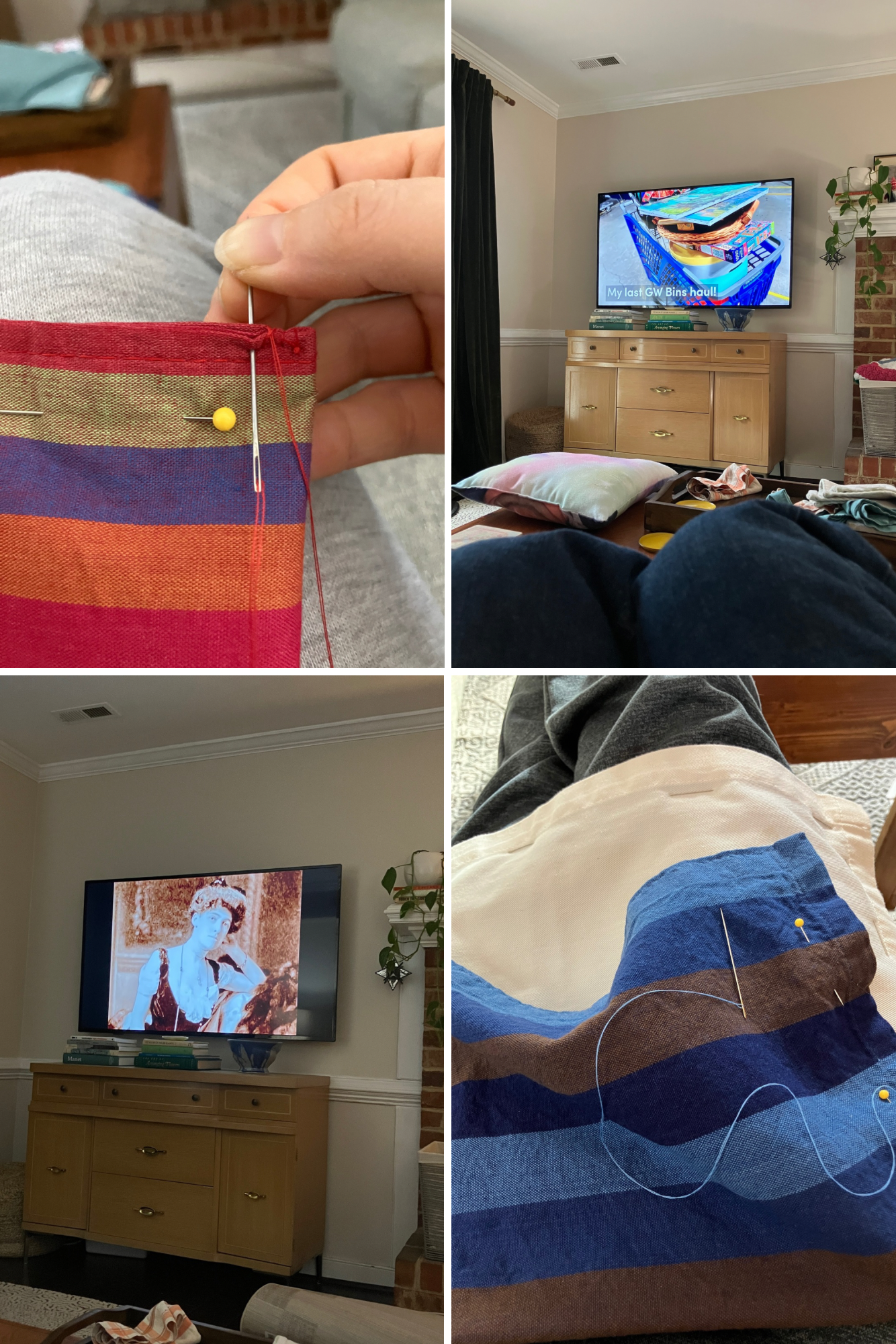
I napped. I daydreamed. I wondered at the way the mid-afternoon light fell low and felt the time was passing all too quickly. Yet my brain slowed, relaxed into the associative waves of thought. Few thoughts turned into action. I was okay with it. I kept sewing.
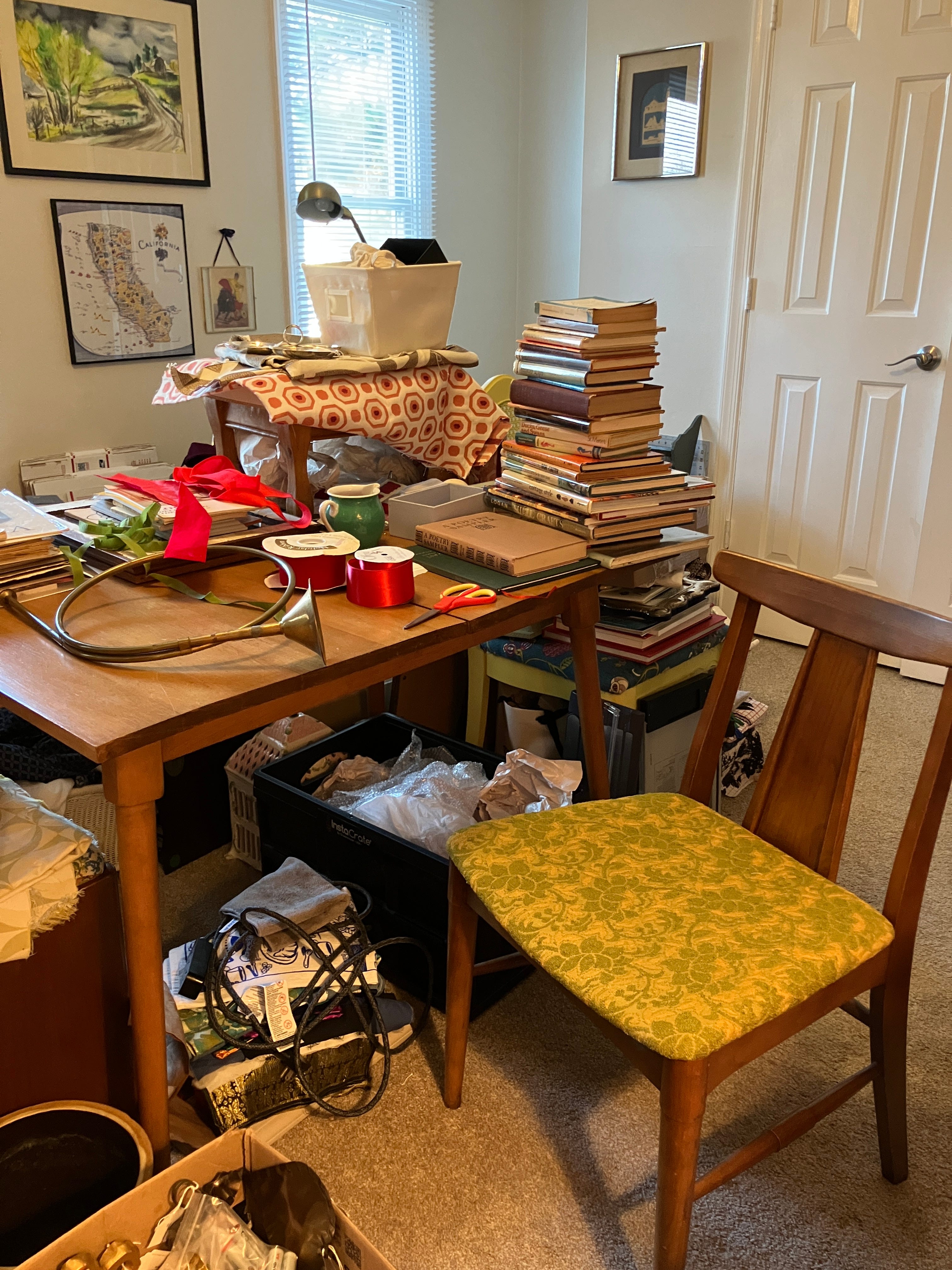
I thought about cleaning. I made a mess (again) of the workroom where I store my vintage goods and crafting supplies. I pulled all the holiday decorations out and set up half of them and left the rest in a tangle on the floor.
I thought about my book and the two remaining story revisions. I thought, hm, maybe the book isn’t so far from finished after all.
I thought about winter break, just a week or so away. I did not try to catch up on grading. I did not try to catch up on anything. If I had any regrets or guilt, I can’t remember them now.
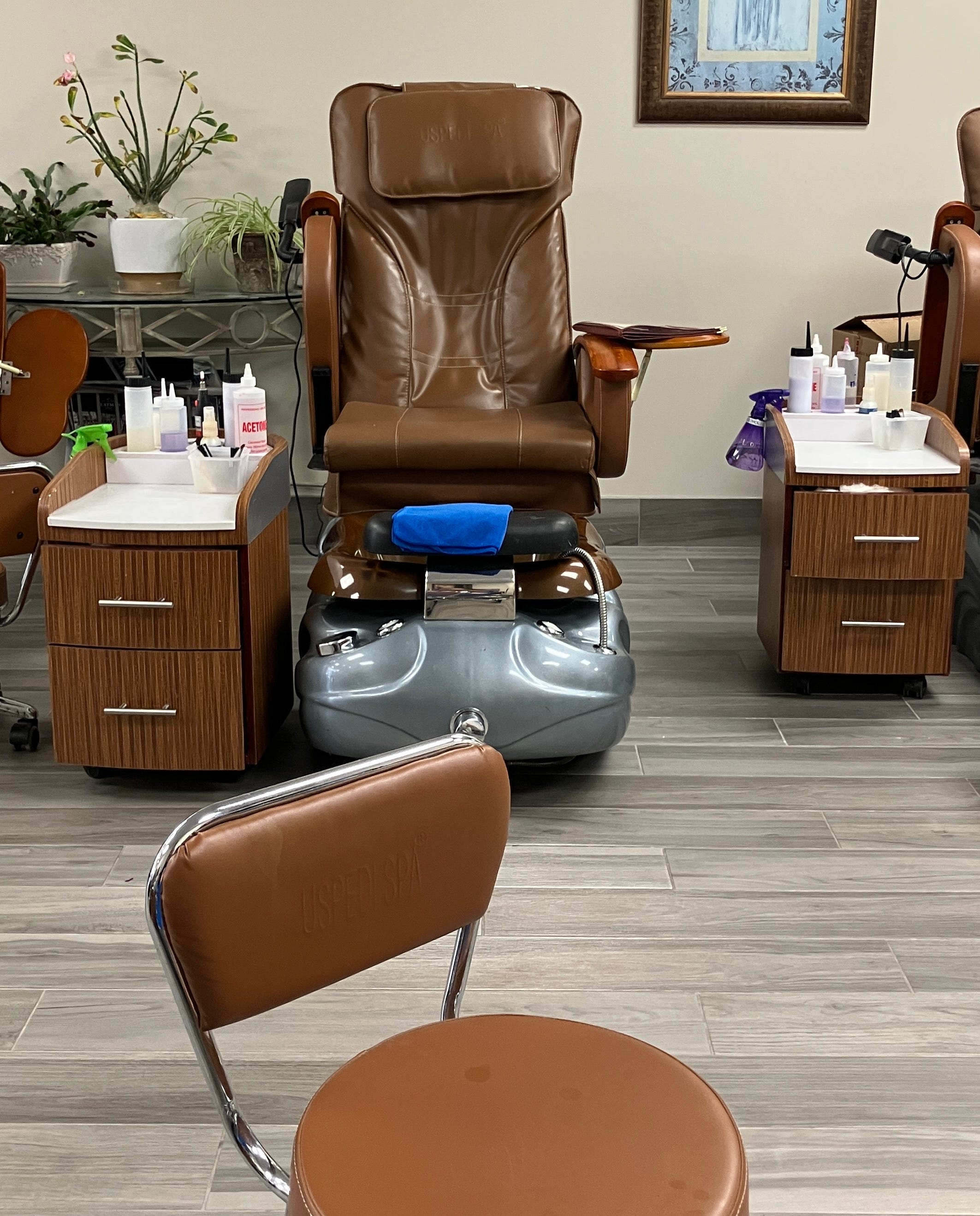
There was money spent (massage, mani/pedi, books, gifts for others). I enjoyed spending it; the fall has been a lot of work, both inter-and-intra-personally. I am sapped of energy. Not all forms of care had to do with spending money, but when it did, it felt good to not overthink things and just lean into it for once.
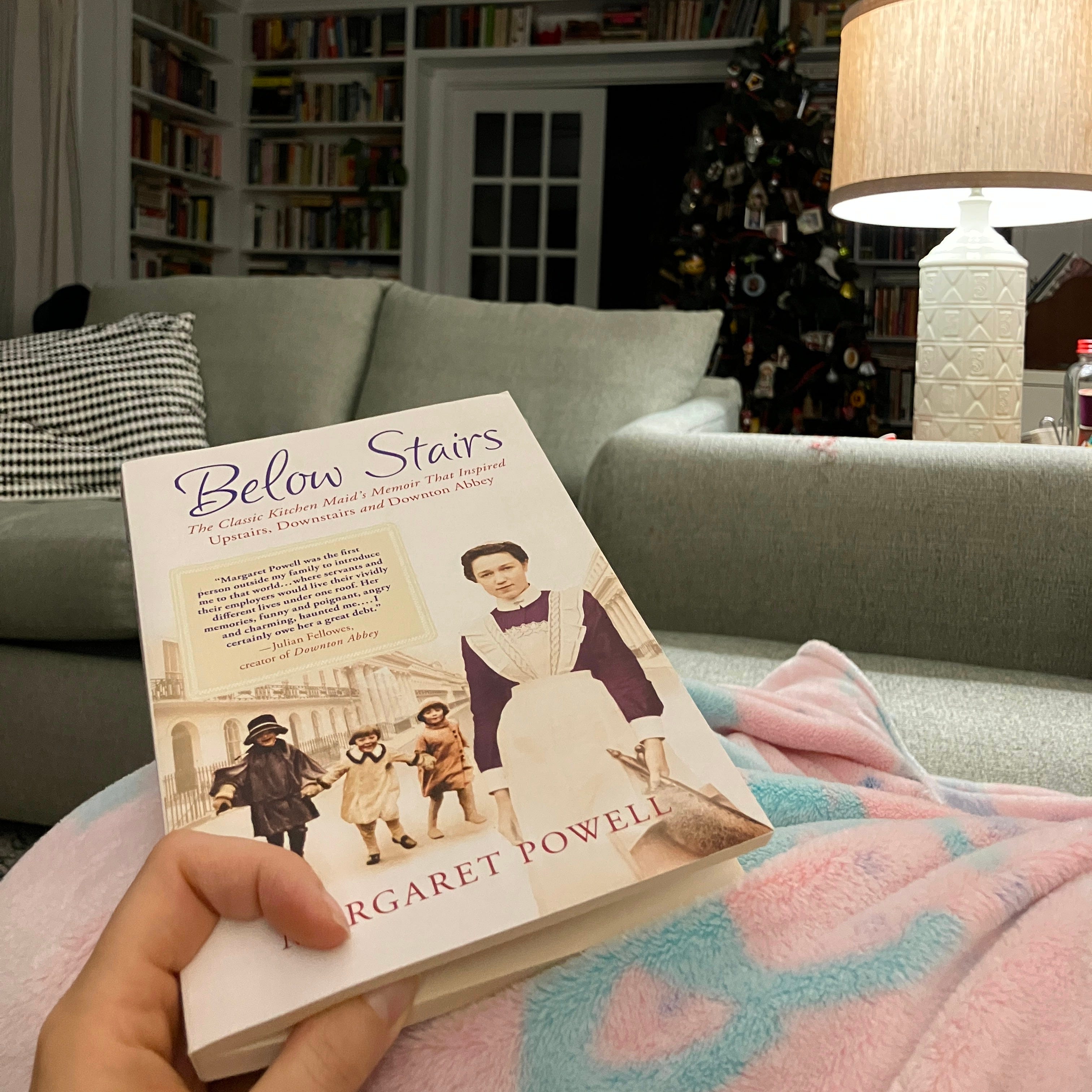
There was reading every night before bed, then more reading in the middle of the night when insomnia struck. As tends to happen in the thick of the semester, I’ve been in a reading lull. But Below Stairs by Margaret Powell, a 1968 memoir about domestic service in England, has been the perfect antidote: conversational tone, subject matter completely unrelated to what I’ve been teaching, and short. All momentum.
Towards the end of the week, I went on a walk with a friend. The air was cold, the sky bright, the conversation easy. Afterward, I joined this friend and her husband at their kitchen table, chatting over coffee and banana bread. What a simple delight.
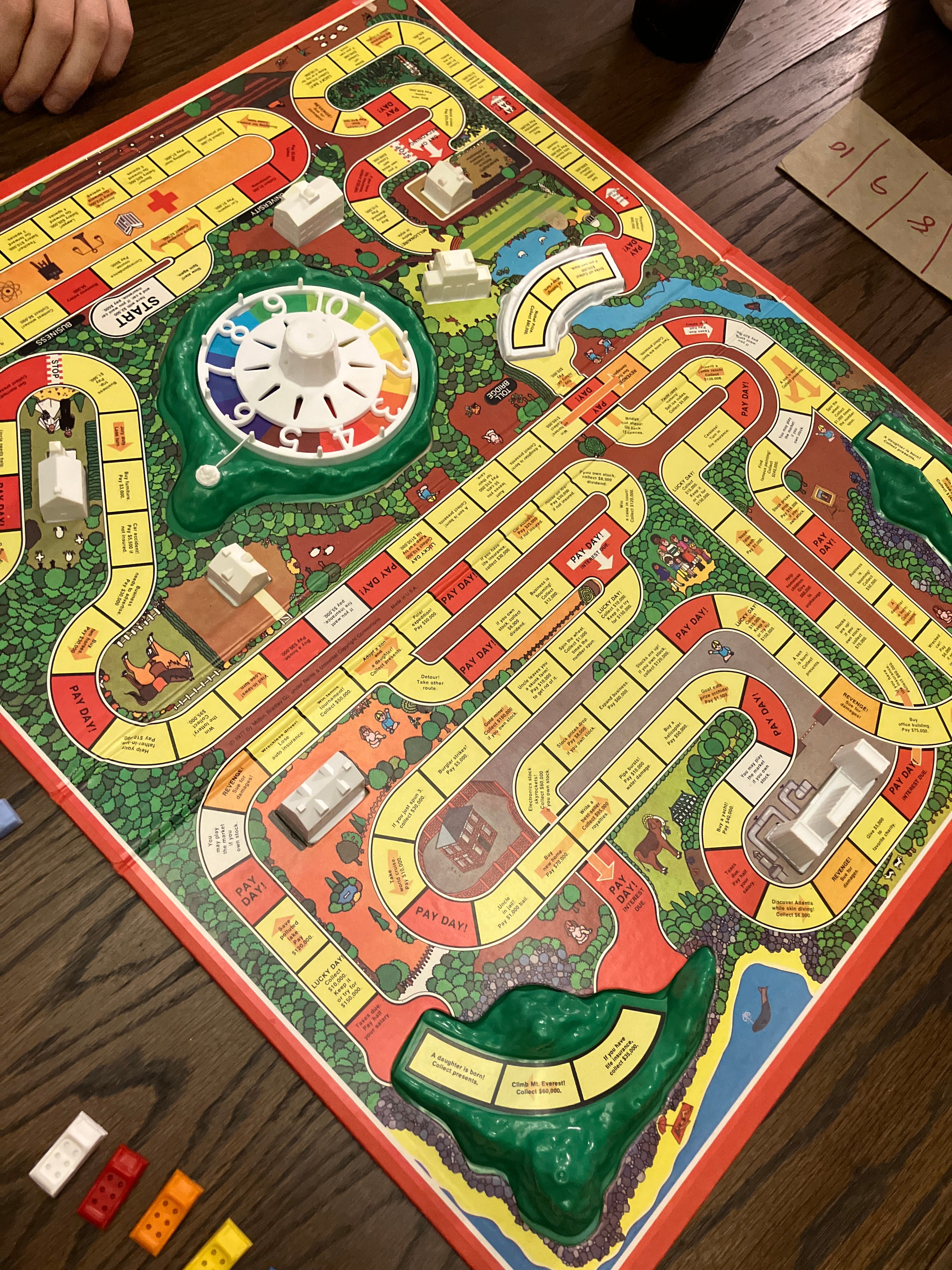
On Saturday night—so close to the end of the staycation that I could feel myself juuust starting to consider Monday morning—a couple of the boys joined us for a board game. Traditionally, we’re a Monopoly family but I’d recently picked up the 1979 version of Life and it felt time to switch things up (though, interestingly, the winner in Life either becomes a millionaire or a tycoon, so… still capitalism, yep). It was a raucous game of unforeseen taxes, inheritances, and pregnancies, plus a gambling add-on option that proved detrimental for some players. In the end a winner was declared but not without some controversy (my husband always wins, plus we’d forgotten to follow about half of the rules). It sounds like there may be a rematch over winter break.
UPCOMING CLASSES (including an online option!)
Dec. 9: Writing Short & Fast: Essay Writing / A generative nonfiction workshop and craft chat where we focus on how to write brief yet impactful personal essays with an observational angle on the world. A ‘fast craft class’ perfect for busy folks. 6:30-7:30pm, register here.
Jan. 21, 2026: **ONLINE** Short Story Workshop: One-Day Intensive / This one-session class is for fiction writers (new or long-term) looking to try out the workshop experience, get feedback on their work, and make new connections. Students will submit and read each other’s work prior to class. 6-9pm, register here!
March. 4, 2026: Short Story Workshop: One-Day Intensive / Same as the online version, except we meet in-person here in Richmond! 6-9pm, register here!
**Spots limited due to the nature of these classes**
RELATED READING
We are multifaceted and curious. Forward this issue of SOON to your favorite people <3
Comments
Nothing yet. Say the first thing.
Sign in to join the conversation.