
Welcome to Something Out of Nothing, a newsletter about meaning—making it, finding it, offering it. I talk about the writing life, teaching, thrifting, books, travel, obsessions and idle interests, and much more.
**Hey, SOON readers: I usually try to publish two of my own issues between each Taking Care questionnaire but my latest issue is still working itself out on the page. Thus! We’re giving space to our next generous and patient Taking Care respondent instead. Enjoy!**
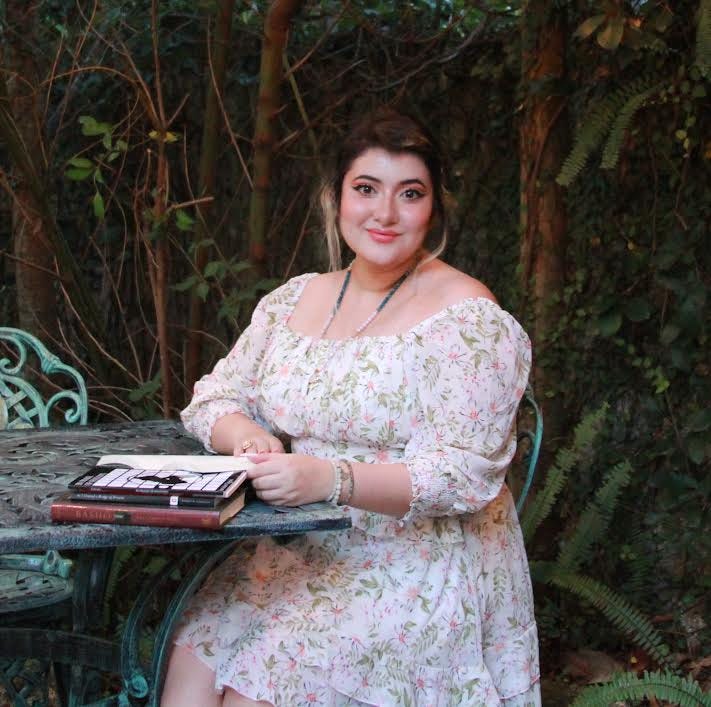
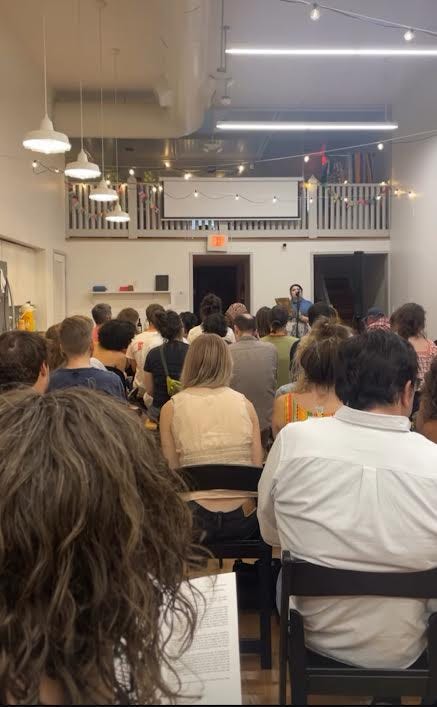
‘Taking Care’ is a questionnaire about how we manage our inner and outer lives as creative people. Emily Okamoto-Green is the kind of poet who appears unafraid in front of the microphone. She will stand in front of a crowd of writers and non-writers and quickly and chattily unpack the haibun form—a combination of a haiku followed by prose—and you’re so charmingly grounded by her manner that before you know it, you’re listening to her read her evocative work and you don’t even blink at the associative leap between forms. She is also a freaking joy, so funny, and so smart. And while we have a truly flourishing assembly of talented and ambitious writers here in Richmond, Emily is one who is also dedicated to building up community, as one of the folks responsible for Richmond’s free and open-to-all PoetryFest (save the date for April 10-11, 2026!).
Emily Okamoto-Green is a half-Japanese poet, essayist, editor, educator, and animal lover. Her accolades include the Joseph A. Lohman III Poetry Prize, The Alan Cheuse International Writers Center 2020 Fellowship, The Visual Arts Center of Richmond Writer-in-Residence for 2022, Yes Poetry magazine’s Poet of the Month, and inaugural winner of the Berkey Essay Contest. Her life highlights include Arthur Sze once saying her poem had a sense of wonder, and any time a cat or dog has come up to her without her first initiating the interaction. She teaches creative writing and embroidery at the Visual Arts Center of Richmond, and tries to spend as much time as possible with her feet in the Atlantic or dreaming of them in the Pacific once more.
Emily! What are you working on?
A book of poetry called MAMA YUME : ママ夢 : Mother Dreams and a book of essays called A Face and Hands Like Theirs.
What is something you once thought about yourself that you no longer do?
I’ve always understood the power of words, but in my early teens I began to understand the power of rhetoric. I thought then that if I crafted my thoughts carefully enough, painstakingly enough, I wouldn’t ever be misunderstood or unable to make people see what I saw as reason. I knew facts alone weren’t enough for some people, but if you used the right appeals to pathos, logos, ethos for your intended audience, people would blink twice and reset their realities.
I think I am keenly aware of how untrue that is these days. There isn’t a perfect set of magic words that will shift all world views. You can be misunderstood no matter how hard you try to be as specific as possible. Which, when I was younger, was what I thought would be a writer's worst nightmare—to have their words misinterpreted, but now I think that part of the joy of that is the relationship between the writer and reader. I see now that it has less to do with me or my writing ability and more to do with what version of themselves people are bringing to my texts.
When is bedtime?
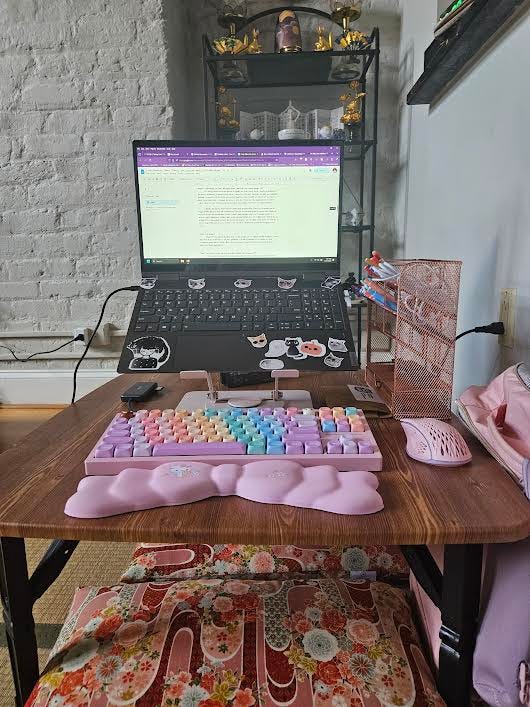
What a lovely, simple question that for me always has a complex answer. Bedtime hovers anywhere from 11:00PM to 2:00 AM, generally. I’ve always been a bit of a night owl and revenge procrastinator. I think I find a lot of productivity and meditative capability in a calm, quiet, cool night atmosphere.
What’s a habit or behavior that feels like taking care of yourself?
When I was a kid, I used to bite my nails until they bled. I kept this up until about my second year in undergrad, even after many failed attempts over the years to try and kick the habit.
One day I just quit cold turkey. I told myself I was going to grow my nails out long enough to paint them. And I was going to paint the hell out of them.
I think at some point I just became tired of having a nervous habit control/damage a part of my body I could use for self expression. Painting or tending to my nails became a ritual that demands I take a few hours out of my day to commit to myself.
What did taking care of yourself look like in your twenties?
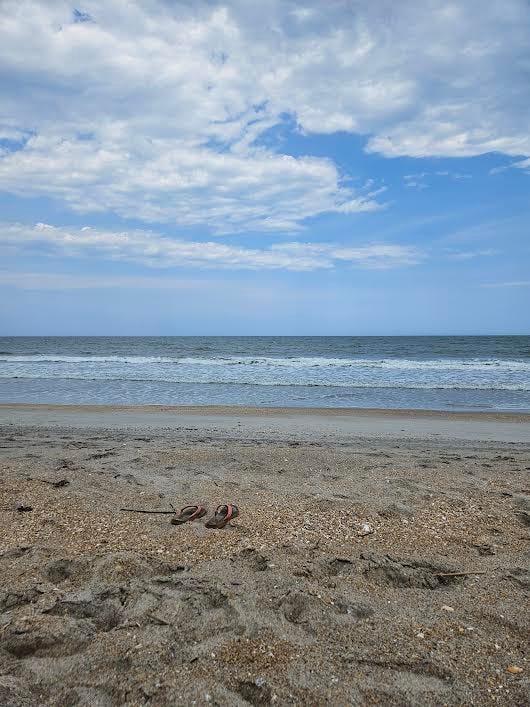
I’m still in my twenties, and I’m not exactly sure that I’ve figured out the magic formula yet. So far, peach bubble tea with strawberry popping boba + occasional trips to the ocean feel key. And spending a lot of time with animals.
How do you prepare yourself to write about particularly difficult subjects?
I don’t think I’ve yet found a way to prepare. I put it off and put it off and then it just has to spill out of me. But if I can get to the editing/revising phase, I find that the goal of making the piece the best it can be distances me from the grief/trauma/anger that the piece required to write it. I find comfort in Samuel Taylor Coleridge’s definition of poetry, “the best words in the best order.” I remove myself from the subject after it’s all out on the page and then just strive for that simple precept.
How do you recover after doing intense creative work?
I nap. I’m a huge napper. I’ll work on something for say, six or seven hours at a time and then nap. I have to reset the noggin.
What self-care advice rings false for you?
"You have to choose to be happy." Sometimes, I can't. Sometimes, I try anyway. Either way, I don't have to be happy at all times in order to be a full and worthy human.
How do you manage the way ambition feels?
Ambition is a double-edged sword. It's the thing that makes me move forward in my art, but also the thing that stifles my creativity. It makes me self-righteous, productive, joyful, angry. I think in the end, how I manage it and how I should be managing it are quite different. I manage it by wallowing in it. I should be managing it by putting myself out there and let what is mine come to me.
How can you tell when you’re coming up on burnout?
I think I might just run hot, because I’m always on the cusp. My brain gets a little too fried, a little too scrambled, and my naps become far less rejuvenating.
What level of “seize the day” are you?
I would say that on the scale of the average neurotypical human being, which of course, I can only estimate, I fall low on the scale of seizing the day. But on my own scale, the day is fully seized when I get out of bed and complete a fews things on the old to-do list. Send a few emails, drink enough water (tea), prepare a lesson on a poetry topic for my veterans' class, feed my cat.
What’s the playlist of late?
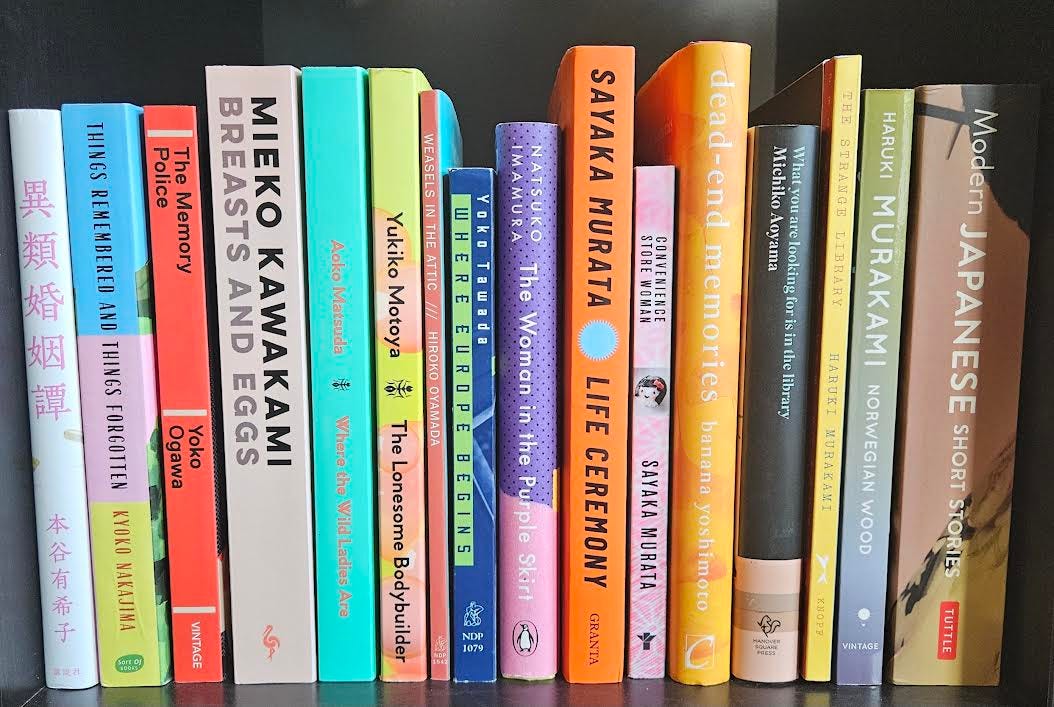
Chappell Roan, Japanese authors like Sayaka Murata and Aoko Matsuda, Dimension 20, video lectures by Dr. Justin Sledge or Dr. Andrew Henry.
How does money, and your relationship to it, provide care or support?
As a poor poet mooching off of a partner with a computer science and programming degree, money for me is a slippery subject. Most of our rent and amenities are paid for by my partner, and anything I make goes into my own upkeep. Money has been for me, always a source of anxiety, and I don't see that changing any time soon. I'm resigned begrudgingly to my poverty.
What are some forms of care that you’re discovering, or want to try?
Making protest screenprints, or just art in general that isn’t solely writing. I’m also just trying to put myself out there more, either by attending or reading at physical events or submitting more of my work more widely. I am also trying to continue fostering an inclusive writing/workshopping community within my friend groups.
What’s your relationship to night and day?
I've always been a bit of a night owl. I feel like I've always had a sense that the night feels less judgmental than the day. I'm able to go about my business best when I know no one else will be there. I'm sure that my best writing happens at night. I am also of the belief that morning people are an oppressive class that have kept the humble night owl down for too long. We can get just as much work done, just at hours that have been deemed inconvenient for some.
What do you want to give a shout-out?
Be on the lookout for a call-for-submissions to a new Richmond-based press soon!
What is comforting to you?
Waves, an air conditioner blasting while I'm under soft blankets, holding my purring cat's chest to my ear, white rice, subtle color shifts in a gradient, when I bring home a little trinket and I find the perfect little space for it to exist.
*All photos courtesy of Emily.*
RELATED READING
SOON, issue 2: Katie Lee Ellison is 'Taking Care'
·
June 14, 2024
"Like many women, I used to think I had to bend myself in a million directions to get anything close to what I wanted. I used to think I had all the time in the world. I know now that I don’t have to bend to anything, and that in fact, that will mostly do me harm."
It’s a lovely boost if you heart, restack, or forward this issue of SOON along to the people in your life who might connect with it.
We are multifaceted and curious. Let’s be many things together. Share SOON with your favorite people.
Comments
Nothing yet. Say the first thing.
Sign in to join the conversation.