
DANGER INTERNETS AHEAD by Les Orchard (CC BY-NC 2.0) https://flic.kr/p/cSsSX
Online Harms

Unleashing the Trolls: Ontario Court Opens the Door to Liability for Influencers Who Weaponize Their Audiences
The legislative efforts to combat online harms in Canada have focused chiefly on platform responsibility, with Bill C-34 reintroducing a regulated duty to act responsibly. An Ontario court recently considered another avenue to address harms that instead targets influencers who weaponize their audiences. The Ontario Superior Court of Justice issued a decision that extends the tort of Internet harassment into networked harassment, in which influencers or those with large online audiences encourage their followers to target individuals. In Miller v. Ahn, the court granted an interim injunction against a social media creator with more than 100,000 followers who had mobilized her audience against a Toronto employment lawyer. The actions led to fake reviews of her firm, threatening phone calls and messages, and antisemitic abuse that was directed at the lawyer’s perceived Jewish and Israeli identity.

Online Harms’ Forgotten Generation: Why the Government Needs to Pay Attention to Protecting Seniors
For much of the past month, someone has been trying to break into my Apple account. I receive regular e-mail and text notifications confirming a password change, which are soon followed by spoofed phone calls with caller ID that purports to be from the company but likely originates from Russia. As my Globe and Mail op-ed notes, I know enough to ignore the calls, delete the messages, and ensure I have two-factor authentication enabled to help keep hackers out.

Why the Answers to Hateful Content Online are Hiding in the Platforms’ Own Rules
The Canadian government has a two-pronged legal strategy to counter rising hate: New Criminal Code provisions to address offline harms, such as intimidation or protests outside schools and places of worship, and the digital safety bill introduced in June, which targets online harms. A new legal duty to act responsibly, which would require internet platforms to publish digital safety plans, provide greater transparency on their efforts to counter harms, and occasionally remove content, serves as the foundation for fighting back against the spread online of illegal content such as non-consensual distribution of intimate images, cyberbullying, terrorist content, and content that incites violence or hatred.
These are worthwhile measures. But for those concerned with antisemitism, Islamophobia, or other forms of hate, my Globe and Mail op-ed notes that stricter rules against illegal content are basic table stakes. The bigger challenge is the far larger category of content best described as “awful but lawful”: the tropes, conspiracy theories, and coded dehumanization that cause serious harm but remain constitutionally protected expression. A law mandating this material’s removal would invite an immediate Charter challenge. Instead, we need to figure out how to address harms without overstepping constitutional safeguards for freedom of expression.

One Step Forward, Two Steps Back: Bill C-36 Modernizes Canada’s Privacy Law, Then Delays It to 2030
Canada’s private sector privacy law is more than 25 years old and there is broad consensus that a modernization is long overdue. Bill C-36, tabled on Monday, is the government’s third attempt at updating the law, following the failed efforts with Bill C-11 in 2020 and Bill C-27 in 2022. My first post on the new bill focused on what I think remains both the most important development and the biggest mistake: the decision to push the Privacy Commissioner of Canada out of private-sector privacy and to place the file with an overloaded digital safety commission. For years, privacy critics have argued that, given the absence of order-making powers or serious penalties, Canada’s biggest shortcoming has been weak enforcement. Yet just as the government adds much-needed new rights and penalties to the privacy law framework, it undermines enforcement once again by introducing a new regulator that will take years to establish. The consequence is that, rather than updating the law for 2027, it is updating it for 2030 or later.
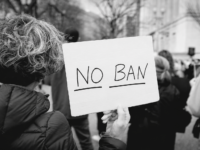
The Exemption Illusion: Why the Government’s Plan to Fast Track Bill C-34’s Kids’ Social Media Ban Means No Standards, No Privacy Review, and No Enforcement
One of the most heavily promoted features of Bill C-34, the government’s Safe Social Media Act, is that its social media ban for those under 16 comes with a potential exemption for platforms that satisfy the new Digital Safety Commission that they provide adequate safeguards for children. But based on comments from government officials, it appears the exemption is an illusion, at least for years to come. The legislation carefully sets out how the ban is supposed to work, but officials at a technical briefing on the bill this week described a very different plan that involves moving quickly after Royal Assent with regulations to bring the ban into force without waiting for the Digital Safety Commission to be fully operational. No Commission means no age verification standards, no privacy review, no exemption, and no effective enforcement. It also creates huge risks since the initial start of the ban is when tens of millions of Canadians would be required to verify their age, yet the government is sidelining the privacy protections written into its own bill and essentially conceding that the ban is unlikely to carry any real consequences for those services that fail to comply when it first takes effect.

Recent Posts
 Unleashing the Trolls: Ontario Court Opens the Door to Liability for Influencers Who Weaponize Their Audiences
  Why Ottawa Will Likely Join the U.S. in Opposing the Quebec Online Streaming Law at the Centre of the Trade Battle
  Online Harms’ Forgotten Generation: Why the Government Needs to Pay Attention to Protecting Seniors
  Culture Off the Table? What the Collapsed Canada-U.S. Trade Talks Reveal About the Carney Government’s Cultural Policy
  Digital Trade Alignment: What May Be in Play in the Canada-U.S. Trade Deal
