BobbyDraco

Musings of a fool.

Here's a starter framework you can adapt for your team.

Pre-Shot Routine (teach this as a fixed sequence)

The goal is a routine so consistent it becomes automatic — same steps, same order, every shot, regardless of score or pressure.

  1. Reset – step back from the line, one slow breath, physically “shake off” the last shot (good or bad)
  2. Setup – stance, natural point of aim check, sight alignment
  3. Breathe – 2-3 controlled breaths, settling heart rate down
  4. Focus cue – one external cue word (“front sight,” “hold,” “center”) to lock attention outward, not on outcome
  5. Trigger – shoot in the natural pause between heartbeats/breath
  6. Follow-through – hold position briefly after the shot, don't rush to check the target
  7. Evaluate – brief, neutral note (“good hold” / “rushed it”) then reset

Juniors benefit from writing their own version of this out and rehearsing it dry (no pellet) until it's boring and automatic.

Simple Mental Drills

Heartbeat awareness drill – have them find their pulse before shooting, then practice releasing between beats. Builds the arousal-control skill without needing to think about it consciously later.

Bad-shot recovery drill – deliberately have them take a poor shot, then practice the reset routine before the next one. Competition is won or lost in how fast an athlete recovers from the shot before, not in avoiding bad shots entirely.

External cue only – ban internal instructions (“relax your hand,” “don't jerk”) during practice sets; only allow external cues (“front sight,” “hold steady”). Research consistently shows external focus outperforms internal focus for fine motor precision tasks.

Pressure simulation – introduce small stakes in practice (call out shots, do team scoring, add a countdown clock) so competition nerves get rehearsed in a low-stakes setting rather than experienced for the first time at a meet.

Process over outcome scoring – occasionally score practice sessions purely on routine adherence (did they follow all 7 steps?) rather than points. Helps juniors internalize that the routine, not the score, is what they control.

For team culture

  • Debrief matches on process (“what part of your routine broke down?”) not just final score
  • Normalize nerves explicitly — tell them elevated heart rate before a match is normal and even useful, not a sign something's wrong
  • Keep goals performance-based (routine consistency, shot process) rather than only outcome-based (final score), especially for younger or newer shooters

Want me to turn this into a printable one-page reference sheet or a Word doc you could hand out to the team?
-Contact Me.-

Your core question is about how to establish and check Natural Point of Aim (NPA) in ISSF 10‑meter air rifle and small‑bore standing, specifically the transition from rifle on the stand → mounted position → NPA check.
Here is the distilled, ISSF‑relevant method based on authoritative shooting‑sport sources.


🎯 Key takeaway

NPA must be set before you aim, and checked after you mount the rifle.
You adjust NPA by moving your body/feet, not the rifle.
The stand is only a repeatable starting reference—not part of the NPA itself.


🧍‍♂️ How NPA works in standing (ISSF air rifle & small‑bore)

NPA is where your rifle points when your body is fully relaxed, with zero muscular correction.
If you must “steer” the rifle onto target, your NPA is wrong.
carnimore.com NRA Family


🧱 Step‑by‑step: From rifle stand → mounted position → NPA check

This is the workflow used by elite ISSF shooters.

1. Build your stance at the stand

  • Feet placed in your consistent reference position.
  • Hips square or slightly open depending on your style.
  • Shoulders relaxed.
  • Head upright, not craning.
  • Your left hip/elbow triangle (supported position) or free‑arm position set.
    Let's Go Shooting

The stand is only a reference anchor so your mount is identical every time.


2. Mount the rifle from the stand

  • Lift the rifle the same way every time.
  • Let the rifle settle into your shoulder pocket.
  • Set cheek pressure and hand position identically.
  • Do not steer the rifle to the target yet—just let it settle.

This is where your true NPA begins to reveal itself.


3. Perform the NPA check

Two authoritative methods:

Method A: Eyes‑closed relaxation test

  1. Aim normally.
  2. Close eyes.
  3. Take 2–3 relaxed breaths.
  4. Open eyes.
  5. See where the sights are.
    If the sights drifted, that drift is your real NPA.
    carnimore.com

Method B: Eyes‑closed mount test

  1. Keep eyes closed.
  2. Mount rifle from the stand.
  3. Open eyes.
    Where the sights land is your natural mount NPA.
    NRA Family

4. Adjust NPA

You adjust your body, not the rifle.

For standing (right‑handed shooter):
Left foot = large horizontal corrections.
Right foot = fine horizontal corrections.
Shooting Sports USA

Vertical corrections:
– Move left hand forward/back on the fore‑end.
– Adjust buttplate up/down.
Shooting Sports USA


5. Re‑check NPA after every shot or every few shots

Standing position settles over time, so NPA drifts.
Elite shooters re‑check constantly.
NRA Family


📌 What ISSF shooters specifically emphasize

✔ Consistency from the stand

The stand is used to ensure your mount is identical every time.
If your mount varies, your NPA will vary.

✔ Zero muscular steering

If you feel tension in:
– wrist
– shoulder
– lower back
– neck
…your NPA is off.

✔ Footwork is the primary NPA tool

ISSF shooters rarely adjust the rifle first—feet first, rifle second.

✔ Watch for “fade” at the shot

If the sights drift just before the shot breaks, your NPA is wrong.
Shooting Sports USA


📊 Quick reference table

Component Purpose Adjustment method
Stance Foundation of NPA Foot placement, hip alignment
Mount Repeatable rifle position Shoulder pocket, cheek weld
NPA check Detect drift Eyes‑closed test
Horizontal correction Center left/right Left foot (large), right foot (fine)
Vertical correction Center up/down Hand position, buttplate
Ongoing monitoring Prevent drift Re‑check every shot or cluster

🖼️ Visual reference


Want deeper guidance?

I can walk you through your exact standing position, including:
– stance geometry
– rifle mount sequence
– NPA drift diagnosis
– how to use your stand more effectively

Which part do you want to refine first:
stance,
mount, or
NPA check?

-Contact Me.-

Good question — there's actually a well-documented routine for exactly this transition (rifle stand → mounted position → NPA check), and it's a common technical gap.

The core routine, as taught by ISSF-level coaches:

The recommended sequence is to pick the rifle off the stand and go through your normal routine up to the point right before you'd start settling on the target. At that point, rather than closing your eyes, you shift where your eyes are looking without moving your head — this checks whether the rifle's natural rest point matches where your eyes/head are already oriented, isolating position error from visual correction.

This matters because NPA is the combination of a balanced, low-tension stance and consistent rifle setup — if you repeat the same setup at the firing point, the rifle will always point to the same place. Coaches recommend doing a full NPA check at the start of a session to establish your baseline, then a lighter NPA check before every single shot in the string, adjusting as needed rather than muscling the rifle onto target.

How the correction should be made — this is the most consistent point across sources:

Multiple coaching sources agree on the same principle: don't fight your natural point of aim by adjusting the gun with muscle — instead adjust your stance so the rifle points directly at the target on its own. Practically, this is almost always accomplished by moving the feet, and once NPA is found, the feet shouldn't move again until you're done firing on that target.

For standing specifically, the feet do double duty: the left foot generally stays fixed while the right foot is used to fine-tune the aim on target, and the stance itself acts as the pivot point for horizontal correction, while extending or pulling in the left hand along the stock adjusts for vertical differences in target height.

A caution for coaching younger/newer shooters:

One CMP training note is worth flagging if you're working with beginners: fine NPA adjustments — small shifts in rifle height and horizontal position — should only be introduced after hundreds of dry- and live-fire repetitions of the basic stance; new shooters should first just learn to bring the sights onto target with a consistent foot position, not chase fine NPA correction too early.

One more practical detail — speed of settling:

Practicing the stance repeatedly builds muscle memory, which helps a shooter settle into position quickly — and the faster the settle-to-shot cycle, the better results tend to be, since spending too long hunting for NPA causes tension to creep in and pull the shooter off target.


How this fits your lesson plan: This maps almost exactly onto the “Drill: NPA Reset Between Shots” I built into your standing plan — the sequence there (settle → close eyes/breathe → resettle → recheck without moving arms) is the same core mechanism these sources describe, just using eyes-closed instead of eyes-open/head-still. Both work; some coaches prefer the eyes-open version because it more closely mimics actual shot conditions. Want me to add this as an explicit “rifle stand to position” checkpoint at the top of the standing lesson plan?

-Contact Me.-

Pop Leo – “Woe to those who manipulate religion and the very name of God for their own military, economic, and political gain, dragging that which is sacred into darkness and filth.”

-Contact Me.-

Going through old files and deleting them I came upon a rant I wrote down. This was maybe 10 years ago.

“Ensure open and accessible internet connectivity for all users.

Restore the peer-to-peer connection by using IPv6.

Define exactly what broadband and high-speed mean. It should also be a minimum speed of 1.5 meg for basic connection and 5 meg for standard, and say no to quotas. Quotas are a good idea from a technical standpoint, but the business side will use them in a profit-driven way, which is not justified.

Be able to choose any ISP I want, not be locked into a single provider, and have no long-term contracts. This would force the ISP to offer customers fair prices and quality service.

Maybe look into government control of the nation's backbone connection, likely not a good choice, but rules need to be implemented.

The internet has turned into a utility, not a service, and should be treated as such. “

Funny but some of this is still true.

-Contact Me.-

Adding to the internet and hoping this will help someone.

I had a Zpool that wouldn't delete, so I asked AI for help. They ultimately did help, but it was a long process. It would have been longer if I had had to look for the answer myself.

The command that saved me was:

sudo zfs set volmode=none zroot/. This caused the OS to stop seeing the pool as a disk volume.

After issuing this command, zpool destroy worked as expected initially.

#FreeBSD #ZFS #zpool

-Contact Me.-

Finally figure out the Cisco SSH FreeBSD problem. Not being able to connect to the switch because Cisco uses old “insecure” ddiffie-hellman-group1-sha1. And the cure is...

Host switch, router HostkeyAlgorithms +ssh-rsa PubkeyAcceptedAlgorithms +ssh-rsa Ciphers +aes128-cbc

Switch* is the name of your prefix switches and router* is the prefix name.

:–)

-Contact Me.-

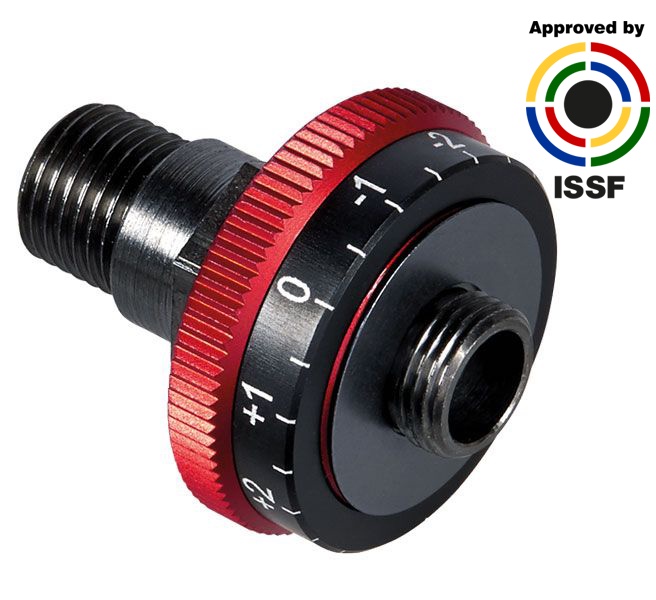
Gehmann diopter 50300-0 Gehmann diopter 0.0x, this thing works. The Monocle did not work well.

Looking forward to the new year. The team will start weekly practice. It looks like we will have some good shooters.

-Contact Me.-

Today is a nice day. Around 70° sunny slight breezes . Feeling better and happier. Got test results this weekend. Looks like not all bad news. Waiting for the doctor’s interpretation.

I’ll go to the range tonight shoot my other pistol Russian pistol.

-Contact Me.-

Thursday, the day before my next test of my heart. I am very anxious. I hope it's not too bad, and maybe I'll get some answers.

-Contact Me.-