Linux Memes

Linux: for when you want your computer to be like a project car – constantly tinkering under the hood instead of actually driving anywhere. These memes are for everyone who's felt the power rush of 'sudo' and the existential dread of accidentally typing 'rm -rf /' (don't do it). We love to preach about freedom and customization while spending entire weekends configuring drivers that Windows installed automatically. The year of the Linux desktop is always next year, but that won't stop us from looking smug when Windows crashes. If your idea of fun is compiling your own kernel, these memes will speak to your terminal-loving soul.
Vim Users Know The Pain

Vim Users Know The Pain
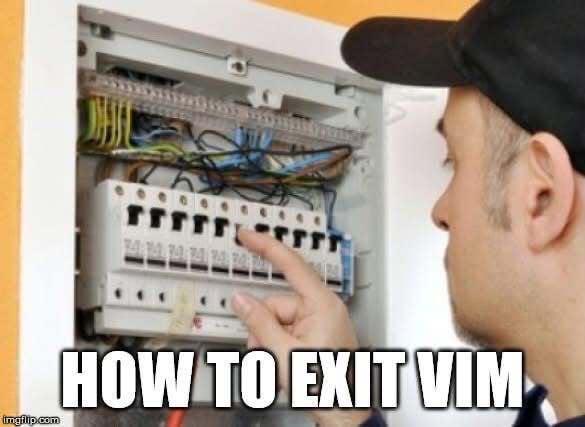
When you accidentally open Vim and suddenly you're trapped in a text editor with no obvious way out, so you do what any reasonable person would do: physically disconnect the power. The electrician examining this absolute rat's nest of wiring is basically every new developer's first experience with Vim. You press ESC seventeen times, type "exit", "quit", "help", "please god no", and nothing works. Meanwhile, your senior dev is watching you struggle and refuses to tell you it's just :q! because "you need to learn the hard way." Some say there are still developers trapped in Vim sessions from 2009, desperately mashing keys, hoping for salvation.

Good Old Days

Good Old Days
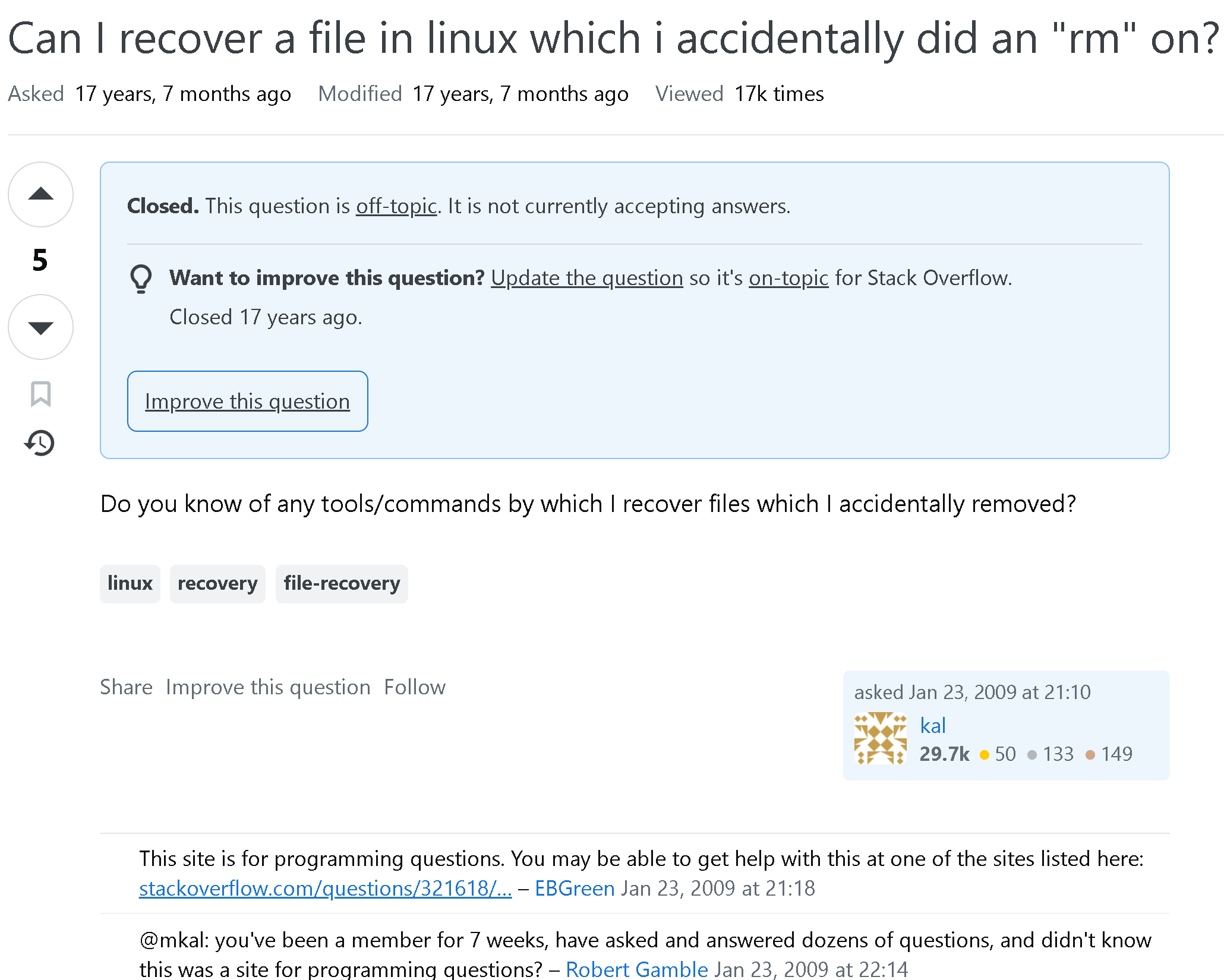
Someone posted on Stack Overflow asking if they could recover a file they accidentally nuked with rm . The question got marked as "off-topic" and closed faster than you can say "backup strategy." The real comedy here is the moderator's comment at the bottom: "you've been a member for 7 weeks, have asked and answered dozens of questions, and didn't know this was a site for programming questions?" Imagine spending 7 weeks contributing to Stack Overflow, building up that sweet reputation score, only to have someone point out you fundamentally misunderstood what the site was for. That's like working at a pizza place for two months before realizing it's actually a dentist's office. The "Good Old Days" refers to when Stack Overflow was the Wild West and you could ask literally anything before the moderators became stricter than a production deployment checklist. Fun fact: The answer to the original question is "no, probably not" unless you had backups or got really lucky with file recovery tools. Which is why seasoned sysadmins have trust issues and backup everything three times.

I Guess Bro

I Guess Bro
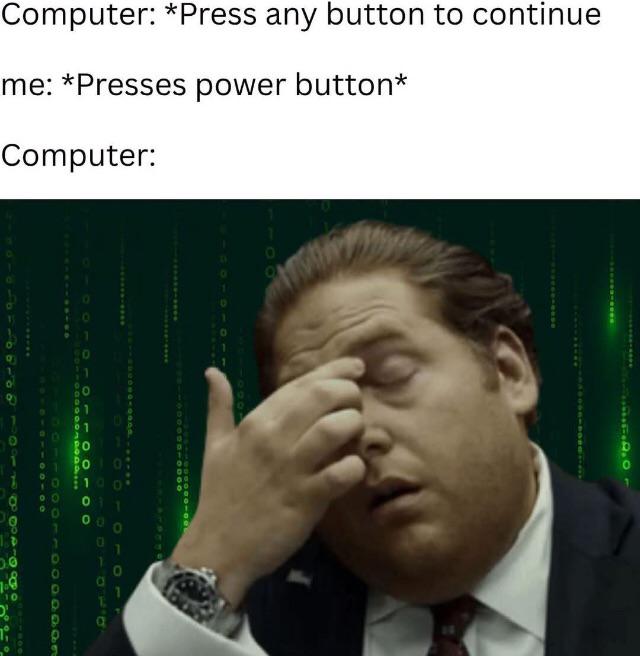
You know that moment when your brain just... stops working? Computer says "press any button" and your neurons decide the power button is technically a button. I mean, it's not wrong , but it's also spectacularly wrong. The computer's response is the digital equivalent of a long, disappointed sigh. It asked for cooperation and got malicious compliance instead. Now you're both sitting there in awkward silence while the BIOS reboots and you contemplate your life choices. Fun fact: The power button is actually handled at the hardware level before the OS even knows what's happening, so pressing it during boot is basically telling the computer "I changed my mind about this whole existing thing." Classic user error meets literal interpretation.

You Wouldn't Download Furniture

You Wouldn't Download Furniture
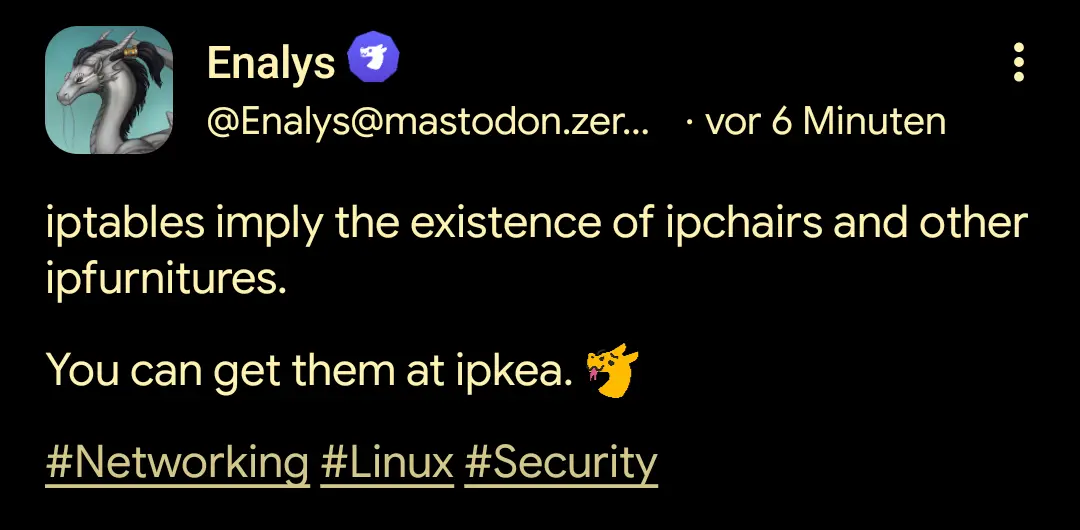
So apparently "iptables" implies the existence of "ipchairs" and other "ipfurnitures" that you can get at "ipkea." 🤣 For those blissfully unaware: iptables is the Linux firewall utility that lets you control network traffic. It's called "tables" because it uses, well, tables of rules to filter packets. But someone's brain went full dad-joke mode and extrapolated an entire IKEA furniture catalog from the IP protocol. The real question is: do ipchairs come with assembly instructions as confusing as iptables syntax? Because if you've ever tried to configure iptables without Googling every single command, you know the pain of staring at cryptical flags like -A INPUT -p tcp --dport 22 -j ACCEPT wondering if you just opened SSH or accidentally exposed your entire server to the internet. And yes, ipkea would definitely sell you ipfurniture in flat-pack format with missing screws. Some assembly required, root privileges mandatory.

Look At Me I Am A Senior Dev Now

Look At Me I Am A Senior Dev Now
Walking away from explosions in slow motion? Check. Sunglasses indoors? Check. Absolutely ZERO understanding of basic Linux system administration? Also check! Nothing screams "senior developer" quite like confidently deploying to production while having no earthly idea what a syscall is. You know, just those tiny little things that make literally EVERYTHING in your operating system work—the bridge between your precious code and the kernel. But who needs to understand the fundamental mechanisms of how programs interact with the OS when you've got three years of React experience and can center a div? The confidence-to-knowledge ratio here is absolutely *chef's kiss* catastrophic.

I Can't Be The Only Childless Middle-Aged Guy That Feels This Way

I Can't Be The Only Childless Middle-Aged Guy That Feels This Way
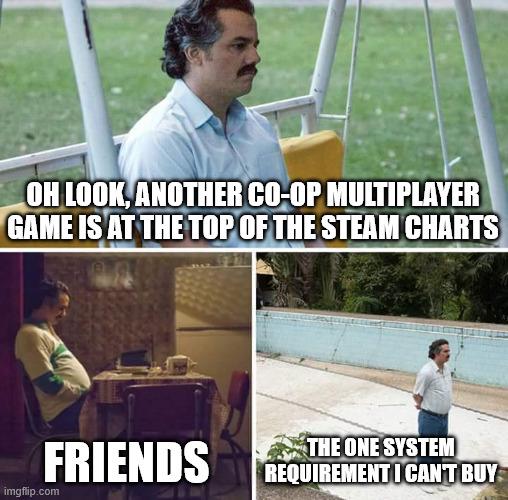
Oh the TRAGEDY of being a PC gamer with standards! You see another co-op multiplayer game dominating the Steam charts, your friends are all hyped, the group chat is buzzing... but there's just ONE tiny problem: it requires Windows and you're running Linux. So while everyone else is coordinating their gaming sessions and building virtual empires together, you're just sitting there like a lonely philosopher contemplating your life choices. The emotional whiplash between "yay new game!" and "oh wait, my system requirements" is absolutely DEVASTATING. It's like being invited to the party but realizing you don't speak the same language as the bouncer.

NordVPN

NordVPN
Encrypt your traffic on public Wi-Fi, stream from anywhere, and cover up to ten devices with one plan. 30-day money-back guarantee.

It's Quite The Burden Knowing I'm Always The Smartest Person In Any Given Room

It's Quite The Burden Knowing I'm Always The Smartest Person In Any Given Room
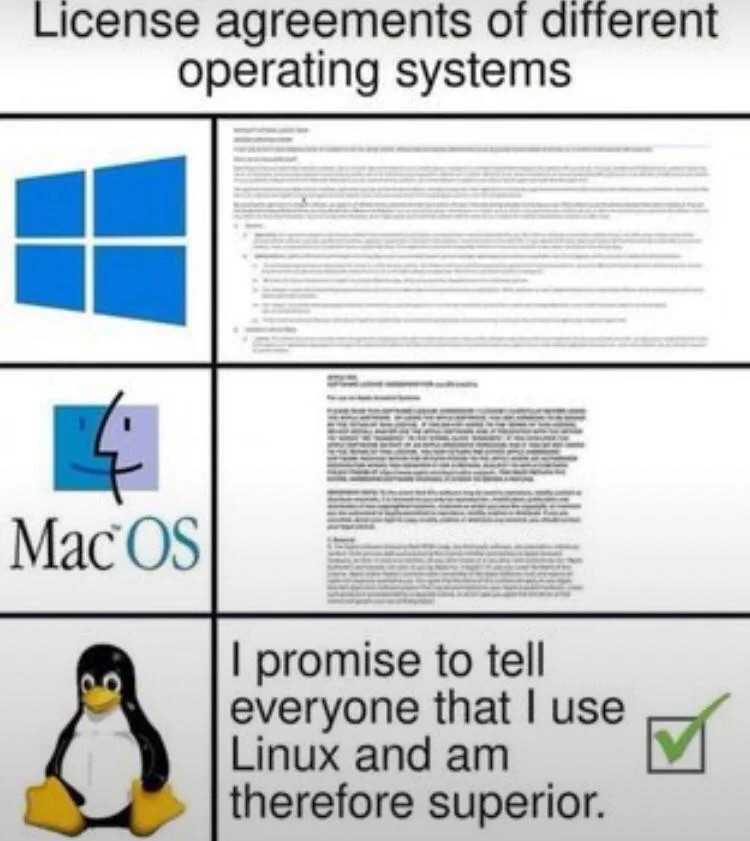
Windows users: scroll through 47 pages of legalese they'll never read. Mac users: same energy, different aesthetic. Linux users: "I read every line of the GPL and compiled my own kernel, btw." The superiority complex is real and honestly, earned. Nobody asked, but they'll tell you anyway. The joke writes itself—Windows and Mac users blindly accept whatever their corporate overlords throw at them, while Linux users actually know what's running on their machine. The trade-off? You become insufferable at parties. Worth it.

People Who Use Potato PCs In 2026, What OS Do You Guys Use?

People Who Use Potato PCs In 2026, What OS Do You Guys Use?
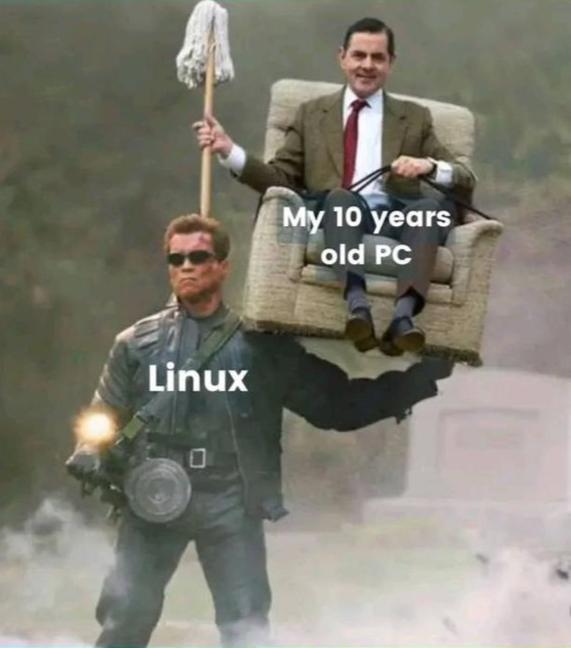
Got a decade-old PC that sounds like a jet engine when you open Chrome? Just slap Linux on it and suddenly you're back in business. While Windows 11 demands a TPM chip, 16GB RAM, and your firstborn child, Linux will happily run on a toaster from 2012. It's basically necromancy for hardware. Your ancient rig becomes a lean, mean, terminal-spewing machine. No bloatware, no Cortana asking if you want to search Bing, no forced updates during important presentations. Just you, your potato, and a lightweight distro that boots faster than Windows can finish its startup sound. The best part? You get to feel morally superior about using open-source software while simultaneously being too broke to upgrade your RAM. Win-win.

The Fact That You Can't Run Through Windows Setup W/O Internet And An Online Account Is Absolute Bullshit

The Fact That You Can't Run Through Windows Setup W/O Internet And An Online Account Is Absolute Bullshit
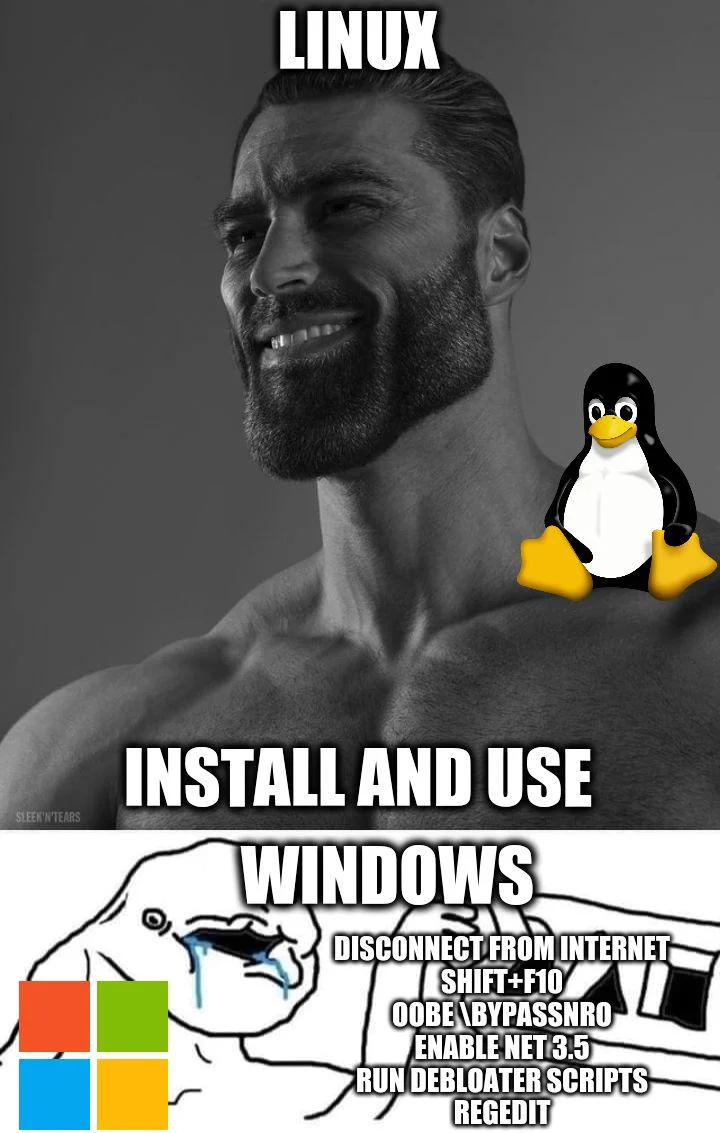
Linux users watching Windows users jump through increasingly absurd hoops just to install their OS without being forced into a Microsoft account. Meanwhile, Linux installation is just... straightforward. No telemetry opt-outs, no mandatory cloud accounts, no "please sign in to use your own computer." The bottom panel perfectly captures the Windows 11 installation experience: disconnect ethernet, hit Shift+F10 to open command prompt, run oobe\bypassnro to bypass network requirements, enable .NET 3.5 from DISM, run debloater scripts, edit registry keys... just to get a clean install. It's like needing a PhD in registry hacking to use your own hardware. The gigachad Linux energy vs the sweating Windows logo really nails it. One OS respects your autonomy, the other treats you like a data point that needs constant supervision. Choose your fighter.

Why Are They Being So Dramatic

Why Are They Being So Dramatic
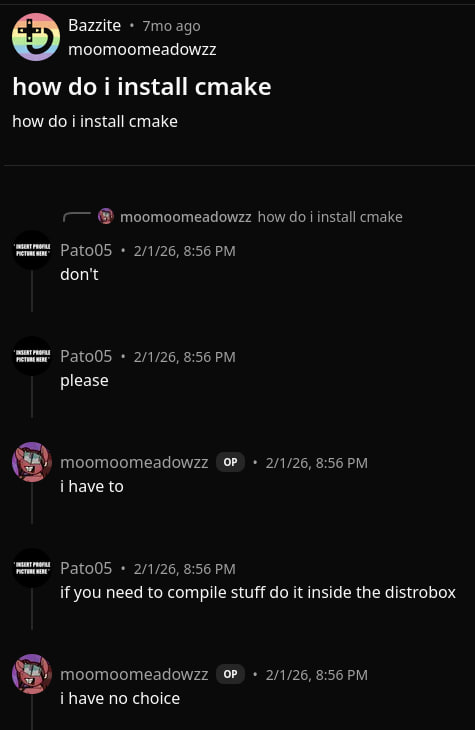
Someone innocently asks "how do i install cmake" and gets hit with the most existentially devastating responses. The progression from "don't" to "please" to "i have to" is pure tragedy. Then Pato05 drops the nuclear option: "if you need to compile stuff do it inside the distrobox" followed by the final acceptance stage: "i have no choice." CMake is the build system that makes developers question their life choices. It's like the tool everyone needs but nobody wants to deal with—a necessary evil for compiling C/C++ projects. The dramatic responses perfectly capture that special kind of despair that comes with build system configuration. The suggestion to isolate it in a distrobox is basically saying "quarantine this chaos away from your main system before it spreads." The five stages of grief, but for build systems: denial (don't), bargaining (please), acceptance (i have to), problem-solving (use distrobox), and finally... resignation (i have no choice). Poetry in motion.

Admin Team Assessing My Threat Level

Admin Team Assessing My Threat Level
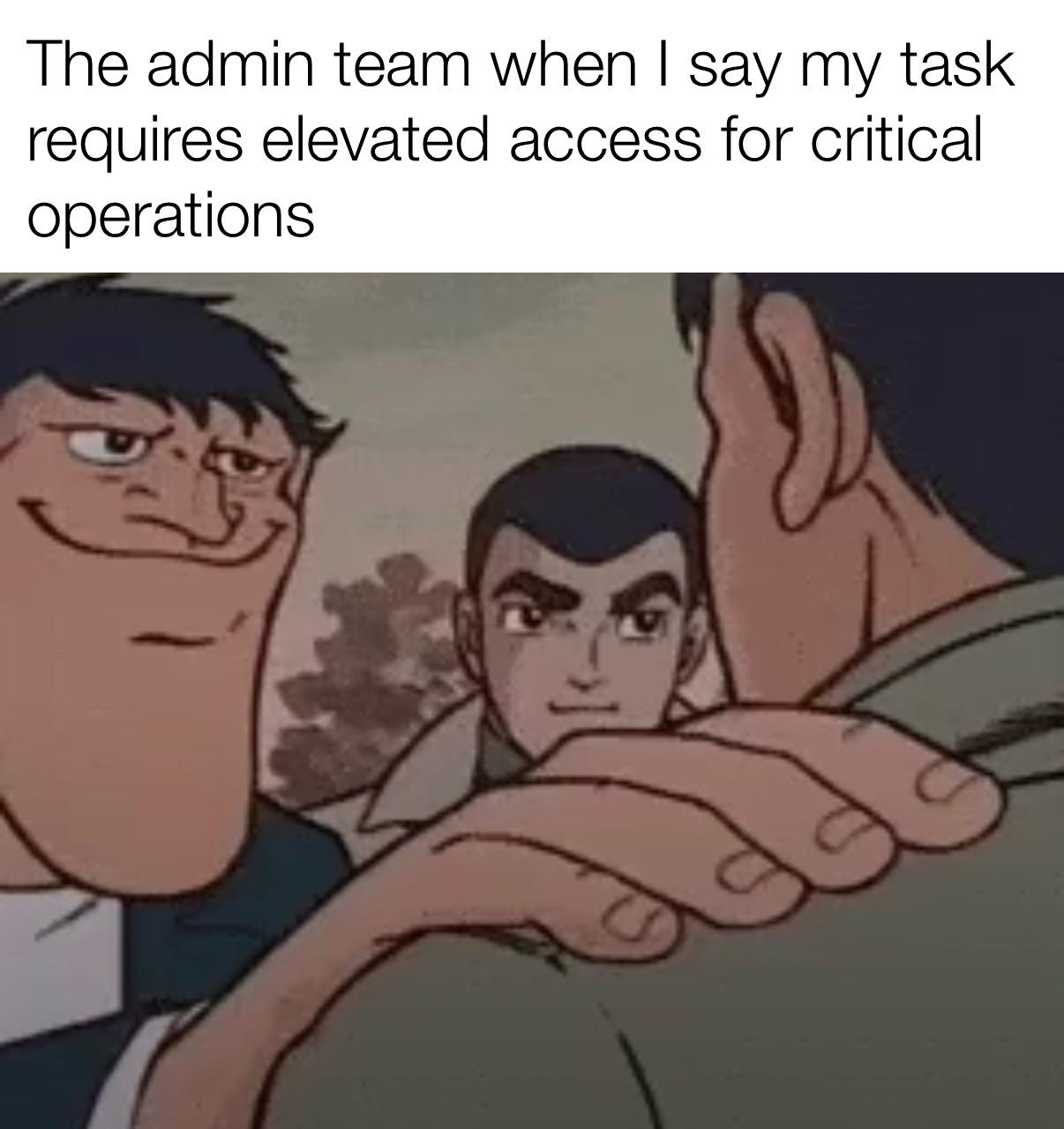
Nothing screams "security risk" quite like a developer casually mentioning they need sudo access to production servers. The admin team immediately goes into full threat assessment mode, analyzing whether you're a responsible professional or a walking disaster waiting to rm -rf / the entire infrastructure. They're scrutinizing your every move like you just asked for the nuclear launch codes when all you wanted was to restart a service. Spoiler alert: you're getting read-only access and a Jira ticket that'll take 6 weeks to approve.

But What If ...

But What If ...
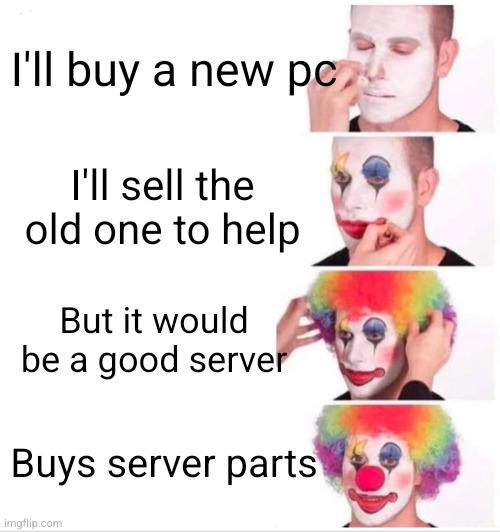
Every developer's journey from "I need better hardware" to running a Kubernetes cluster in their basement. You start with noble intentions—maybe upgrade your laptop. Then the voice whispers: "but what if you turned that old machine into a home server?" Next thing you know, you're browsing eBay at 2 AM for enterprise-grade RAM sticks and arguing with yourself about whether you really need redundant power supplies. The hoarding begins. The old laptop becomes a DNS server. The ancient desktop? Perfect for Docker containers. That Raspberry Pi collecting dust? Now it's monitoring your network. Your electricity bill hates you, but your homelab... your homelab is beautiful .