My brain runs an "out of sight, out of mind" policy. I come back to my laptop after a day or two away and genuinely can't remember what state things are in. Which repos have uncommitted work? Did I push that branch? What was I even working on last two nights ago?
When juggling a dozen or more repos, that mental overhead adds up fast. I set out to build a little tool to help me visualise local repo state.
What it does
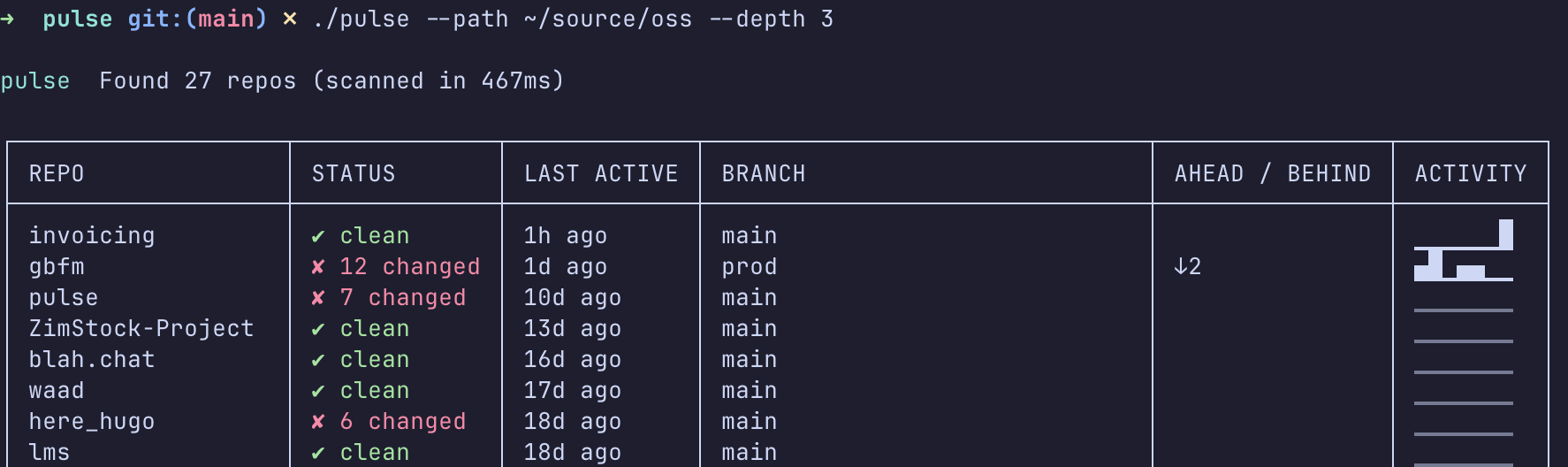
Pulse recursively scans a directory tree, finds every git repo, and prints a status table.
./pulse --path ~/source --depth 3Key things it surfaces:
- Clean/dirty status with changed file counts
- Ahead/behind remote: unpushed (↑) and unpulled (↓) commits vs origin
- Ghost detection: repos inactive for 6+ months get flagged with a 👻
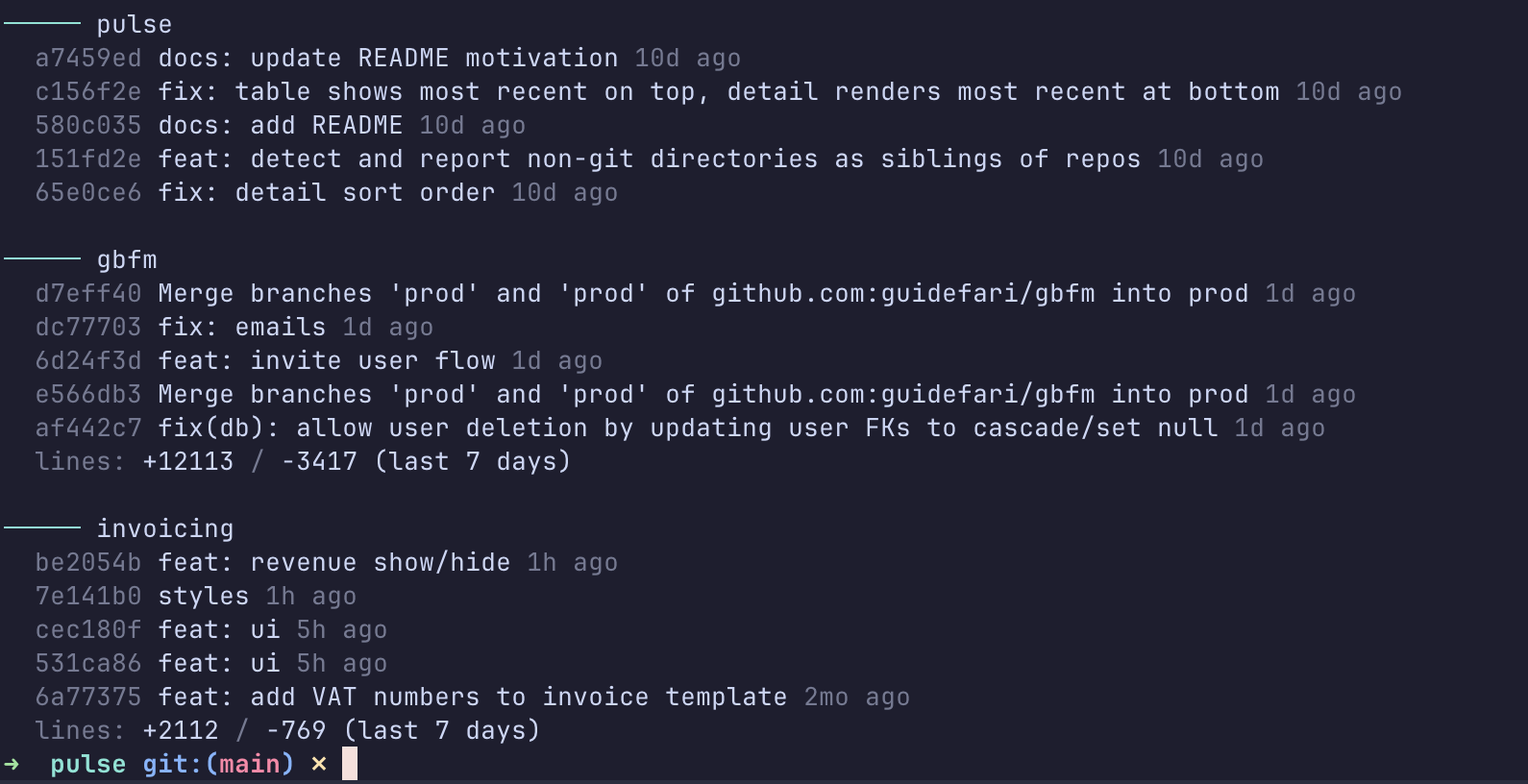
- Detail mode (
--detail): shows recent commits and lines changed per repo - Non-git detection: flags directories sitting alongside repos that aren't git-tracked
- JSON output (
--format json): pipe tojqor feed to other tools. I figure this can be useful when I'm ready to go web.
Some technical bits
Written in Go. Directory traversal uses godirwalk (faster than filepath.Walk, allegedly.), and repos are analyzed in parallel through a worker pool.
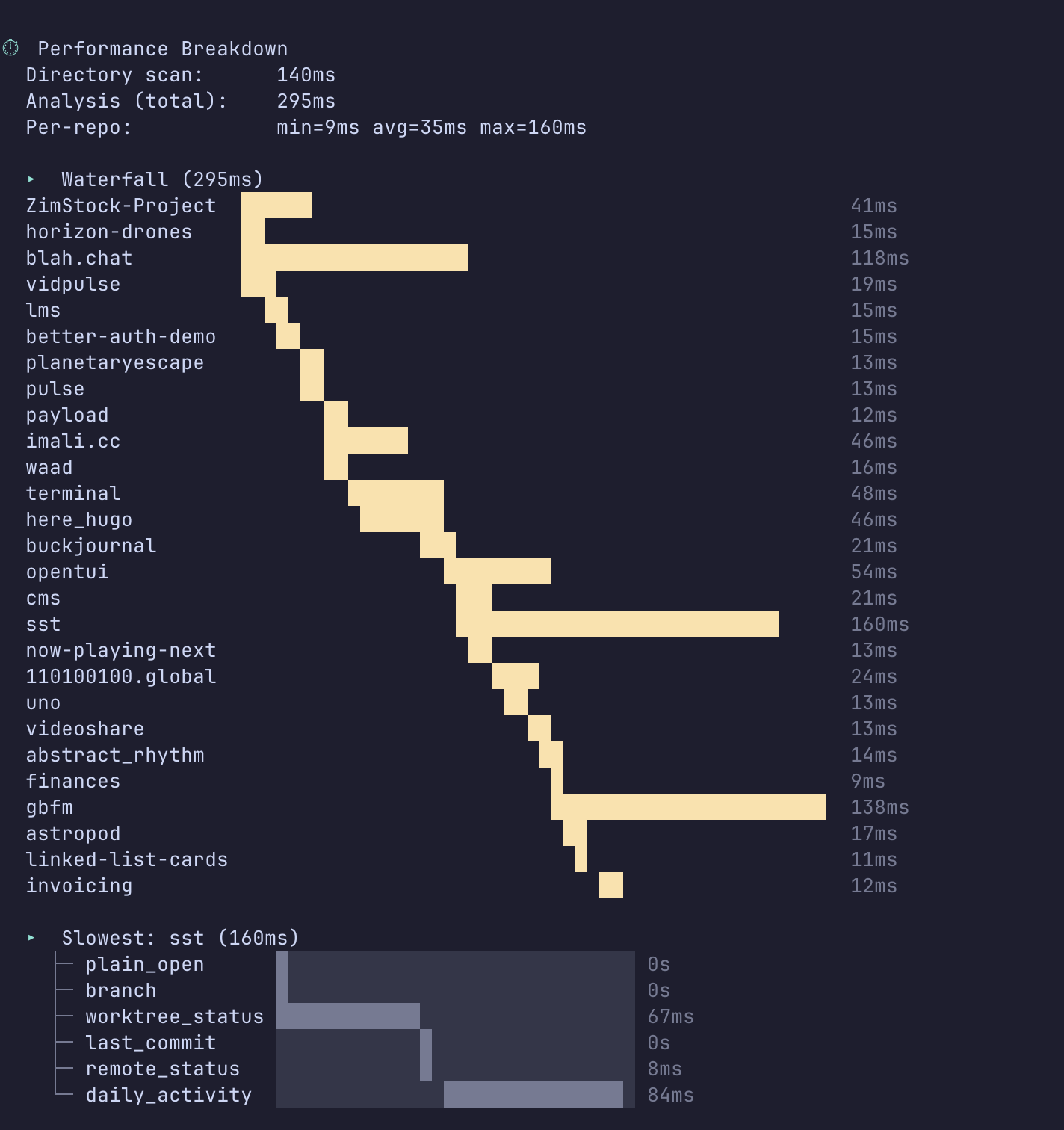
A basic scan felt like it was taking too long, 20+ seconds. Which straight away was unacceptable for a small util meant to give me a quick glance. I added timing logs, and chose to go with OpenTelemetry . run with --time and you get a waterfall timeline showing where time is being spent.
That's how I discovered that go-git's worktree status was the bottleneck. The OTel waterfall made it obvious. Swapping that one operation to shell out to git status --porcelain instead gave a 10-20x speedup, while keeping go-git for everything else (branch info, commit history, remote status).
I initially instrumented the timing manually, before going the OTel route.
Screenshots
No LLMs were harmed in the building of this project 💀