.jpg)
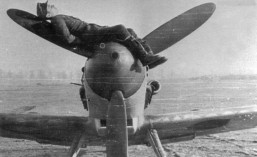
The 5F.1 Dolphin was designed in the mid 1917 to provide a heavily armed fighter with good visibility and powered by the geared 200hp Hispano-Suiza 8B. The result was a not very handsome biplane equipped with a two-bay wing in negative stagger configuration in which the cockpit was placed in the middle of the two parts upper wing. The first examples went to war in France in Feb. 1918 where, in general, they were quite well-liked by their pilots. The cockpit seemed to them dangerous in case of crash though and it was later improved. The engine also gave some troubles. In service their high-altitude performances was noted and they saw a fair amount of action way up high. In total circa 2000 were produced, but the end of the war also meant the end for this useful asset. The Dolphin did not have a place in the frugal postwar RAF.
This gorgeous photo displays the official armament of the Dolphin: two fixed, synchronized Vickers MGs and two movable Lewis MGs mounted on the cockpit cabane. In operations one or both of the Lewis MGs were usually discarded. They’re awkward in operation and potentially dangerous in a crash.
Tag Archives: WW1
NAF N-1: Davis Gun Carrier.
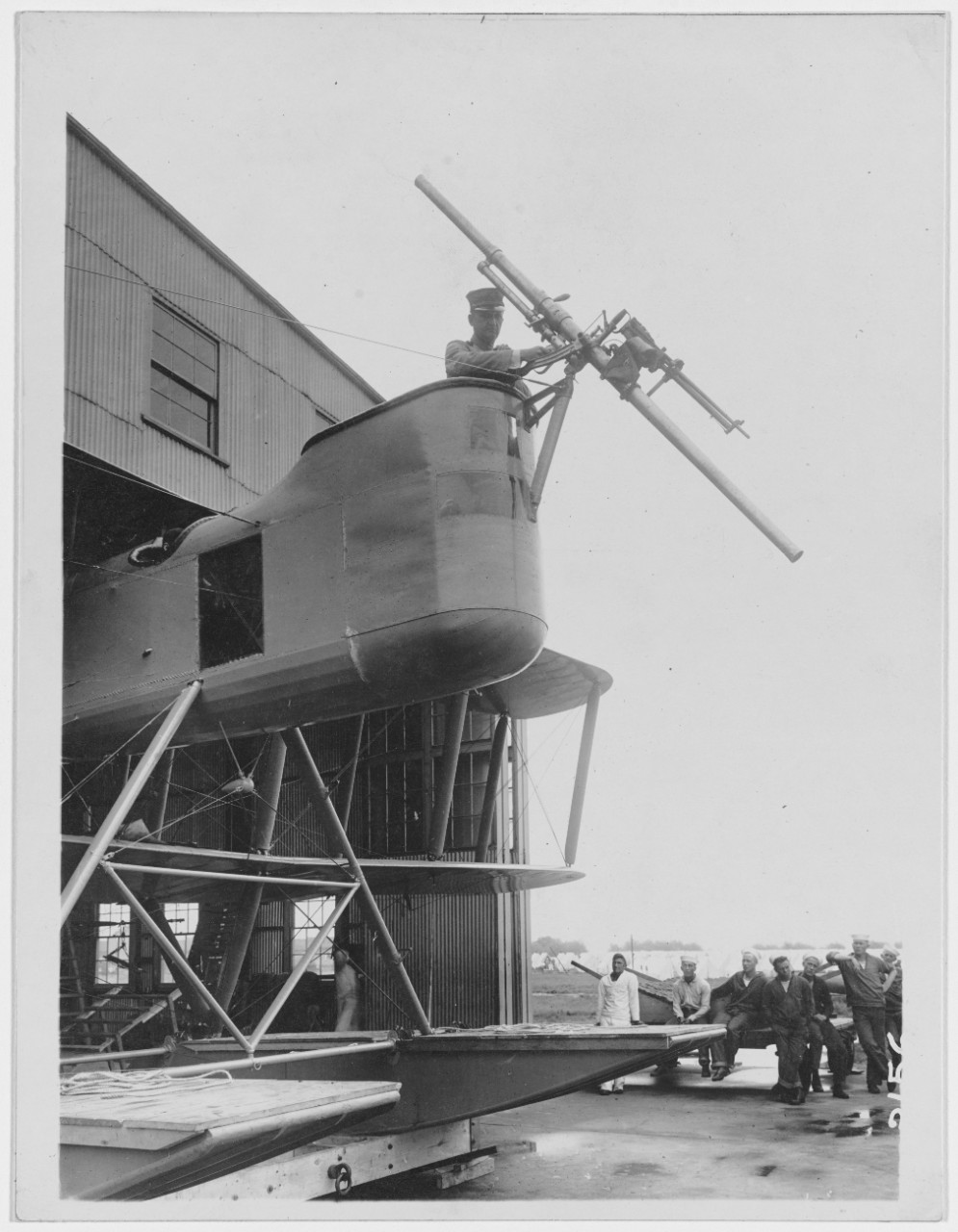
The N-1 was the first aircraft produced inhouse by the US. Navy at their Navy Aircraft Factory. This floatplane was designed by Jerome Hunsaker specifically as a submarine killer. For that role the N-1 was equipped with a nose-mounted Davis recoilless gun. Powered by the almost de rigueur 360hp Liberty engine in a pusher configuration, work started in the four proposed prototypes early in 1918. The maiden flight of the first was undertaken in May 1918. Not very fast, the N-1 displayed serious structural weaknesses during its tests; its floats did collapse on its very first flight. Just two of the four prototypes were completed before its abandonment.
The clumsy Davis installation on this ungainly-looking creature. No one on this picture seems to be too convinced. I kinda love that Lewis MG installed above the recoilless gun as an aiming device.
Södertelge SW 15: Smiling Skull.

Nicknamed the “Lottery Fighter” because it was financed by a public lottery, this single seat fighter was designed in the neutral Sweden during WW1. Södertelge Verkstäder had produced some aircraft under licence and the SW 15 was the first local product. Its design was inspired by the Siemens-Schuckert D Ia and was powered by a 110hp Vabis (Mercedes D1) inline engine. The prototype made its first flight in June 1917, and killed its pilot Lt. Bertil de Maré during the landing. Two modified examples were built anyway, which proved to be as nasty as the prototype. Despite that the trio remained barely in service until 1921; only flown by just one pilot, Nils Rodéhn. He hated them.
The happy bony face of the 2nd SW 15 produced. The armament comprised a pair Schwarzlose MG equipped with a locally designed synchronization gear.
Dorand A.R.1: Going backwards.

By 1915 the French realized their pusher biplane recon two-seat aircraft (Farman F.40 mainly) were on their fast way to obsolescence. A replacement was needed, in a hurry. The A.R. was designed by Georges Lepère and carried the name of Section technique de l’aéronautique (STAé) director Lt. Col. Dorand, the man who formulated the requirement. The result was this boxy tractor biplane, a quite up-to-date design at the time of its first flight around mid-1916. Sadly, by the time they entered service with the Aéronautique Militaire a year or so later technology had moved on, fast. They served anyway for a very short time and by mid-1918 they were gone.
The peculiar negative-staggered two-bay wings and “floating” fuselage of the A.R. nicely displayed in this gorgeous photo of the “Historial de la Grande Guerre – Péronne”. That portable Bessonneau hangar is a nice touch.
Junkers J 1: Steely all-out determination.

This experimental private-venture two-seat cantilever monoplane was the result of Hugo Junkers interest in the use of metal in aircraft construction. Nicknamed the Blechesel (Tin Donkey), the J 1 was of steel construction and made its troubled maiden flight (it was damaged during the landing) on Dec. 1915. Becoming in the progress the first all-metal aircraft to take the skies. Powered by a 120hp Mercedes D.II engine, the design proved to be both underpowered and vastly overweight. The rate of climb was abysmal, but its potential was clearly there for all to see. So Junkers got a small contract to develop the idea further. Flown only a month or so, the J 1 survived the ravages of WW1 to be destroyed by the ravages of WW2 when the Deutsches Museum (Munich) was air bombed.
Crystal clear photo of the J 1 and its pilot getting ready for its first flight at FEA (Fliegerersatzabteilung) 1 at Döberitz. Junkers through and through already.
Oberursel U.1: “Gnome Scourge”.

A pair of Pickelhauben giving all their attention to a Fokker E-type‘s 100hp Oberursel U.I rotary engine; in fact a mere clone of the French Gnome Monosoupape 9 B. The Motorenfabrik Oberursel A.G. acquired before the war the licences to manufacture both Gnomes (their U-series) and Le Rhônes (UR-series).
Courtois-Suffit Lescop C.S.L.1: Pretty & Smart.

Build by the ephemeral SAIB (Societe Anonyme d’Applications Industrielles du Bois), this single-seat biplane fighter was the brainchild of Roger Courtois-Suffit and Captain Lescop, the latter an experienced pilot. A quite conventional design, with a difference. When it first flew in January 1918, the C.S.L.1 was one of the first aircraft featuring leading edge wing flaps, fitted to the lower planes. Conceived to employ a 200hp Clerget 11E rotary engine, the first prototype used instead a 160hp Gnome Monosoupape 9Nc and later a 140 hp Clerget 9Bf. A second prototype powered by the then available 200hp Clerget remained unfinished. That’s all, no more followed.
Royal Aircraft Factory BE.9: “Please, you first” (II).
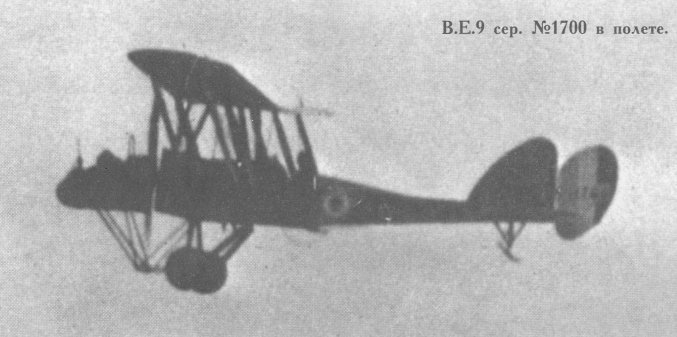
As in the French SPAD A.2, the intention of British recon BE.9 was to give a tractor aircraft a good forward field of fire in the times before the disposal of machine gun synchronization gears. The pushers provided just that but with less performances. Only one prototype of this hairy contraption took the skies on the Summer of 1915. Equipped with a pivoting gunner front nacelle, like the A.2, the “Pulpit” proved to be even worse than its French counterpart. As dangerous as the latter for the front gunner, the BE.9 was also painfully slow. Nothing strange there, the basic design employed in its construction was the one of the definitely pedestrian BE.2c. It was tested in anger in France anyway, and soon forgotten.
Poor quality, but descriptive inflight photo. Rare too.
Sopwith L.R.T.Tr: On top of nothing (II).

L.R.T.Tr was Sopwith’s contender for the multi-seat escort fighter requirement which also included the Vickers F.B.11. More interesting than the latter, the L.R.T.Tr was, in fact, a development of a previous two-seat triplane design equipped with large, narrow chord three-bay wings. The Sopwith people chose to place the Lewis gun on a gorgeously streamlined gunner nacelle placed in the middle of upper wing. The four-wheel chariot undercarriage was certainly less aesthetic. Only a prototype was built, powered by the mandatory RR Eagle engine. It flew late in 1916, by then overtaken by both technical and operational developments.
Lovely ungainliness.
Vickers F.B.11: On top of nothing.

The F.B.11 was one of the three designs considered by the British War Office in early 1916 as escort fighters to face the frightful Fokker E-type, and also as “Zeppelin destroyers”. Vickers’ entry was the more conventional of the three; a large single-engined three-seat biplane powered by the specified 250hp RR Eagle engine. With gun synchronisation gear not available, it was equipped with a gunner nacelle instead. Placed on the upper wing, it provided a 360º field of fire. Only one prototype, of the two ordered, was completed and test flown. It displayed poor performance and handling and was lost in a crash. Anyway, the emergence of effective gun synchronisation gears put an end to the whole idea.
Looking sorta charming here at the pastoral Joyce Green airfield.
 Aviation Rapture