
Printed in
Geneva, Helsinki, and the Making of the CSCE. International Diplomatic Documents on the Conference on Security and Cooperation in Europe, 1969–1975, vol. 30, doc. 2
volume linkBern 2026
more… |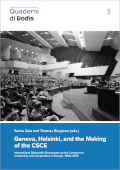
▼▶Repository
| Archive | Italian Ministry of Foreign Affairs and International Cooperation, Historical Diplomatic Archives, Rome |
▼ ▶ Archival classification | IT-ASDMAE DGAP, Uff. XIII (ex III), CSCE, b. 6, fasc. Sicurezza europea, 1969 |
| Archival classification | IT-ASDMAE 1969 1969 |
 Transcription
 QdD
QdD
 Facsimile
dodis.ch/75738
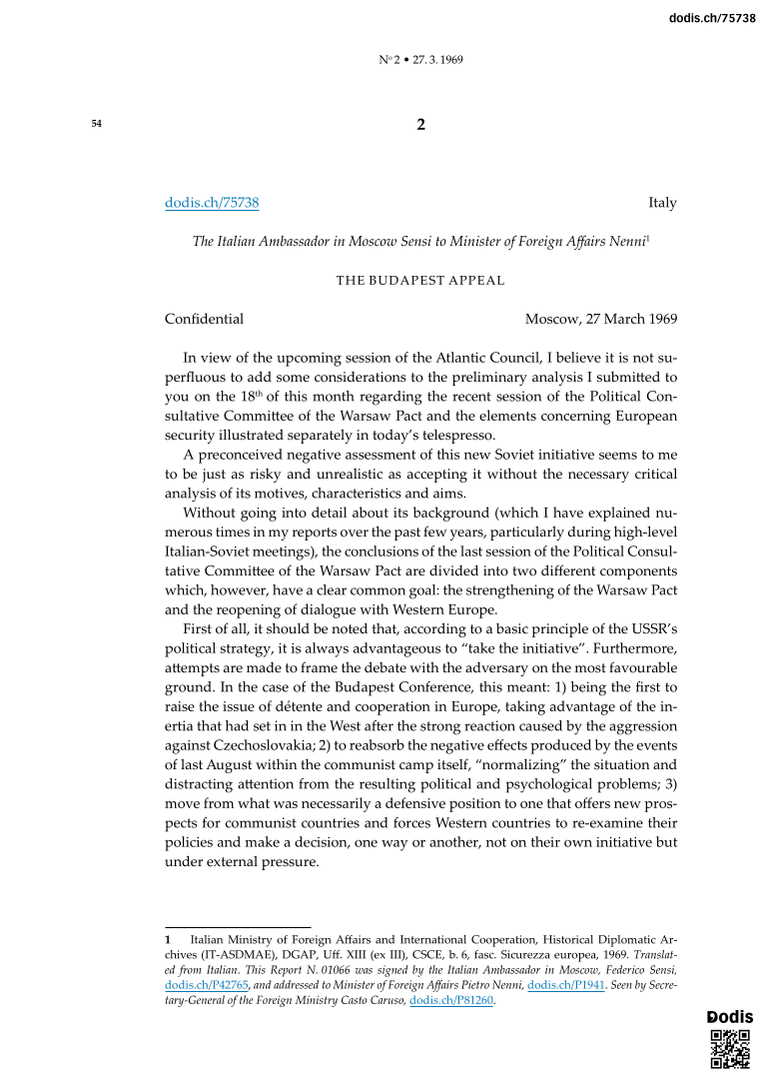
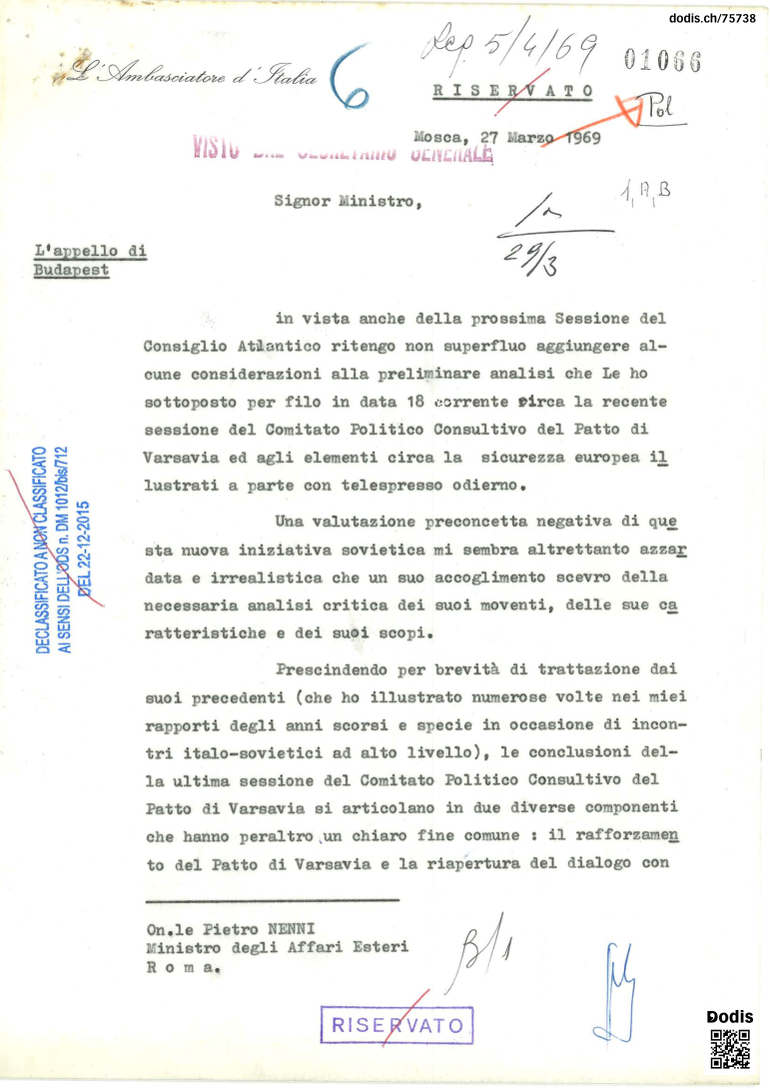
The Italian Ambassador in Moscow Sensi to Minister of Foreign Affairs Nenni1
The Budapest Appeal
In view of the upcoming session of the Atlantic Council, I believe it is not superfluous to add some considerations to the preliminary analysis I submitted to you on the 18th of this month regarding the recent session of the Political Consultative Committee of the Warsaw Pact and the elements concerning European security illustrated separately in today’s telespresso.
A preconceived negative assessment of this new Soviet initiative seems to me to be just as risky and unrealistic as accepting it without the necessary critical analysis of its motives, characteristics and aims.
Without going into detail about its background (which I have explained numerous times in my reports over the past few years, particularly during high-level Italian-Soviet meetings), the conclusions of the last session of the Political Consultative Committee of the Warsaw Pact are divided into two different components which, however, have a clear common goal: the strengthening of the Warsaw Pact and the reopening of dialogue with Western Europe.
First of all, it should be noted that, according to a basic principle of the USSR’s political strategy, it is always advantageous to “take the initiative”. Furthermore, attempts are made to frame the debate with the adversary on the most favourable ground. In the case of the Budapest Conference, this meant: 1) being the first to raise the issue of détente and cooperation in Europe, taking advantage of the inertia that had set in in the West after the strong reaction caused by the aggression against Czechoslovakia; 2) to reabsorb the negative effects produced by the events of last August within the communist camp itself, “normalizing” the situation and distracting attention from the resulting political and psychological problems; 3) move from what was necessarily a defensive position to one that offers new prospects for communist countries and forces Western countries to re-examine their policies and make a decision, one way or another, not on their own initiative but under external pressure.
Apart from these methodological considerations, which are important in their own right, the factors that determined the Soviet move can, in my opinion, be summarised as follows:
1) The conflict with China certainly exerted a major influence. However, it would be wrong to attribute the USSR’s hypothetical conciliatory political stance solely to this factor. First and foremost, the USSR wanted to nip any further Chinese ambitions in the bud with its decisive reaction and probably hopes to have succeeded, at least for now. According to Asian diplomatic sources, the Soviet reaction caused China to “lose face”, which is particularly serious in Asia, and it is therefore possible that China, in order to regain prestige, will return to the fray with other pinpricks, perhaps in other geographical areas. However, based on the analyses made here by military experts, it is believed, as a preliminary assessment, that the Chinese are acting for political and psychological purposes and that as long as the conflict retains this character, the USSR’s offensive capability in Europe will not be diminished at all.
It would therefore be an oversimplification to believe that the USSR, under pressure from the Chinese threat in the East, feels the need to rectify its essentially expansionist policy in Europe. The opposite may in fact be true, namely that the USSR wants to increase its security in Europe by exercising even greater control over the communist countries and seeking to intensify its efforts to break up the opposing front, both by attempting to exacerbate the “internal contradictions” of the capitalist camp and by sowing seeds of discord within the individual countries that belong to it. From this point of view, the Soviet initiative would therefore not be determined by considerations relating to the balance of power, but by political and psychological opportunities.
2) The situation within the European communist camp remains unsatisfactory for the USSR which, despite having apparently overcome the existing centrifugal forces, feels the deep unease and latent hostility created by the doctrine of limited sovereignty. Evidence of this situation is provided both by the difficulty the USSR is experiencing in obtaining open and decisive solidarity from its allies with regard to the Sino-Soviet conflict and by the obstacles standing in the way of the implementation of economic integration plans.
The Budapest Appeal should make it possible to overcome these difficulties by pointing to a goal in which the smaller communist countries are keenly interested, namely the resumption of economic, technical and cultural cooperation with the West (this time under the aegis of the USSR). The representatives of these countries in Moscow, and especially the Ambassadors of Romania2 and Czechoslovakia,3 have repeatedly explained to me the positive aspects of the Warsaw Pact initiative, suggesting that a negative response from the West could cause the more aggressive tendencies in the Soviet political leadership to prevail and lead to a tightening of the Soviet grip on their respective countries. These concerns are understandable in countries faced with the tragic alternative of submitting unconditionally to Soviet power or running very serious risks. It is right and politically wise to take them into account, but I believe that it is not advisable to allow oneself to be carried away by these considerations beyond the insurmountable limits of one’s own security and vital interests.
It seems to me that the Budapest Appeal has also aroused some interest in Yugoslavia for reasons partly similar to those expressed in Romania and Czechoslovakia. But for the rest, Belgrade, as far as we can tell, remains firm in its belief that the USSR must demonstrate through its actions that it has renounced its aggressive policy.
On the other hand, by reiterating the preconditions for the definitive recognition of existing “realities”, especially with regard to Germany, the Appeal also satisfies those Communist leaders, such as Ulbricht4 and Gomulka,5 who are particularly sensitive to the German question. A further clarification on this point was provided by Shelepin6 in his speech yesterday in Poland, in which he stated, among other things, that the USSR would give a “resounding response to the gentlemen in Bonn who suffer from insomnia because of the maintenance of the status quo”.
3) As far as the West is concerned, apart from what I have pointed out above, the offer to create a more relaxed and cooperative atmosphere seems to want to channel East–West relations into a rigidly defined path that is firmly framed within the usual Soviet patterns. Significant in this regard is the editorial published yesterday by Izvestia, which contrasted “little Europe” with the “great Europe” championed by the Soviets and even criticised France for its attitude during the recent Berlin crisis, while praising Paris’s general policy against America and against the “hysterical protests of the Atlanticists”. It is interesting to note that, in recent days, there has been a resurgence of strongly negative views regarding what has been termed here “the policy of bridges” and economic, ideological and political infiltration in communist countries with the aim of “eroding socialism” in those countries and thus weakening the USSR and the communist bloc. This “aggressive” policy is attributed not only to America and West Germany, but also to Great Britain. This view was expressed once again in the latest issue of the authoritative journal “World Economy and International Affairs” in a lengthy scientific article.
4) As usual, little is known about the internal reasons that may have prompted the new Soviet gesture of détente, but these reasons certainly exist. Even abstracting from undocumented hypotheses about the certain differences that exist within the Politburo, one can nevertheless see in the objective conditions that characterise the internal situation of the USSR (and I refer in this regard to my report No. 550 of 14 February) a real Soviet interest in developing its cooperation with Western Europe, in the hope, perhaps, to be able to initiate a more complex and certainly less immediate collaboration with America, as the contacts established between Gvishiani7 and McGeorge Bundy,8 which I have already reported, would suggest.
The collective leadership, which is currently drawing up the new five-year plan, is faced with some fundamental choices: in terms of technology, the gap with America is widening rather than narrowing, while heavy military budgets and massive investments in heavy industry are required, and aid to so-called national liberation movements and developing countries demands considerable effort.
What priorities should be set? Would it not be better for the USSR to focus primarily on its own economic and technical-scientific development at this stage and to extend to the multilateral level the cooperation that is being actively sought at the bilateral level? This is just a hypothesis, but it is worth bearing in mind. It is supported by the interest that top Soviet leaders sometimes reveal (as can be seen, for example, in my telegram of 24 February about my last conversation with Kossighin9) and which has also been theorised, albeit within the usual Leninist and anti-imperialist principles, in some scientific publications, including the aforementioned journal “World Economy and International Affairs”. This journal has noted, among other things, that the “revolution in the art of warfare”, the “development of international relations” and economic and technological progress influence each other to a decisive extent, and went so far as to say that “this circumstance casts doubt on the possibility that military strategy issues can be dealt with exclusively by military experts”.
The instability and unpredictability of internal Soviet trends make it difficult to assess the fundamental Soviet approach, but precisely for this reason, I believe that we should not neglect any opportunity to probe that approach and test its consistency and character.
5) During this period, the contradiction between the realistic and cautious policy of the Soviet state and the ideological and revolutionary direction of the Party is more striking than ever. While on the one hand there is talk of peaceful coexistence, cooperation and security, on the other hand the concepts of the struggle against imperialism and capitalism are reiterated, with the hope and prediction of their imminent and definitive defeat. After the conclusion of the Preparatory Meeting of the Conference of Communist Parties, in which the Soviets, despite all possible tactical enticements, maintained their uncompromising line, the commemoration of the Comintern was used as an opportunity to reaffirm the principle of revolutionary ideological struggle based on proletarian internationalism. Suslov10 condemned any attempt at “social-democratic conciliation with the bourgeoisie and any attempt by right-wing opportunists to bring the ‘spirit of reformism’ into revolutionary theory”. Suslov concluded by reaffirming that today more than ever, the unity of the communist movement is necessary, under the leadership of the CPSU, which “will spare no effort to consolidate unity for the triumph of communism”. Ponomariov11 expressed similar ideas in his report.
The contradiction between state policy and ideological struggle is, however, only apparent since, as has also been stated here in official Party documents, the former is only an instrument of the latter and peaceful coexistence is, in reality, from a doctrinal point of view, a simple tactical expedient.
The fact that the analysis outlined in the five points above cannot be far from reality is confirmed by the timing chosen to launch the new diplomatic offensive. This is in fact part of various circumstances and contingencies, which the Soviets have most likely taken into account: the opportunity to initiate an autonomous “dialogue” with European countries, to be included in the complex situation existing in Europe and in relations between Europe and America; the prospect of a broader Soviet-American dialogue (or confrontation) on major world issues, a prospect on which the collegial leadership is focusing its attention; the 20-year expiry of the Atlantic Pact, which could provide an opportunity, according to Moscow’s wishes, for some revisionist proposals on the part of certain member countries, and in particular the next session of the Atlantic Council; the conflicts of interest and policy within some European countries; the widespread feeling in the West that the current impasse between East and West must be overcome and the genuine aspiration of peoples to seek a stable order that allows for harmonious and peaceful political and social development throughout Europe, even at the cost of certain sacrifices; the prospect of the forthcoming World Conference of Communist Parties, on which progress in the principles of the 1966 Bucharest Declaration and the 1967 Karlovy Vary Declaration would certainly exert a salutary influence to the advantage of Soviet theses.
The democratic countries of Europe and also the United States thus find themselves in need of giving an adequate response to the Budapest Appeal and of taking back the political initiative into their own hands. Careful consultation and close cooperation between the countries of Western Europe and America are of decisive importance in this regard.
The problems raised by the Budapest Appeal are essentially twofold.
The Soviet offer to address issues relating to European security and to promote a General European Conference contains nothing new: there is already a virtually uniform Western position on this matter, which does not allow for any significant variations. The lengthy correspondence between Bonn and Moscow on German issues has yielded very few results. The rejection of the use of force and the threat of force contained in the Budapest Appeal merely repeats what was already stated in the Bucharest Declaration and has no specific significance as it remains subordinate to the recognition of East Germany. The frequent references here to the possibility that Bonn’s renunciation of its national aspirations would open the way to a “normalisation” of relations between the two Germanys are clearly aimed at distancing the Federal Republic from its alliances and steering it towards neutralist adventures with no serious prospects. Finally, the recent crisis in Berlin has shown once again that attempts at accommodation can complicate rather than alleviate the situation. In any case, when it comes to German problems, the USSR always adheres to the agreements between the four victorious powers, so it is difficult to see what progress could be achieved through a conference of all European countries (the possibility of American participation in such a conference remaining vague). Finally, it should be noted that the Budapest Appeal expressly mentions the special status of Berlin, which was not mentioned in the Bucharest Declaration.
On the other hand, it is doubtful, for obvious reasons, that the Soviets really want to go ahead with the upcoming conference and, even on this occasion, after insisting on its indispensability, they have left it to the other countries to put forward proposals for the concrete implementation of the initiative.
The issue of the Western response to the offer of various forms of cooperation aimed essentially at creating the conditions for a relaxed and constructive atmosphere is more complex. First of all, I think it is worth pointing out that it is not advisable to allow ourselves to be drawn onto the terrain chosen by our adversary. Before talking about cooperation, détente and other vague and ambiguous formulas, which are likely to create misunderstandings and complications in the future, it would be better to return to the themes that inspired the policies of various European countries in the past, even before the Czechoslovak crisis: application of the principles of the United Nations Charter, respect for the sovereignty of individual states, non-interference in their internal affairs, and a code of good international conduct. Democracy cannot renounce its essential moral values, first and foremost the defence of fundamental freedoms in relations between peoples and individuals, the non-instrumental but substantive nature of peace based on real security, and the right of all peoples to harmonious political, economic and social progress free from demagogic interference.
Once these guarantees are in place, dialogue with the USSR can become more concrete and effective, free from the neo-colonialist infringements that Soviet agents in certain Western countries are adopting with increasing ease in economic relations and political propaganda.
In conclusion, it seems to me that, at least as far as we are concerned, it would be advisable to adopt a two-pronged approach:
on the one hand, we should not miss an opportunity for realistic and constructive action, especially since the unpredictability of Soviet moves in recent times always implies the risk of sudden reversals of direction and consequent new causes of tension and risk;
on the other hand, maintaining a firm position in the face of unclear and indeed questionable requests and, before taking any initiative, assessing the actual substance, nature and aims of Soviet proposals in a tangible and realistic manner.12
- 1
- Italian Ministry of Foreign Affairs and International Cooperation, Historical Diplomatic Archives (IT-ASDMAE), DGAP, Uff. XIII (ex III), CSCE, b. 6, fasc. Sicurezza europea, 1969. Translated from Italian. This Report N. 01066 was signed by the Italian Ambassador in Moscow, Federico Sensi, dodis.ch/P42765, and addressed to Minister of Foreign Affairs Pietro Nenni, dodis.ch/P1941. Seen by Secretary-General of the Foreign Ministry Casto Caruso, dodis.ch/P81260.↩
- 2
- Teodor Marinescu, dodis.ch/P45242.↩
- 3
- Vladimír Koucký, dodis.ch/P55846.↩
- 4
- First Secretary of the Socialist Unity Party of the German Democratic Republic Walter Ulbricht, dodis.ch/P2597.↩
- 5
- First Secretary of the Polish United Workers’ Party Władysław Gomułka, dodis.ch/P18141.↩
- 6
- Member of the Politburo of the Communist Party of the Soviet Union (CPSU) Aleksander Shelepin dodis.ch/P40945.↩
- 7
- Deputy Chairman of the Soviet State Committee for Science and Technology Dzhermen Gvishiani, dodis.ch/P46735.↩
- 8
- President of the Ford Foundation McGeorge Bundy, dodis.ch/P37402.↩
- 9
- Soviet Prime Minister Alexei Kosygin, dodis.ch/P15549.↩
- 10
- Member of the Politburo of the CPSU Mikhail Suslov, dodis.ch/P23606.↩
- 11
- Head of the International Department of the Central Committee of CPSU Boris Ponomarev, dodis.ch/P55926.↩
- 12
- For all Italian documents in this volume, cf. the compilation dodis.ch/C2915.↩
Tags
Russia (Politics) Organization for Security and Co-operation in Europe (OSCE)