Posts about News

News bills: From bad to worse

I recently wrote an extensive analysis and criticism of a proposed California link tax, offering many alternatives. A state senator just proposed his own alternative — and it is even worse.

Sen. Steve Glazer’s SB1327 would tax the collection of data for advertising by large platforms — onlyl those earning more than $2.5 billion in ad revenue — to support a job credit for local news organizations. Glazer calls this a “data extraction mitigation fee,” analogizing the collection of data to chemical companies polluting the land. Oh, please.

I have many problems with this:

  • Data are information and information is knowledge. To demonize and tax the collection of information should be abhorrent in an enlightened society. His rhetoric at moral-panic pitch sets a perilous precedent. 
  • He argues that he is taxing a barter exchange users make when they give data to internet platforms and receive free content in return. Well then, shouldn’t that tax apply to the exchange we all make when we give our valuable attention to TV and radio and much of the web in exchange for free content? But the bill exempts news media. 
  • The bill offers a tax credit of 25–50% of the salaries of full-time journalists. As I said in my paper analyzing the prior legislation, the California Journalism Preservation Act (CJPA), this disadantages much of Black, Latino, community, and start-up media that cannot afford full-time staff and rely on freelancers. The bill earmarks funds for ethnic media but supports larger incumbents over small and new competitors. 
  • The hedge funds that now own 18 of the state’s top 25 newspapers — the hedge funds that are ruining journalism in California and across America — will benefit. They should not receive a penny. If anyone’s cash flow should be taxed, if anyone should be punished for the state of news today, it is them. Though the money is intended to go to supporting reporters, money is fungible and it will doubtless support hedge funds’ bottom lines more than journalists. 
  • I remain disappointed to see journalists standing with legislators to lobby for and support legislation for their benefit and to use editorial space to promote it in a clear conflict of interest. Journalists should not be seeking favors from those in power whom we should be covering independently. 
  • In his presentation of the bill, Glazer in one breath notes the growth of revenue for California’s own platforms and the decline of revenue for the legacy news indusry and says “the correlation is unmistakable.” In a next breath he goes farther, saying that “the fee in my bill assigns the cost of reviving local journalism to those firms whose data extraction and economic activity is causing the news industry’s decline.” (My emphasis)

I’ve spent 50 years in journalism and I can testify that much of the injury to the legacy news industry is self-inflicted. It is unproductive to try to pin entire blame and responsibility for the health of a state’s news and information ecosystem on one industry and a few companies in it. Under this logic, as I say in my paper, A&P (if it still lived) would owe reparations to every corner grocery, and solar- and wind-power providers should subsidize coal mines.

I have long been on record saying that I am concerned about government intervention in speech and especially journalism. Glazer says his formula for journalist employment tax credits doesn’t interfere because it gives the credit “to all qualifying news organizations.” But for government to decide what news organizations qualify is itself a thumb on a scale. 

If government wishes to subsidize news, I will ask again whether there are better alternatives. In my paper, one of many that I discuss is the New Jersey Civic Information Consortium. It receives state as well as private funding and solicits grants for news entities and projects. Its board, which is appointed by state universities, the governor, and the legislature, makes independent judgments about what to support according to its goals. It is housed at Montclair State University’s Center for Cooperative Media (where — disclosure — I am on an advisory board).

If I were to get over my objections to government involvment in journalism and, for the sake of discussion, endorse use of government funds to support news, then I would at least want to find an alternative that was not based on punishing one behavior, one industry, or one set of companies. If news matters to everyone in the state, shouldn’t everyone in the state take a measure of responsibility for it? 

Here’s one promising idea. What if a state’s — for example, New Jersey’s — existing library funding were expanded to also support the news information ecosystem — and, importantly, to recognize the role that libraries (in towns, colleges, and schools) already play in supporting local information. The funding for news could be distributed by the NJ Civic Information Consortium, which could also encourage more collaboration among libraries and news organizations — another benefit. Rather than supporting only incumbents, it would also support new competition and innovation and serving communities ill-served in the past. 

Thus far, the debate over government support of news media has been driven by lobbyists for news media. In an op-ed of mine just published by Editor & Publisher (a trade publication that, I’m grateful to say, encourages such debate), I track the history of the newspaper industry opposing new technologies and competitors, cashing in political capital earned through their journalism to attack those competitors — radio a century ago, then TV, then telcos, now internet platforms — and seek political favors of protectionism and subsidy. I wish we could break free from this cycle of self-interested good-guy/bad-guy myth-making and instead have a mature, responsible, productive, and open discussion about society’s priorities and how to support them. 

I believe that rebuilding news — not legacy news companies and not their investors, but news — should be a high priority. I hope to find ways to support it. I wish that this agenda would not be set by hedge funds’ lobbyists but instead by the communities and institutions affected.

California’s latest bill does not do that. It supports incumbents over innovators. It demonizes not just internet companies (odd, given that California benefits tremendously from their presence, employment, and taxation) but worse, the collection of data — ultimately, of learning. California can do better. (And if it doesn’t, New Jersey could show the way.)

Is it time to give up on old news?

I am coming to a conclusion I have avoided for my last three decades working on the internet and news: It may finally be time to give up on old journalism and its legacy industry. 

I say this with no joy, no satisfaction at having tried to get newspapers and magazines to change, and much empathy for the journalists and others caught working in a dying sector and those who count on them. But the old news industry is gasping for air. I’m not suggesting performing euthenasia on what is left. Nor do I dance on the grave. In my time running a Center for Entrepreneurial Journalism, now ending, I have tried to balance support for startups and legacy companies. But I wonder whether it is time stop throwing good money and effort after bad.

The old news industry has failed at adapting to the internet and every one of their would-be saviors — from tablets to paywalls to programmatic ads to consolidation to billionnaires — has failed them. Hedge funds have bought up chains and papers, selling everything not bolted down, cutting every possible cost, and taking every penny of cash flow home with them. The one thing the old companies are still investing in is lobbying.

In my testimony in the Senate last week, I engaged in the wishful if futile act of urging the legislators not to enact protectionist legislation written with the industry lobbyists who sat beside me, but instead to support the emergent reinvention of journalism occurring in communities everywhere. Not likely. 

The bad news for news is constant. Just in the last month, the Los Angeles Times is laying off 115 people, throwing its newsroom into “chaos” and “mayhem.” Time magazine lays off 15 percent of its unionized editorial staff. Meanwhile, The New York Times chronicles the pains of billionnaires losing fortunes trying to save old news. I didn’t think it was possible for hedge funds to torture journalism more, but Alden just did something even worse than buying a paper: selling The Baltimore Sun to the mini-Murdoch, David Smith, chair of right-wing Sinclair, hater of news and newspapers. In the UK, the Mirror’s circulation has fallen from 5 million to a quarter million, its local papers are sputtering, and the company predicts print will be unsustainble — something I’ve been warning about for two decades. Once-grand Sports Illustrated is being murdered in plain sight. The FCC just announced it is trying to support local TV news, nevermind that audience for local broadcast news is small, old, and dying … and more and more made up of people watching the faux Fox, Sinclair. 

Meanwhile, trust in journalism falls to ever-lower records. The Reuters Institute at Oxford tells us that a third of people actively avoid news, and who can blame them? I myself am fed up with old news’ wishful doomsaying, its credulous coverage of politics as sport, its bothsidesing and normalization of the rise of populist fascism, its refusal to call racism racism, its chronic lack of diversity, its dependence on access to power, its moral panic about technology, and the resource it wastes on copying and clickbait. Semafor and Gallup report that trust in journalists is falling now among Democrats, too.

And now here comes artificial intelligence to manufacture and devalue that thing we call content, robbing the old news industry of its sense of value and purpose in making the commodity. I’ve been trying to convince news organizations that they are not, or should not be, in content business, but that journalism is instead a service built on conversation, community, and collaboration. I have failed. 

Of course, there are exceptions. The Boston Globe and StarTribune seem to be surviving or better. My old colleagues at Advance are innovating in Alabama, living on past print. (In his lengthy lamentation on death in news, Ezra Klein lists Alabama going out of print as a loss when I say it is a victory: life after the death of the press.) The Times is growing on the backs of games and food. The National Trust for Local News is saving papers here and there

But then there’s Scranton, its paper now in the clutches of Alden. The Washington Post has chroncled their pain. On Feb. 9, I’ll be speaking at the University of Scranton’s Schemel Forum about what to do now. What should I tell them?

I will warn them to expect cutbacks and no investment or innovation at their dear old Times-Tribune. I’ve seen how Alden operates. As a member of a Digital First advisory board a decade ago, I saw the company innovate under John Paton and Jim Brady, but when that didn’t yield a sale in 2015, both of them left and the hedgies proceeded to cut to the marrow.

I come with no solution, no salvation; nothing’s that simple. There are many examples of people trying to find new futures for news. In my Senate testimony, I spoke of the 450 members of the New Jersey News Commons, which I’m proud to have helped start a decade ago at Montclair State University; and the 475 members of LION, the Local Independent Online News Publishers; and the 425 members of INN, the Institute for Nonprofit News. See also today’s news that The 19th is starting a new network for sharing news (something I tried in New Jersey years ago). This is where innovation in news is occurring: bottom-up, grass-roots efforts emergent in communities.

But as my old friend and colleague Peter Bhatia said when he made the controversial decision of dismissing the editor of the new Houston Landing, “We’re basically putting out a newspaper on the web. And that’s not a recipe for success for us for the long term, nor is it a recipe for sustainability.” I don’t know Houston Landing well enough to comment but I do worry that some of the efforts at new news still emulate and aspire to the form and function of old news. 

I think we need to be more radical than that, much more radical than I have been.

I say we must fundamentally reimagine journalism and its role in a society under threat of authoritarian, anti-Enlightenment, fascist takeover. I recently wrote about a journalism of belonging. With my colleague Carrie Brown, I helped start a degree program — a movement carried on by our alums — in Engagement Journalism. There are other movements seeking to remake journalism: Solutions Journalism, Collaborative Journalism, Constructive Journalism, Reparative Journalism, Dialog Journalism, Deliberative Journalism, Solidarity Journalism, Entrepreneurial Journalism, and more. What they share is an ethic of first listening to communities and their needs and an urgency to innovate. 

I note with optimism Mike Masnick’s just released report, The Sky is Rising, about the impact of the internet on media writ large — reading, watching, listening, and playing. It concludes, “More creative content is being produced that ever before. More people are able to create content than ever before, and more people are able to make money doing so…. And almost all of this is thanks to the power of the internet.” The report is talking mostly about entertainment but also notes that according to Census Bureau data, “it appears that internet publishing jobs more than replaced the jobs lost in newspapers and periodicals.” 

There can be life after legacy. There will be roles for journalists. But journalism schools must expand their horizon to teach more than making content. How do we serve many publics in a networked world?

For the last two decades at least, I have told newspaper editors and publishers that they must imagine a day when print is no longer sustainable, and if they are not profitable digitally by then, they will die. Now I will tell the good people of Scranton to imagine a day when their paper dies, or is as good as dead. 

What then? Citizens will have to come together to understand their needs as a community: for information, yes, and also for understanding, collaboration, accountability, repair, and service. They will need to decide what is best for Scranton and its many communities. 

They might find some help, though never enough. Press Forward is bringing $500 million to the effort, but that can stretch only so far. The New Jersey Civic Information Consortium is doing interesting work granting state funds to bolster innovation. Perhaps Pennsylvania could do likewise. (Though I worry about what equivalent efforts in Texas, Florida, or Oklahoma would support.) California, like the US Congress with its JCPA, are talking about helping news — but what they’re actually doing is looking to blackmail tech companies on behalf of legacy news companies and their hedge-fund owners. JCPA specifically excludes news enterprises making less than $100,000 — which is to say most of those hundreds of innovators I listed above. No thank you. 

The way out of this will be to educate and empower our next generation, not in so-called media literacy, but in media leadership, in taking responsibility for the health of their communities and their public discourse. That is a big, complex, nuanced, unsure order that will require marshalling the wisdom of disciplines far beyond journalism: history, anthropology, sociology, psychology, community studies, ethics, design, and the arts. 

I am afraid to say that the newspaper and TV and commercial radio station of today are inadequate to the task. Their news was invented in the long century of mass media, which began (as I recount in Magazine) when Frank Munsey realized he could sell his eponymous periodical at a dime and a loss, but profit by selling his audience’s attention to advertisers. Thus was born the attention economy that now corrupts not only old media but new. The internet isn’t killing news. It is killing the mass and the myth that kept media alive all these years: that our attention is a commodity to be owned, bought, and sold. 

I say this with reluctance and sadness but also with hope, for I am priviliged to watch some of my alumni try to create a new journalism at human scale, built on listening and serving communities, not nostalgia. How might Scranton do that? That will be up to Scranton, not to the heartless hedge fund — the Dunder-Mifflin of newspapering — that has come to town. 

California’s protectionist legislation

I just submitted a letter opposing the so-called California Journalism Preservation Act that is now going through the Senate. Here’s what I said (I’ll skip the opening paragraph with my journalistic bona fides):

Like other well-intentioned media regulation, the CJPA will result in a raft of unintended and damaging consequences. I fear it will support the bottom lines of the rapacious hedge funds and billionaires who are milking California’s once-great newspapers for cash flow without concern for the information needs of California’s communities. I have seen that first-hand, for I was once a member of the digital advisory board for Alden Capital’s Digital First, owner of the Bay Area News Group. For them, any income from any source is fungible and I doubt any money from CJPA will go to actually strengthening journalism.

The best hope for local journalism is not the old newspaper industry and its lobbyists who seek protectionism. It will come instead from startups, some not-for-profit, some tiny, that serve local communities. These are the kinds of journalists we teach in the Entrepreneurial Journalism program I started at my school. These entrepreneurial journalists will not benefit from CJPA and their ventures could be locked out by this nonmarket intervention favoring incumbent competitors. From a policy perspective, I would like to see how California could encourage new competition, not stifle it. I concur with the April letter from LION publishers.

More important, the CJPA and other legislation like it violates the First Amendment and breaks the internet. Links are speech. Editorial choice is speech. No publisher, no platform, no one should be forced to link or not link to content — especially the kinds of extremist content that is ruining American democracy and that could benefit from the CJPA by giving them an opening to force platforms to carry their noxious speech.

Note well that the objects of this legislation, Facebook and Google, would be well within their rights to stop promoting news if forced to pay for the privilege of linking to it. When Spain passed its link tax, Google News pulled out of the country and both publishers and citizens suffered for years as a result. Meta has just announced that it will pull news off its platforms in Canada as a result of its Bill C-18. News is frankly of little value to the platforms. Facebook has said that less than four percent of its content relates to news, Google not much more. Neither makes money from news.

The CJPA could accomplish precisely the opposite of its goal by assuring that less news gets to Californians than today. The just-released Digital News Report from the Reuters Institute for the Study of Journalism at Oxford makes clear that more than ever, citizens start their news journeys not with news brands but end up there via social media and search:

Across markets, only around a fifth of respondents (22%) now say they prefer to start their news journeys with a website or app — that’s down 10 percentage points since 2018…. Younger groups everywhere are showing a weaker connection with news brands’ own websites and apps than previous cohorts — preferring to access news via side-door routes such as social media, search, or mobile aggregators.

Tremendous value accrues to publishers from platforms’ links. By lobbying against the internet platforms that benefit them, news publishers are cutting off their noses to spite their faces, and this legislation hands them the knife.

In a prescient 1998 paper from Santa Monica’s RAND Corporation, “The Information Age and the Printing Press: Looking Backward to See Ahead,” James Dewar argued persuasively for “a) keeping the Internet unregulated, and b) taking a much more experimental approach to information policy. Societies who regulated the printing press suffered and continue to suffer today in comparison with those who didn’t.” In my new book, The Gutenberg Parenthesis, I agree with his conclusion.

I fear that California, its media industry, its journalists, its communities, and its citizens will suffer with the passage of the CJPA.

Trafficking in traffic

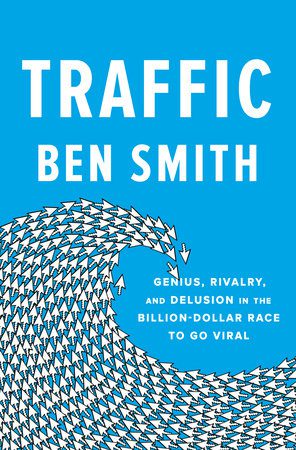
Ben Smith picked just the right title for his saga of BuzzFeed, Gawker, and The Huffington Post: Traffic (though in the end, he credits the able sensationalist Michael Wolff with the choice). For what Ben chronicles is both the apotheosis and the end of the age of mass media and its obsessive quest for audience attention, for scale, for circulation, ratings, page views, unique users, eyeballs and engagement. 

Most everything I write these days — my upcoming books The Gutenberg Parenthesis in June and a next book, an elegy to the magazine in November, and another that I’m working on about the internet — is in the end about the death of the mass, a passing I celebrate. I write in The Gutenberg Parenthesis

The mass is the child and creation of media, a descendant of Gutenberg, the ultimate extension of treating the public as object — as audience rather than participant. It was the mechanization and industrialization of print with the steam-powered press and Linotype — exploding the circulation of daily newspapers from an average of 4,000 in the late nineteenth century to hundreds of thousands and millions in the next — that brought scale to media. With broadcast, the mass became all-encompassing. Mass is the defining business model of pre-internet capitalism: making as many identical widgets to sell to as many identical people as possible. Content becomes a commodity to attract the attention of the audience, who themselves are sold as a commodity. In the mass, everything and everyone is commodified.

Ben and the anti-heroes of his tale — BuzzFeed founder Jonah Peretti, Gawker Media founder Nick Denton, HuffPost founder Arianna Huffington, investor Kenny Lerer, and a complete dramatis personae of the early players in pure-play digital media — were really no different from the Hearsts, Pulitzers, Newhouses, Luces, Greeleys, Bennetts, Sarnoffs, Paleys, and, yes, Murdochs, the moguls of mass media’s mechanized, industrialized, and corporate age who built their empires on traffic. The only difference, really, was that the digital moguls had new ways to hunt their prey: social, SEO, clickbait, data, listicles, and snark.

Ben tells the story so very well; he is an admirable writer and reporter. His narrative whizzes by like a local train on the express tracks. And it rings true. I had a seat myself on this ride. I was a friend of Nick Denton’s and a member of the board of his company before Gawker, Moreover; president of the online division of Advance (Condé Nast + Newhouse Newspapers); a board member for another pure-play, Plastic (a mashup of Suck et al); a proto-blogger; a writer for HuffPost; and a media critic who occasionally got invited to Nick’s parties and argued alongside Elizabeth Spiers at his kitchen table that he needed to open up to comments (maybe it’s all our fault). So I quite enjoyed Traffic. Because memories.

Traffic is worthwhile as a historical document of an as-it-turns-out-brief chapter in media history and as Ben’s own memoir of his rise from Politico blogger to BuzzFeed News editor to New York Times media critic to co-founder of Semafor. I find it interesting that Ben does not try to separate out the work of his newsroom from the click-factory next door. Passing reference is made to the prestige he and Jonah wanted news to bring to the brand, but Ben does not shy away from association with the viral side of the house. 

I saw a much greater separation between the two divisions of BuzzFeed — not just reputationally but also in business models. It took me years to understand the foundation of BuzzFeed’s business. My fellow media blatherers would often scold me: “You don’t understand, Jeff,” one said, “BuzzFeed is the first data-driven newsroom.” So what? Every newsroom and every news organization since the 1850s measured itself by its traffic, whether they called it circulation or reach or MAUs. 

No, what separated BuzzFeed’s business from the rest was that it did not sell space or time or even audience. It sold a skill: We know how to make our stuff viral, they said to advertisers. We can make your stuff viral. As a business, it (like Vice) was an ad agency with a giant proof-of-concept attached.

There were two problems. The first was that BuzzFeed depended for four-fifths of its distribution on other platforms: BuzzFeed’s own audience took its content to the larger audience where they were, mostly on Facebook, also YouTube and Twitter. That worked fine until it didn’t — until other, less talented copykittens ruined it for them. The same thing happened years earlier to About.com, where The New York Times Company brought me in to consult after its purchase. About.com had answers to questions people asked in Google search, so Google sent them to About.com, where Google sold the ads. It was a beautiful thing, until crappy content farms like Demand Media came and ruined it for them. In a first major ranking overhaul, Google had to downgrade everything that looked like a content farm, including About. Oh, well. (After learning the skills of SEO and waiting too long, The Times Company finally sold About.com; its remnants labor on in Barry Diller’s content farm, DotDash, where the last survivors of Time Inc. and Meredith toil, mostly post-print.)

The same phenomenon struck BuzzFeed, as social networks became overwhelmed with viral crap because, to use Silicon Valley argot, there was no barrier to entry to making clickbait. In Traffic, Ben reviews the history of Eli Pariser’s well-intentioned but ultimately corrupting startup Upworthy, which ruined the internet and all of media with its invention, the you-won’t-believe-what-happened-next headline. The experience of being bombarded with manipulative ploys for attention was bad for users and the social networks had to downgrade it. Also, as Ben reports, they discovered that many people were more apt to share screeds filled with hate and lies than cute kittens. Enter Breitbart. 

BuzzFeed’s second problem was that BuzzFeed News had no sustainable business model other than the unsustainable business model of the rest of news. News isn’t, despite the best efforts of headline writers, terribly clickable. In the early days, BuzzFeed didn’t sell banner ads on its own content and even if it had, advertisers don’t much want to be around news because it is not “brand safe.” Therein lies a terrible commentary on marketing and media, but I’ll leave that for another day. 

Ben’s book comes out just as BuzzFeed killed News. In the announcement, Jonah confessed to “overinvesting” in it, which is an admirably candid admission that news didn’t have a business model. Sooner or later, the company’s real bosses — owners of its equity — would demand its death. Ben writes: “I’ve come to regret encouraging Jonah to see our news division as a worthy enterprise that shouldn’t be evaluated solely as a business.” Ain’t that the problem with every newsroom? The truth is that BuzzFeed News was a philanthropic gift to the information ecosystem from Jonah and Ben.

Just as Jonah and company believed that Facebook et al had turned on them, they turned on Facebook and Google and Twitter, joining old, incumbent media in arguing that Silicon Valley somehow owed the news industry. For what? For sending them traffic all these years? Ben tells of meeting with the gray eminence of the true evil empire, News Corp., to discuss strategies to squeeze “protection money” (Ben’s words) from technology companies. That, too, is no business model. 

Thus the death of BuzzFeed news says much about the fate of journalism today. In Traffic, Ben tells the tale of the greatest single traffic driver in BuzzFeed’s history: The Dress. You know, this one: 

At every journalism conference where I took the stage after that, I would ask the journalists in attendance how many of their news organizations wrote a story about The Dress. Every single hand would go up. And what does that say about the state of journalism today? As we whine and wail about losing reporters and editors at the hands of greedy capitalists, we nonetheless waste tremendous journalistic resource rewriting each other for traffic: everyone had to have their own story to get their own Googlejuice and likes and links and ad impressions and pennies from them. No one added anything of value to BuzzFeed’s own story. The story, certainly BuzzFeed would acknowledge, had no particular social value; it did nothing to inform public discourse. It was fun. It got people talking. It took their attention. It generated traffic

The virus Ben writes about is one that BuzzFeed — and the every news organization on the internet and the internet as a whole — caught from old, coughing mass media: the insatiable hunger for traffic for its own sake. In the book, Nick Denton plays the role of inscrutable (oh, I can attest to that) philosopher. According to Ben, Nick believed that traffic was the key expression of value: “Traffic, to Nick … was something pure. It was an art, not a science. Traffic meant that what you were doing was working.” Yet Nick also knew where traffic could lead. Ben quotes him telling a journalist in 2014: “It’s not jonah himself I hate, but this stage of internet media for which he is so perfectly optimized. I see an image of his cynical smirk — made you click! — every time a stupid buzzfeed listicle pops on Facebook.”

Nick also believed that transparency was the only ethic that really mattered, for the sake of democracy. Add these two premises, traffic and transparency, together and the sex tape that was the McGuffin that brought down Gawker and Nick at the hands of Peter Thiel was perhaps an inevitability. Ben also credits (or blames?) Nick for his own decision to release the Trump dossier to the public on BuzzFeed. (I still think Ben has a credible argument for doing so: It was being talked about in government and in media and we, the public, had the right to judge for ourselves. Or rather, it’s not our right to decide; it’s a responsibility, which will fall on all of us more and more as our old institutions of trust and authority — editing and publishing — falter in the face of the abundance of talk the net enables.)

The problem in the end is that traffic is a commodity; commodities have no unique value; and commodities in abundance will always decrease in price, toward zero. “Even as the traffic to BuzzFeed, Gawker Media, and other adept digital publishers grew,” Ben writes, “their operators began to feel that they were running on an accelerating treadmill, needing ever more traffic to keep the same dollars flowing in.” Precisely

Traffic is not where the value of the internet lies. No, as I write in The Gutenberg Parenthesis (/plug), the real value of the internet is that it begins to reverse the impact print and mass media have had on public discourse. The internet devalues the notions of content, audience, and traffic in favor of speech. Only it is going to take a long time for society to relearn the conversational skills it has lost and — as with Gutenberg and the Reformation, Counter-Reformation, and Thirty Years’ War that followed — things will be messy in between. 

BuzzFeed, Gawker, The Huffington Post, etc. were not new media at all. They were the last gasp of old media, trying to keep the old ways alive with new tricks. What comes next — what is actually new — has yet to be invented. That is what I care about. That is why I teach. 

Publishers’ political blackmail

Senator Amy Klobuchar’s oxymoronically titled Journalism Competition and Preservation Act — it might better be named the Journalism Lobby Blackmail Bill — was just dealt a kick to the kidneys by a confused Ted Cruz amendment. It is delayed but not dead. It is still wrong-headed and dangerous and here I’ll examine how.

As ever, Mike Masnick does stellar work picking apart the bill’s idiocy and impact in detail. In summary, the JCPA would require big internet companies — Google, Microsoft, Apple, and Amazon, though perhaps not the incredibly shrinking Facebook — to negotiate with midsize newspaper publishers. Freed from antitrust, the publishers may band together and demand payment for linking to their news. Yes, linking to their news. The value platforms bring in terms of promotion, distribution, and audience is not a factor in these negotiations. If agreement cannot be reached, talks go to a co-called arbitration process and the platforms can be forced to carry and pay for publishers’ content.

Stop right there. That government would force anyone to carry anyone else’s speech is a clear violation of the First Amendment. Compelled speech is not free speech. Keep in mind that the extremist right in Congress is dying to concoct ways to force platforms to carry their noxious speech; Klobuchar et al are paving a way for them. That government would force anyone to pay to link to others is a fundamental violation of the principles of the internet. Links are free. Links are speech. That government would insert itself in any way into journalism and speech is simply unconstitutional.

Let us now consider the wider context of this legislation and where it goes wrong.

Newspaper publishers do not deserve payment

God did not grant newspaper publishers the revenue they had. They chose not adapt to the internet; I spent decades watching them at close range. Competitors offered better, more efficient and effective vehicles for advertisers, who fled overpriced, inefficient, monopolistic newspapers at first opportunity. Readers, whose trust in news has been falling since the ’70s, also fled. Welcome to capitalism, boys.

Today, most newspaper chains in America are controlled by hedge funds. I briefly served on digital advisory boards for one American and one Canadian company controlled by the hedgies and witnessed what they did: selling every possible asset, cutting costs to the marrow, and stopping all investment in innovation. The JCPA offers no real means of accountability to assure that platform money would go to journalism serving communities’ needs, not straight into the pockets of the hedgies. (The JCPA shares that problem with Rupert Murdoch’s similar blackmail bill in Australia.)

Journalists should not be lobbyists

I am appalled that legacy journalistic trade organizations — led by the News Media Alliance (née Newspaper Association of America, recently merged with the former Magazine Publishers Association)— have turned into lobbyists, cashing in news’ political capital and engaging in conflict of interest in the name of protectionism. Newspapers exist to stand independent of power in government, not beggars at its trough. Journalists themselves should rise up to protest what their publishers have ganged together to do: to sell their souls.

Newspapers have a long history of antitrust

This shameful behavior of publishers is not new. When radio emerged as print’s first competitor, papers did everything possible to prevent it from competing in news. Here are a few paragraphs recounting that episode from my upcoming book with Bloomsbury, The Gutenberg Parenthesis.*

In Media at War, Gwynth Jackaway chronicled American newspapers’ opposition to broadcast in a tale of defensiveness and protectionism that would be reprised with the arrivals of television and the internet. “Having been presented with a new technology, contemporary actors voice their concerns about how the new medium will change their lives, and in so doing they reveal their vulnerabilities,” she wrote…. Newspaper publishers tried to disadvantage their new competitors, strong-arming radio executives to agree to abandon news gathering, to buy and use only reports supplied by three wire services, to limit news bulletins to five minutes, and to sell no sponsorship of news. Their agreement also prohibited commentators from even discussing news less than twelve hours old (a so-called “hot news” doctrine the Associated Press would try to establish against internet sites as late as 2009). The pact fell away as wire services and station-owning newspapers bristled under its restrictions.

Print publishers tried other tactics. They threatened to stop printing radio schedules in their newspapers, but readers protested and radio won again. They lobbied to have radio regulated by the federal government and then unironically maintained that radio companies under government control would be unreliable covering government. The newspaper press tried to have radio reporters barred from the Congressional press galleries. They called radio a “monopolistic monster” and lobbied for a European model of government control of the airwaves. They blamed radio for siphoning off advertising revenue, though the Great Depression was more likely to blame for newspapers folding or consolidating in the era. They also lobbied for the government to limit or ban advertising on radio.

All their protectionism was cloaked in self-important, sacred rhetoric, with publishers accusing radio of manifold sins. Radio, they said, spread loose statements and false rumors: fake news. Radio “filched” and “lifted” news from newspapers. Radio seduced the public with the human voice to exploit emotions, to “catch and hold attention,” and to excite listeners. Will Irwin, a muckraking print journalist, wrote in his book Propaganda and the News: “The radio, through the magic inherent in the human voice, has means of appealing to the lower nerve centers and of creating emotions which the hearer mistakes for thoughts.” Radio was “a species of show business, with overtones of peddling and soap-boxing.” Editor and Publisher maintained that “the sense of hearing does not satisfy the same intellectual craving as does the sense of reading” and the editor of American Press claimed that “most folks are eye-minded. They get only impressions through their ears; they get facts through their eyes.”

“Using the doomsday approach that so often accompanies the invocation of ‘sacred’ values,” wrote Jackaway, “they warned that the values of democracy and the survival of our political system would be endangered” if radio took on the roles of informing the electorate and serving a marketplace of ideas….

“Never,” said Jackaway, “is there the admission that public opinion might be manipulated by the printed word as well as the spoken word, or any recognition that by attempting to control radio news the press was actually infringing upon the broadcasters’ freedom of expression.”

Sound familiar? This is the same industry that today wants to be excused from antitrust law and Klobuchar et al are doing its bidding.

Government must not license and limit journalism

The JCPA sets a definition for news organizations eligible for its benefits and thus defines and de facto licenses journalists. Beware: What government giveth government may take away.

To avoid accusation that the bill would transfer money from big tech to big media, the JCPA sets a limit of 1,500 employees. It also sets a floor of $100,000 revenue. Thus, many are excluded. In our entrepreneurial program at CUNY’s Newmark Journalism School, we train independent journalists to serve communities and markets; they are too small. Our Center for Community Media and its Black, Latino, and Asian Media Initiatives work with a wide array of news organizations serving communities; many of them are too small. LION, the wonderful association serving local news organizations, says 44 percent of its members are too small.

These newcomers and publishers of color are the real innovators in journalism, not the old, tired, failing, incumbent newspapers. They are left out of the JCPA. The JCPA is aimed at companies whose papers are, in the immortal words of Goldilocks, just right — that is, the ones controlled by the hedge funds who pay the lobbyists.

The help platforms should give

I am all for technology companies helping the cause of news. In full disclosure, my school receives funds from various of the technology companies to fight disinformation, to independently study the internet, to train journalists in the new skills of product, to train community news organizations in business innovation. For years, I’ve attended Newsgeist, an event started by the Knight Foundation and Google, and there I began what is now the tradition of running a session asking, “What should Google do for news?”

Forcing payments from technology companies as this bill and others elsewhere would do is no business model. It’s blackmail. What we need instead is help to develop new models. Google does that with subscriptions and YouTube players offering monetization. Facebook used to do that in various programs but has thrown up its hands and given up on news (I frankly do not blame them). Apple and Microsoft send audience to news. Jeff Bezos saved The Post. We need more of this kind of help. JCPA does nothing to make news sustainable.

Should news even be copyrighted?

The legislation in the U.S., Australia, and Canada, as well as Germany’s Leistungsschutzrecht, Spain’s link tax, and the EU’s resulting Article 15 are all attempts to extend copyright.

In The Gutenberg Parenthesis, I also write about the origins of copyright. Note well that at the start, in the Statute of Anne of 1710 and in the first American copyright laws, news was explicitly not included. Not until 1909 in the United States did copyright law include newspapers, but even still, according to Will Slauter in Who Owns the News?, some still debated whether news articles, as opposed to literary features, were protected, for they were the product of business more than authorship.

The first, best government subsidy newspapers received was a franking privilege from the Post Office, starting in 1792, which allowed publishers to exchange editions with each other for the express purpose of copying each others’ news. This, too, from my book: “Newspapers employed ‘scissors editors’ to compile columns of reports from other papers. Editors would not complain about being copied because they copied in turn — but they would protest and loudly about not being credited…. It is ironic that newspapers — which since their founding in Strasbourg in 1605 have been compiled from news created by others — today complain that Google, Facebook, et al steal their property and value by quoting headlines and snippets from articles in the process of sending them readers via links. The publishers receive free marketing.”

I came to learn that copyright was created not to protect creators. Instead, copyright turned creation into a tradable asset, benefitting the publishers and producers who acquired rights from writers.

Just as a thought experiment, instead of extending copyright as so many legacy publishers in league with legislators wish to do, let us imagine what journalism might be today without copyright.

Without copyright, news organizations might not concentrate, as they do now, on the notion of journalism as a product to be restricted and sold to the privileged who can afford it. They are returning news to what it was before the printing press, when it was contained in expensive, exclusive newsletters called avvisi. Meanwhile, disinformation, lies, and propaganda will always fly free.

Without copyright, journalists might see news as a service that individuals and communities could choose to support — as they do public radio, The Guardian, and countless newsletters — because it is useful to them.

Without copyright, journalists might then concentrate on creating service of original value rather than employing digital scissors editors to rewrite each others’ stories into trending clickbait to make their own content to fill their own pages to attract their own SEO and social links to feed ever-decreasing programmatic CPMs.

Without copyright, they might turn all that wasted journalistic labor and talent loose on watching, reporting on, and holding accountable the politicians they are instead now lobbying.

Without copyright and the Gutenberg-era notions of content, property, and product, journalists might also feel freer to collaborate with the public, rather than speaking and selling to the public. Journalists might come to center journalism in the community rather in themselves, as we teach in our Engagement Journalism program at Newmark.

Without copyright, journalism might no longer be seen as a widget to be used as a wedge but instead a contributor to the quality of public discourse.

Do I want to get rid of copyright for news? Actually, yes, I do. I know that is not going to happen. But I can at least beg my legislators — I am looking at you, Cory Booker — not to extend and mangle copyright in the service of hedge funds and failed newspaper monopolists. Instead, let us find ways and means to support collaboration and innovation to improve news.


* The Gutenberg Parenthesis is scheduled to be published by Bloomsbury in June. You can be assured I would be sending you to a preorder link now if it existed, but it won’t until November. Watch this space.