
A 5-minute read. No fluff. Just what matters and what to do about it.
Let me be real with you.
Most AI newsletters recap the news and stop there. You’re left with headlines and no playbook.
That’s not what this is.
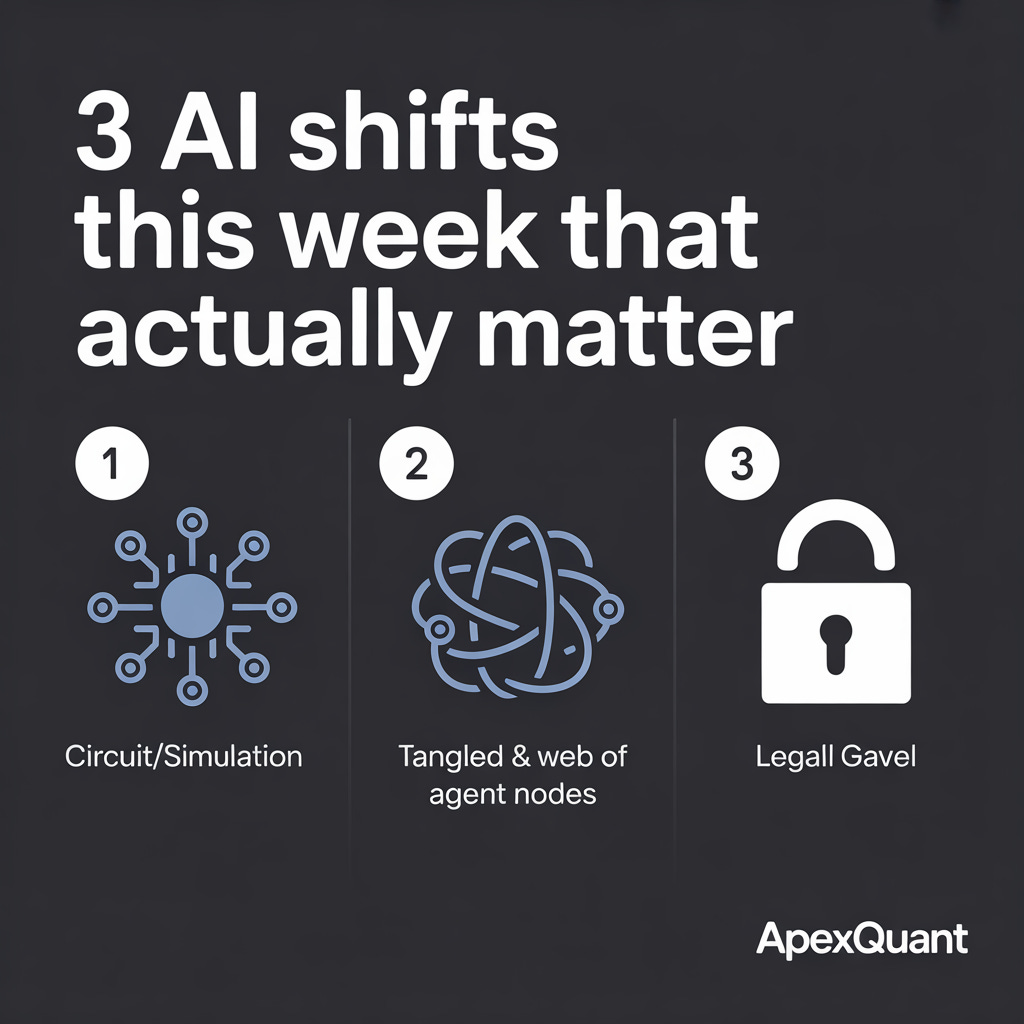
This week three things happened that directly affect how you run your agency, build your automations, and protect your business. I’m going to break each one down — and tell you exactly what to do next.
Here’s what happened: At CadenceLIVE Silicon Valley 2026, Cadence and NVIDIA announced an expanded partnership combining agentic AI, physics-based simulation, and digital twins to accelerate engineering across semiconductors, physical AI systems, and AI factories.
The tech media covered it as a robotics story. It’s not.
Here’s what it actually is: proof that the biggest companies on Earth are now building exact digital replicas of their operations — and running AI agents through them before touching anything real.
Think about what that means for you.
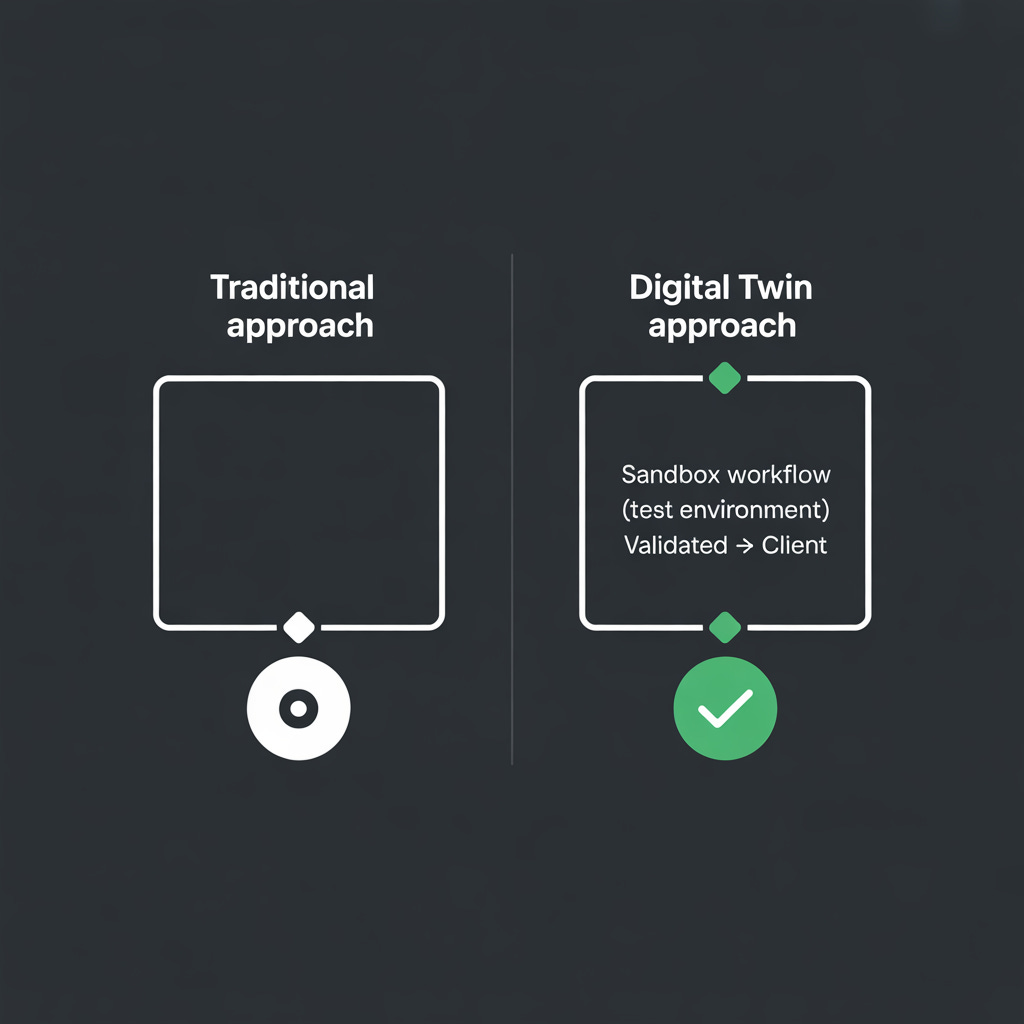
You don’t need to simulate a factory. But you can simulate your business process. Your lead flow. Your client onboarding. Your content pipeline.
Build a digital twin of your workflow in n8n. Test new automations in a sandboxed environment before they touch live clients. Run edge cases. Break things safely. Deploy only what works.
The combined Cadence-NVIDIA stack coordinates AI agents across the full lifecycle — from training and optimization through to real-world deployment feedback. That’s exactly what a well-built n8n workflow does at agency scale.
The principle is the same. The price tag is very different.
The lean agency version of this? Duplicate your live workflow. Run tests. Validate outputs. Only then push to production. If you’re not already doing this, you’re shipping blind.
This one hit close to home for me.
Alcon, a global medical device company, let individual teams build their own AI agents independently over the past year. The result? 900-plus agents built in silos. Their Director of System Integrations called it “a security risk, first and foremost.”
Alcon is a massive enterprise. But the same pattern happens at agency scale — just faster and messier.
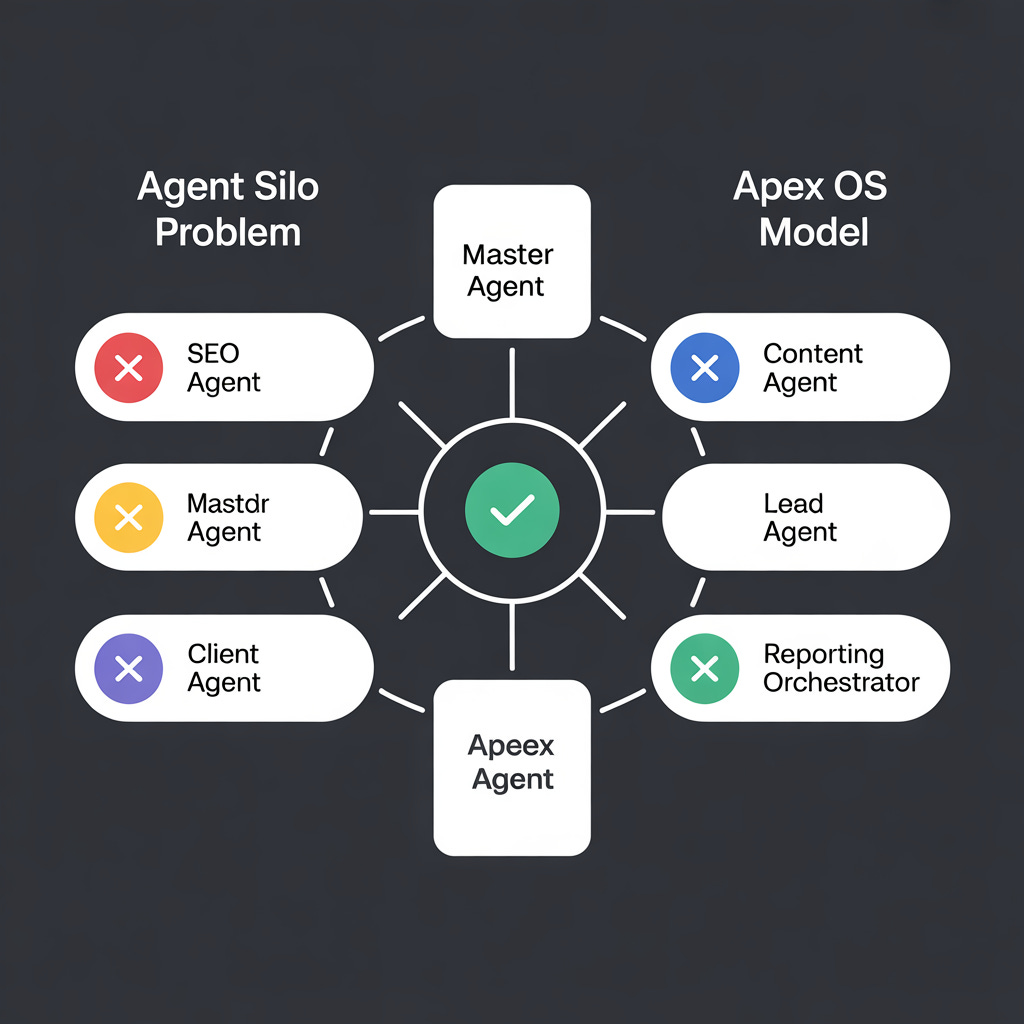
You build one agent for lead gen. Another for content. Another for client reporting. Another for onboarding. None of them talk to each other. Data gets duplicated. Workflows break. You spend more time fixing agents than running your business.
Salesforce’s own data shows that half of all AI agents in enterprises currently operate in isolated silos, resulting in disconnected workflows and redundant automations.
The fix isn’t more agents. It’s one Master Orchestrator.
I call it the Apex OS model. One parent workflow in n8n that acts as the brain. It receives the trigger, decides which specialist agent handles it, passes the context, gets the output, and routes to the next step. Every agent reports back to one place. No silos. No chaos.
Think of it like this: you don’t hire ten different managers who never talk to each other. You have one ops lead who coordinates the team. Your AI stack should work the same way.
If you’ve been building agents one-by-one and wondering why things feel messy — this is why.
This is the one nobody in our space is talking about. And it’s the most important.
In February 2026, a New York federal judge made a landmark ruling. Judge Rakoff of the Southern District of New York addressed “a question of first impression nationwide” and ruled that written exchanges between a criminal defendant and generative AI platform Claude were not protected by attorney-client privilege or the work product doctrine.
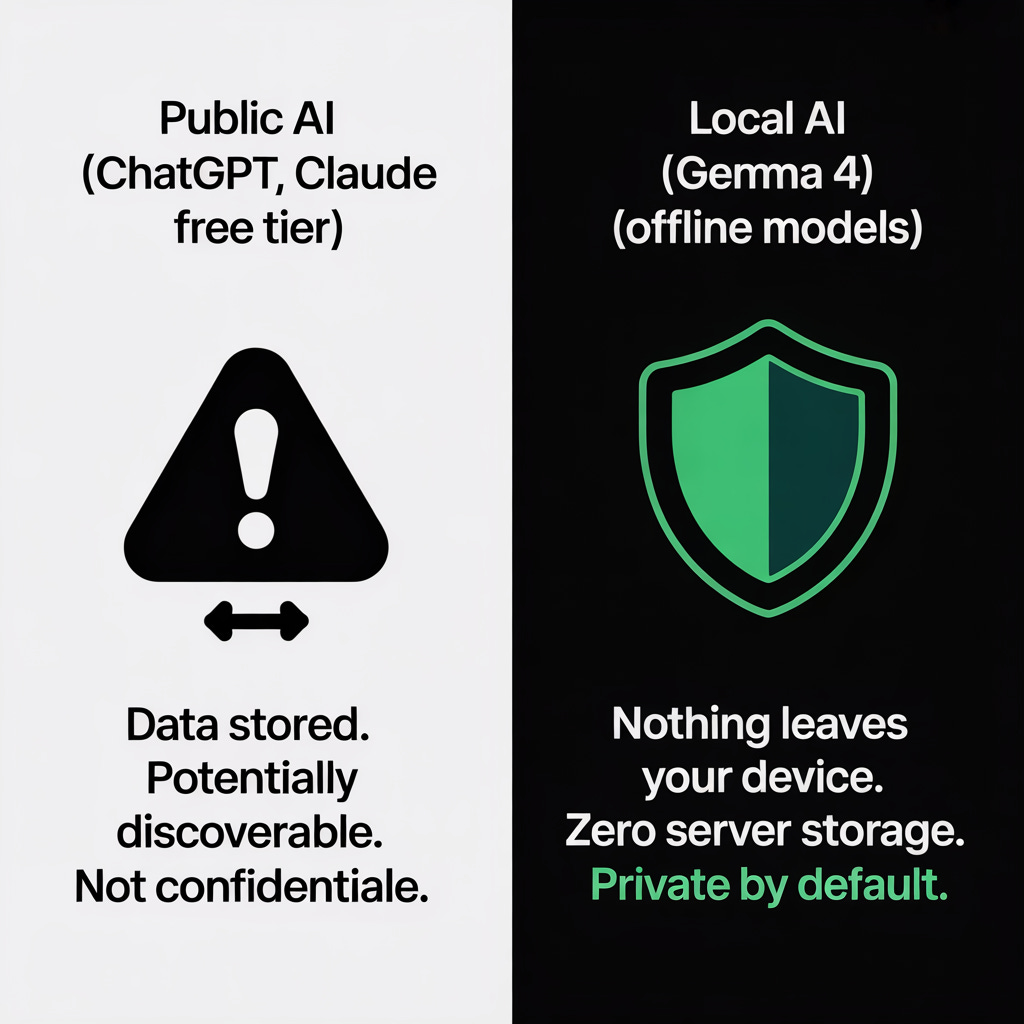
Translation: anything you type into a public AI tool about your business — client contracts, deal strategy, legal disputes, sensitive ops — is potentially discoverable in court.
Law firms are now warning clients that anything shared with consumer AI chatbots can be subject to legal discovery, and recommending the use of only enterprise-level AI tools with contractual confidentiality guarantees when handling sensitive information.
This isn’t theoretical. This is a federal ruling. It already happened.
Here’s what you need to do right now:
Stop putting sensitive client strategy, contract details, or anything you wouldn’t want a judge to read into standard ChatGPT or any public AI window. Full stop.
For sensitive work, use local, privacy-first models. Gemma 4 just hit full offline mobile inference — meaning you can now run a capable AI model entirely on your device with zero data leaving your machine. Nothing going to a server. Nothing stored. Nothing discoverable.
For your everyday agency work that isn’t sensitive? Keep using the tools you know. But be deliberate about the line.
The rule is simple: if you wouldn’t say it in a public forum, don’t say it to a public AI.
I’ve been testing a lot of tools for the voice layer of my automation stack. Most of them sound like robots reading a script.
ElevenLabs doesn’t.
I cloned my own voice and now use it for client onboarding walkthroughs, workflow explainer videos, and automated audio content — all generated from my written scripts with zero recording time. A client asked me last week when I found time to record all the explainers. I didn’t. An AI did it in my voice.
If you’re building any client-facing automation — onboarding, reporting, content, outreach — and you’re not using voice yet, you’re leaving a massive engagement gap on the table. Text agents are table stakes now. Voice is where the differentiation is.
Talk directly to ElevenLabs’ Success Agent and see what’s actually possible in your stack. It’s genuinely worth 5 minutes.
→ Try ElevenLabs and talk to their AI Success Agent here
23,800 founders and agency owners read this every Tuesday. If your tool, product, or service belongs in front of that audience — let’s talk.
→ Book your ad slot here or email me directly: nefro992@gmail.com
Three stories. Three direct lessons for your business.
Digital twins aren’t just for NVIDIA. Build a sandbox for your workflows before touching live clients.
Stop building agent silos. One orchestrator to rule them all — that’s your Apex OS.
Public AI is not private. Sensitive business strategy stays off public tools. Full stop.
The founders who read between the headlines and adjust their operations — those are the ones who stay ahead.
See you Tuesday.
— Patrick
💬 Drop a comment below — which of these three stories hit hardest for your business? And what do you want me to break down in next Tuesday’s issue?
(Most requested topic gets the full workflow breakdown next week.)
Found this useful? Forward it to one founder who needs to hear it.
Comments
Nothing yet. Say the first thing.
Sign in to join the conversation.