
I have continually put off writing this post because I find it very hard to describe this novel and really articulate my thoughts on it. It feels like the kind of thing I would love to have a conversation about with someone else who has read it, but to try to describe it out of context almost feels like doing it a disservice. The book is sectioned into four distinct sections, each following the reconstructed life of a different person. I say reconstructed because none of them are actually present at the time that the narration is taking place, all being told to us by one narrator who is recounting his time having conversations with other people who are talking about the man in question.
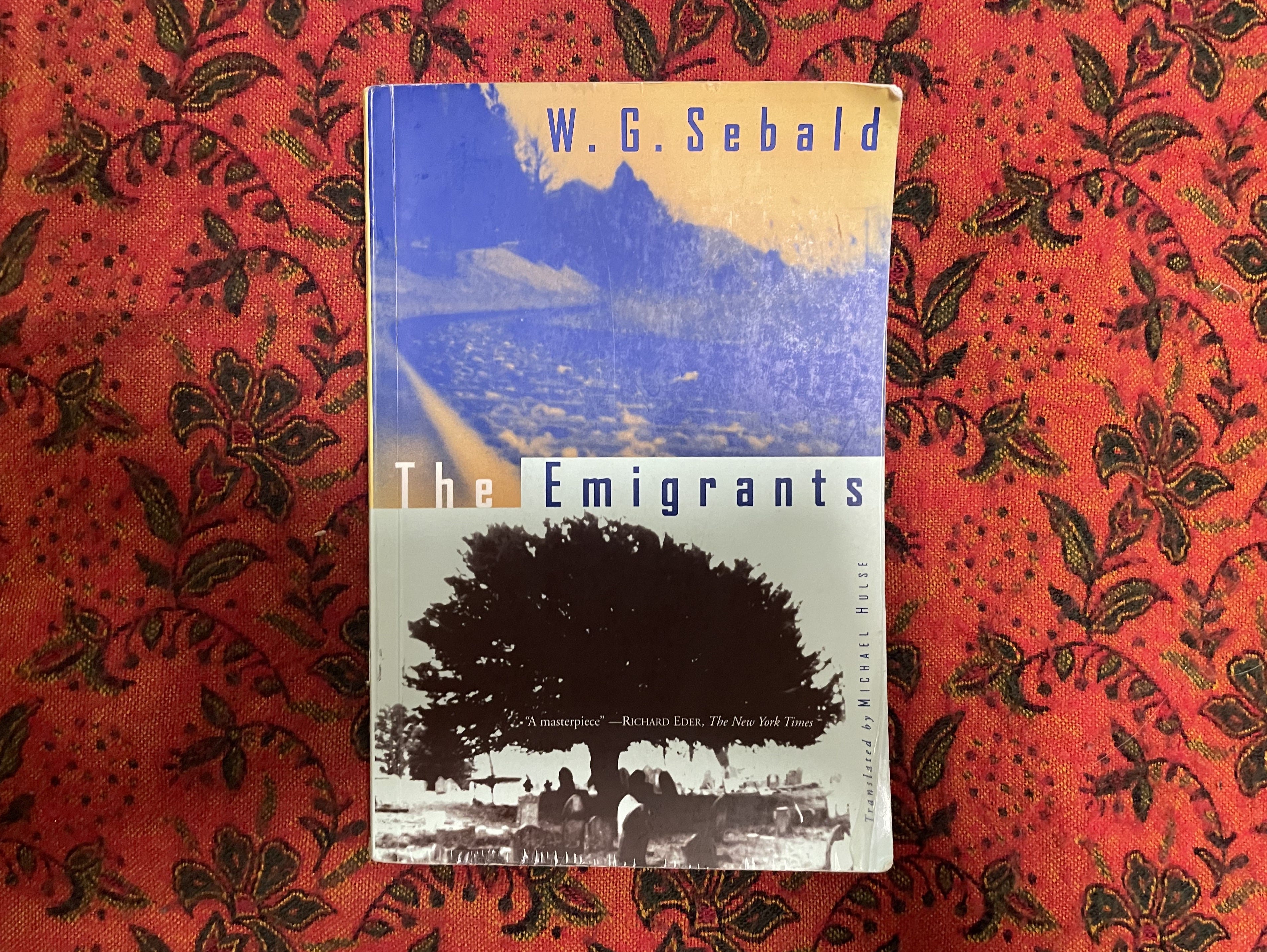
Obviously as someone very into POV and perspective, this is very interesting to me!
The reconstruction is absolutely the point, and the narration often becomes amorphous, the narrator adopting wholesale the speech he is remembering someone else saying. For me, it often became unclear who is speaking, or at least difficult to follow, and I had to go back and find the point when the narrative switched. This difficulty definitely feels intentional, and I didn’t even mind it. It felt almost suitable, like these are the confusions that happen when you’re trying to get to know the personality of someone who is no longer here - there are labyrinthian layers of truth and games-of-telephone where reality becomes obscured. I read the novelist and critic Brandon Taylor assert that Rachel Cusk’s style is actually based on Sebald’s, and while I haven’t read any other works by Sebald, I can see where he says that - the technical craft elements bringing us from first person narrator to second hand speaker are the same. However, I think they are utilized to very different ends. The narrator in The Emigrants is interested in these four people, all of whom he has a personal connection with. He wants to bring these people to life, to understand him more, and while his personal story does get told a little bit through those explorations and excursions, it is not the focus. The way Cusk utilizes the same technical style is all within the service of defining the narrator by putting her in relief of what other people are saying to her, how she responds to them, and what details of them she observes. The narrator becomes a black hole or a shadow, but from all of the observations around her we can then infer a lot about her.
The concept of returning to the past is definitely explored and a repeated theme, one which someone could (and probably has) written a whole academic paper on. I will spare both you and me of that here. The fact that all of these men are Jewish and German and living in the 20th century is absolutely important to that theme: the spectre of the holocaust looms over everything until it is explicitly invoked in the final section.
The inclusion of photos was at times perplexing to me, but ultimately I think they add something to the muddied water of the perspective- some photos are old and being shown to the narrator by the people he’s speaking to, but sometimes they are contemporary and its unclear who would have taken the picture or how the narrator would have gotten it. Added more questions and thought experiments to a book definitely intent on fostering those things.
It took me a long time to read this book and i’m not sure why. When I had it open in my hands and was reading it I really enjoyed it, especially picking up on all of the connections and repetitions and themes as things went on, but when it was closed and on the table I never really wanted to pick it up. It might have just been a case of my current mood not matching the temperament of the book, or that while it is interesting intellectually, I wasn’t really hooked. Maybe as I said at the beginning I would have gone through it faster if I had someone to discuss it with. But this is the closest I’ve got! Until next time!
No posts
Comments
Nothing yet. Say the first thing.
Sign in to join the conversation.