
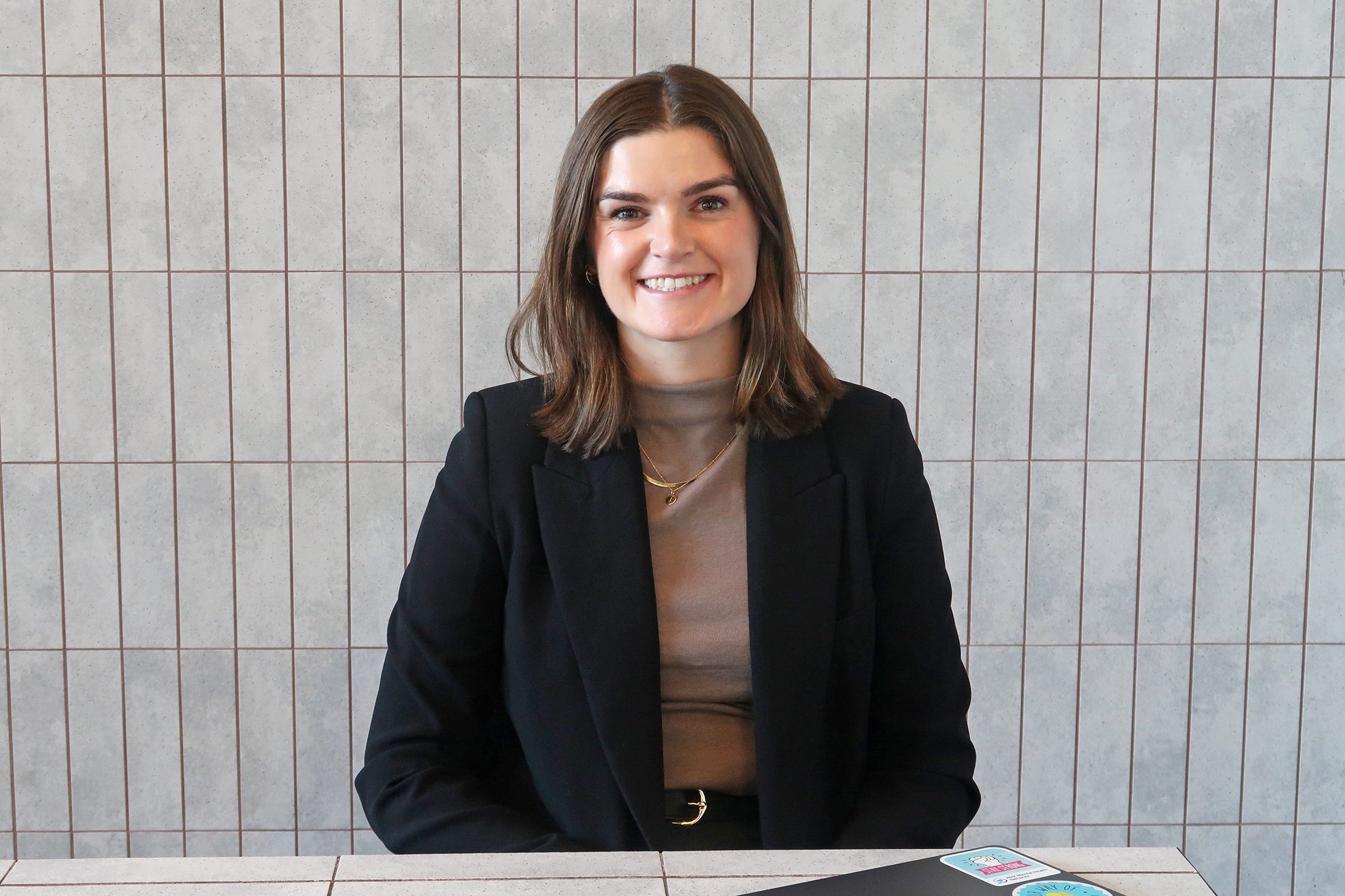
Before I worked at ANZ I had never worked in finance, heard of Temporal, written a line of code in Go, or deployed anything to Google Cloud.
When I applied for an engineering job at ANZ I had just moved to Australia from Ireland. I’d only worked in one company previously, so the thought of working on so many new technologies day-to-day in a new job in a new industry was a little daunting.
During my interview I asked the interviewer what their favourite thing about working on ANZ Plus was, and they said it was the amount of time they were given to upskill in these new areas. This was reassuring and I was somewhat put at ease when I heard the response.
Despite my trepidation about using new technologies in a new industry, in the end, the draw of working on greenfield projects and the challenge of jumping from everything I knew in my last job as a C# .NET engineer to work with more modern technologies was enough for me to accept the offer.
While the learning curve for the first six months was steep, looking back, I’m confident I made the right decision. Fast-forward two years, I’m now a Senior Engineer and I’ve reached the stage where I’m comfortable with all the things that initially made me question whether taking this role was the right career move for me.
So, what did the promised – and actual – upskilling look like?
Learning Go as a language takes some adjustment – particularly if you come from a strongly object-oriented (Microsoft) background like I did. Coincidentally though, its quite explicit nature makes it more readable and perhaps easier to pick up than other languages.
Go is a reasonably new language that was created in 2007 so it’s still being very actively developed, which keeps things interesting for the engineers who use it. Late in 2024, I was lucky enough to attend the annual GopherCon with ANZ, where one of the speakers wholeheartedly encouraged the attendees to do their best to ‘break Go’ and use it for things it wasn’t designed to do, to test its limits and help with its development.
The transition to Google Cloud (GCP) from AWS was probably the easiest one for me to make given that for most tools in AWS there is an equivalent in GCP, so it’s just a matter of learning the new names.
I’ve now worked in a few teams in my time at ANZ and have had different levels of interaction with GCP. I worked on one project that involved building a microservice to enable the offset feature for our home loan product offering. This involved me helping to create the Kubernetes configuration from scratch and successfully deploying the service for the first time.
I also got the opportunity to get hands-on with Terraform, updating infrastructure as code to create Google Pub/Sub resources. In general, getting engineers more familiar with GCP is something ANZ is willing to invest in. They offer training and allowances for becoming certified to those who are interested.
Temporal is new to most people who join ANZ. It’s a platform that many backend engineering teams use for ‘durable execution.’ It aims to reduce code complexity particularly around retry mechanisms and defining the workflow of a service.
Temporal is best used for services that don’t require ultra-high performance but do need to be fault tolerant and have the capability to retry certain steps over a long period of time. In the finance industry – and specifically for home loans – this is hugely beneficial as some agreements and transactions can span multiple months.
Temporal was only founded in 2019 but has already become popular with leading tech companies such as Netflix and Stripe. While I’m certainly not an expert yet, I’m thankful I get the opportunity to work with a modern technology and keep up with new features and additions.
This makes every day seem like a school day and keeps the problems you encounter daily interesting.
At a time when Generative AI is becoming increasingly present in the workplace, ANZ is encouraging engineers to innovate and find new ways to improve productivity and solve problems using AI assistants such as Google’s Gemini and Github Copilot.
The opportunity to use these (GenAI) tools is prevalent in the company, and the freedom to incorporate them into our day-to-day job is a welcome perk.
Github Copilot is readily available to ANZ engineers and can be integrated in our repositories and IDEs. As someone who was a bit late to the AI game, resisting the urge to ask Chat GPT everything for longer than I should have, I’m now gravitating towards Copilot reasonably often to assist with refactoring and test writing. I find it helps particularly well with reducing the amount of time it takes to meet code coverage and complexity requirements.
ANZ has a rich and ever-evolving tech stack and offers constant opportunities for growth. Whether it’s learning from leading innovators at guilds and showcases, or diving into something new, there’s significant support for personal development here.
While I don’t really know where all this new technology is heading, I’m comfortable that ANZ will continue to give me the support and tools I need to continue on my path.
Jenny is a Senior Engineer with seven years of experience specialising in backend development.
She’s passionate about solution design and simplifying complex problems, and aims to deliver scalable solutions that drive business efficiency.
She’s an advocate for improving ways of working and collaborating with cross-functional teams to design and build robust solutions and enhance testing methodologies ensuring systems are reliable and high-performing.
This article contains general information only – it does not take into account your personal needs, financial circumstances and objectives, it does not constitute any offer or inducement to acquire products and services or is not an endorsement of any products and services. Any opinions or views expressed in the article may not necessarily be the opinions or views of the ANZ Group, and to the maximum extent permitted by law, the ANZ Group makes no representation and gives no warranty as to the accuracy, currency or completeness of any information contained.
Comments
Nothing yet. Say the first thing.
Sign in to join the conversation.