
This past Friday—the first day of spring—I found myself in Washington, DC.
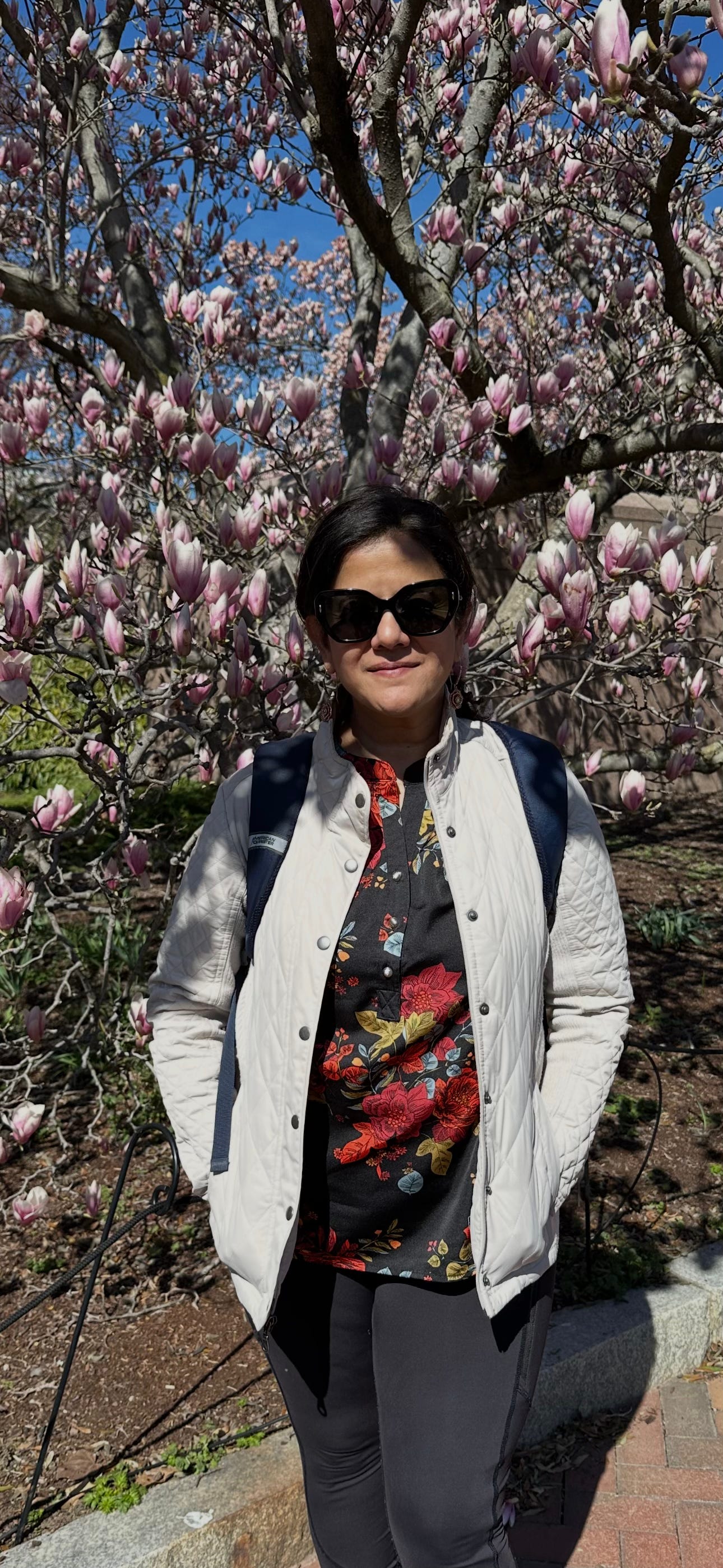
It was a small milestone. I had just dropped my son, a high schooler, off for his first day of work as a Science Explainer at the National Air and Space Museum. With a few hours to spare, I walked over—with my laptop—to the Smithsonian’s National Museum of Asian Art, just a few steps away.
Cherry blossoms were just beginning to bloom—a mesmerizing pink against the deep red brick of the Smithsonian Castle.
Baby daffodils lined the pathways, their heads bobbing—tentative, almost unsure—like a newborn calf finding its footing.
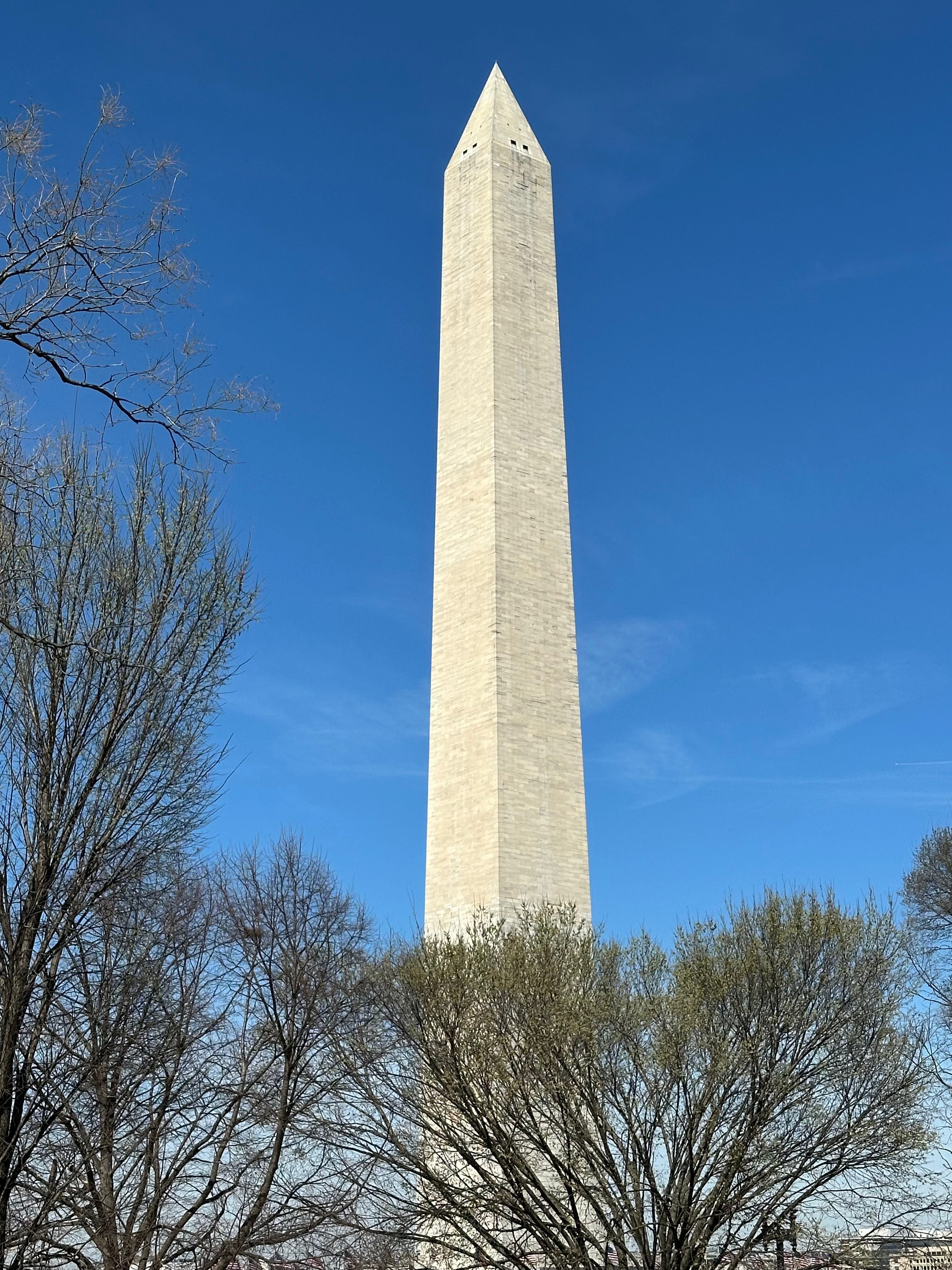
The Washington Monument appeared and disappeared—tall—through the branches, playing peekaboo against a clear blue sky, laying claim on the city of its birth.
And just beyond the museums, a familiar layering unfolded.
Colorful food trucks lined the streets—cheesy arepas next to smoky kabobs.
Policy conversations wove through the chatter of tourists taking in the capital.
Suits moved briskly past jean-clad visitors emerging, visibly moved, from the Holocaust Memorial.
Tram trolleys chugged alongside commuter cars, as the city moved at its many speeds.
Perhaps nowhere else do so many worlds intersect so closely as in Washington, DC.
In a city often defined by politics, Washington, DC also functions as something quieter and more expansive—a place where cultures, histories, and disciplines intersect in everyday life. On an ordinary spring morning, moving through its museums, streets, and conversations, one can experience the world in miniature.
Perspective, it turns out, is shaped not by staying in one lane, but by moving between them.
Inside the National Museum of Asian Art, I sat in quiet awe before an exhibit on Lord Vishnu, newly arrived from Cambodia, carrying with it centuries of history, craft, and belief.
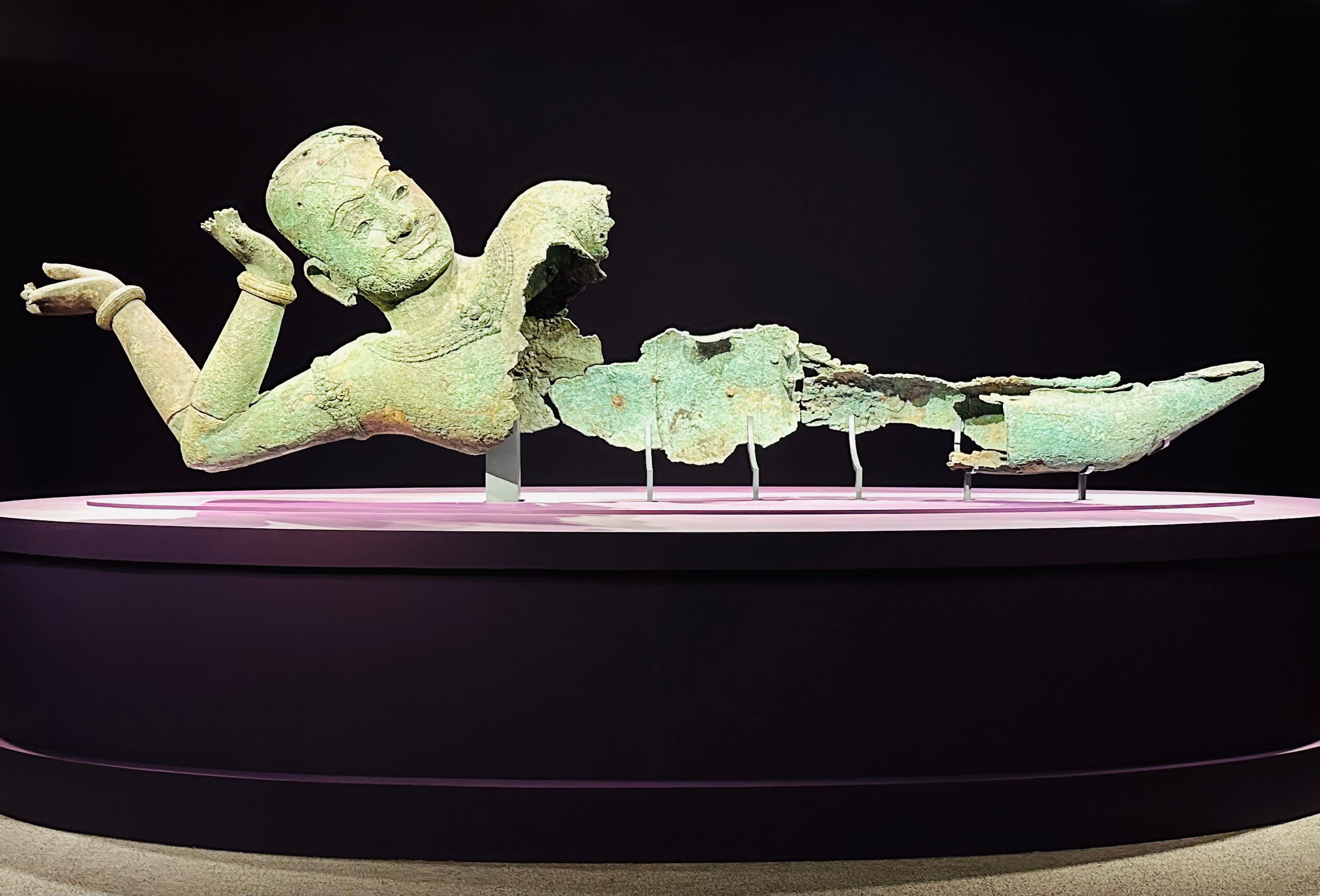
An accompanying documentary traced its origins to West Mebon, where the statue once stood in pure gold nearly a thousand years ago under the reign of Suryavarman II—before being pillaged during the Khmer Empire.
I never fail to savor a new slice of the world in this city. Diversity is its DNA.
From there, I moved through a recreated Tibetan shrine in deep reds and golds—intricate, symbolic, deeply still.
And as I registered one experience after another—there in the city of my professional beginnings—I was reminded of something central to my work as a writer:
Perspective rarely comes from a single domain.
It emerges when you move across worlds and begin to see both differences and shared histories.
Curiosity may kill a cat—but it also lets you live a thousand lives.
Like toggling in a single morning, between—
aerospace and ancient philosophy,
arepas and policy briefings,
memorials and meeting rooms,
tourists and senators.
Each has its own language.
Each has its own way of seeing.
And sometimes, those worlds intersect in the most unexpected places—like a graduate editing course tucked inside a stark United States Department of Agriculture building.
Only in DC.
Twenty-five years ago. From 8 to 10 pm. After a long working day.
The work of writing—especially in global contexts—is to bridge these worlds: to take what is complex or distant and make it human and clear.
To remind us that this city is not just a political corridor, but the world, lived in many flavors.
That kind of clarity doesn’t come from staying in one place.
It comes from paying attention.
From movement.
From moments that quietly expand how you see.
And DC, in its own way, makes that movement possible—bringing the world to your doorstep.
On this first day of spring—between cherry blossoms, food trucks, and a centuries-old shrine—my son finished his first day of work—his very first—and declared, with a mix of pride and surprise:
“That was fun… and I’m tired.”
I smiled.
“We’ve been doing ‘that’ for 20+ years,” I told him.
It is the spring of his professional life.
And despite the rain that soon set in, his future feels quietly luminous.
Later that evening, as we stepped out to gather yet another piece of the world—this time, Thailand, over a sumptuous dinner—the day seemed to come full circle.
And something else from earlier stayed with me.
Inside the museum, a centuries-old bronze of Vishnu reclining on Ananta—the endless one—weathered, fragmented, incomplete—held an unmistakable stillness.
Even in its time-worn state, the calm in his face endured.
As if untouched by the centuries that had passed over it.
And there—ten thousand miles from my birthplace—I found myself returning to that stillness.
In the quiet, enduring gaze of Lord Vishnu, there was a gentle assurance: be still—
the world has endured much before, and it will endure again.
With that spirit, it begins to feel like spring—again and again—wherever you are.
Meaningfully yours,
Anu Prabhala
Subscribe to receive new posts.
If this piece spoke to you, please feel free to share.
No posts
Comments
Nothing yet. Say the first thing.
Sign in to join the conversation.