
What is striking about Fanore is its unpretentious majesty.
In the language of human beauty, you might say—she has exquisite bone structure. No makeup. No embellishment. Nothing arranged.
Just… presence.
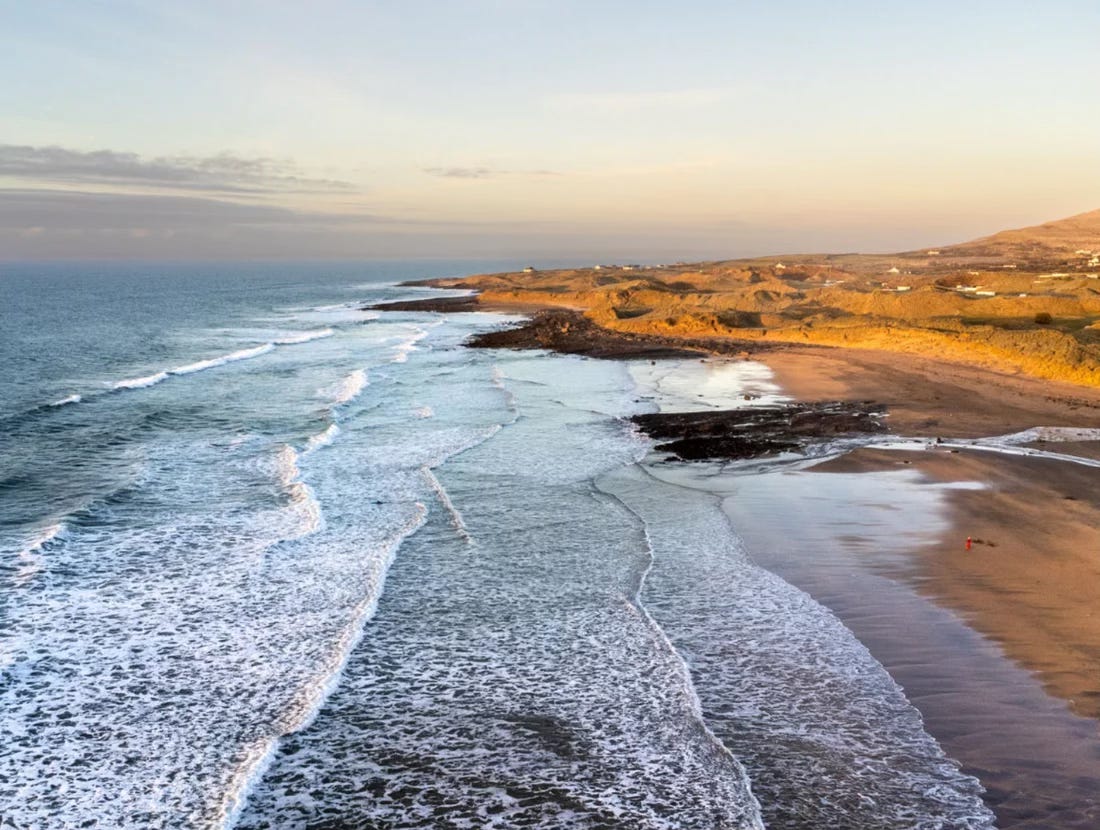
Minimalist, Yet Haunting
Tucked into County Clare, along the wild western edge of Ireland, Fanore is often called the longest village in Europe.
It is less a village though, and more a stretch—a quiet ribbon of homes and vast fields, mountains rising behind it, and the Atlantic opening out in front.
Beauty held gently between land and sea.
Life here feels pared down to its essentials. One shop. One pub. A post office. A surf school. And an entire landscape doing most of the talking.
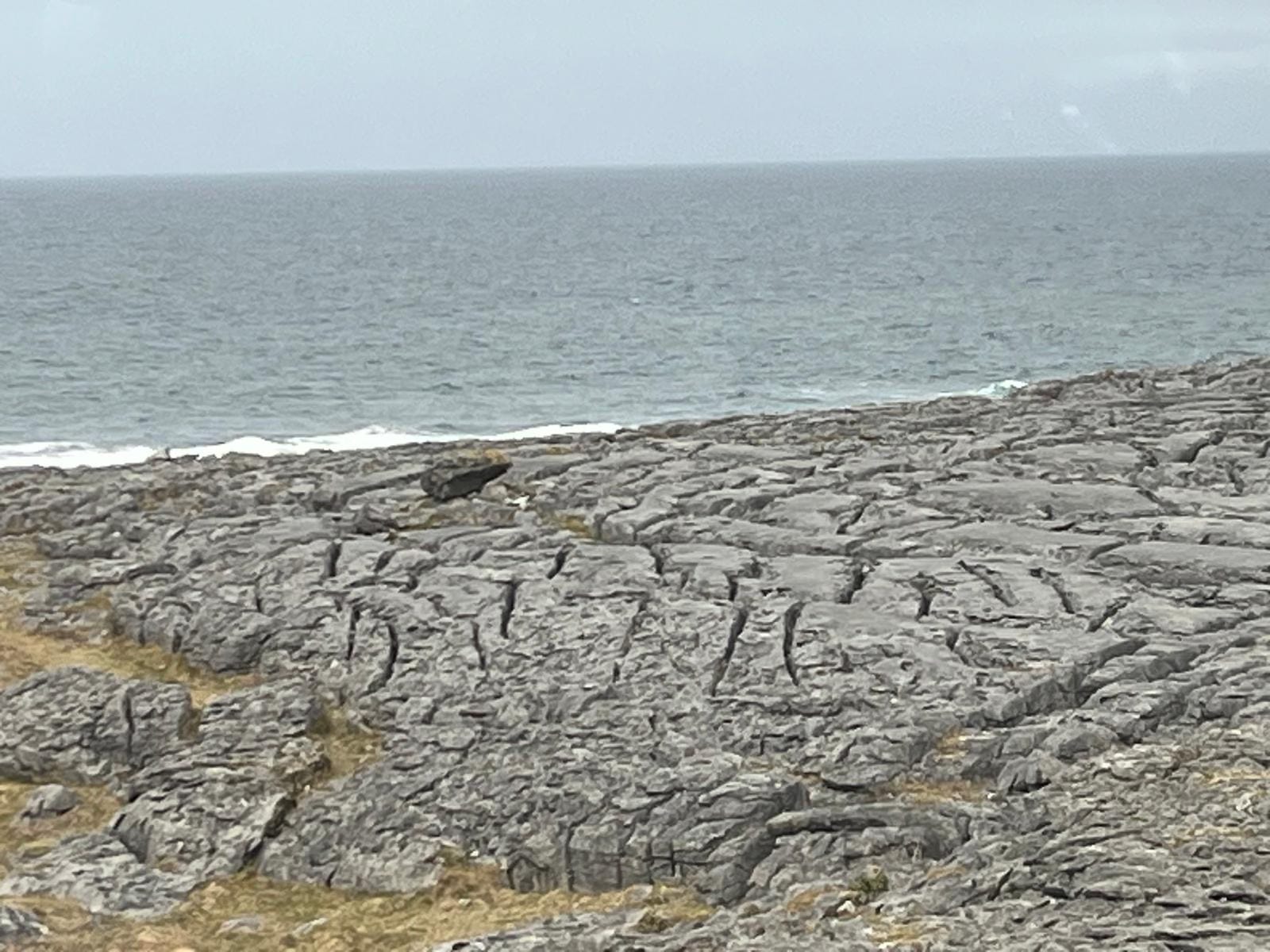
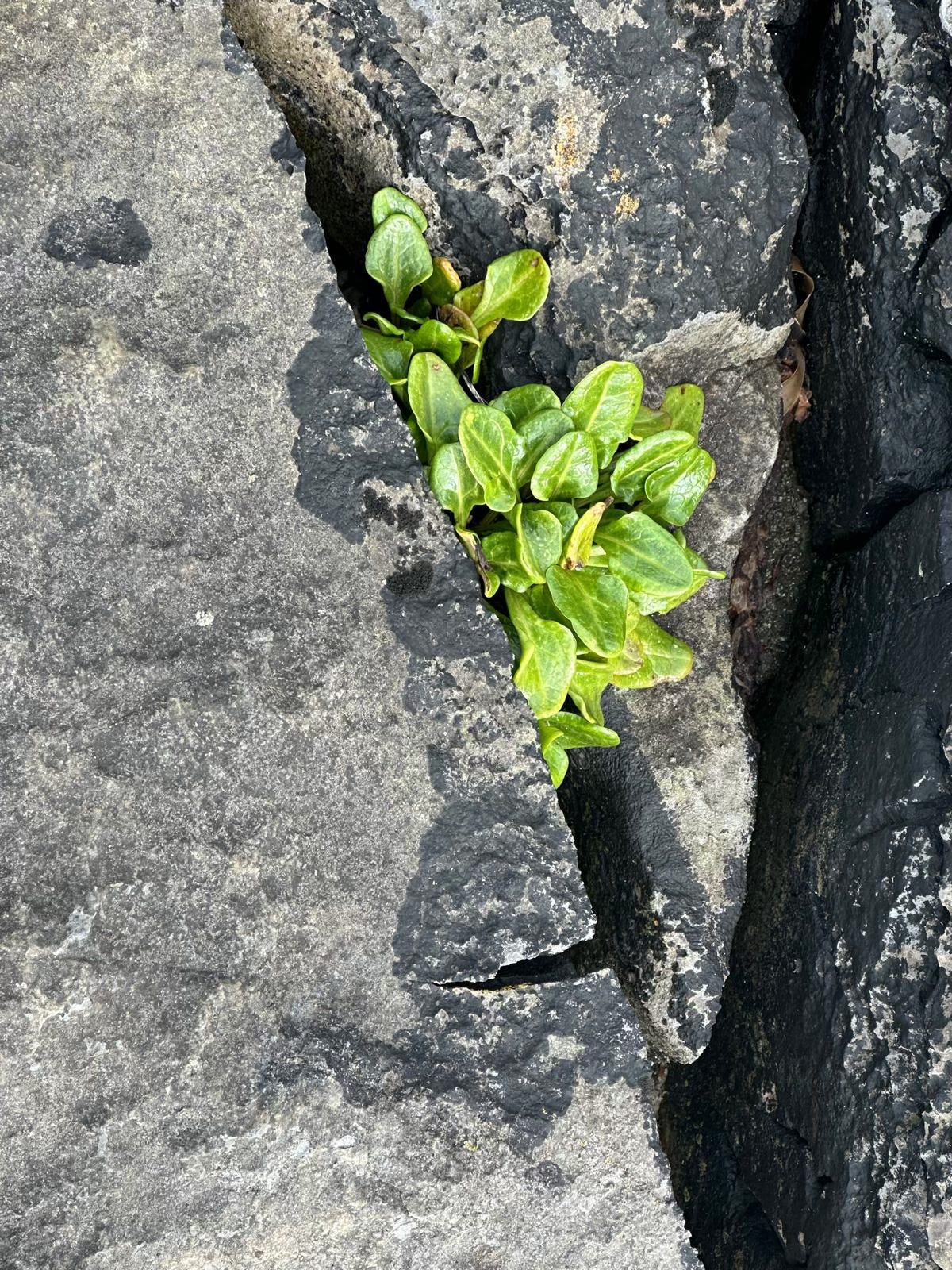
Fanore sits beside the Burren and Cliffs of Moher UNESCO Global Geopark, where the earth reveals itself in unlikely and magical ways—limestone cracked open like an ancient puzzle, holding within it delicate wildflowers and fresh green shoots that seem to defy logic, and continue to captivate botanists and geologists from across the world.
And beyond it all, the Atlantic—restless, expansive—never quite still.
World Kitchen Without Fanfare
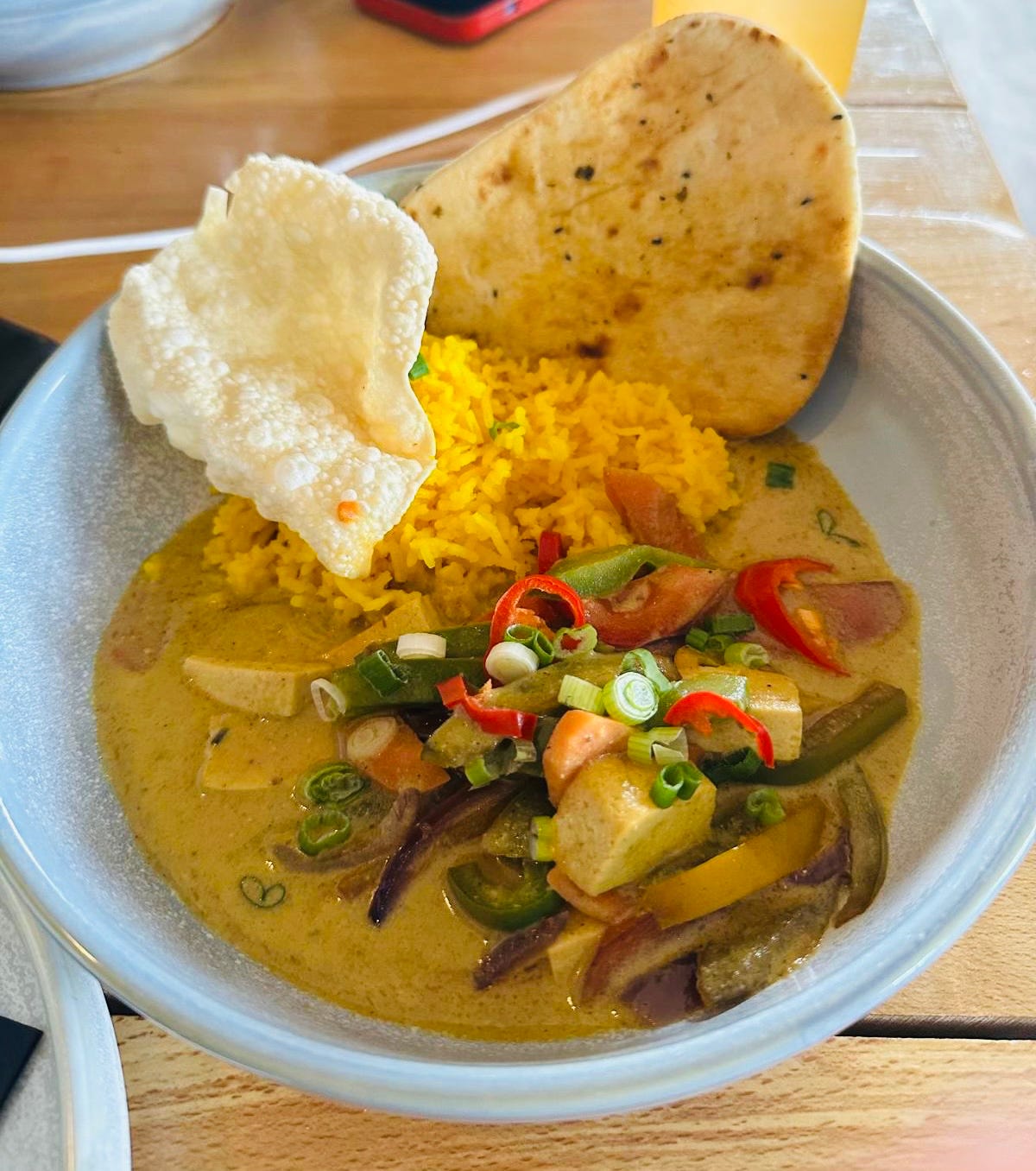
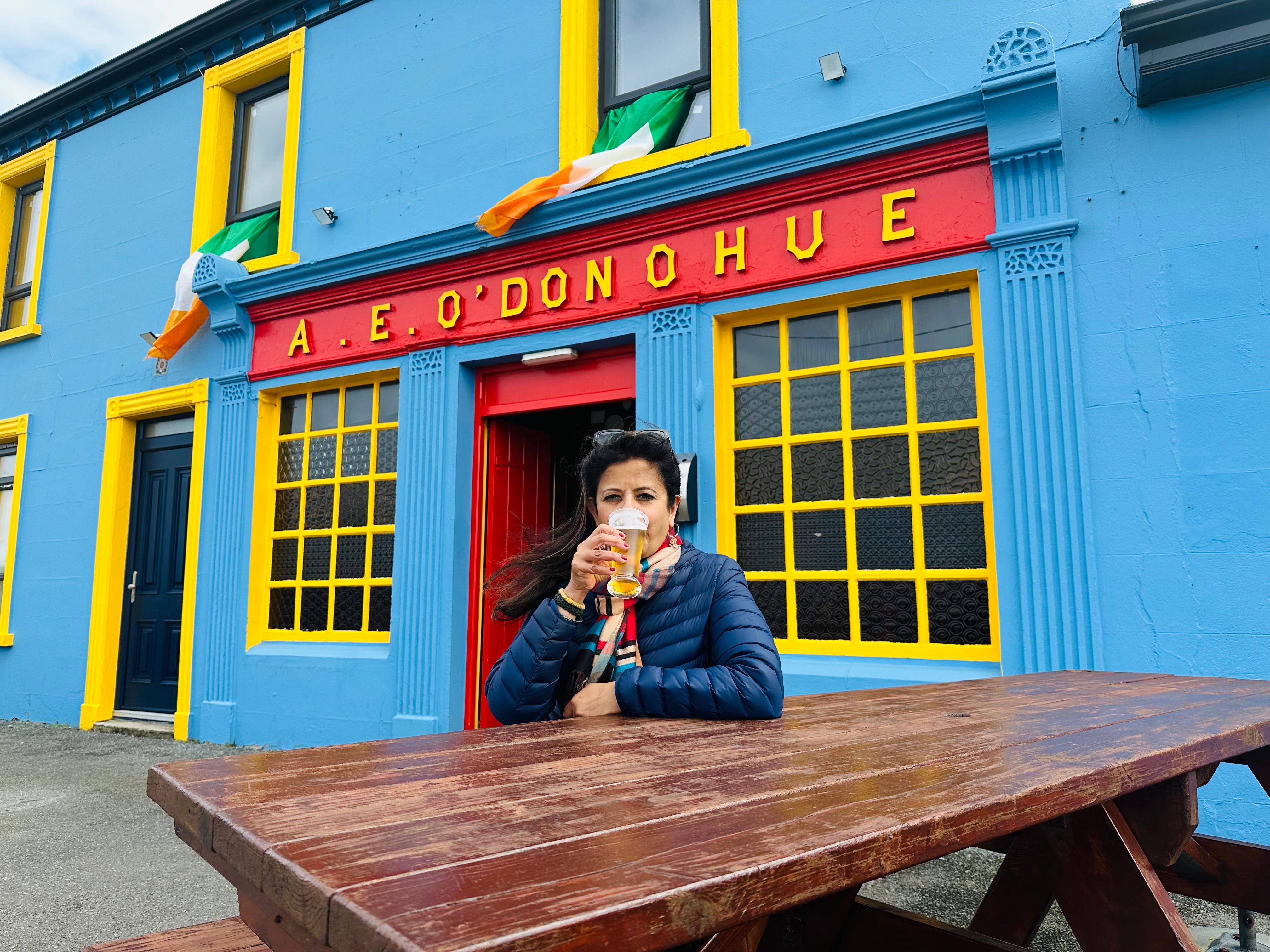
We stopped at the village’s only restaurant, O’Donohue’s Pub, for lunch.
The pub did not announce itself. It didn’t need to.
There was no careful signaling of what it could accommodate—no menu boasting vegetarian or gluten-free options, no attempt to impress. And yet, somehow, it had exactly what was needed. A Thai Massaman curry served with a poppadum and naan. A mushroom soup. Quietly excellent. The kind of meal you might expect in a polished restaurant in Washington, DC—but here, it simply existed.
My first Irish beer—Rockshore—was light, almost understated, as though it, too, understood the tone of the place.
If this piece resonates, you might enjoy more reflections like this—on places, people, and the quiet meanings they leave behind.
Openness In Spirit and In Space
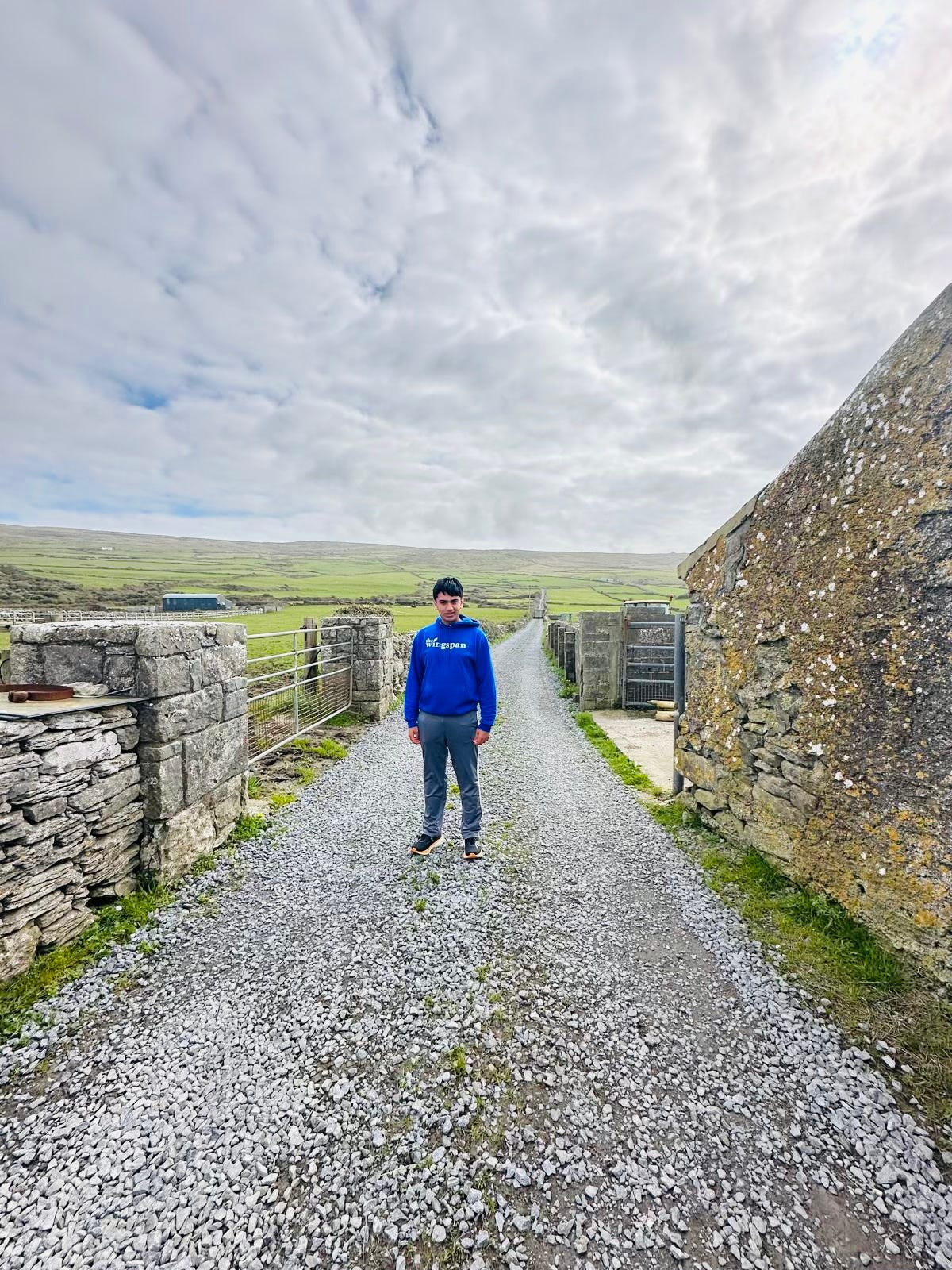
Sahil wandered off, and soon found himself petting horses grazing nearby, only to realize he had walked into someone’s private property.
He laughed when he came back.
A little sheepish. A little amused.
Even that felt fitting somehow.
Because Fanore holds boundaries—but lightly.
We hurried back to the horses he insisted I must see, Sri settling the bill behind us. I slowed as it dawned on me that we were, in fact, stepping onto someone’s land. Just then, a jeep with a long trailer pulled up in front of us—two cows and two horses inside, staring at us with mild curiosity. The owner at the wheel glanced our way, indulgent, as we stood there giggling at our own antics.
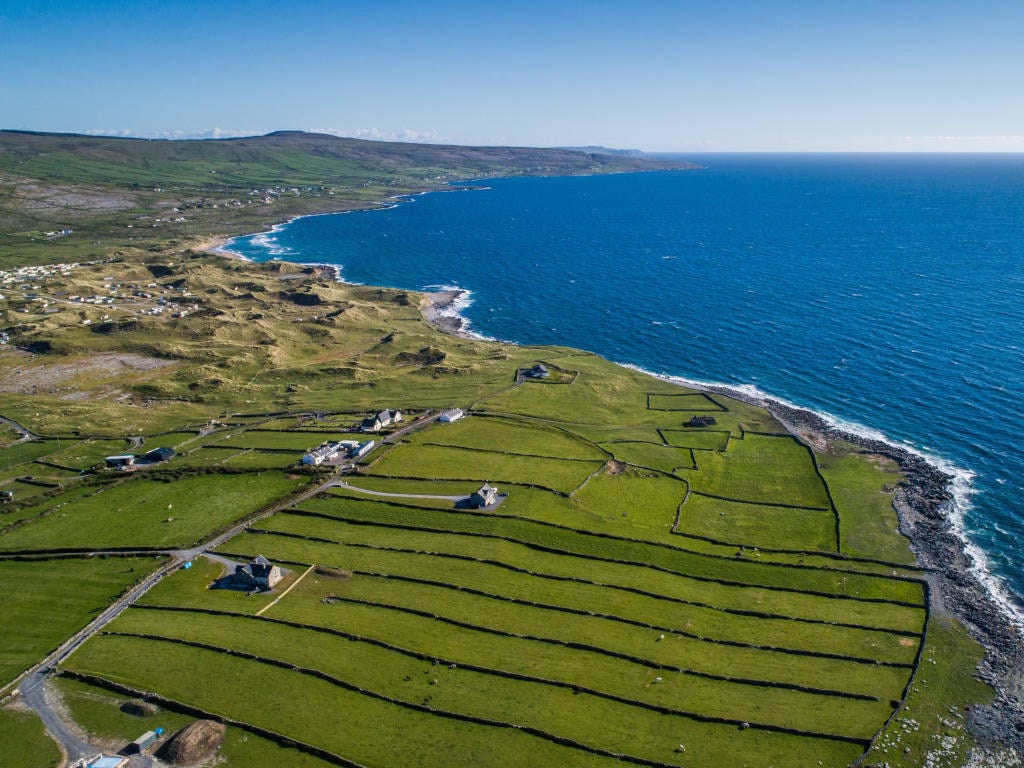
The homes in Fanore do not seem to need fences.
They stand in such open, generous surroundings that the idea of enclosure feels almost unnecessary. The land stretches freely, uninterrupted—shared, it seems, more than owned.
That sense of openness is not new.
A local resident I spoke with, Joe Queally, recalled how traveling tin smiths—once known as the “tinkers”—would camp along the old road just beyond the pub. They moved from place to place, living lightly on the land, sustained by the generosity of the community—and in return, mending pots, shaping copper and tin, and sharing songs and stories.
It was a harder life, he said. But also one marked by exchange, by movement, by a kind of belonging that did not depend on staying in one place.
I did briefly wonder if, after watching us stroll into his property, the horse farm owner might reconsider a more Frostian approach—good fences make good neighbors.
And yet, nothing here seemed to insist on it.
The boundaries felt lighter. Almost as if they belonged as much to the land as to the people who lived on it.
Perhaps that lightness is not accidental.
Since Fanore is, after all, a place where people seem to draw from both the steadiness of the land and the restlessness of the ocean.
This is, after all, an island shaped as much by departure as by arrival.
For centuries, the sea did not simply frame Ireland—it carried its people away from it. Sometimes by choice, often by necessity. Monks once left these shores as an act of faith, setting out into the unknown. Later, waves of Irish crossed oceans under harsher conditions—famine, displacement, survival—carrying with them not land, but memory, language, and story.
And perhaps that is why belonging here feels different. Less about holding on, and more about allowing.
It felt, in some quiet way, familiar.
I was reminded of Mumbai’s Dadar Parsi Colony where I grew up—where people of different faiths moved through the same spaces with ease. I went to a Zoroastrian school as a Hindu, taught by Catholic teachers. It was never remarked upon. It simply was.
That same unspoken openness seemed to live here too.
And maybe that is why Fanore feels the way it does.
Unclaimed. Uninsistent. Open, without trying to be.
Not because it lacks history, but because it has lived through enough of it to loosen its grip and stand, unadorned, as it is.
One World in Fanore
Behind me, the quiet confidence of green hills.
In front of me, the Atlantic in motion.
And in between—horses grazing, a lone pub serving what it has, homes open to the land—a life that does not seem to demand very much.
I may not belong here.
And yet, no one seemed to mind that I wandered a little too far, or stood a little too freely on land that wasn’t mine—or that it welcomed me, unexpectedly, with a vegetarian’s delight.
Joe said something to me after reading an early draft of this blog: “You found the heart that beats in Fanore—but that heart has to be inside of yourself to feel for the place.”
It stayed with me—because perhaps what we recognize in a place is not only what is there, but what we bring to it.
Perhaps that is the gift of a place like this—
it lets you arrive as you are, and stay for a while.
Imperfectly perfect ❤️
Meaningfully yours,
Anu Prabhala
If this piece resonated, consider subscribing—and sharing it with someone who loves places that don’t try too hard.
Comments
Nothing yet. Say the first thing.
Sign in to join the conversation.