
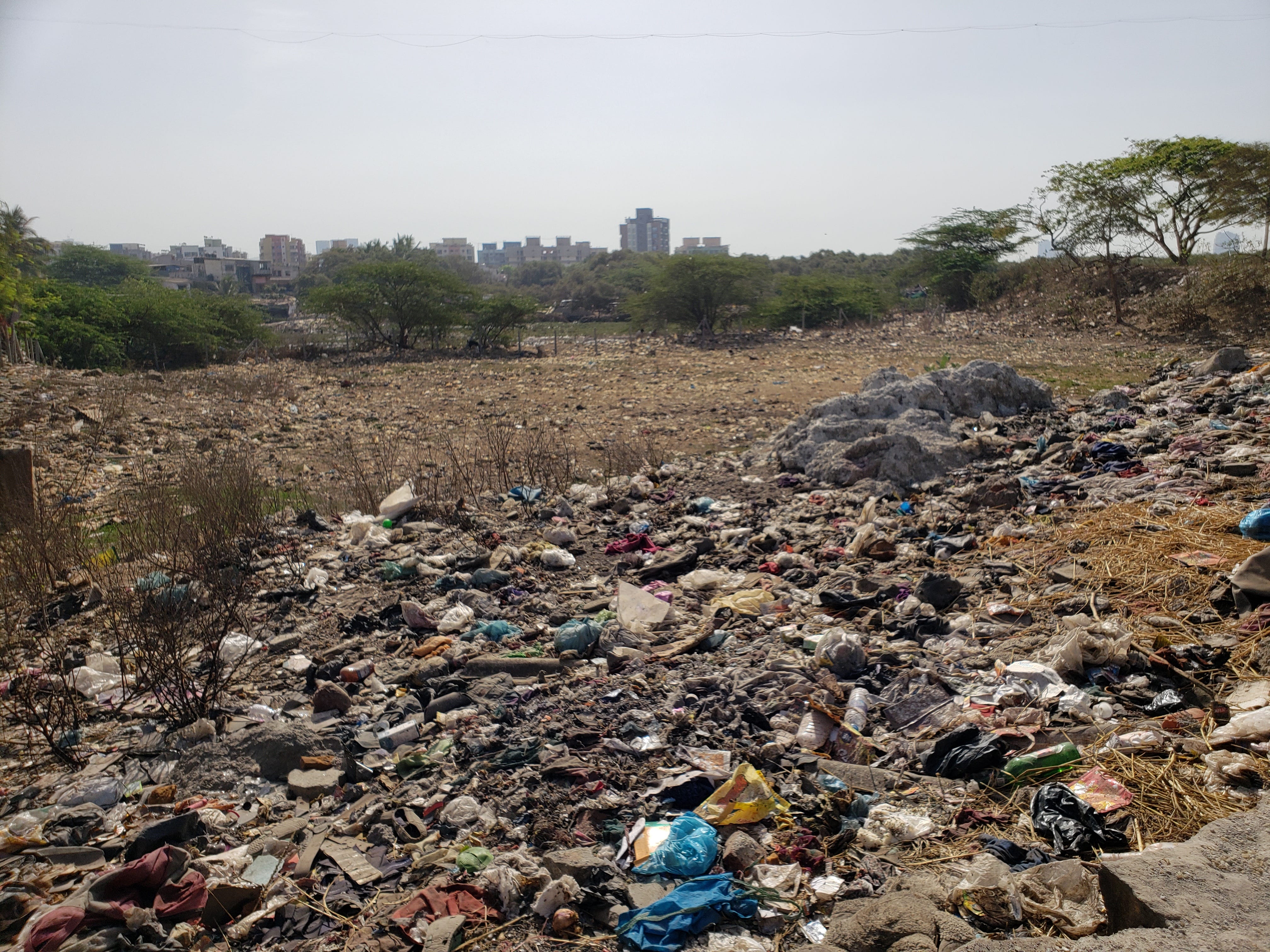
Although urban slums in lower income countries appear, at first blush, to be immensely poor, I have come to realize that is not the case. The reason why urban slums seem poor to other urbanites is that they imagine themselves living in slums. If you live in a proper apartment outside a slum, even in a lower-income country, moving to a slum would be a huge downgrade. Smaller quarters, open sewers, no running water, public toilets. The problem with this train of thought is that it is misguided. The implicit comparison assumes that the reasonable alternative for a person living in a slum is to live outside the slum, in a proper apartment in the city. That is not realistic. While residents of slums are quite poor, their next best option is not living in the city, but rather in rural villages. That life involves unemployment, and even less access to water, sewers, and indoor toilets. And we know that life is worse. Because people in slums left their villages for the city. They voted for urban slums with their feet. Their life may be worse compared to ours but it is better than their other options.
Nor are slums stuck in the mud of poverty. They are actually communities with remarkable rates of economic growth. And it is easy to convince yourself of this. Go online to Google Earth. Pick out a slum, especially one in the periphery of a city. Now, use Google Earth’s history feature to look at the same spot 5 or 10 years ago. There is a very good chance you will see a greenfield—empty space filled with grass or a forest. Now, use Google Earth’s timeline feature to walk forward through the slums' history. You will see the field cleared and become a brownfield, and then some tents go up. Then the entire are will be filled with homes, and some will be converted to mud or even cinder block. Later, you will see all the homes convert to cinderblock, and some grow to 2 stories. It is likely this will occur in less than a decade. Now compare that to your own life. Have you experienced an improvement in your lifestyle comparable to going from living in a tent in an empty field to living in a dense community with multi-story masonry structures? That is real growth, not tinkering at the edges of a comfortable lifestyle.
That said, there is one big risk of living in a slum: having your community—including your home—demolished. To understand the devastation this causes, Google “slum demolition” and look at some videos. You will see something much worse than the worst slums. You will see devastation that might remind you of a town destroyed by a hurricane or flood. The difference is that the wreckage was caused by humans, not Mother Nature. Indeed, demolition is likely the biggest risk that slum dwellers fear. So much so that its prospects hinder economic growth even in slums before they are demolished. Slums could grow even faster than they already do. But they do not because residents fear investing too fast in homes that might, one day, be demolished.
One might wonder if there is a contradiction between my claims that urban slums are better for residents than rural villages and that demolitions devastate slums. There is certainly tension, but no inconsistency. When residents choose a slum over village life, they compare the expected gains from living in a slum to the expected value of living in a village. The expected value of a slum is fast growth if the slum survives and loss of everything if the slum is demolished, with the two outcomes weighted by the probability of demolition. So, as bad as demolition is, the risk of demolition is sufficiently low that the expected value of a living in a slum is greater than the value of living in a village.
That was not always the case. There once was a time—in the 1960s—when demolitions happened because governments thought they were the way to avoid slums. Today, most know that is not the case. The risk of demolition just keeps slums from growing faster and becoming fully developed communities. So modern governments, instead, pursue a combination of neglect or modest reforms, such as giving partial land rights and building public housing.
Nevertheless, demolitions continue to take place. And there is no way to avoid that. The reason is that slums are comprised of squatters who have no legal right to the land they occupy. When slums dwellers came from villages and settled in cities, they chose to live in places that were unattractive to residents of formal apartments and to businesses already in the city. This lack of demand for the land under slums kept residents safe from demolition, which is how landowners kick people out of slums and reclaim their property for other uses, such as formal housing or commercial buildings. This initial selection of where to build a slum kept slums safe for a while. But over time, cities grow. This leads to changes in land use. Areas that were once underdeveloped become the site of new formal communities as population grows. If slums owned the land they occupied, developers would simply buy the land under slums from their residents. But those residents are squatters, and cannot sell the land even if they wanted to. So developers go to landowners or the government if it owns the land, buy the land under slums, and evict slum residents by demolishing their homes. The lack of formal rights prevents a “peaceful” transfer of property. All that is possible is demolition.
To summarize, demolitions happen because land use changes in a growing city, and residents of slums have no legal right to transfer the land they occupy to people who end up valuing it more than they do. Thus, demolitions are a second-best solution for growing cities to reallocate land to developers over time. So, although demolitions are tragic for the poor, they are almost unavoidable in a growing city in a lower or middle income city.
The only cities that avoid involuntary demolitions due to changes in land use are in developed countries, where nearly all residents have legal ownership or rental rights to their homes. In those countries, land is peaceably sold. So, even when there are demolitions to make way for new residential developments, former landowners are compensated by the new owners before they move out.
No posts
Comments
Nothing yet. Say the first thing.
Sign in to join the conversation.