
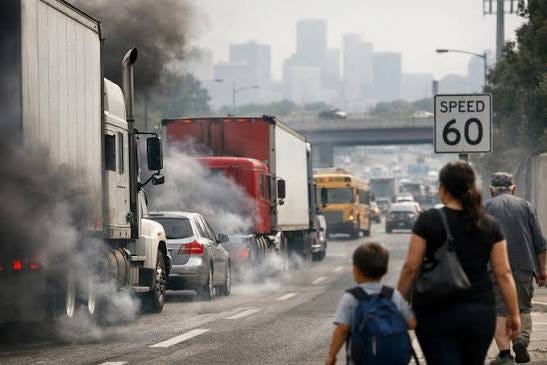
In June 2025, I stood in front of a group of mayors of the region and their stand-ins, and dared suggest that public policy - and transport investment in particular - should be for the public good. For example, I brazenly suggested that the premature death of 2-3000 New Zealanders every year from air pollution – mainly from diesel-fuelled trucks – should be a consideration when making investment decisions and prioritising projects.
Thanks for reading An Uncommon Land! This post is public so feel free to share it.
Expecting this to be accepted as a statement of the obvious, I was astounded when I was subjected to a pile-on, with an outspoken few seeking to outdo each other with defiant statements of parochialism, self-interest and anti-wokeism. One mayor fixed me with his gaze and declared “I keep my yard clean. I don’t care about what state of the environment is beyond my gates!” To which he was greeted with nods and grunts of approval from the other male politicians in the room.
I think much of this was performative, a competition between like-minded men who enjoyed the “sport” of attacking an official, who they knew could not argue back without risking losing their job. But it also left me in shock, realising first hand that this gamesmanship is just as much part of our political landscape today as genuine policymaking.
Lifting the gaze to the big round building across town in Wellington, this sort of parochialism, self-interest and gamesmanship are the dominant forces shaping politics. I am sure there must be many politicians who come into politics wanting to create a better New Zealand – whatever that means to them. But these are not the people steering the ship at the moment. When it comes to the most powerful politicians in New Zealand today, it seems their main objective is to stay in power, whatever that takes.
And that “whatever” is, for example, taking policy advice from industry stakeholders and lobby groups to amend law (eg, the legislation to prevent citizens taking tort cases against climate polluters, and last week’s removal of council agreements to work with mana whenua from the resource management legislation, at the behest of the taxpayers union). Other examples of roll-backs of legislation or initiatives at the behest of industry lobbying abound, but include the slashing of vehicle emissions standards, the repeal of smoke-free legislation and deregulation of alcohol licencing.
Even if politicians aren’t fully comfortable with what they are being asked to do at the behest of industry or powerful lobby groups, they know it is in their interest to fall in behind, because doing so secures generous political donations, which will help keep them and their parties in power. This is now the reality of the political landscape in New Zealand. And you can bet that in most of these cases there were officials, like me, valiantly trying to urge for the public good behind the scenes - often at their personal or professional cost.
So it is comforting to be reading Mariana Mazzucato’s latest book The Common Good Economy and recognising that while I might have been fighting a losing battle with that particular group of politicians, I am in good company proposing that policy – and indeed politics – should, first and foremost, be about the public good.
In fact, Mazzucato suggests that as an idea “public good” is the poor cousin of the stronger notion of “common good”. The idea that the primary purpose of government is to provide for the wellbeing and flourishing of its people has been around since the days of the Greek philosphers, including Plato and Aristotle (known as eudaimonia). More recently, UN Secretary-General Antonio Guterres and Pope Francis have advocated for economic and governance systems focused on the common good.
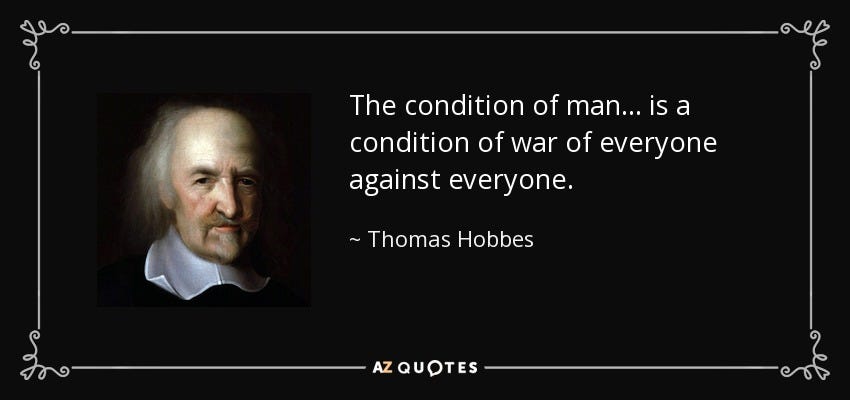
But sadly, it feels like our current government and indeed many that have gone before is more Hobbesian in inspiration than Aristotelian. 17th century philosopher Thomas Hobbes argued that the state’s primary purpose is to protect individuals’ ability to pursue their personal interests. So he may well have approved of this government’s gutting of environmental protections from its proposed resource management law, in favour of “enjoyment” of private property rights, and ultimately the unabashed indulgence of self interest at the cost of the common good.
But we have an election coming up, and as citizens it is up to us whether we want a more Hobbes or Aristotle-inspired government.
How to advance the Libertarian Agenda: Step 56
·
December 20, 2025
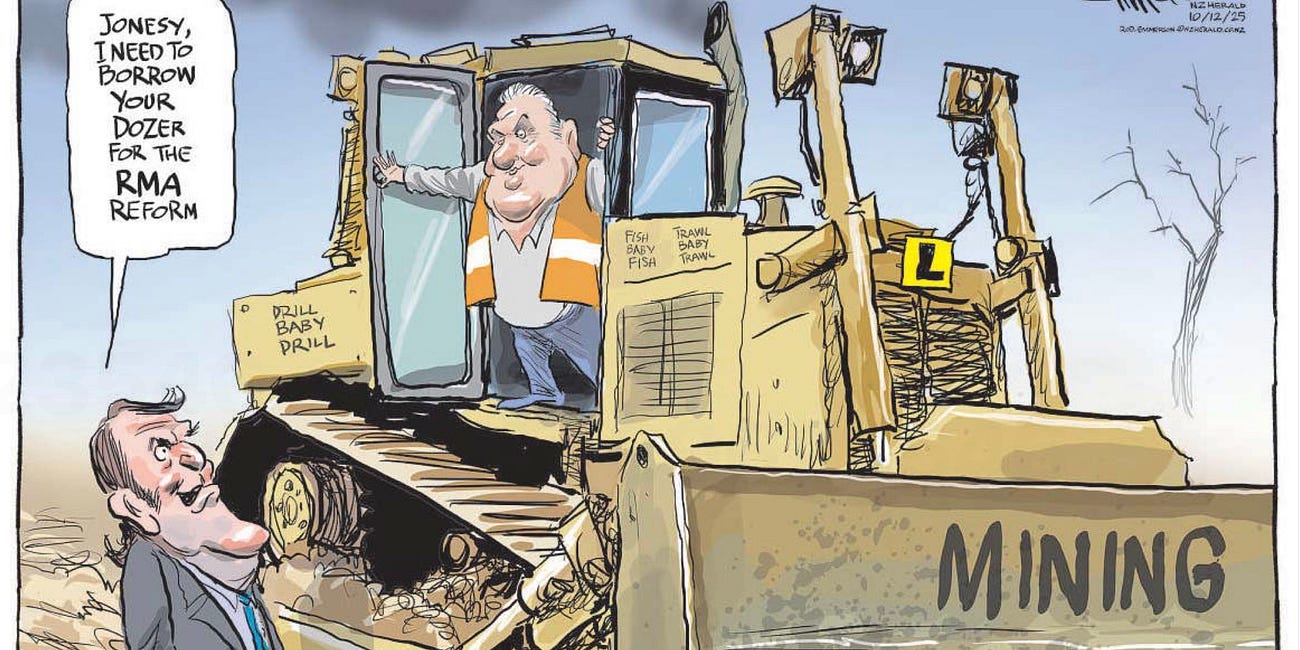
On 9th December, the legislation to replace the current Resource Management Act was introduced. As was well signalled, it gives ‘enjoyment of private property rights’ primacy, by creating a presumption that activities are allowed unless they have a significant negative impact. Or as the Bill so articulately puts it:
No posts
Comments
Nothing yet. Say the first thing.
Sign in to join the conversation.