
After years advising companies on sales processes and CRM adoption, I’ve noticed something: the tools a founder chooses often reveal how they make all their decisions.
Not because technology alone determines success or failure. It rarely does. But because the reasoning behind a tech choice mirrors the reasoning behind hiring, spending, partnerships, and strategy.
Two patterns emerge again and again. Both can threaten a business. And both tend to show up early in how companies approach their tools.
Making things work with limited resources is a hallmark of entrepreneurship. Improvisation shows grit. In the early days, it’s often necessary.
But some founders never leave this mode. They keep finding workarounds instead of investing in solutions that scale. They confuse frugality with strategy.
The strangest ‘CRM’ I’ve ever seen was built entirely in Microsoft Word. Page after page of contacts, maintained manually. Its only output? Printing mailing labels. The data was locked, unusable for anything else.
Today, too many companies still run their sales process in spreadsheets. It works for a while. But when deals multiply, when follow-ups slip through cracks, when reporting becomes guesswork the cost of ‘free’ becomes very real.
Here’s what matters: this same pattern usually shows up elsewhere. The founder avoiding CRM investment is often also delaying a critical hire, underspending on marketing, or holding back from a necessary pivot. The spreadsheet isn’t the problem. It’s a symptom of a decision-making bias that touches everything.
The opposite trap is just as dangerous, sometimes more so, because it disguises itself as ambition.
Some founders, flush with confidence or fresh capital, leap to invest in sophisticated systems before their fundamentals are proven. They believe the right technology will guarantee growth.
I once helped a company implement a CRM that fit their sales process simply and effectively. It worked well. Then a new CMO arrived, eager for an all-in-one platform to unify marketing and sales. The new system promised everything. The cost jumped twelvefold. The vendor, clever, delayed the full price increase for three years, by which time switching would be nearly impossible.
The CMO moved on. The company was left trapped.
But the most painful example: a startup in 2022, still in product development, received significant VC funding. I recommended a sales CRM to support early validation. A consultant from the VC firm objected. He needed to ‘see the active and passive cycle of invoicing.’ He was confusing CRM with ERP. He pushed for SAP before the company had issued a single invoice.
The startup went off market before its product ever launched. The VC wrote off the investment. The founders lost everything, including a genuinely promising idea.
Was SAP the killer? No. But the decision to implement SAP revealed a pattern: misaligned priorities, unclear definitions, resources diverted from what mattered most, getting the MVP to market and get traction!
The tech choice was the symptom. The disease was a decision-making process disconnected from reality.
If you want to understand how a company makes decisions, look at their tools. Not because tools determine fate, but because they reveal thinking patterns.
The founder clinging to spreadsheets may be trapped in scarcity, scared to invest even when investment is warranted.
The founder implementing enterprise software before product-market fit may be trapped in premature scale spending on infrastructure before building foundations. Maybe an excess of confidence -something very much expected by VCs-.
Both patterns tend to repeat across every domain: hiring, spending, partnerships, strategy. The CRM is just the canary in the coal mine.
As Henry Mintzberg wrote: ‘The real challenge lies in detecting the subtle discontinuities that may undermine a business in the future. And for that there is no technique, no program, just a sharp mind in touch with the situation.’
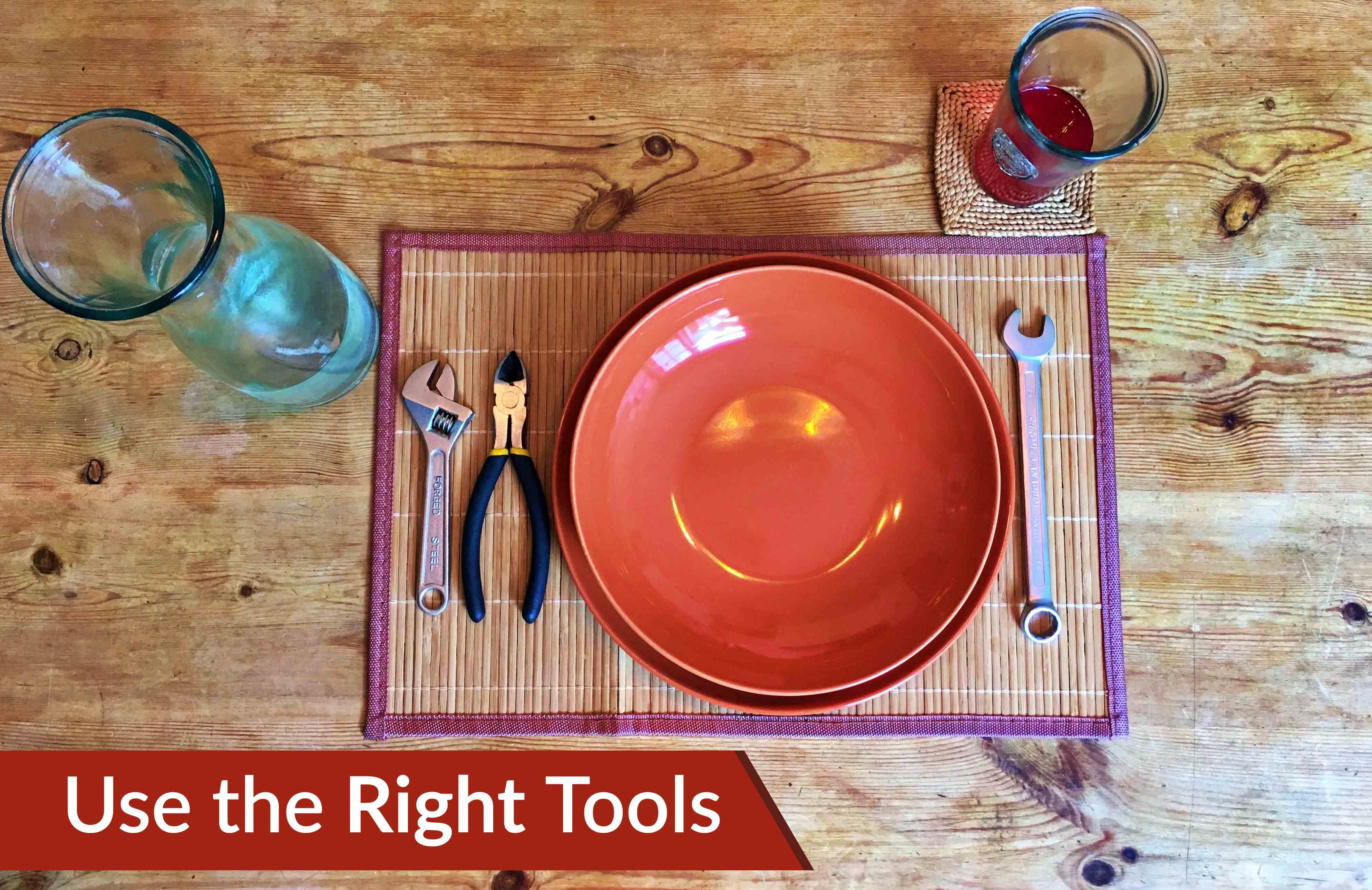
The right tool at the right time isn’t about budget size or feature lists. It’s about honest assessment: knowing your business stage, understanding the problem you’re actually solving, and choosing what supports your future, not someone else’s vision of it.
If you find yourself defending a tool choice with ‘we’ve always done it this way’ or ‘this is what serious companies use’ pause. Ask what decision-making pattern that defence reveals.
Your tech stack won’t make or break your business. But the thinking behind it might.
.
No posts
Comments
Nothing yet. Say the first thing.
Sign in to join the conversation.