
When a new, expensive CRM system stores badly designed data, it's like having a high-tech car with an outdated, inaccurate map. It will lead you to inevitable failure despite the investment. This manifests as:
Bad Retrieval: CRMs yield multiple, inaccurate records for a single client, wasting sales time and undermining personalization.
Unreliable Data: Marketing campaigns misfire (e.g., welcome discounts for loyal customers), and sales leads are phantom, eroding trust. Employees revert to manual, unscalable methods.
Weak and Dangerous Decisions: Leadership makes costly expansions based on inflated metrics from duplicate or defunct data, leading to financial devastation.
In essence, neglecting data architecture ensures expensive technology only amplifies mistakes, becoming a strategic blunder that renders powerful tools useless.
Modern organizations thrive (or falter) on the strength of their data.
To transform raw information into strategic insight, organisations rely on robust Data Architecture as a foundational discipline. Customer Relationship Management systems depend on both structure and quality in their data to deliver on the promise of customer-centricity and operational efficiency.
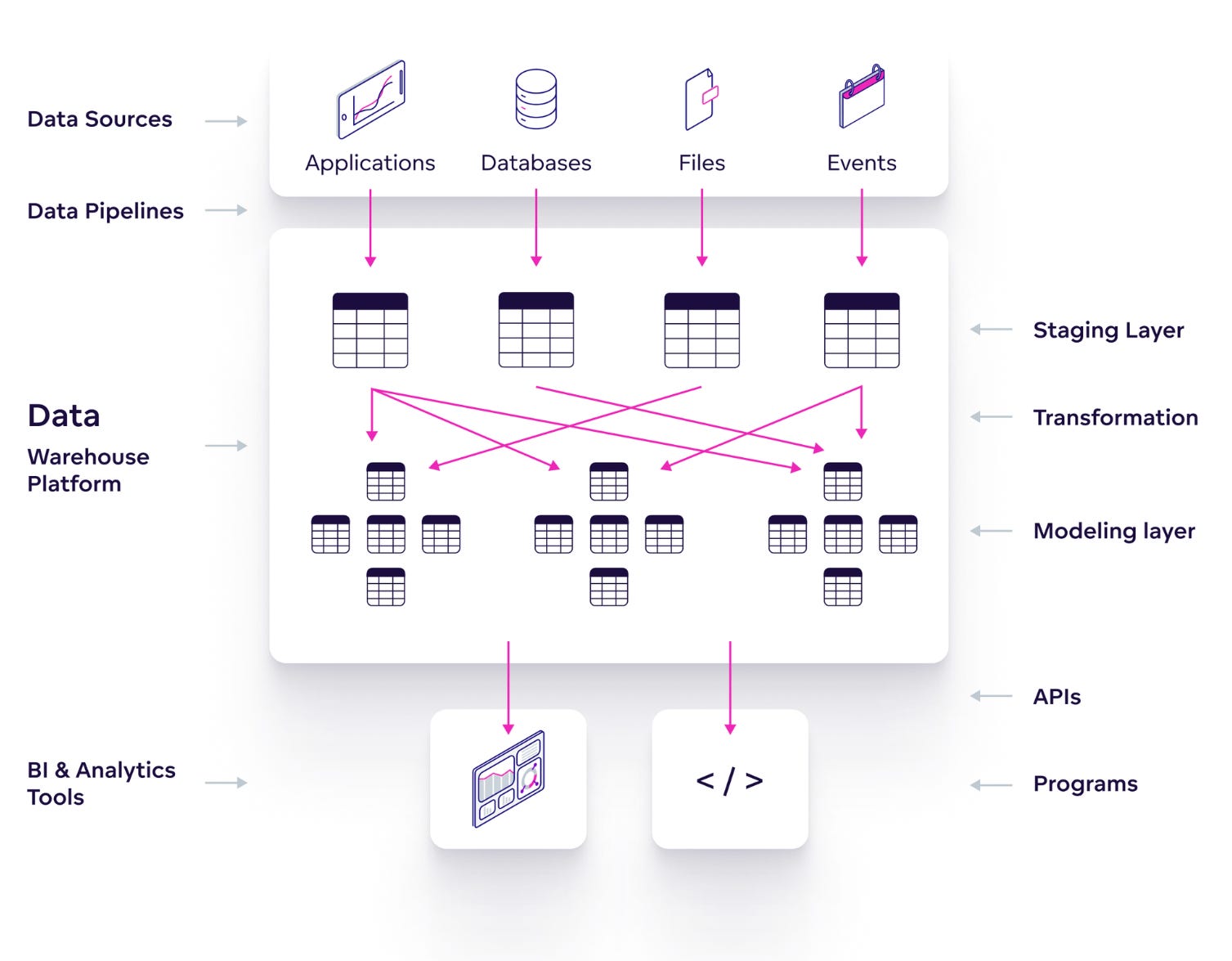
Data Architecture defines the blueprint for how data is collected, organized, managed, stored, and utilized across an enterprise. Its scope includes:
Data models and flow diagrams documenting how data moves through IT systems.
Policies and standards ensure consistent, high-quality, and auditable data.
Techniques for cleaning, standardizing, deduplicating, and transforming data, reducing errors and redundant storage while enabling efficient processing and reporting 1 2 3.
Strategically, Data Architecture:
Aligns data resources with business goals, allowing decisions to be supported by accurate, timely, and relevant information 4 3.
Enables organizations to efficiently integrate disparate data sources, break down operational silos, and respond agilely as new technologies (like cloud, IoT, or AI) emerge 5 3.
Reduces operational risks, as well-architected data frameworks ensure regulatory compliance, secure access, and reliable insights 4 2.
Fundamental principles underpinning effective Data Architecture include:
Data Quality: Clean, well-governed data is the foundation for extracting insight and building trust.
Data Governance: Clear rules for ownership, usage, and maintenance protect consistency and compliance.
Data Provenance & Context: Traceability and understanding of data origins enhance reliability and usefulness.
Detail Granularity: Storing the right level of detail supports precise reporting and advanced analysis 2 3.
These principles turn raw data into a strategic asset, unlocking organization-wide value and reducing the effort spent on mundane data management tasks 6 1 2 3.
Customer Relationship Management is more than a software platform: it is a holistic business approach focused on structuring every interaction around customer needs. CRM systems enable marketing, sales, and service teams to capture, access, and analyze customer information—but their power is directly tied to the quality of the data they manage.
Key facts about CRM and data quality 7 8:
Strategic Role: CRM serves as a central hub integrating marketing, sales, and support functions, streamlining the entire customer life cycle.
Data Dependency: Poor data quality—like duplicates, outdated records, or inconsistent formats—undermines trust in reports and hinders customer engagement.
Scalable Architecture: Effective CRMs are built on flexible, well-designed data structures that accommodate growth, facilitate analysis, and support future integration.
Continuous Improvement: Robust data governance ensures accurate data entry, regular cleansing and audits, and compliance with data privacy standards.
Practical CRM success demands:
Data Cleansing & Standardization: Removing redundancies and enforcing rules for how data is captured and organized.
Data Enrichment & Analysis: Adding context, tracking interactions, and providing actionable reporting.
Efficiency Gains: Efficient data architecture in CRMs frees users from manual, repetitive work—allowing more focus on high-value customer activities and better, more confident business decisions 1 7 8.
Can NLP “Rescue” Bad Data?
NLP and AI can sometimes retrieve data in more user-friendly ways (such as answering a plain-English question that would require ten tables and a bottle of aspirin in a classic SQL CRM). Solutions like Salesforce’s Einstein NLP search make data retrieval easier for end users. 35
However, if the data itself is inconsistent, duplicated, mislabeled, or fragmented, AI and NLP mostly reflect and amplify these problems. NLP can’t unify twelve versions of “John Smith” or clarify which record is correct without a solid underlying architecture. Messy, unreliable data leads to misleading insights, at light speed. The GIGO acronym remains in place. 38
Can AI Overcome Bad Data Architecture?
In short: not really, and definitely not magically.
AI systems ingest whatever data is available. If that’s bad data, AI becomes a fast, confident producer of nonsense, scaling mistakes and biases rather than fixing them.
In fact, AI often reveals data weaknesses you didn’t know you had. Models trained on poor data can “hallucinate” insights, perpetuate biases, or collapse under spurious correlations, undermining decision-making and trust.
Leading organizations invest as much in cleaning, standardizing, governing, and enriching their data as they do in AI models themselves, sometimes more so.
The Bottom Line
AI and NLP aren’t the “get out of bad architecture for free” cards. They’re power tools: remarkable in the right hands, but they can make old problems far worse (and more expensive) in messy data environments.
Good data architecture remains utterly essential, not just for reliable AI, but for any meaningful analytics or automation.
AI won’t deliver value on its own, it needs a robust data architecture built for enterprise realities. AI is as powerful as the data architecture that supports it.
Effective data architecture transcends mere technical functionality, serving as the foundational cornerstone for CRM systems to actualize their complete strategic potential. Absent a robust and meticulously designed data architecture, CRM implementation endeavors risk yielding fragmented and inefficient systems, ultimately failing to deliver on their inherent promise. A formidable data architecture facilitates the consistent acquisition, integration, and organization of customer data from disparate sources, thereby transforming raw information into dependable and actionable customer insights. This reliability is indispensable for fostering enhanced decision-making across all organizational tiers, encompassing the optimization of marketing campaigns, the personalization of customer interactions, the streamlining of sales processes, and the improvement of service delivery. Ultimately, by furnishing a singular, coherent, and accurate portrayal of the customer, efficacious data architecture empowers businesses to cultivate more robust customer relationships, anticipate evolving needs, and adapt proactively to market shifts, thus contributing significantly to sustained organizational expansion and a discernible competitive advantage within an increasingly data-centric environment.
Bibliography:
Maximizing Your CRM's Potential With Insycle's Pillars of Success. (n.d.). Insycle. Available at: https://blog.insycle.com/pillars-of-success
Bridging the Gap: How Data Architecture Enables Effective Data Strategy Implementation. (n.d.). Infomineo.
Available at: https://infomineo.com/blog/how-data-architecture-enables-data-strategy-implementation/Trends in Data Architecture. (2023). DATAVERSITY. Available at: https://content.dataversity.net/rs/656-WMW-918/images/6_67501_TrendsinDataArchitecture_Final.pdf
What is Data Architecture? A Data Management Blueprint. (n.d.). TechTarget. Available at: https://www.techtarget.com/searchdatamanagement/definition/What-is-data-architecture-A-data-management-blueprint
Five Essential Data Architecture Principles. (n.d.). DATAVERSITY. Available at: https://www.dataversity.net/five-essential-data-architecture-principles/
Insycle – CRM Data Management & Automation Tools. (n.d.). Available at: https://www.insycle.com
Specchia, A. (2020). Customer Relationship Management (CRM) for Medium and Small Enterprises. Academia.edu. Available at: https://www.academia.edu/107741679/Customer_Relationship_Management_CRM_for_Medium_and_Small_Enterprises
Specchia, A. (2022). Reimagining Customer Experience: Empirical Dive. LinkedIn Pulse. Available at: https://www.linkedin.com/pulse/reimagining-customer-experience-empirical-dive-antonio-specchia-xnrwf
IBM. (n.d.). Data Architecture – IBM Think Blog. Available at: https://www.ibm.com/think/topics/data-architecture
10 Tips for a Successful Data Architecture Strategy. (n.d.). Instaclustr. Available at: https://www.instaclustr.com/education/data-architecture/10-tips-for-a-successful-data-architecture-strategy
Tupper, C. M. (2011). Data Architecture: From Zen to Reality. Morgan Kaufmann. Available at: https://archive.org/details/Data_Architecture_From_Zen_to_Reality_C._Tupper_Morgan_Kaufman_2011_BBS
Data Architecture 101. (n.d.). DATAVERSITY. Available at: https://www.dataversity.net/data-architecture-101/
Tupper, C. M. Data Architecture (book preview). Google Books. Available at: https://books.google.com/books/about/Data_Architecture.html?id=bu-wlAEACAAJ
Managing SaaS CRM Data. (n.d.). Insycle. Available at: https://blog.insycle.com/saas-crm-data-management
Data Architecture Best Practices. (n.d.). DATAVERSITY. Available at: https://www.dataversity.net/data-architecture-best-practices/
Tupper, C. M. (2011). Data Architecture. Elsevier. Available at: https://shop.elsevier.com/books/data-architecture/tupper/978-0-12-385126-0
Data Architecture Blog. (n.d.). BMC. Available at: https://www.bmc.com/blogs/data-architecture/
Tupper, C. M. (2011). Data Architecture (book details). ScienceDirect. Available at: https://www.sciencedirect.com/book/9780123851260/data-architecture
Security in CRM Data Management. (n.d.). Insycle. Available at: https://www.insycle.com/security/
Enterprise Data Architecture Principles. (n.d.). UK Department for Education (DfE).
Available at: https://dfe-digital.github.io/architecture/principles/enterprise-data-architecture-principles/Data Architecture: Theory and Practice (PDF). (n.d.). STIE STIEKOM. Available at: https://digilib.stiestekom.ac.id/assets/dokumen/ebook/feb_B86HPdjqWQMqjpqdyUbO7byV7949c7RfhzGj8z-FlQjSqd4H-3nRSZY_1680774123.pdf
Why Insycle? (n.d.). Insycle. Available at: https://www.insycle.com/why-insycle/
Customer Relationship Management (CRM) for Medium and Small Enterprises – Book. (n.d.). SooBrief.
Available at: https://sobrief.com/books/customer-relationship-management-crm-for-medium-and-small-enterprisesSpecchia, A. (2022). Customer Relationship Management (CRM) for Medium and Small Enterprises: How to Find the Right Solution for Effectively Connecting with Your Customers. Taylor & Francis. Available at: https://www.taylorfrancis.com/books/mono/10.4324/9781003148388/customer-relationship-management-crm-medium-small-enterprises-antonio-specchia
Specchia, A. (2022). Customer Relationship Management (CRM) for Medium and Small Enterprises: Routledge. Available at: https://www.routledge.com/Customer-Relationship-Management-CRM-for-Medium-and-Small-Enterprises-How-to-Find-the-Right-Solution-for-Effectively-Connecting-with-Your-Customers/Specchia/p/book/9780367708863
Navigating the Enigma Through Leads Generation. (n.d.). Antoniospecchia.com.
Available at: https://antoniospecchia.com/navigating-the-enigma-through-leads-generation/Specchia, A. (2022). Customer Relationship Management (CRM) for Medium and Small Enterprises: How to Find the Right Solution for Effectively Connecting with Your Customers. EconBiz. Available at: https://www.econbiz.de/Record/customer-relationship-management-crm-medium-small-enterprises-how-find-right-solution-effectively-connecting-your-customers-specchia-antonio/10013460592
TechTarget. (n.d.). What is Data Architecture? A data management blueprint. Retrieved from: https://www.techtarget.com/searchdatamanagement/definition/What-is-data-architecture-A-data-management-blueprint
Infomineo. (2021). How Data Architecture Enables Data Strategy Implementation. Retrieved from: https://infomineo.com/blog/how-data-architecture-enables-data-strategy-implementation/
IBM. (2023). Why Your Organization Needs AI-Ready Data Architecture. Retrieved from: https://www.ibm.com/think/topics/data-architecture
DATAVERSITY. (2022). Natural Language Processing (NLP) for Business Intelligence. Retrieved from: https://www.dataversity.net/natural-language-processing-nlp-for-business-intelligence/
Harvard Business Review. (2021). If Your Data Is Bad, Your Machine Learning Tools Are Useless. Retrieved from: https://hbr.org/2018/04/if-your-data-is-bad-your-machine-learning-tools-are-useless
DATAVERSITY. (2023). Five Essential Data Architecture Principles. Retrieved from: https://www.dataversity.net/five-essential-data-architecture-principles/
McKinsey Digital. (2022). AI Needs Good Data. Here’s How Organizations Can Deliver It. Retrieved from: https://www.mckinsey.com/capabilities/mckinsey-digital/our-insights/ai-needs-good-data-heres-how-organizations-can-deliver-it
Salesforce (2023), Salesforce Einstein Natural Language Search: Intuitive Data Retrieval. Available at: https://www.salesforceben.com/salesforce-einstein-natural-language-search-intuitive-data-retrieval/
Data Ideology, AI Data Quality Matters—Bad Data Leads to AI Failure. Available at: https://www.dataideology.com/ai-data-quality-matters-bad-data-leads-to-ai-failure/
The AI Journal (2025), AI Needs Superior Human-led Data To Solve The Industry’s Bad Data Problem. https://aijourn.com/ai-needs-superior-human-led-data-to-solve-the-industrys-bad-data-problem/
Data Quality First: Why Your AI Initiative Will Fail Without It. Linkedin Pulse (2025), https://www.linkedin.com/pulse/data-quality-first-why-your-ai-initiative-fail-without-weidenhammer-3plse/
What is data Architecture, Sandra Suszterová https://www.gooddata.com/blog/what-data-architecture/
No posts
Comments
Nothing yet. Say the first thing.
Sign in to join the conversation.