
This deep dive is another step forward in my bio/acc journey. To learn the first principles Biology framework I use to understand biotech companies, you may benefit from taking the Biology module in my course.
My view remains that Biology will deliver most of the returns in the stock market in the coming few decades.
The body is good at healing skin, bone and liver. It is famously bad at healing nerves. Sever a peripheral nerve and recovery is slow and incomplete. Damage the spinal cord or the brain and you typically get none at all. The deficit is permanent, the patient is often young, and the cost compounds across an entire lifetime of care.
The global nerve repair and regeneration market sits around $11.5B in 2025 and is forecast near $32B by 2034. But roughly two thirds of that is neurostimulation and neuromodulation devices. That is the tell. The current market is almost entirely about managing the deficit, because there has never been a drug that reverses it. No approved therapy regenerates a damaged central nerve. The market understates the opportunity precisely because the product category does not yet exist.
And this is not one market. Everywhere the nervous system is damaged, the body lays down the same scar and engages the same brake. That turns the addressable surface into a stack of indications rather than a single line.
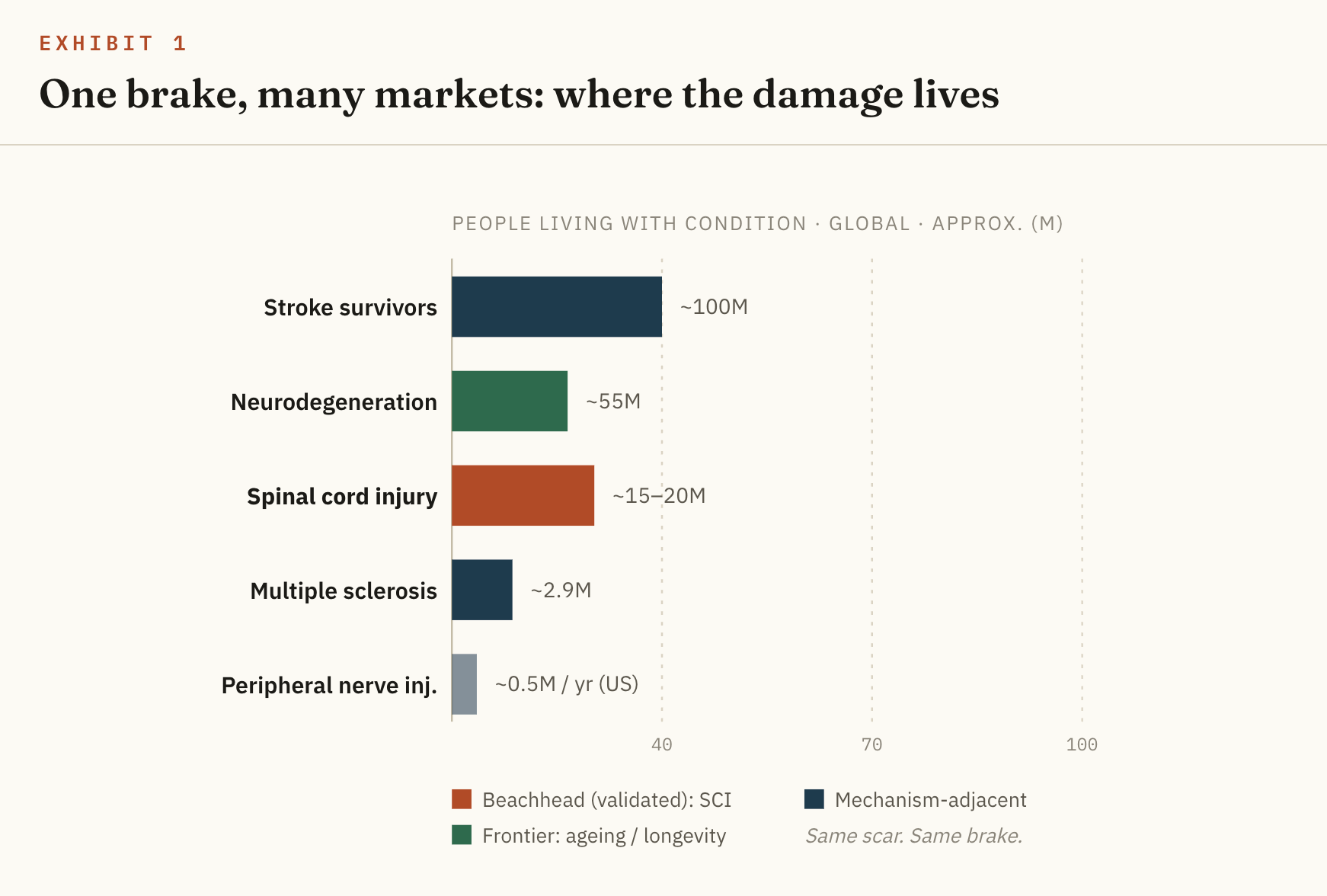
The brake is not specific to one injury. It is a general feature of how the mature nervous system responds to damage. Release it in the cord and you treat paralysis. Release it after a stroke and you treat the brain. Release it in a peripheral nerve and you treat the limb. Release it slowly, repeatedly, in an ageing nervous system, and you are preventing all of the above.
GLP-1 drugs did not stay in diabetes. They became a metabolic platform because they hit a node that touches appetite, weight, heart, kidney and liver at once. NervGen's peptide hits a node that touches every place where nerves fail to repair. If it works, this is closer to an Ozempic for the nervous system than to a single-injury drug. That is the long shape of the bet.
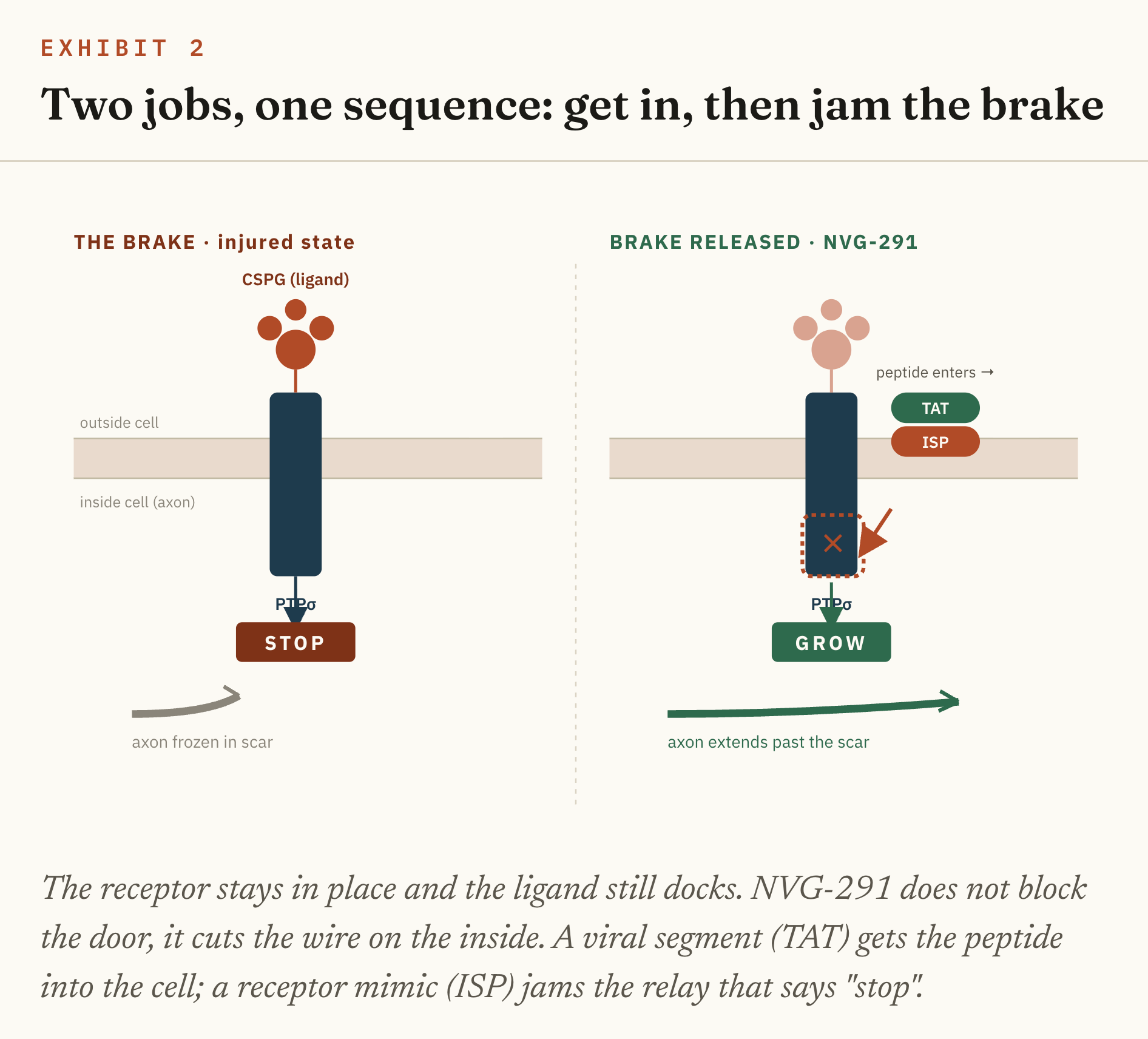
The therapeutic target sits inside the neuron, on the inner face of the membrane. Most drugs cannot reach it: antibodies are too large, most peptides get stuck on the outside. NervGen solved this by borrowing a sequence from HIV. The virus evolved a short protein segment, called TAT, whose entire function is to ferry cargo across the cell membrane. Bolt that segment onto your peptide and the whole construct walks straight into the cell. Part of this drug is a piece of a virus repurposed as a delivery van.
After injury, scars fill with molecules called CSPGs (Chondroitin Sulfate Proteoglycan). A CSPG is a ligand: a molecule whose job is to bind something and deliver a message. What it binds is a receptor on the axon called PTPσ. When CSPG docks onto PTPσ, the message delivered is unambiguous: stop growing. The axon obeys, freezing in the scar and recovery fails.
NervGen's sequence is shaped like the internal part of PTPσ that the receptor uses to pass that message inward. Once inside the cell, the peptide jams that relay. The receptor still sits in the membrane. CSPG still docks onto it. But the message no longer goes through. The stop sign is deleted, and the axon's own growth programme, which was never lost, simply switches back on.
Biology runs on ligands and receptors. A signalling molecule binds a sensor and triggers a response. Hormones, neurotransmitters, immune signals, growth factors: all of it is ligand meeting receptor. Once you see biology this way, drugs stop being mysterious. It can be a fake ligand, a blocked receptor, or, as here, a jammed relay sitting behind the receptor. NervGen picked the third option, which is the hardest and the most elegant.
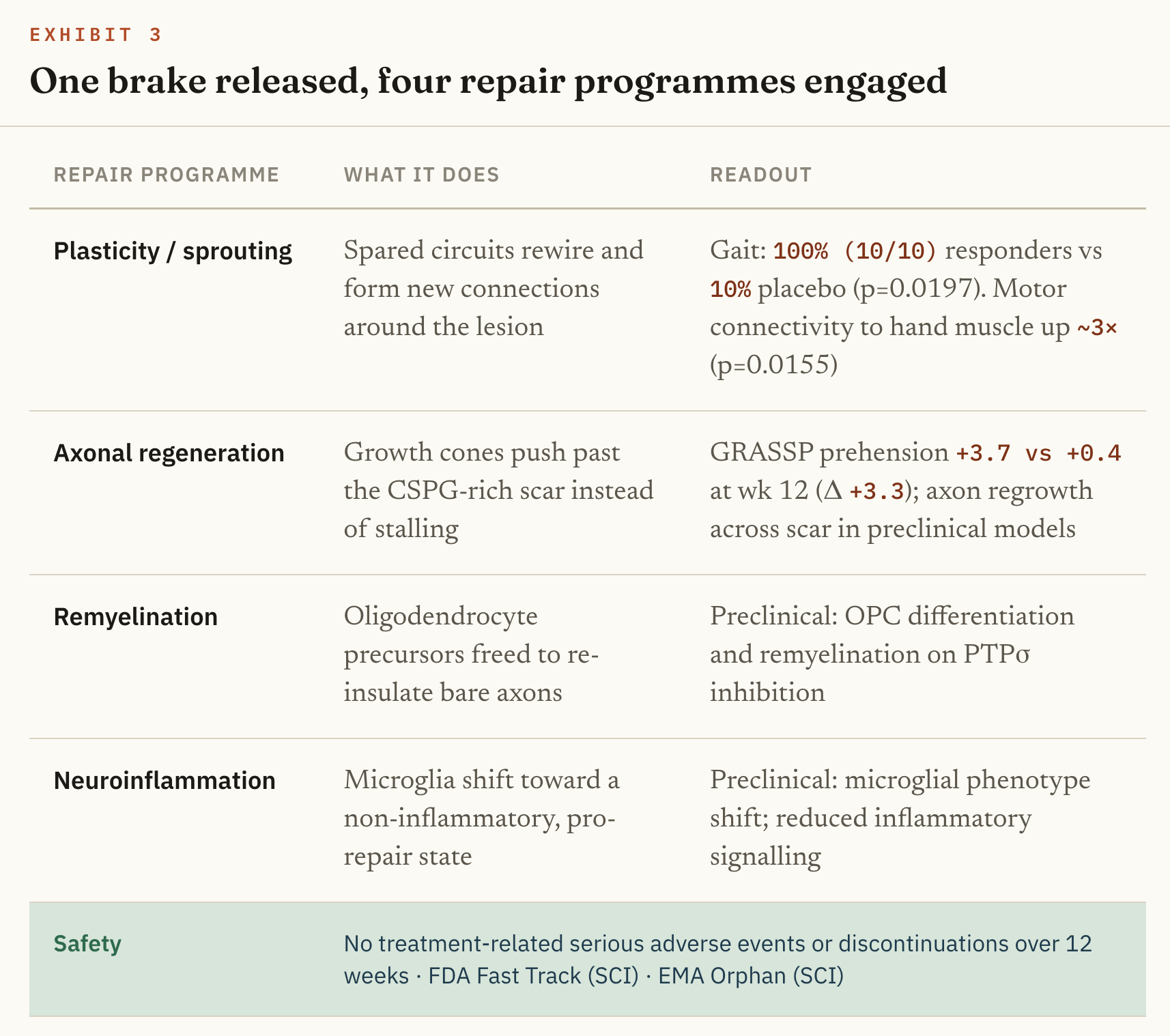
NVG-291 drug seems to trigger four distinct repair programmes, which are downstream of the above proteomic even. The human data is early and the numbers are small, but they point in the same direction the animal models did.
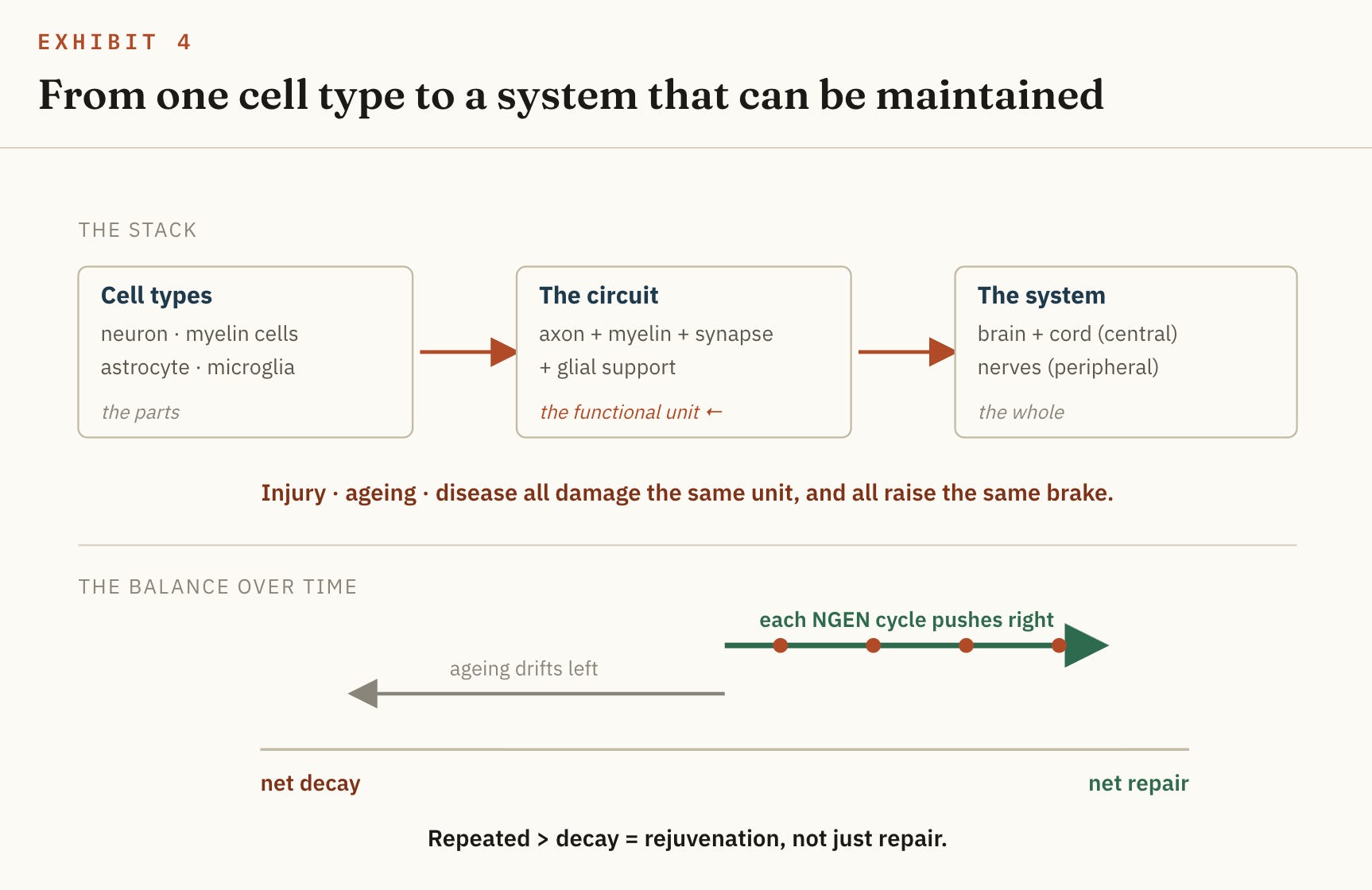
To see why a brake-release could matter beyond injury, you have to see what the nervous system actually is. Build it up in layers.
Cell types. A handful of specialists. The neuron carries the signal. The oligodendrocyte (central) and Schwann cell (peripheral) wrap the neuron in myelin, the insulation that makes signals fast. The astrocyte supports the tissue and, after injury, builds the scar. The microglia is the resident immune cell.
The functional unit. These cells assemble into a circuit: an axon carrying current, insulated by myelin, connected at synapses, held up by glial support. This is the irreducible unit of nervous function. Every movement, sensation and thought you have ever had is circuits firing.
The system. Circuits bundle into tissue: the brain and spinal cord at the centre, the nerves running to every muscle and organ at the periphery.
Injury, ageing and disease all damage the same unit: the circuit. And they all trigger the same defensive response: the scar, the CSPG, the brake. That is the structural coincidence the whole platform thesis rests on.
The four programmes NervGen's peptide unlocks, sprouting, regeneration, remyelination and calmer inflammation, are exactly the four things that decline in a nervous system as it ages. The ageing brain accumulates inhibitory matrix, loses myelin, and drifts into chronic low-grade inflammation. In slow motion, that is the same picture as injury.
So picture the peptide not as a one-time repair but as a periodic intervention. Each cycle nudges the balance: a little more repair, a little less decay. Net repair greater than net decay, applied repeatedly, is the definition of rejuvenation. The injury market is the proof of concept, while the maintenance market is the prize.
Everything above rests on a single peptide. The entire operation is one amino acid sequence doing two jobs. That is the source of the asymmetry and the source of the risk, and you do not get one without the other.
A 35-amino acid peptide is not a difficult object to synthesise. The defensibility is not the molecule, it is the intellectual property around using this specific sequence to hit this specific target, licensed from Case Western. A patent on a single sequence is powerful while it holds and a cliff when it expires. With one product and one patent family, NervGen is a concentrated bet on a single legal and biological fact staying true.
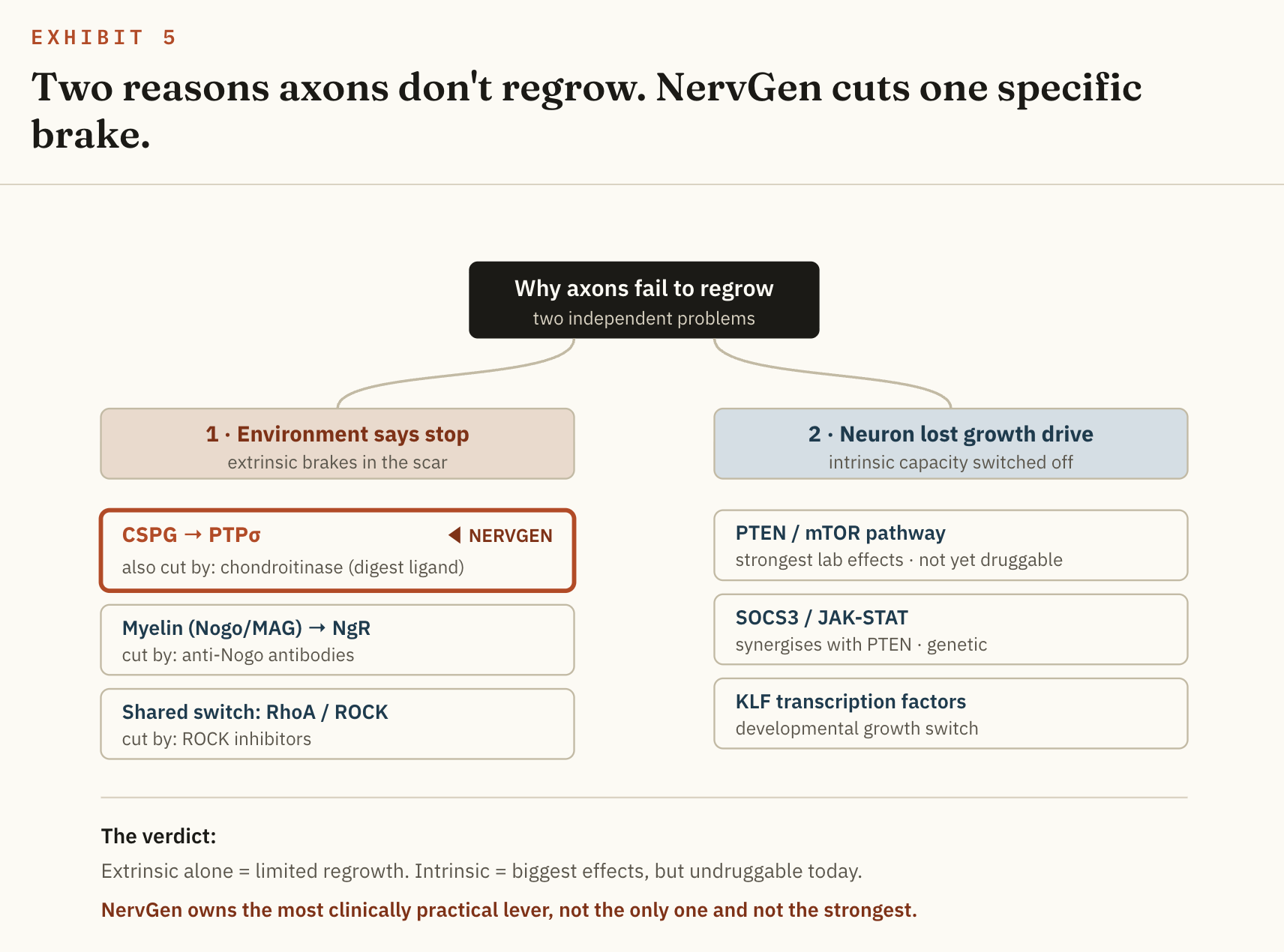
Deleting the PTPσ brake is not the only road to regeneration. Reason it out from first principles, axons fail to regrow for two independent reasons, and you need a lever for each:
The environment says stop (extrinsic brakes). The scar is full of inhibitors. CSPG hitting PTPσ is one. Myelin debris carries others, Nogo, MAG, OMgp, that hit a different receptor (NgR). These largely funnel into one downstream switch, RhoA/ROCK, which collapses the growth cone. NervGen sits on the CSPG/PTPσ branch. But you can theoretically attack that same branch other ways: digest the CSPG sugar directly (chondroitinase), block the myelin inhibitors (anti-Nogo antibodies), or jam the shared downstream switch (ROCK inhibitors). NervGen owns one lever, on one branch, of one of the two problems.
The neuron has lost the will to grow (intrinsic capacity). Mature neurons switch off their own growth machinery. Re-activating it, by removing PTEN to wake the mTOR growth pathway, or removing SOCS3, produces some of the most dramatic regeneration ever recorded in a lab. These are completely different levers, and mostly not yet druggable in humans.
Releasing extrinsic brakes alone produces only limited regeneration. The largest effects come from waking the neuron's intrinsic growth, or from combining levers. So NervGen's edge is not that its lever is the only one, or even the strongest. Its edge is that its lever is the most druggable: a systemically injected peptide that works in chronic injury, years after the event, where nearly every rival is a mouse genetic trick, an enzyme with delivery problems, or an antibody that already stalled in the clinic.
NervGen does not have the only path to regeneration. It has a uniquely deliverable path, protected by a patent, on a node that recurs across many indications. If the Phase 3 confirms the signal, that combination, deliverable plus protected plus recurring, is exactly what may turn this one-drug company into a platform. Apart from getting better at Biology, that’s a great reason to continue watching NervGen.
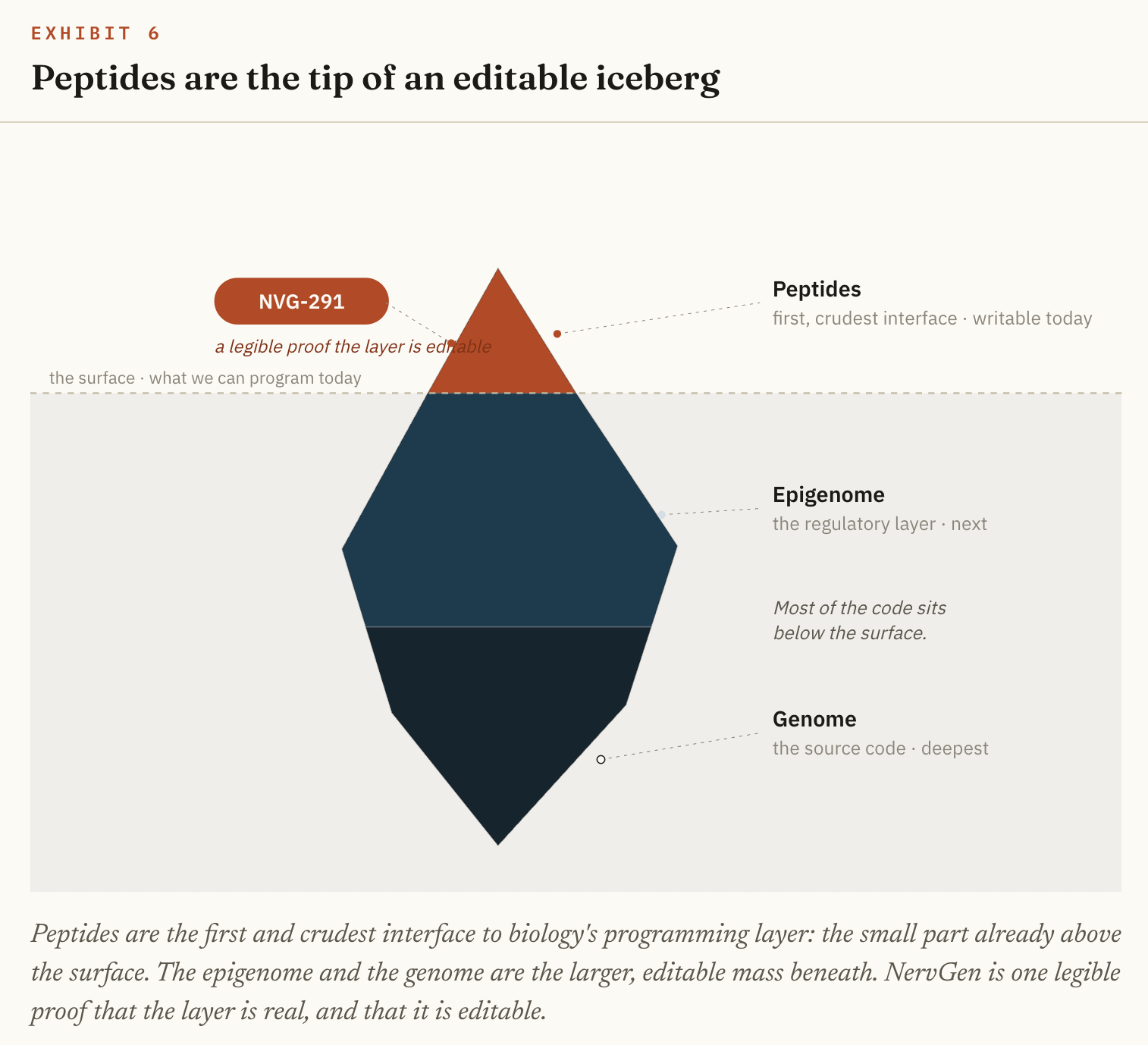
I keep saying peptides are the tip of the iceberg. Here is a clear instance. A 35-letter string, half of it borrowed from a virus, walks into a cell and deletes a biological stop sign that evolution spent millions of years installing. The body then repairs itself. That is not medicine as we inherited it but biology being programmed. Peptides are the first and crudest interface to that programming layer. The epigenome and the genome are next. NervGen is a single, legible proof that the layer is real and that it is editable.
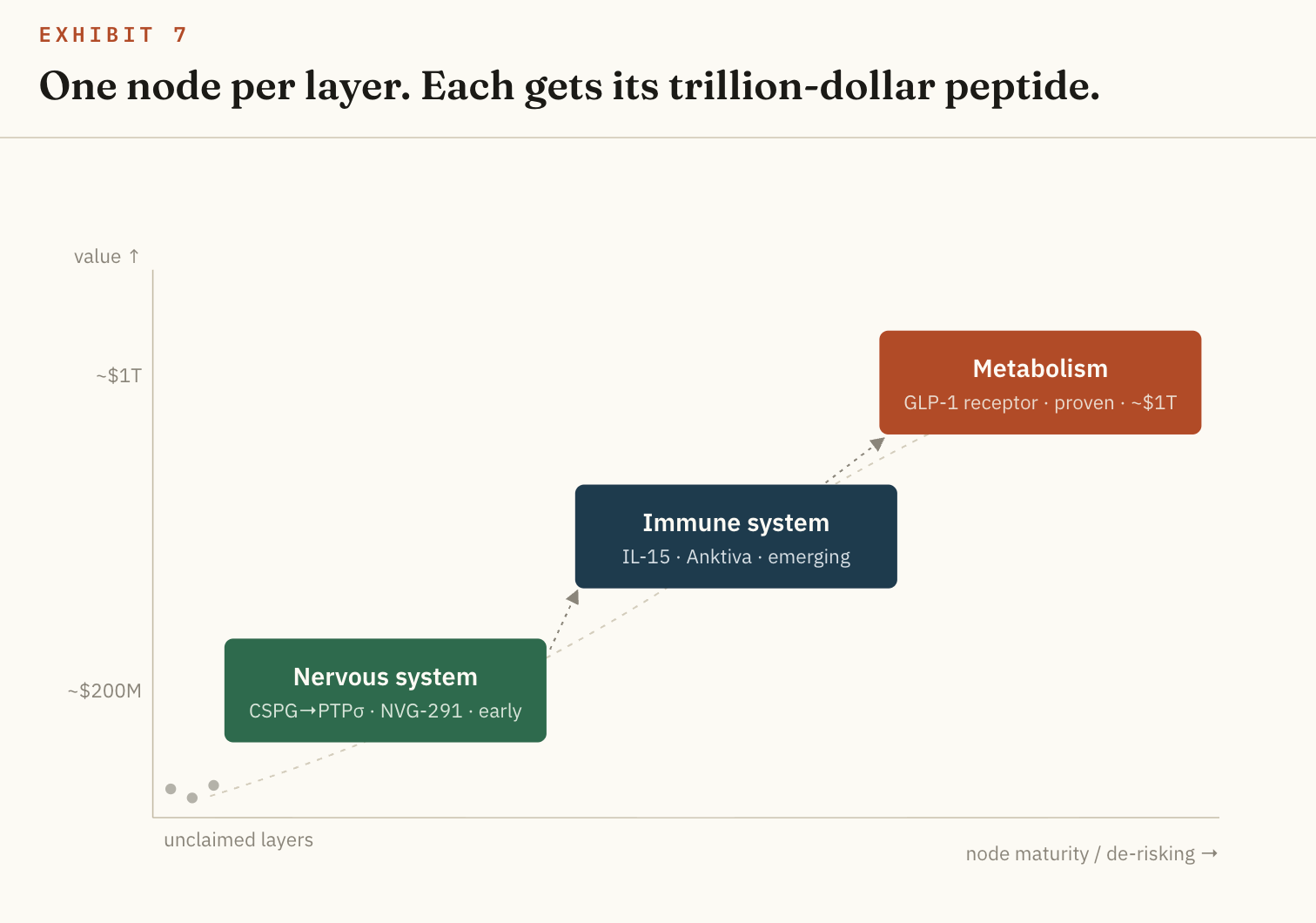
The body is built in layers: metabolism, immunity, the nervous system, and the rest. Each layer is a system, and every system has a control surface. My working assumption is that each foundational layer has one core proteomic node: a single protein-level lever where the biology is most druggable and the therapeutic yield relative to toxicity is highest. Most of biology is noise around these nodes and the returns concentrate on them.
And when you find a node and learn to address it precisely, the economics stop being normal. GLP-1 is the proof. A peptide hit the core node of metabolism, and the result was not merely a good drug. It became the largest drug category in medicine and created on the order of a trillion dollars of market value. That is the template. I expect a trillion-dollar peptide to emerge for each foundational layer, one after another, as we learn to address each node with the precision GLP-1 brought to metabolism.
We’ve only just started building the map:
The immune system. ImmunityBio is tentatively staking this claim. The node is IL-15, the cytokine that orchestrates the immune response, addressed through Anktiva. If it holds, that is the immune layer’s GLP-1 candidate: earlier and less certain, but on the board.
The nervous system. NervGen is the interesting name. The node is the CSPG/PTPσ brake on regeneration, addressed through NVG-291. Earlier still, and far less proven than the other two, but on exactly the same map.
Each layer’s flagship climbs the same curve, from early to proven, and the value compounds toward trillion-dollar scale as the node de-risks. Metabolism is already at the top. The immune layer is on its way. The nervous system is at the start. Every other layer is still sitting at the origin, waiting for its node to be found.
NervGen, then, is not only a spinal cord bet. It is an early position on the nervous system's square of a map that I believe will define most of the returns in the market over the next few decades.
To get better at Biology, you can read my previous biotech deep dives:
⚡ If you enjoyed the post, please feel free to share with friends, drop a like and leave me a comment.
You can also reach me at:
Twitter: @alc2022
LinkedIn: antoniolinaresc
These are opinions only of the individual author. The contents of this piece do not contain investment and/or medical advice and the information provided is for educational purposes only and no discussions constitute an offer to sell or the solicitation of an offer to buy any securities of any company or any drug or medical treatment. All content is purely subjective and you should do your own due diligence.
Antonio Linares makes no representation, warranty or undertaking, express or implied, as to the accuracy, reliability, completeness or reasonableness of the information contained in the piece. Any assumptions, opinions and estimates expressed in the piece constitute judgments of the author as of the date thereof and are subject to change without notice. Any projections contained in the Information are based on a number of assumptions as to market conditions and there can be no guarantee that any projected outcomes will be achieved. Antonio Linares does not accept any liability for any direct, consequential or other loss arising from reliance on the contents of this presentation. Antonio Linares is not acting as your financial, legal, accounting, tax, medical or other adviser or in any fiduciary capacity.
No posts
Comments
Nothing yet. Say the first thing.
Sign in to join the conversation.