
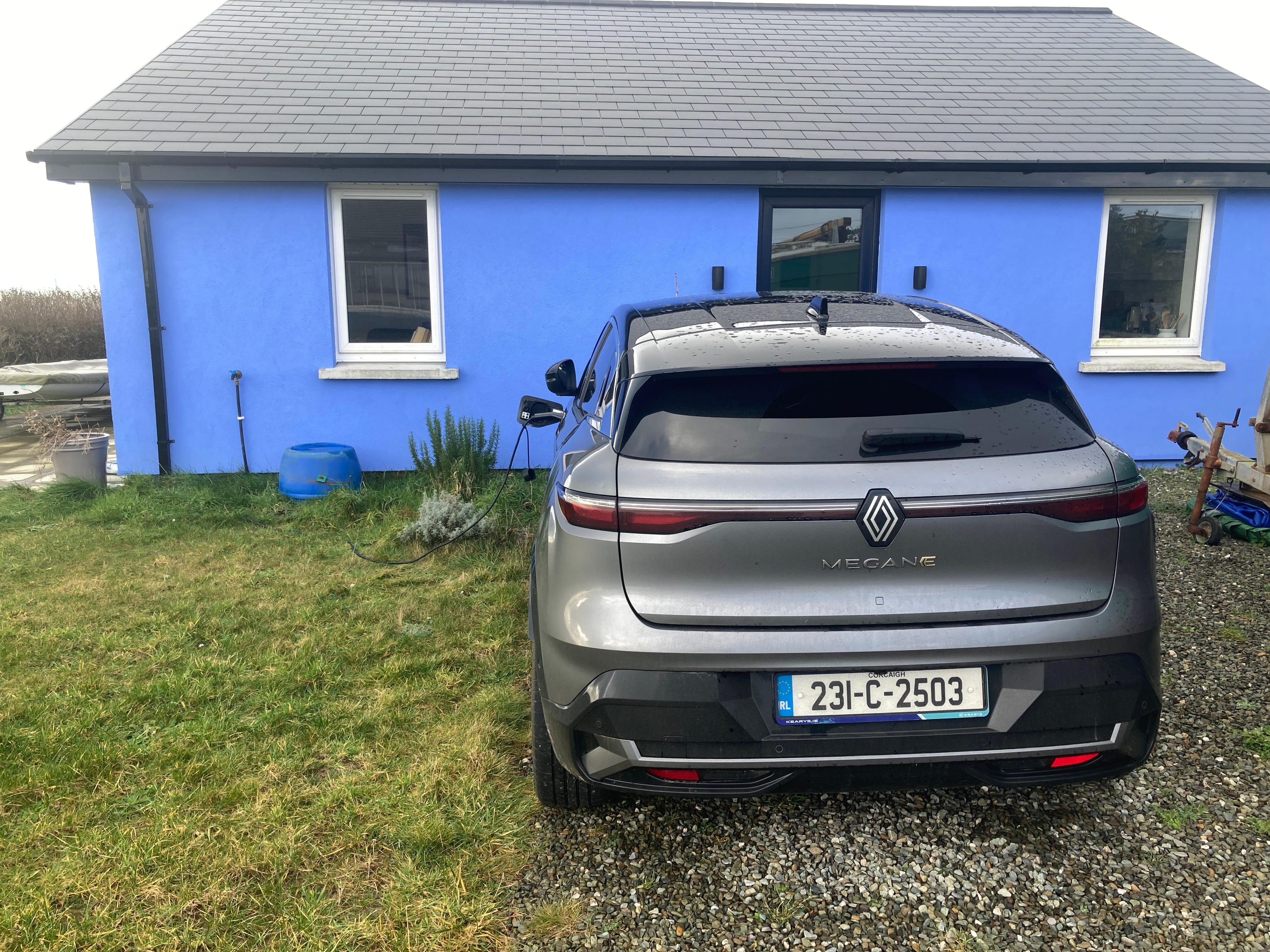
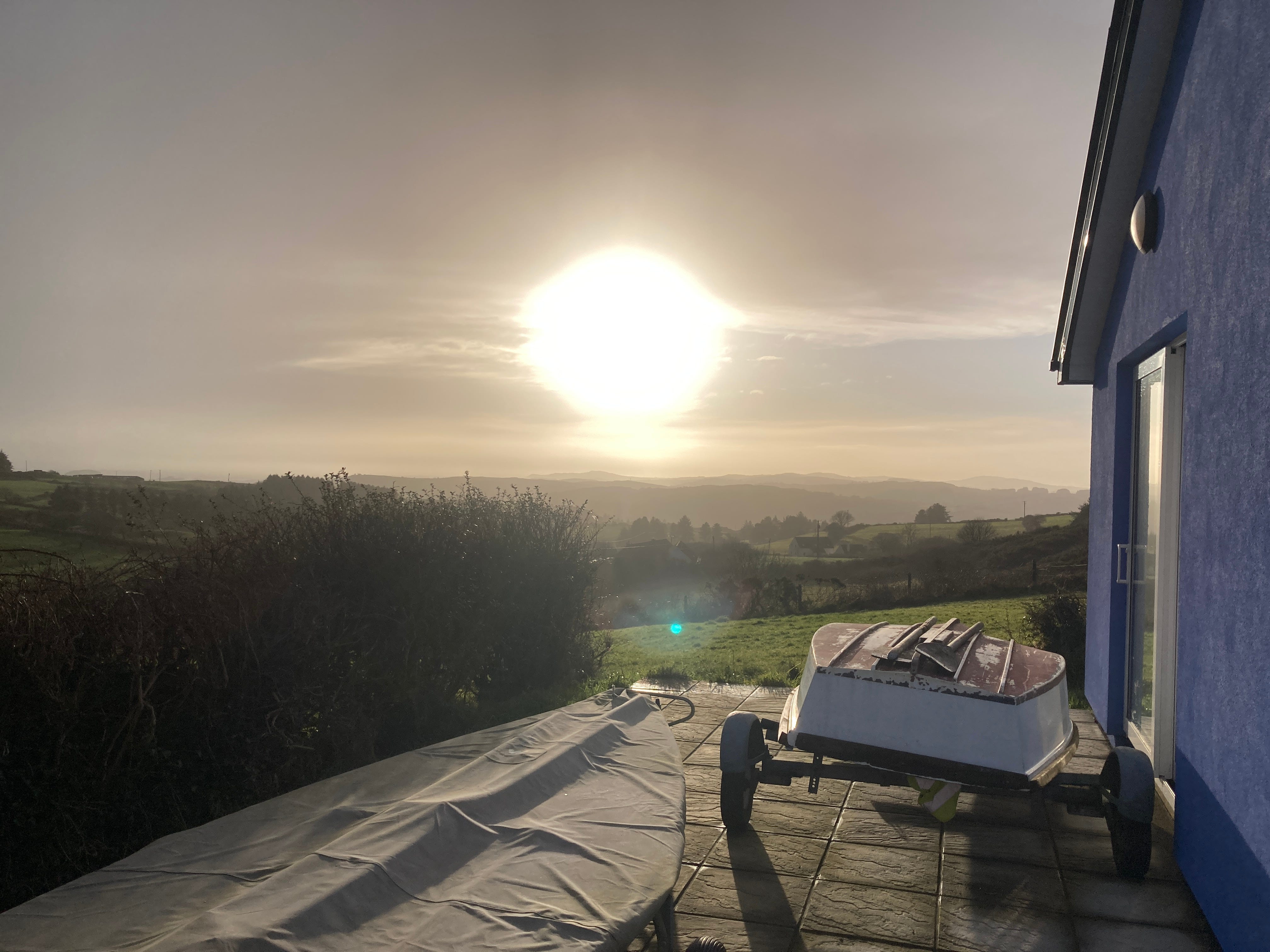
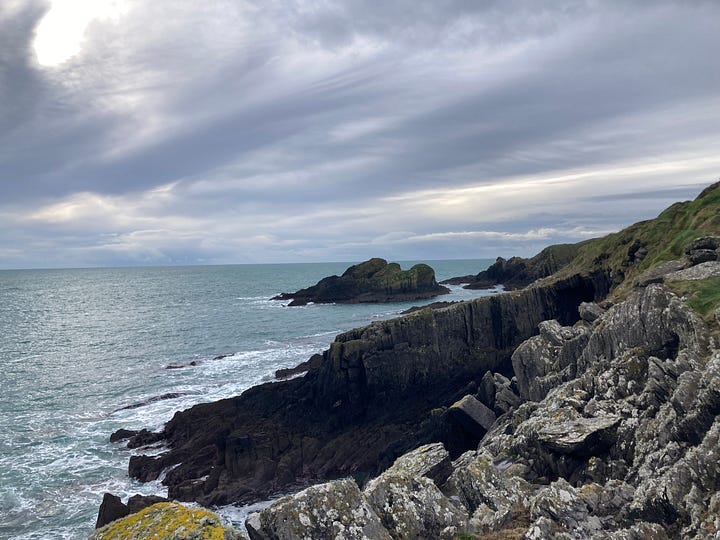
Late January is fair deep into West Cork winter. It’s chilly and often windy and wet, but I discover I don’t mind. If I was in a city, oppressed by crowds, cars and concrete, I would be disgruntled and uneasy. I’d fantasize about tropical sun and waters, and wonder about my choices. Here, though, I am uplifted by long views to the horizon and the pleasure of watching the ocean in all its winter moods. When the sun is out and the sky is blue it is a revelation. There are kind and interesting people about. Casey’s Pub is warm and inviting, with two fires blazing in the evenings, and a regular collection of rogues and raconteurs at the bar. Where we are has everything to do with how we are.
My winter equanimity is convenient, because I just sent my passport off to the US Embassy in Dublin for renewal. Even if I wanted to (which I don’t at the moment), I can’t go anywhere for up to six weeks. Now that the calendar year has clicked into 2026, and I am on the downslope toward a relaunch and reunion with Laughing Gull, I can hunker down and fire up some 2026 voyage planning. More on that soon.
In the meantime, one final electrification note. In December, the 2007 Ford Fiesta—five speeds, four wheels, four seats, an engine, and 265,000 kilometers on the odometer—finally gave up the ghost. It had endured long past all expectation, but suddenly started losing gears one day and died on the final steep hill to the house. I gave it my gratitude for getting me almost all the way home before expiring, rolled backward into a safe spot alongside the church, and called Burke’s Garage to come claim it for parts.
As much as I can use a bicycle for lots of local trips, West Cork life demands a four-wheel option for food shopping in Skibbereen or Clonakilty, runs to Crosshaven to check on Laughing Gull, and other chores. The conventional move, the sensible move, probably would have been a plug-in hybrid (PHEV). All the rage for anyone who has Electric Vehicle (EV) range anxiety (which I don’t), and who makes lots of local trips within easy range of an electric engine (which I do).
But I found I just couldn’t bring myself to buy another ICE (not referring to a jackbooted militia, but to an Internal Combustion Engine) vehicle. I want to ditch fossil fuels every chance I get, and this was a chance. When I buy something (a car, a phone, a laptop, a boat) I tend to keep it for the duration of its useful life. I am the opposite of a serial-upgrader. Despite predictions that it will be hard to phase ICE cars out as far into the future as 2035, I feel certain that the transition will happen much faster and that owning a car with a combustion engine will feel dumb and/or weird in just a few short years. I don’t like to feel dumb and/or weird.
Yes, yes. Charging infrastructure in Ireland, as in the US and many countries, is still inadequate, slow, and gap-filled. But it will only get better with each year. “Today is the worst it will ever be,” I like to say. More important, if you can charge an EV at home you only really have to worry about public chargers during road trips. EVs require a certain mindset, and a willingness to plan. But it is just not that hard. I searched for recent-model used EVs in West Cork that could tow a light boat trailer around and haul bikes and kayaks, and settled on a 2023 Renault Megane, swiftly dubbed “Maggie” (because who the hell knows what a Megane is).
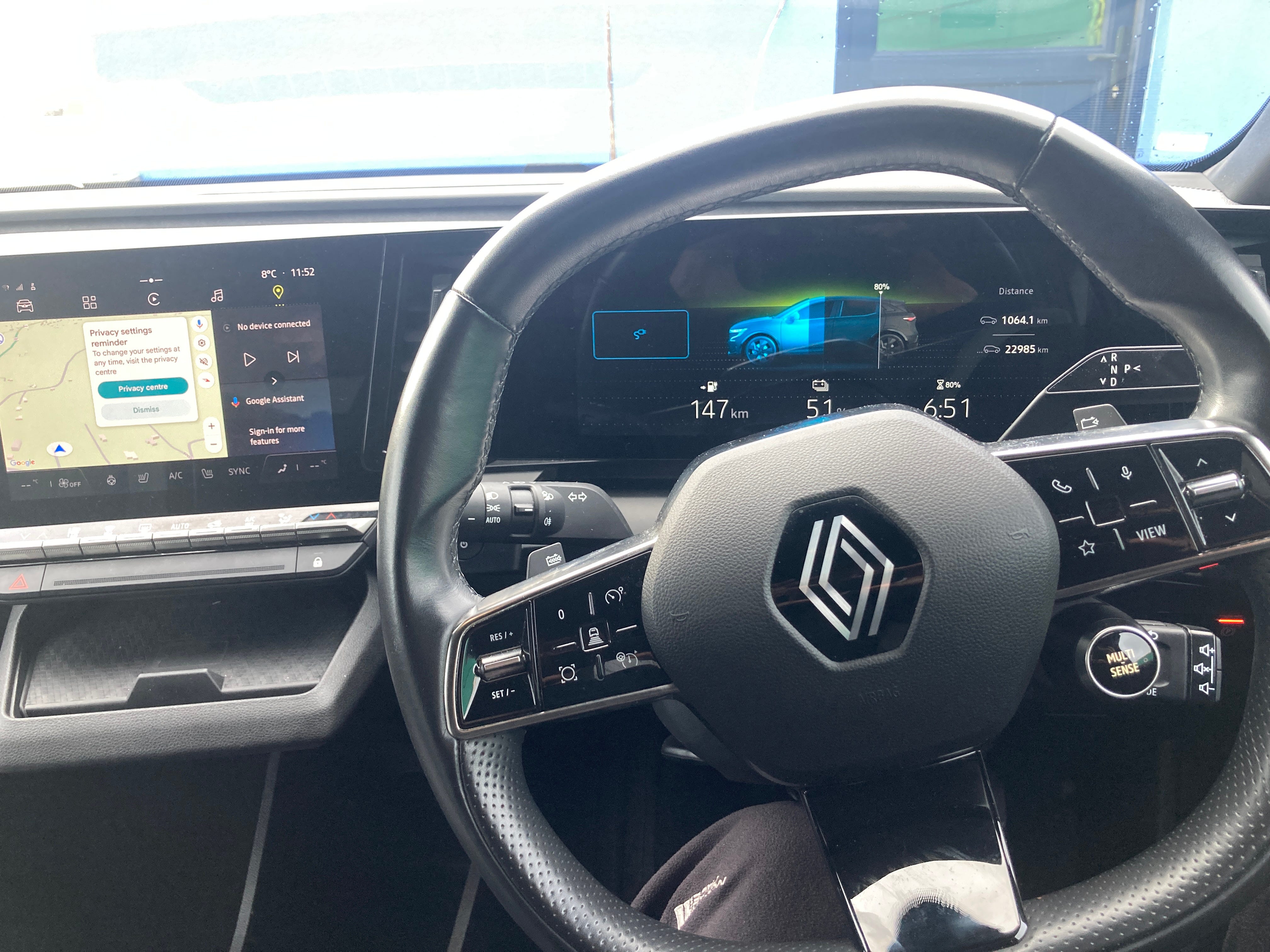
Driving Maggie around, in contrast to the Platonic simplicity of the Fiesta, is like piloting a spaceship. There is a lot of tech that goes into a 2023 EV compared to a rolling 2007 box (Apple CarPlay for great music and easy nav; tray charging for an iPhone; automatic lights and wipers; keyless entry; wild light displays; I haven’t even come close to figuring out all the options). It makes voyaging by EV a lot of fun. On top of the pleasure of seeing every gas station you pass as anachronistic and completely irrelevant.
Initially, I looked into getting a standard 7 kilowatt home charger installed. But it was expensive and would have required some modifications to the aged electrical system in the house. When I realized I could just order a 3 kilowatt charging cable that can be plugged into any outlet, that seemed like the obvious solution. It would take around a day to fully charge Maggie’s battery if it was near-empty. But I can plug in any time I am home, and am usually charging from around 30-40%. So an overnight charge is sufficient to get me back above 80% charge, which is all you want for good battery health and normal car usage (I can charge to 100% for longer trips).
Maggie, like the heat pump and induction stove in Little Blue, also adds to the strong economic case for electrification. Public charging is more expensive, and comparable to the cost of gas per 100 kilometers of driving in the Fiesta (which got about 35 mpg). But the cost of a kilowatt hour at home (approx. €0.28 per kWh), is about half of the cost at a public charger. Which makes the cost of driving 100 kilometers in Maggie about half the cost of driving the same distance with a gas combustion engine. Pretty, pretty good (Larry David reference).


Similarly, driving 100 kilometers in the Fiesta emitted approximately 24.9 kilograms of CO2 emissions (if you drove a pretty ordinary 10,000 kilometers in a year that would mean a hefty carbon footprint of 2.5 tons). Driving 100 kilometers in Maggie—thanks to the fact that Electric Ireland’s domestic electricity supply is almost 60% from renewables—emits just 4.2 kg of CO2e. That is about six times less CO2 per 100 kilometers driven, and an annual carbon footprint for 10,000 kilometers driven of less than half a ton. That is some serious shrinkage. Presumably, Electric Ireland will continue to increase the percentage of renewables in its electricity generation. Regardless, it would be easy enough to zero out the carbon footprint of both Little Blue and Maggie with a modest solar panel array. This is the future (in Australia it is almost the present).
The radical power of electrification will transform how we live and get around (e-bikes are also taking off) regardless of what the oil industry, and its lackey Mad King Donald, tell you. That malign axis of greed and corruption can delay, with painful costs to the planet and humanity, the electrify everything revolution. But they can’t stop it. The economics are too compelling.
If you want to follow someone even more enthusiastic about electrifying human existence, here you go:
If you liked this post from Sailing Into The Anthropocene, why not subscribe here (free!), and/or hit the share button below? You can also find me on Instagram and BlueSky. (You can find me, but I don’t post much anymore for quality of life reasons).
No posts
Comments
Nothing yet. Say the first thing.
Sign in to join the conversation.