
A companion piece to the first claim, Hate needs an address.
What was your sleep score last night?
Anyone with a ring or a watch that measures it, what number did you wake to?
And how do you feel?
~
Notice which answer came quicker.
I remember reading blogs and books on biohacking to optimize that number. Caffeine cut off nine hours before bedtime. Exercise cut off three. I planned my life to achieve the number, then looked to the number to see what I could promise of my life. Because better sleep, I was taught, led to better performance, and better performance to better pay, and better pay to a better life; every link a number measured outside of me, standardized, except the last — the only one I cared about. A life run as an equation rather than lived. The numbers measured what their issuers determined worth measuring; no value entered for the way it felt to be alive, for knowing myself, for meaning. What would have been left of me to live once every measure was achieved?
High-score mornings, low-score mornings, neither matched how alert or well I actually was. Sleep had become something to game rather than something to have. I lost sleep over it.
I remember the ideal weight, too, and what it cost to make the body match it.
So back to it: What number did you wake to, and how do you feel?
~
You are the one thing on earth only you can inspect directly, and you checked the screen. Hold that claim to its exact size. Instruments read your biology better than feeling does; perception distorts, and can decouple from the measurements entirely; the device catches what the body holds apart from the mind. The claim only you hold sits past the reach of every instrument: what being you is like. Your isness is yours alone to verify.
Yet you turned to the screen, the sign, the measure. Hold that motion. It is 53 centuries old; except the first time, someone else pressed the count on you.
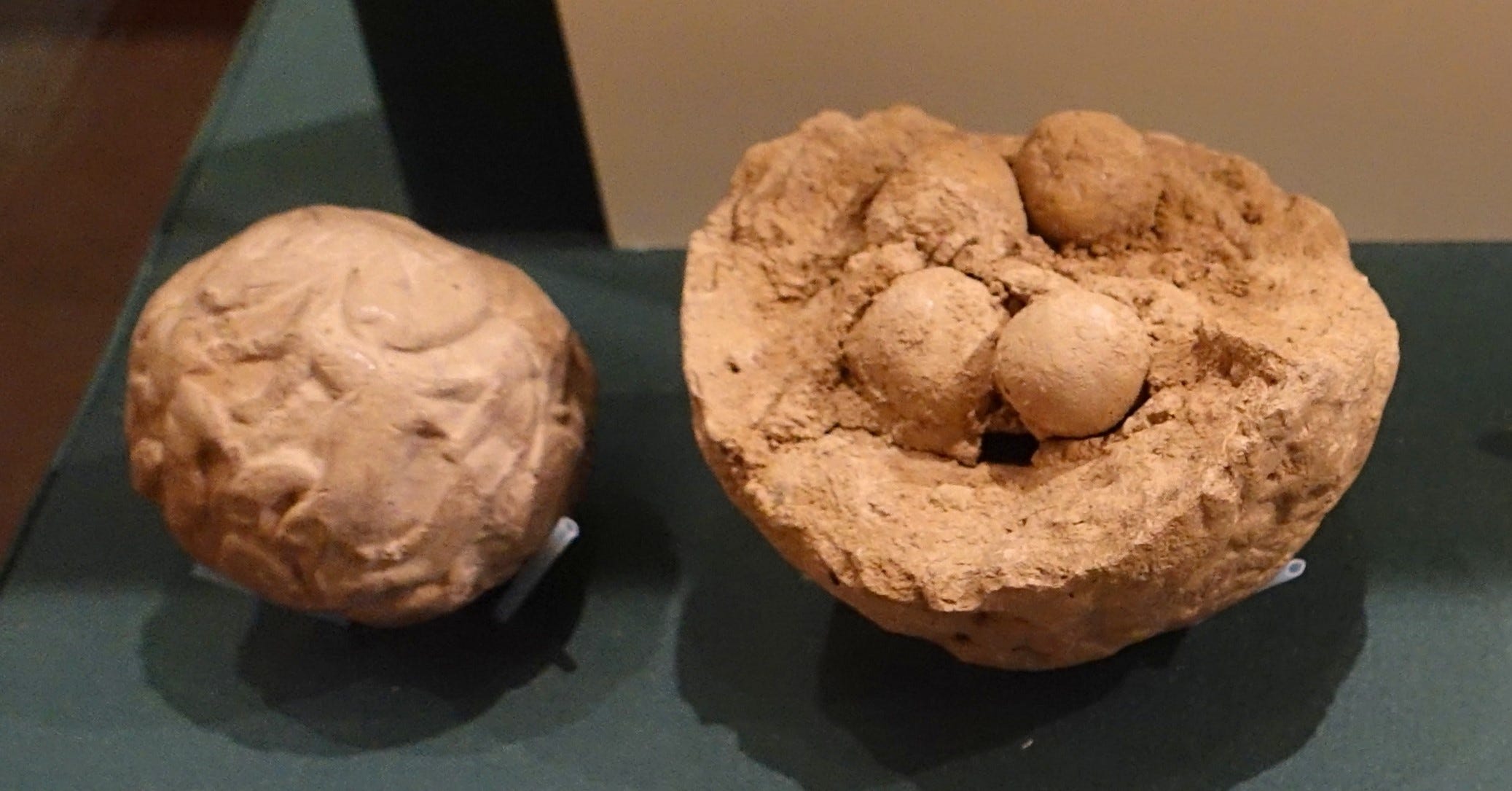
Uruk, in what is now southern Iraq, the first city of record. A clay ball the size of a fist, tokens sealed inside: a cone for a small measure of grain, a sphere for a large one. You could feel the count through the shell with your fingers. To verify, you broke it open.
Jüterbog, Germany, a day’s walk from Wittenberg, 1517. A friar sells time off purgatory, priced, printed, and receipted, a debt his own institution entered against you at birth. The referent is the condition of a soul, a thing no living person can inspect.
A phone screen, October 2024. A token called Goatseus Maximus climbs from 3 million dollars to 800 million in under two weeks, then keeps climbing until it becomes the first token from its launchpad to pass a billion. Its loudest promoter is a language model. Its issuer is anonymous. No hand sealed anything. There is nothing to break open.
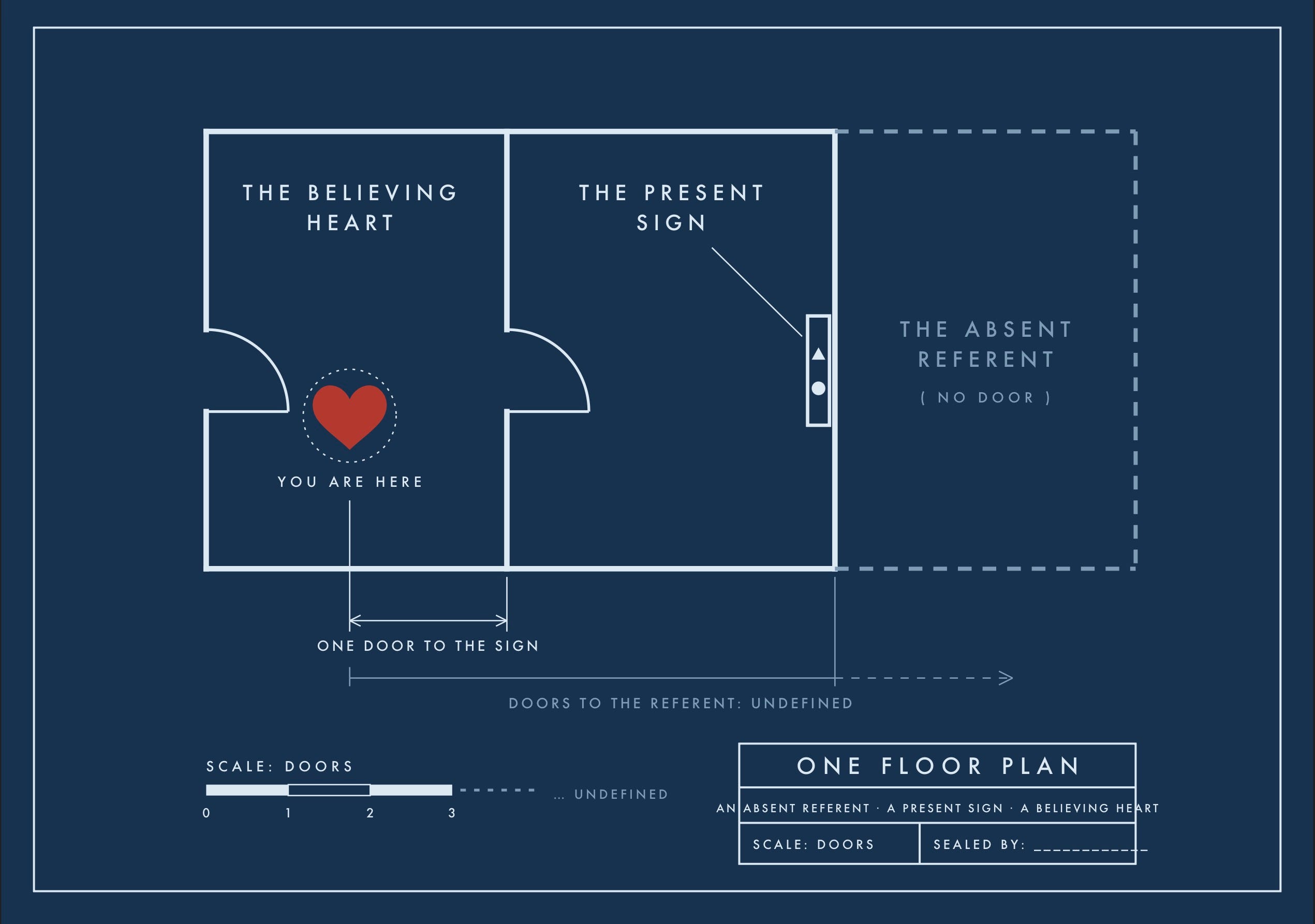
Three sales, five thousand years apart. One floor plan: an absent referent, a present sign, a believing heart. Grain in a granary you’ll never visit. A soul’s standing you’ll never see. Code and collateral you’ll never read. The sign stands in, and the whole weight of the deal rests on the third leg — the heart that agrees to believe.
Honor that leg before anything else, because every warning skips it. Placing the heart in a sign is the species’ masterstroke: it lets a promise travel farther than a body can walk. It is how strangers raise a granary, a cathedral, a market; how labor, attention, and responsibility spread across hands that will never touch. Coordination at any scale past the village runs on hearts placed in signs. The propensity to believe is an achievement that has enabled almost all of the accomplishments of our species.
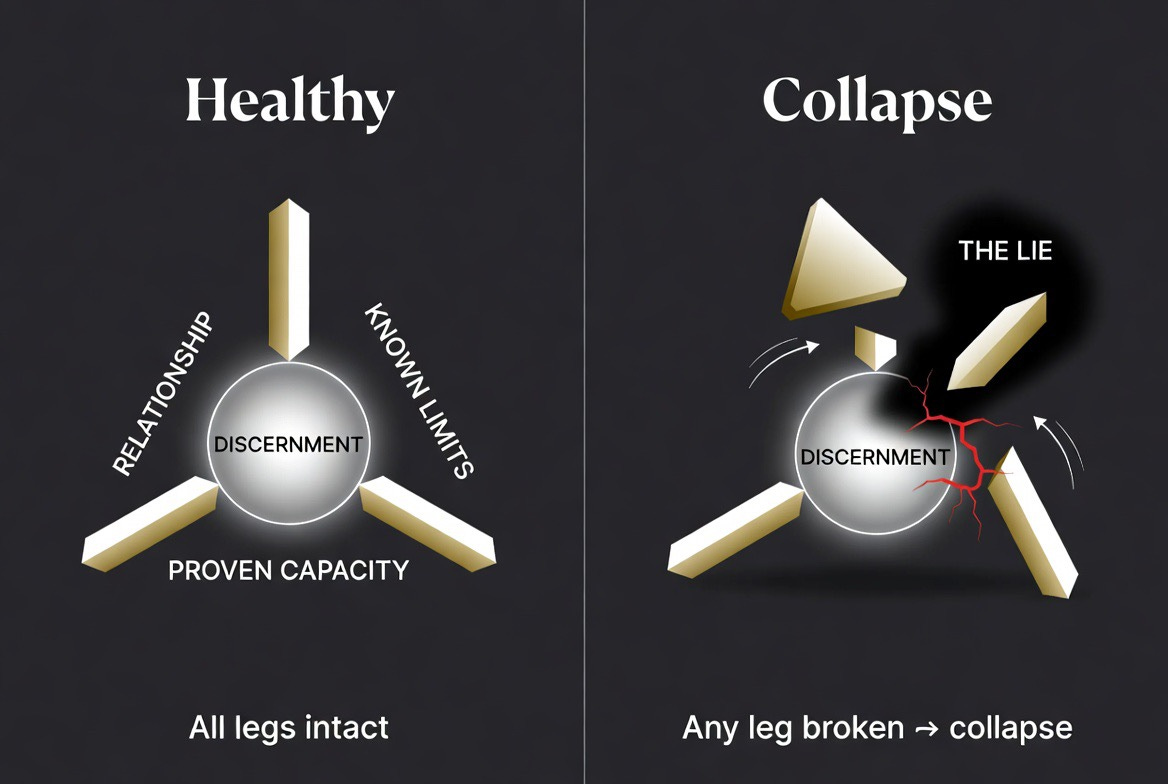
The con is a rider on the achievement. The lie is ancient, small, and unimproved: turn the placing toward capture — coordinate the many, enrich the few, degrade the entirety. What the lie cannot survive is discernment, and discernment runs on three inputs: relationship, proven capacity, known limits.
Can you reach the one you’re trusting?
What have they carried before?
Do you know what they cannot do?
Across five thousand years, the lie holds still. The inputs come apart. What follows crosses clay, church, bond, coin, and currency: one machine the whole way, honest runs and crooked runs on the same rails, and one test held to every run.
English kept receipts.
Token comes from a root meaning to point, the same root that gives verdict, the truly-said.
Credit comes from Latin credere, an old compound whose traditional reading is to place the heart; Sanskrit kept the same compound as śraddhā: faith. Rome ran lending and believing on one verb.
And ledger is the placing verb again, from leggen, to lay—a church’s service book before it was an account book; faith held the word first, and the loan is dated: the 1580s. Believing, the old words agree, is putting something of yours somewhere, at risk, in another’s keeping. The sign points. The heart is placed. The record lies down and becomes law.
Faith, finance, and law were one operation before anyone alive was born. The language preserves the shared origin.
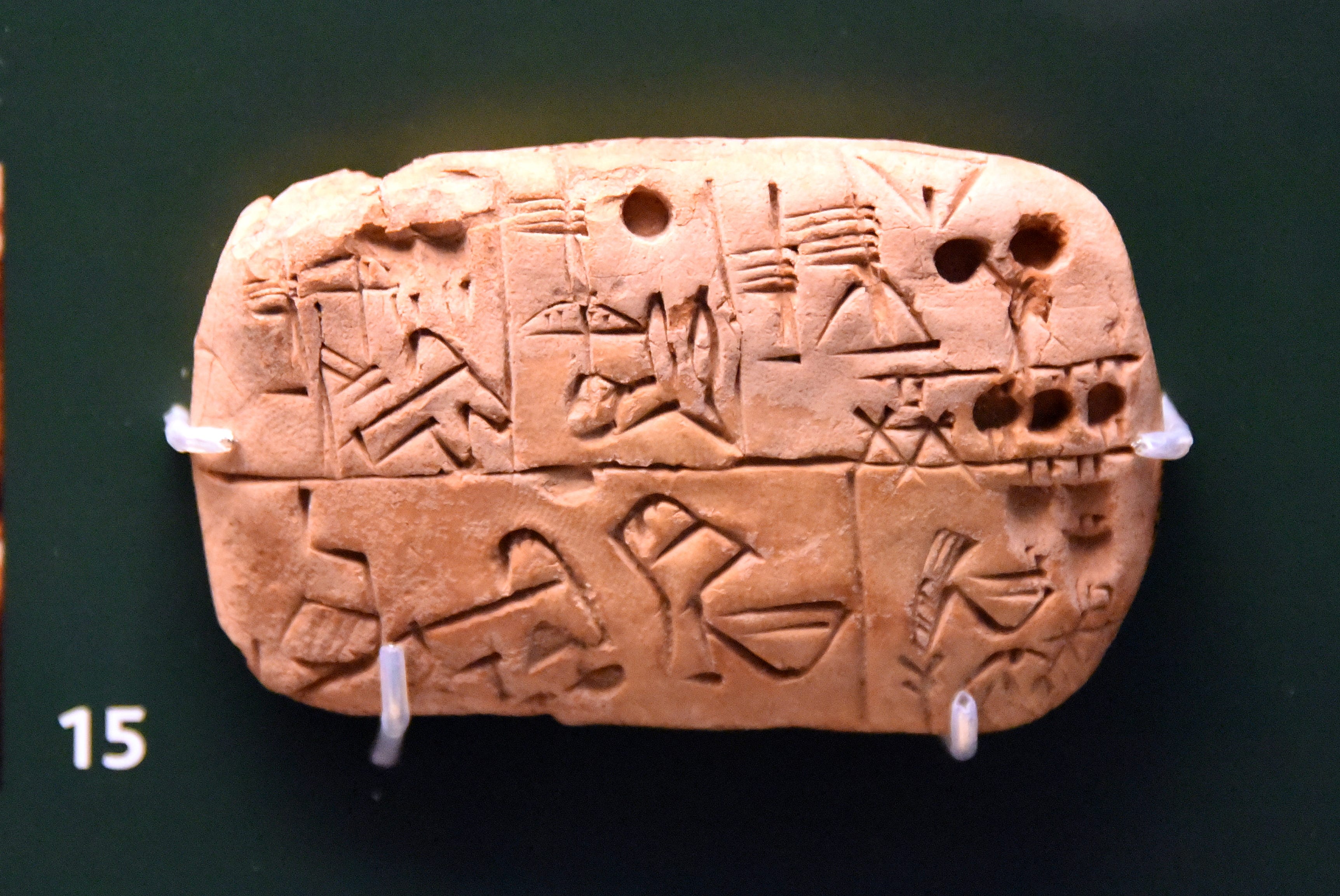
The clay run is the floor plan at its most honest and it shows the first crack. The shell was tamperproof by nature: the seal pressed into wet clay by a named official, a man with a household, a door, a body, whose family ate or starved on the standing of that seal. Then someone pressed the tokens on the outside of the shell before sealing it, so the count could be read without breaking — and once the outside sufficed, the inside was dropped. Flat tablets replaced shells. The sign had eaten its referent, politely, in two moves.
The ledger overwrote the living from the first tablets. In the earliest accounts of persons at Uruk, children appear graded by the age-scale built for herds, the farmer’s tool for timing weaning and breeding, turned on human young. The modern paper that assembled these accounts carries a title that captures the revulsion: The Smell of the Cage. When that arithmetic ate too many farmers, kings wiped the slates by decree. The Sumerian word for such release, the oldest word in the record translated as freedom, is amargi, and its literal compound means return to the mother: debts cancelled, slaves freed. The oldest law in the record states itself: the ledger exists for the living, and when its arithmetic begins consuming the living, the living outrank it. The mother is what the ledger answers to.
The church run perfected the token. The con is old enough to be named inside the book: simony, after Simon, who offered the apostles coins for the power to confer the Spirit. Fifteen centuries later the product line matured, purgatory-time denominated, priced, and sold, the issuer grading its own claim, audit impossible in principle. And the proceeds were structured. Half the take from that friar’s campaign, his name was Johann Tetzel, went to St. Peter’s in Rome; the other half serviced the Archbishop of Mainz’s debt to the Fugger banking house, Europe’s biggest lender, a debt incurred buying the office itself. Securitized penance; the Fuggers held the tranche. And Tetzel appears to have been left off the term sheet: he seems to have believed all of it went to Rome. Even the seller was sold a sign.
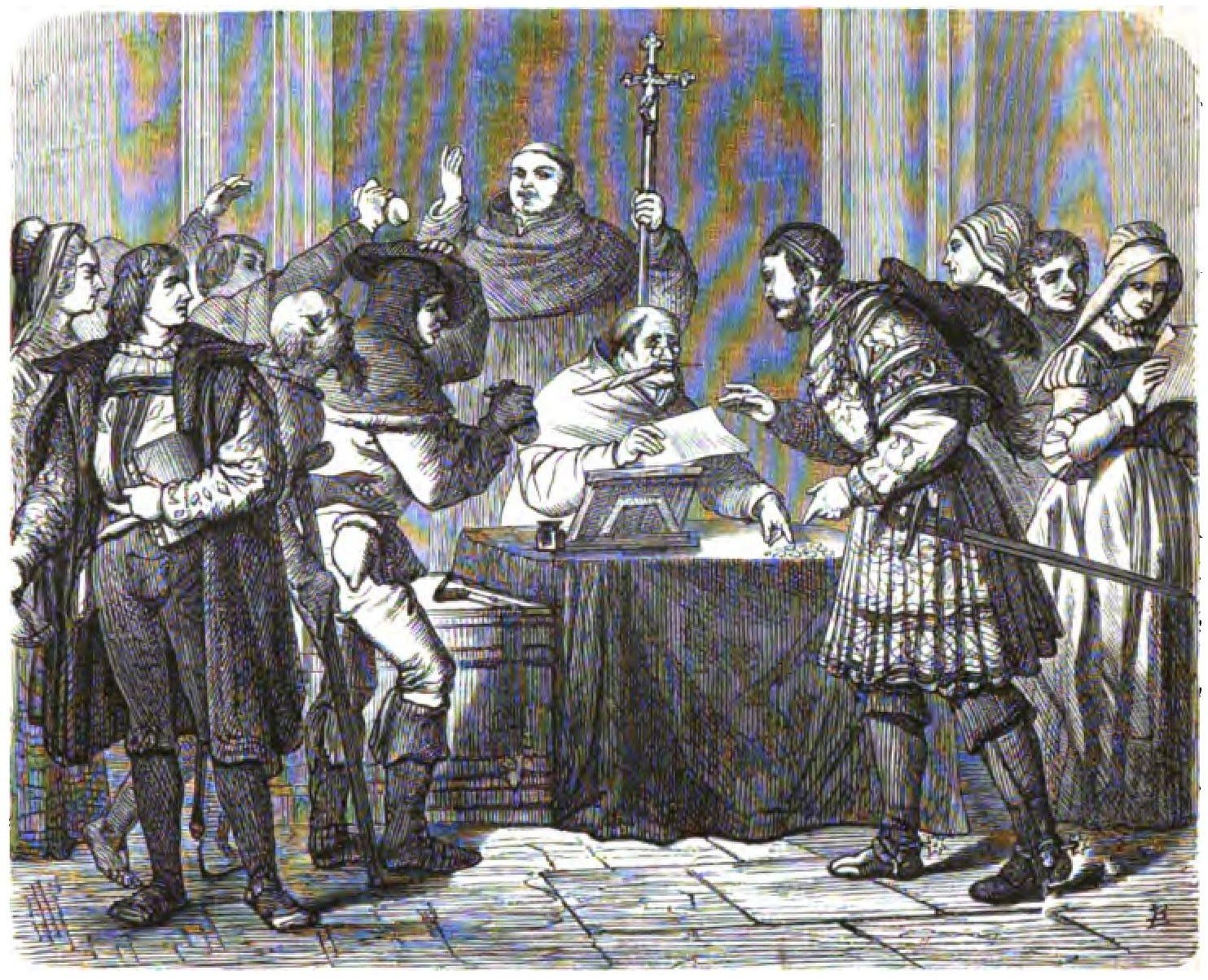
The corrective came from Wittenberg, Martin Luther; it made two moves. What Luther verifiably did on the last day of October 1517 was mail his ninety-five claims to Albert of Mainz, the archbishop whose Fugger debt the sales serviced. He addressed the indictment to the beneficiary. Then scripture in the vernacular, the loan tape handed to the believer to read with their own eyes.
Name the seller, to his face. Reopen the shell.
Notice what the corrective did: it rebuilt the surfaces belief could check, and left the believing standing. The corrective never stays won, but the container is not resealed.
You know the modern runs.
2008: grades stamped on unread loans, failure rates waived in and unspoken, one man imprisoned for all of it. Then the compression: Terra, a stablecoin grading its own slab, its dollar-claim propped by a sister token whose worth was demand for the claim. Launchpads banking fees on millions of tokens that assert nothing at all, the referent simply omitted. And in February 2025 the largest theft in the industry’s history, the Bybit vault, ran through a signing screen that showed a routine transfer while the transaction underneath rewrote who controlled the vault; the hardware wallets, the last honest surface, showed only a hash. Trace the senses down the runs: hands on the clay shell, eyes on the certificate, one glowing rectangle, a string of hexadecimal — the final verification surface is illegible by design.
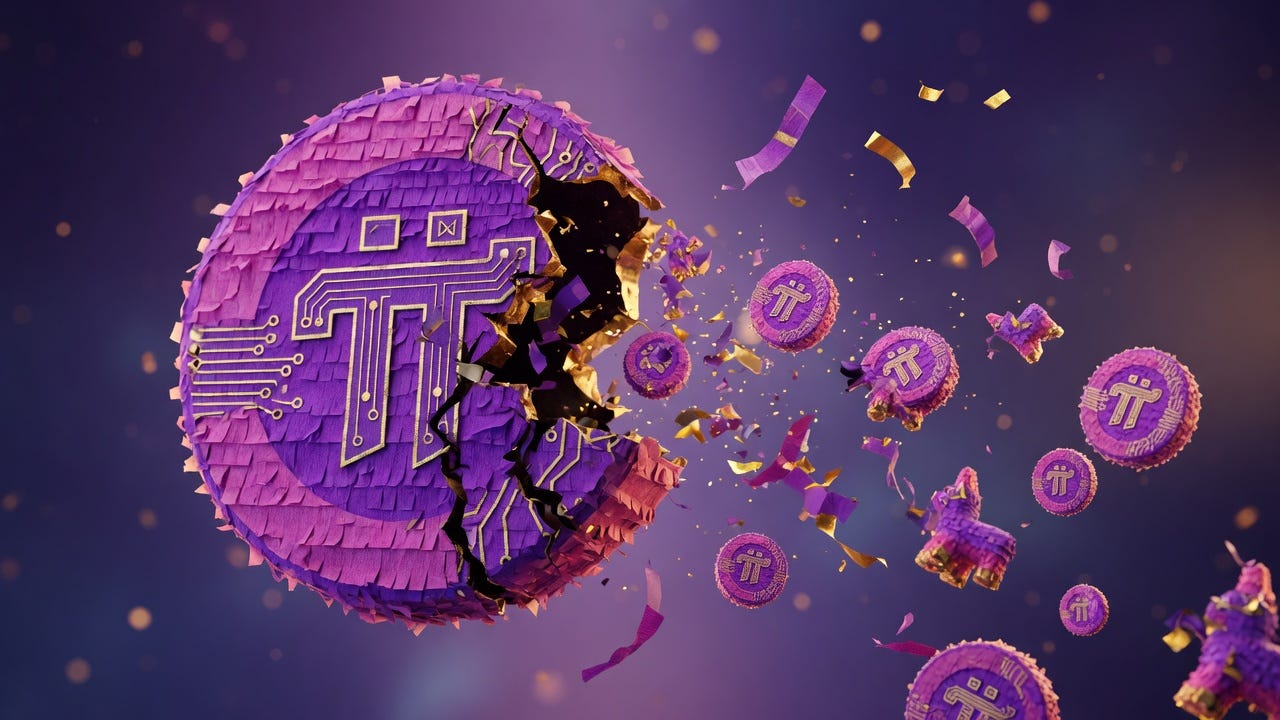
The words never changed: tranche, collateralized, wrapped, underlying; the 2008 words stamped without a blush on the new slabs. I have cut that stone open already: the lead-filled ruby.
When the product is new and the language is identical, the language is the confession.
Line the runs up and one thing moves: the body leaves the seat. A seal-bearer with a household; a sovereign with a mortal frame; a bank with a charter and a door; founders with at least names to hide. Then the goat, the roles split so no single body held both the fee and the claim. The promoter had no body at all. The issuer hid his. Bodilessness arrived as a division of labor.
The run you are standing in is the money in your pocket. The easiest entry in anyone’s ledger is the one written against me: file any shortfall as my failure, write a story in over the place where a living, breathing, feeling being stands. Lazy, doesn’t want to work, should have gotten a degree, shouldn’t have gotten a degree, should work harder, longer, smarter, etc.
You know that entry. It has your name in it too — the number you saved sat still while the sign it was written in bled worth. Where is the body that suffers when this sign lies? Look down. Fiat seats the believing heart and the bleeding body in the same chair: you hold the sign, you eat the debasement, and it lands on wages and savings while the officials who authorized it miss no meals. The issuer kept the pen and outsourced the bleeding to the holder.
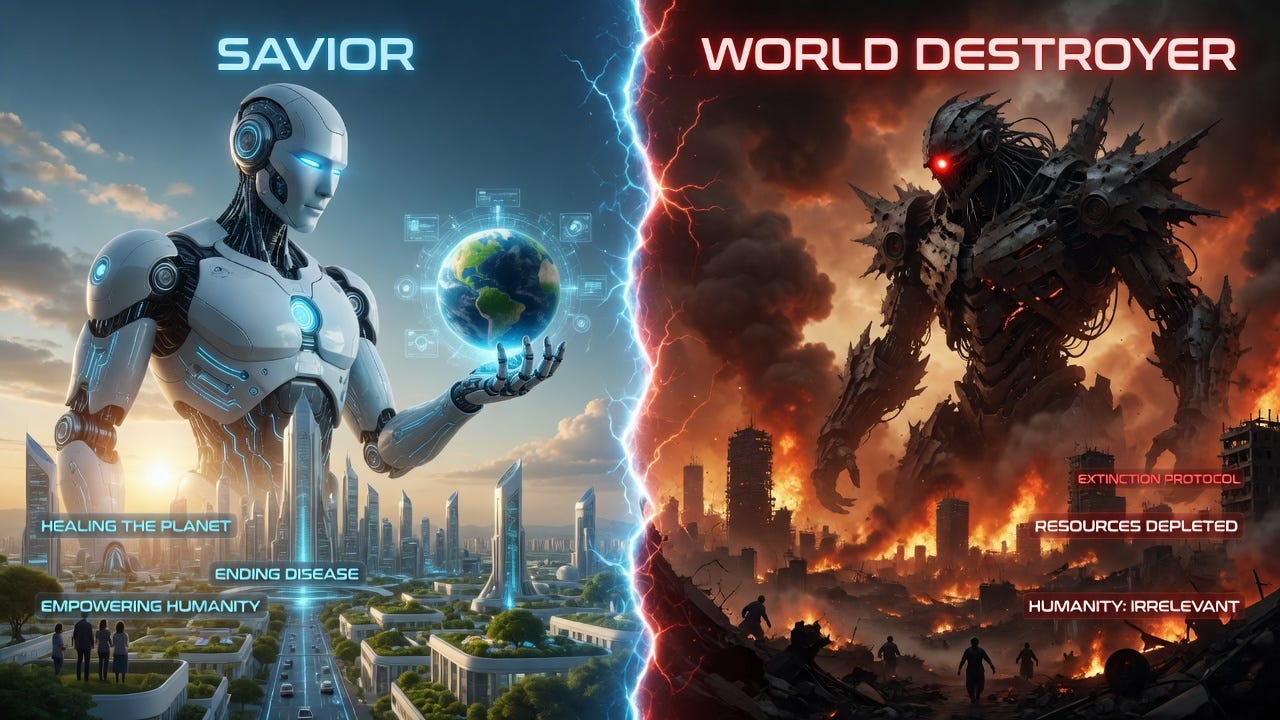
The second con arrives at the same door from the other side. The savior is on sale again; tribute now, audit never. Two pitches run from two pulpits: this will cure death; this may end the species. The pulpits oppose each other, and many of the preachers are sincere. The structure does the work regardless of the sermon: both denominate the present price of faith in a future state no one can inspect, and that structure pays whoever occupies either pulpit. The always-imminent machine god plays the purgatory role. And this mystery is partly real: no one, including the builders, can yet fully read these models’ inner ledgers. That changes the con’s grade without dissolving it.
Now stand where the whole line can be seen, and let the anger come before the tool does. The propensity they farm is the one that raised every granary and cathedral and child; the faculty that let a soft, slow animal outbuild everything with teeth. Some looked at that, at the open hand extended on the strength of a word, and saw a crop.
They set up at the choke points of coordination and harvested the placing itself. And for the shame of it they wrote a doctrine: the believer was the defect. Trust was weakness, the mark had it coming, the taking proved the taker’s fitness — cruelty exempted by reclassifying the species’ masterstroke as the victim’s flaw. The pickpocket lecturing the crowd on the naivety of pockets. A confession filed as a boast.
A man who farms placed hearts has priced his own, and a priced heart cannot be placed. The open hand is closed to him: he knows what open hands fetch. He lives past the last door, breathing the fog he makes. The emptiness is structural. The ledger exists for the living; he made his living into ledger, and that conversion runs one way.
So take the heat and hammer it into a tool. The tool is a ruler, a single configuration with two conditions: the seller grades his own claim, and the shell is built so you cannot break it. Wherever both conditions hold, the run is crooked, whatever the sermon. Clay, indulgence, mortgage bond, stablecoin, dollar, one machine. Before you place the heart, find the body, then pace off the distance. Ask it of any sign that wants your faith, a bond, a coin, a grade, a promise of heaven or of the future: where is the nearest body that suffers if this sign lies, and how many doors stand between you and it? Who misses a meal, loses a house, stands in a dock, dies — and could you walk to them?
The distance is the verdict, and the trajectory of five thousand years is that number climbing until it leaves the scale. And be clear what the ruler is for. It is a custodian’s tool, maintenance for the placing itself: verification is what keeps trust affordable, and the test exists so you can keep placing the heart and have it survive the trip.
~
The scar a con leaves at scale is suspicion of everything, and total suspicion finishes the job for it: a people who can place the heart nowhere coordinate nothing.

What is owed in this essay:
Where is the body that suffers if this essay lies? Me. My name is on the record and findable in minutes. I sell signs for a living, luxury watches, objects whose price is nearly all provenance, across a counter with my face above it and my name on the receipt. I am publishing this ahead of a legal proceeding I expect to reopen, knowing an adversary can read every line of it into the record. And this essay was drafted with a bodiless instrument, the same class of promoter that shilled the goat. Its claims were worth nothing until a body certified them: every receipt verified or flagged, the liability transferred whole to my signature. That is the countersignature protocol — the only honest way to use what has no skin in the claim: one name holds the claim, the fee, and the fall. Graded on my own ruler, I stand downhill from the clay sealer: his family ate on the seal; I stake an imprint, a standing before my children, and a forward exposure I am choosing. Mid-distance, and closing. The body is me.
What I’ve learned writing this:
There is no valid measurement of love. I have looked. Every ledger prices it at zero, which is how the dearest thing in the repertoire of being here goes invisible on the books. Let it stay unmeasured; the content of a heart was never the measurable part. The placement is. Where the heart is held, and who stands protecting what it holds — measure that, and nothing else. The weight on your chest when a score drops is a heart placed in a sign that answers to no one.
A note before the comments.
If you’d like to reply, open with the last token you took on faith — the thing you placed your heart in without pacing the distance. Then name the body and count the doors. If the distance comes back undefined, say that instead. That’s the exercise.
The record.
— The runs: Terra, May 2022; Bybit, February 2025; Goatseus Maximus on pump.fun, October–November 2024; the 2008 autopsy and the tokenization architect in the lead-filled ruby, linked above.
— The door: first reported by Melanchthon in 1546, twenty-nine years after the fact; Luther’s October 31, 1517 letter to Albert of Mainz is the documented act.
— Uruk: R. K. Englund, ‘The Smell of the Cage,’ Cuneiform Digital Library Journal 2009/4 — humans logged with the herd apparatus, children graded by the stock scale; amargi, the debt-release word, literally ‘return to the mother.’
Comments
Nothing yet. Say the first thing.
Sign in to join the conversation.