
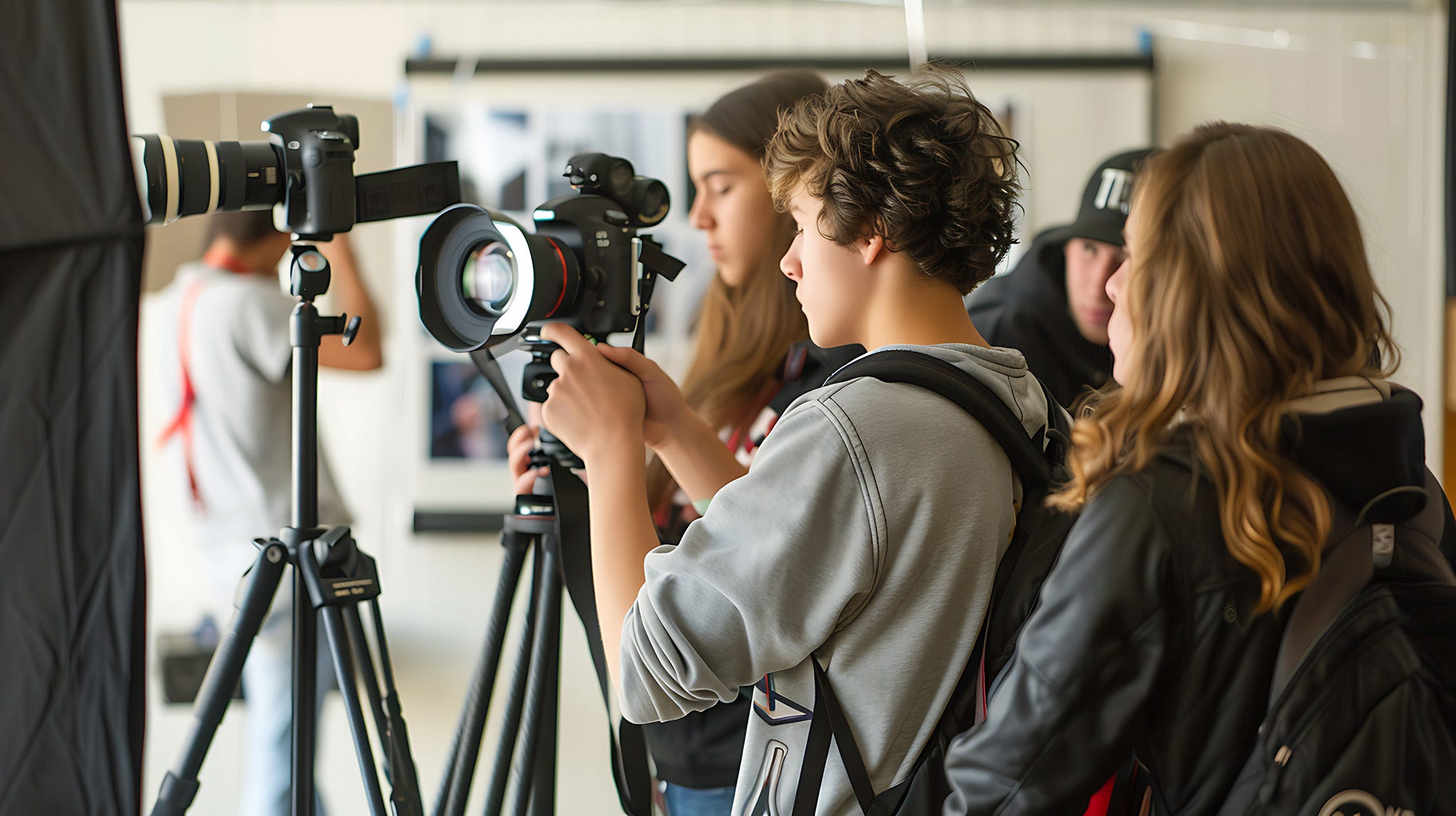
I believe that camera clubs, for the most part, are good. They give photographers a reason to get out and shoot, plus they provide a place to spend time alongside people who understand why anybody would wake up before sunrise just to take a picture of something.
Although I’m not a terribly social person, for many others, the social side of a camera club is probably its greatest benefit. Although personally I enjoy the solitary aspect of photography, many others find it to be more enjoyable when they’re doing it with other like-minded individuals.
With that said, I think camera clubs can do some damage and hurt a photographer’s overall growth.
In my view, many people who are in a camera club are learning how to take pictures that win competitions and not exploring ways to make images that might be more personally fulfilling. Pictures that resonate with them on a gut level.
The metamorphosis is gradual. You enter one or more of your photos in a monthly competition and listen to what the judge or judges have to say about them. The judge points out something they view as a flaw. Makes suggestions about cropping and f-stop.
Often, the advice is helpful. Similar to how our own nose might not notice the smell coming from our cat’s litter box because we live with it, our eyes become numb to things in our own pictures that other people immediately notice.
The issue though, is often the helpful advice a judge is offering, is an opinion. An opinion they developed by knowing what they like and how they like to interpret the world through their lens. Not necessarily how you want to do the same through yours.
I’m reminded of the time I was a judge in a photo contest and, when looking at a landscape entry, I mentioned that I didn’t like the shadows—I thought they were too dark. Another judge said, “My favorite part of that photo is the shadows.”
That doesn’t mean one of us was right and the other wrong. It means neither of us knew what the photographer liked—only what we liked.
The problem begins when the photographer takes the recommendations of the judge out into the field. They’re suddenly attempting to take pictures to win a competition instead of ones that resonate with their heart. It’s no longer the photographer and the subject. It’s now the photographer, the subject, and the judge, with the judge dictating to the photographer what to do.
I personally would prefer a camera club that teaches how to do things, not telling how to do them. There’s a distinctive difference. When the camera club teaches how to do something, they’re saying, here is a technique that you might like—use it if it works for you. When the camera club tells you how to do something they’re saying, when you have that type of subject in that situation, you need to shoot it like this…
See the difference?
Over time, photo club members learn what does well in competitions and will take pictures accordingly.
I don’t mean to heap complete blame on photo judges. Some images are easy to score. The subject is intriguing and framed well. The lighting is perfect, and the editing is clean. To me, more value would be had by the members if the photographers were given time to explain why they shot it the way they did and how they did it, and, just as importantly, if others were allowed to explain how they would do it differently.
Doing things differently from each other should be encouraged and if possible, rewarded.
I’m reminded of the street photographer Eric Kim. Several years ago, he made a name for himself making YouTube videos promoting street photography. Almost from the beginning, Kim said that to properly do street photography, one would need to shoot with a wide-angle lens. 35mm or preferably, wider. Early on, he also advocated shooting with Leica cameras or at the very least, a Leica-like rangefinder camera. For a bit, he was pushing film as the ultimate medium as well. I remember seeing a video of him chastising somebody for using a 50mm lens.
The good thing is that Kim turned many people onto Street Photography. The bad thing was that almost every street photo shared online looked the same. How could they not? Everybody was shooting with the same focal length lens and a similar style camera. The world was being interpreted by nearly every one at 24mm’s.
Personally, I went hard the other way. I went out with a full-frame Nikon Camera and a 28-300mm lens. I wanted my street photography to look different.
If Eric Kim were a judge in a contest and viewed one of my images, he would likely have immediately tossed it aside.
The tossed-aside images are the ones I’d be most drawn to.
A camera club should expose you (pun intended) to new ideas and different techniques. It should give you the confidence to experiment. It should not denigrate a bad picture but instead praise it as a stepping stone to something better.
Often, the photographer who wins the most ribbons isn’t the best photographer in the club but, instead, is the best photographer at knowing what the judges want.
My Website: https://www.anthonymorganti.com/
My YouTube Channel: https://www.youtube.com/@anthonymorganti
No posts
Comments
Nothing yet. Say the first thing.
Sign in to join the conversation.