
One of the most long-lasting tactics of sleazy car salesmen is to pressure prospective buyers with a sense of urgency—known as the “Buy Now, Or Else” tactic, or the “Limited Time Offer!” They’ll say their deal is only good for that day, and if you don’t take it now, you’ll lose out on a great opportunity. This manufactured sense of urgency immediately puts the buyer off balance, and gives the salesperson leverage and control. This kind of thing feels bullyish and manipulative, of course, and versions of it happen across all types of business transactions—even, sadly to say, in the world of independent film.
Filmmakers must constantly navigate a vast car-lot with sundry wheeler-dealers trying to convince them that this or that option is the best for them—and you’ve got to decide right now! Whether it’s a particular film festival giving film teams a 24-hour deadline to accept their slot or lose it, or agents or distributors suggesting their offers of talent or distribution are only good for a very short window, one is quickly reminded that movies are a business—and like buying used cars—it can feel pretty crass sometimes.
While most people are taking mid-July to take summer vacations with friends and family, the American independent film industry is heating up with preparations for this fall’s movie marketplace. Filmmakers are finding out right now whether they’ve made the cut at major fall festivals like Toronto and Venice. And although the indie-film-festival-distribution-system is faltering, it still remains an intense time for prospective Oscar campaign launches, potential acquisition deals, and the still-held belief that one’s film will find audiences and transform lives.
Even though it all seems so anachronistic, recalling a long-ago model of the industry, filmmakers, producers, sales companies, and distributors are all trying to figure out right now where they will have their big World (or even U.S.) Premiere. And if it’s not at Toronto, Telluride, or Venice, they’ve got to find a Plan B—and quick!
But hold on. Take a breath. Rushing never helped anybody.
I’ve written before about the stress and importance that revolves around film premieres, but I think it’s important to remind the world that a film’s premiere can be less of a big deal than people think. Sure, there are times where it can be a make-or-break moment—and certainly getting into a Sundance, Cannes, or Venice gives a film a level of import that still elevates it among the rest—but it’s probably more often than not the case that a premiere is moreover just the first time a film is screened, and hopefully, the first among many.
Especially nowadays.
Ten or twenty years ago, the film festival premiere was a lot more important than it is now, because the industry was so much more oriented around film festivals as the only place for discovery. It was also largely how films were acquired. These days, most indie films are not getting acquired at all, and the industry is less focused on film festivals as the ultimate place to find a film. So why does the push for premieres—among the film festivals themselves and the filmmakers and their teams—still matter so much?
I get it. It’s a film’s coming out party; it’s their Quinceañera; their baptismal confirmation, and for many new filmmakers, it’s their first outing professionally. And there is still the idea that the right film festival can “launch” a film. But outside of the aforementioned “Big 3” (and you can add Telluride and Toronto to make it “5,” kind of)—with Tribeca and SXSW down another rung—I’m not sure how much it makes a difference.
Maybe film teams should simply prioritize launching their films in the place that makes the most sense for that film rather than some mythologized locale that they wishfully think is going to get them noticed. And maybe film festivals, sales agents, and other advisers should give filmmakers the time and space to figure out where that place is—rather than pressuring people like a car salesman with a limited time offer—and where their film will have the largest or most engaged audience, and the biggest immediate impact. Or how about this: Where would be the most fun to premiere the film!? Think about that: Prioritizing joy over some make-believe financial or professional benefit.
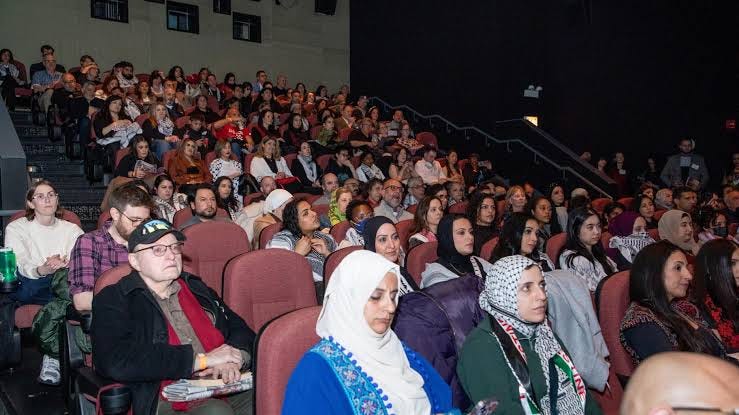
From my own professional experience, here’s an instructive little example—one that functions as a kind of microcosm for the hubris of film-festival programmers (and how I, as a programmer, didn’t see the wider picture and was acting a bit like a salesman myself); and a filmmaking team that ultimately knew how to prioritize their audience over some vague idea of prestige or value.
As we were putting together the line-up for the Doc10 film festival in Chicago earlier this year, I knew I wanted to include “American Doctor,” Poh Si Teng’s vital and devastating chronicle of U.S. doctors trying to save lives in Gaza. At Doc10, we only require a Chicago premiere—to maximize the audiences and impact of our screenings locally—so this usually doesn’t present a conflict with other U.S. festivals, except for this year, when we overlapped with another local event, the 25th anniversary of the Chicago Palestine Film Festival, which was taking place right before us.
So while pursuing the film, I told the filmmakers that we wanted to include it in Doc10, but this would forgo their screening with CPFF. (And I didn’t rush the choice—we had discussed the possibility with them for weeks). As Doc10 is fairly prestigious and somewhat known nationally—at least in doc circles—I figured that the filmmakers would choose Doc10 as their Chicago premiere (and we would invite CPFF as promotional partners). But the filmmakers chose otherwise: To premiere at the Chicago Palestine Film Festival as their Closing Night film, choosing community over “perceived value.” Ultimately, the CPFF added a second screening of the film the next day, which was co-presented by Doc10, so we were also able to include the film in the Doc10 lineup.
It was a “win win” for everybody. “American Doctor” stayed true to their community, with a celebratory, empowering, and cathartic experience at CPFF, followed the next day by a successful screening at Doc10.
And I learned a valuable lesson. The filmmakers made the right call: This was a film that always should have premiered locally at the Chicago Palestine Film Festival. The filmmakers might have given up a prestigious slot as one of the ten films at Doc10, but the CPFF still would have been the right choice for the film. In the end, fortunately, they didn’t have to, because we all found a way to work together in a collaborative way to uplift the film and do what was the best thing for it. I wish more film festivals, exhibitors, and distributors would do the same—and not behave like used car salesmen.
Comments
Nothing yet. Say the first thing.
Sign in to join the conversation.