
Sundance is still five months away, but don’t think it isn’t on peoples’ minds. While everyone first has to survive the fall trifecta of Telluride, Venice, and Toronto, Sundance remains a point of focus on the not-so-distant horizon. Sundance 2027 is especially important for filmmakers (and their producers, sales agents, and teams) who didn’t make it into this fall’s festivals, or didn’t finish in time for their deadlines, or who have been targeting a 2027 launch all along (the official deadline for Sundance’s feature submissions is just a few days away, Aug 28.) But it’s also top of mind for everyone else in the industry, particularly because of its new location and revamp in Boulder, Colorado, which is adding new levels of uncertainty.
Will the inaugural edition of Sundance 2.0 be the ultimate FOMO event, or a first-edition-working-out-of-kinks that people will be lucky to miss? Will it represent a newly revitalized market for arthouse films, or a nail in the coffin? Will visitors miss the snowy mountain very white elite resort vibe of its predecessor, or welcome a medium-sized laid-back very white city with a more liberal politics? (Fun fact: Summit County, Utah, home to Park City, went Harris +15; Boulder County went Harris +56).
The answer to such questions is surely going to be somewhere in between, but I’m already foreseeing some new winners and losers with Sundance’s move to Colorado. Here are a few thoughts:
Location, Location, Location: Obviously, the biggest impact of the festival moving to Colorado will be on the state’s own film ecosystem. Every film festival has a special commitment to its local filmmakers. No matter where in the world they are or how prestigious the event, there is going to be a greater attention to filmmakers from that area, whether French filmmakers at Cannes, Canadian filmmakers at Toronto, or Italian filmmakers at Venice. As part of the community in which a film festival is based and connected to a local audience, these filmmakers have an innate fan-base, and are part of the greater cultural fabric of that location. But what now for Sundance? Will Utah filmmakers be left in the dust, passed over in favor of creators from Colorado? I’ll bet they will.
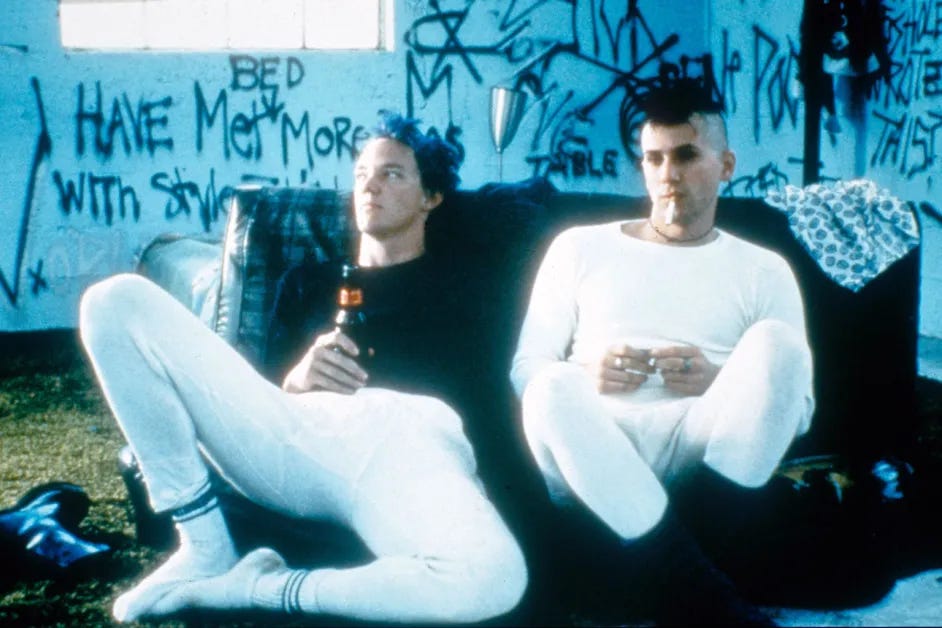
I’ll never forget when “SLC Punk!” opened Sundance in 1999—the second time I ever attended. Starring a young Matthew Lillard, the film, as I described it for IndieWire, was “the perfect introduction to this Midwestern, mythic locale, that lest we forget, is not just the setting for a film festival, but actually part of a greater city, culture, and history.” But not anymore.
Would an equivalent Salt Lake City film play at Sundance Boulder today? Maybe; maybe not. Would it have been given such a prominent platform? Absolutely not. I even suggested at the time that maybe one of the reasons Sony Pictures Classics had acquired the film in the Cannes Market months earlier was because they knew they would be able to launch it at Sundance. Would this past year’s documentary “The Lake,” about the ecological collapse of the Great Salt Lake, make it into a Sundance Boulder? What about Taylor Sheridan’s thriller “Wind River”? Utah filmmakers, sorry, you’re losing out. Colorado filmmakers, now is your moment.
Online Screenings: If Sundance needs to build excitement and urgency around its new destination, it’s time to ends its online screening program. With Sundance’s move, there’s obviously an extraordinary opportunity to breathe fresh life into the festival, and create something even a bit new, but how do you do that when people don’t have to even attend? While offering online screenings is undoubtedly important for increasing the accessibility and reach of its offerings, making Sundance films available to a much wider group of people than it did pre-pandemic, Sundance won’t regain its status as an essential must-attend event if the online screenings remain.
Sure, several of the “Premieres” section titles screen only in the theaters, but the option of watching every competition feature film online results in a major reduction in the urgency of in-person attendance, and the buzz that comes along with that experience. Honestly, I’m skeptical that Sundance’s desire to retain online viewing is about accessibility as much as it is about revenue, anyway, so while accessibility could lose out here, Sundance itself could emerge as the ultimate winner if they cancel their streaming platform.
Accommodations: Housing in Boulder during the festival is clearly turning out to be a problem. Just a few days ago, AirBnB announced it’s incentivizing local home-owners to rent out their places by giving them a $200 bonus. Over this past weekend, I found just a single place available in central Boulder on Hotels.com within a mile of the theater’s venues—a house with three beds for the low, low price of $2,139.25 per night. About 12 miles out, there is a hotel with double rooms for $626 per night. And that was it. Currently, AirBnB has about 25 places to rent in Boulder, with two places for about $1,000 per night for a 3 bedroom (get it now!) to as much as $6,152.50 per night for a 4 bedroom.
Sundance keeps saying they’re going to be finding ways to release more housing, but I know several people who have given up looking, and don’t seem committed to attending the festival at all anymore. Personally, I’m not sure what to do myself. Who's the loser here? Me, I guess—and Sundance, too. If they can't figure out ways to find hotels with more double rooms for sharing, or houses with a spare bedroom, what's a festival without an audience?
Comments
Nothing yet. Say the first thing.
Sign in to join the conversation.