
I remember clearly the first time I realized both the power and folly in being verbose. It was in the 5th grade and we had a science assignment with short-answer questions. I can’t remember exactly what the question was, but I know for certain that I didn’t know the answer. It was around this time that I was discovering I had some knack for writing.
Instead of leaving it blank, I tried something. I wrote a lengthy answer, using whatever “big words” I knew that more or less kept rephrasing the question instead of answering it. The teacher asked us to go around and read our answers to each question. I stood up and read my eloquent mess of an answer. I remember my peers nodding their heads, seemingly impressed.
This didn’t last long. A moment later, my teacher told me my answer was wrong, and I sat back down.
It wouldn’t be the last time I tried that trick – throwing words at a problem. I see it all the time. In retrospect, maybe I missed my calling as a Fortune 500 CEO. Sometimes you can get away with it, sometimes not. But after a time I realized it wasn’t doing me any good. I started to develop some bad habits that, honestly, I’m still trying to break.
It’s given me great appreciation for brevity. It’s one thing to be able to paint a picture with long, lavish, descriptive sentences packed to the brim with adjectives and allegory. It’s another to leave an impression with only a few words.
At one point, when I was struggling early in my writing career, I got this software called Hemingway Editor that was meant to review your work and tell you how to trim it down and write more like, well, Hemingway. Shorter, sparser, impactful sentences. I hated it. It felt sophisticated when he did it. When I tried, it felt like Go, Dog. Go! I eventually did away with the app. Took some good lessons, but realized it wasn’t my style. But still, writers with restraint always amaze me.
I feel that same amazement listening to Greg Mendez’s latest album, Beauty Land. He good. Real good. I like. (Okay, right, brevity isn’t my style).
I wasn’t familiar with Mendez prior. I put it on impromptu on a cloudy morning in the car driving through the rundown factories and train tracks of South Seattle. Without even knowing what the music would sound like, it ended up being perfect. Whatever ennui I was feeling was perfectly matched by the soft strums of the opening track, “I Wanna Feel Pretty.”
By the time the song ended, I nearly pulled over. It breezed by in a little over two minutes. In a short span, he’d talked me through his inner malaise, getting mugged, getting drunk, going to rehab, escaping rehab, and wishing he were someone else. It was a wallop of emotion, almost too much to take at once. I needed to double back and hear that again.
And this isn’t an isolated incident. This same sort of rapid-fire emotional devastation happens again and again on Beauty Land. Just on the next track, “Looking Through Your Window,” he pulls off this heartbreaking magic trick again – but this time he does it in one minute and 43 seconds. In fact, no song cracks the three-minute mark (he nearly gets there with “So Mean” but beats it right at the buzzer). The whole album moves by in just over 26 minutes.
I’ve often thought about the power of short songs, but mostly in the context of punk records. Songs that get in and get out quickly, hitting you with a wallop of aggression and excitement before suddenly ending.
Or if it’s not punk albums, I think of hip-hop maestros like J Dilla and Madlib, who can put a collection of short, seemingly disparate beats together into a chaotic but beautiful sound collage. Mendez’s Beauty Land feels akin to these works, though it trades in chaos for intimacy and restraint.
With each song it feels like he’s pushing himself to cut deeper with less. A song like “Frog” features only one line, repeated several times over a soft keyboard: “please forgive me for my faults.” Hemingway, eat your heart out with those “six-word stories.”
The realm of “singer-songwriter” I think is maybe the hardest in music. There’s certainly mastery at play watching someone spiral out with insane guitar riffs and load up intricate layers of dense music. But the vulnerability and nakedness of just a person and a guitar feels so brave. You have nothing to hide behind. The songs are distilled to their core elements. If it sucks, it’ll be quickly apparent. But when someone can do it and be excellent, it’s breathtaking.
All that is what amazes me about Mendez. I love his voice and his guitar playing, which aren’t showy but deceptively intricate and excellent. There’s an underlying intentionality behind every note. When he does overdub with a piano or adds drums, it never feels like it’s there for garnish. When the drums come in at the last minute of “So Mean,” it feels like a buildup of all the frustration and despair he’s been building up the whole song. Contrasting that is a song like “Sunsick,” where he confronts his worst tendencies over delicate, sublime finger-picked guitars.
The spartan approach to his songwriting builds a trust with you as the listener. These songs are meant to have a heavy impact in the short time they’re with you. Ephemeral but arresting.
I can listen to Beauty Land on repeat several times with how quickly it goes by, but then I’ll find suddenly I need to stop. The songwriting is so heavy and there’s so much to digest, it can be a lot. Inevitably, though, I find my way back. These brief passages of music are so enamoring with their scattered memories and suppressed feelings. There’s power in its brevity. Mendez wields it beautifully.
Want to Support Another Thought? Okay, I’m Down!
I appreciate you reading Another Thought, whether this is your first post or you’re a long-time reader. Another Thought is a labor of love fueled by very long deadline nights, lots of art supplies, and espresso at ungodly hours.
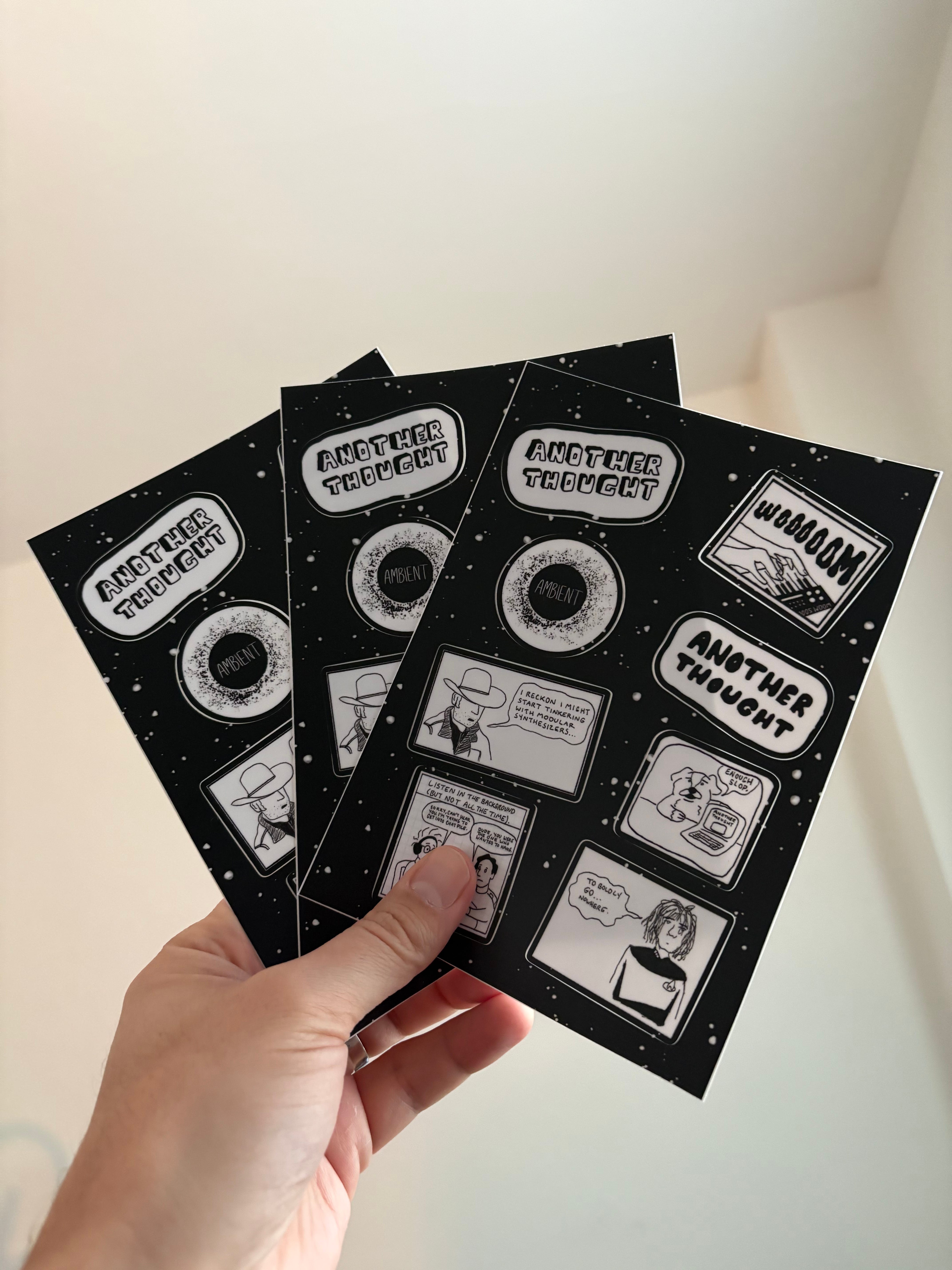
If you want to support the newsletter, please consider becoming a paid subscriber at $5/mo. You’ll get exclusive newsletters, early access to upcoming physical media, and a sheet of stickers featuring drawings from the newsletter and my book mailed to you!
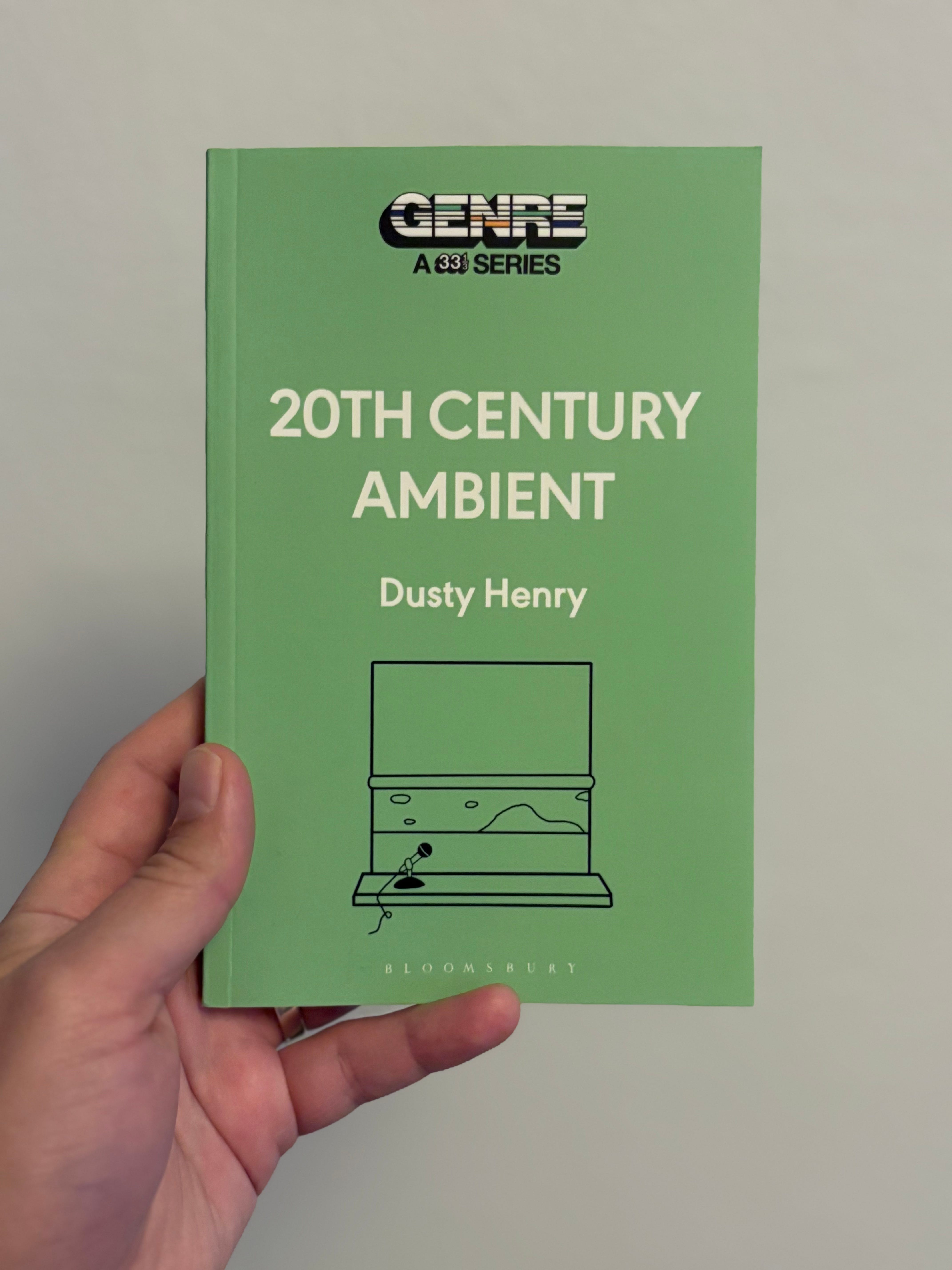
Through text and comics, 20th Century Ambient traces the recent history of ambient music to uncover how the genre has evolved and the role it plays in our daily lives. If you dig the combination of art and essays on Another Thought, I think you’ll love this book.
“Enriched by vivid profiles of the genre’s practitioners and capped by a list of essential tracks, it’s a quirky love letter to an enigmatic sound.” - Publishers Weekly
“Dad! Your book isn’t boring! It has pictures in it! It’s hilarious. Kids can read it too!” - my child
20th Century Ambient is out now from Bloomsbury Books.
No posts
Comments
Nothing yet. Say the first thing.
Sign in to join the conversation.