
This is the first article exclusive for subscribers of this Substack. My plan is to use this space twice a month to share articles I’ve written that have never appeared online. This piece on Pulse is unpublished; I wrote it about three years ago for a catalog that was never actually released. I’ll continue to post 1–2 free articles each week, but I’ve always wanted to share certain pieces I have here at home that were only circulated in booklets or catalogs with very limited print runs.
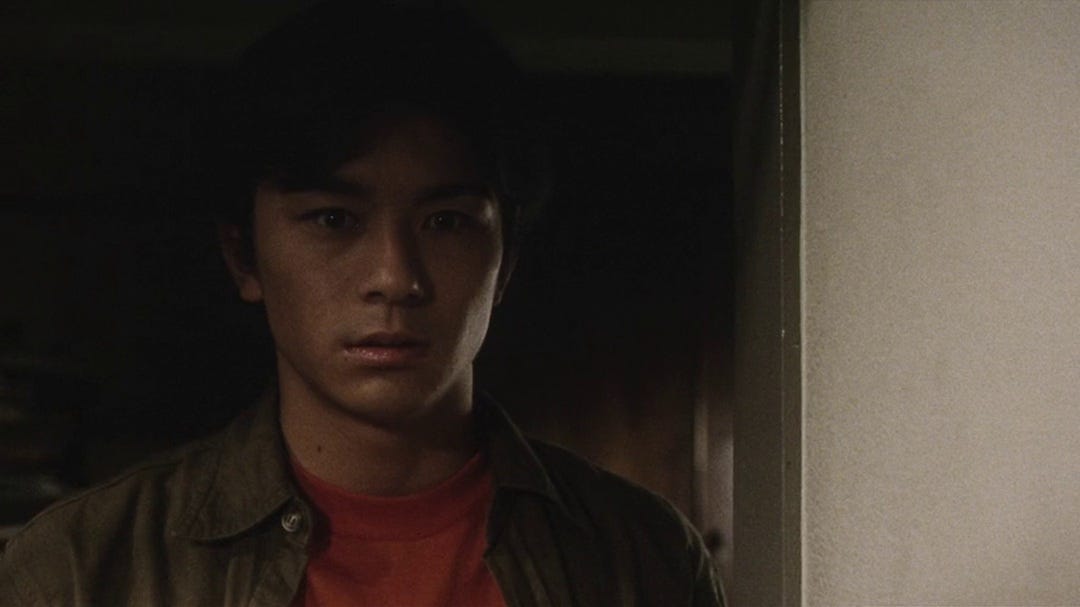
The horror in Pulse stems from a very particular notion of abandonment. An alienation from relationships that gradually isolates the characters, leading them toward disappearance. This is the first of the movie’s many strengths: how it translates a sense of contemporary unease into the narrative of a horror film. It’s not just a matter of situating horror within that sense of unease as a mood, something horror films with contemporary themes often do (and which modern horror has frequently mishandled), but rather making it an integral part of the drama itself. And from there, we are led to the image that we more often associate with the movie: the human body being transformed into the black blurs that the victims leave behind. An idea that could have come from a Val Lewton film: the metaphysical process of disappearance that leaves a tangible mark. Horror taken to the extreme: the person vanishes from the world but leaves behind that black mark indicating they were there, an extra theatrical touch to torment those left behind.
The film came out toward the end of the most popular period of Kurosawa’s career in the West, when, after about 15 years as a dedicated craftsman in low-budget Japanese film, he began, with Cure, a series of unsettling movies (shortly after Pulse, he would appear in the Cannes competition with Bright Future). A sense of unease as something written on the screen is something Kiyoshi Kurosawa’s films have explored on other occasions. It is present in the investigations of Cure and Retribution, in the enigma of the tree in Charisma, in the flow of the river in Bright Future, or even in his most recent, less confrontational period, in the “mirror-cinema” of Daguerreotype or the sense of displacement in To the Ends of the Earth.
Comments
Nothing yet. Say the first thing.
Sign in to join the conversation.