
Just as part three in our Broken at the Biochemical Level series was very near to my heart, this topic is also extremely personal me. I waited for a quiet a while before I wrote part four just because I wasn’t sure just how much I wanted to share about my own life and this subject. So, I decided I will wade in until I feel like I can’t go further. Then you’ll know that is as far as I’m willing to share on this segment of my personal story. I hope you can respect that.
This B Vitamin Series is a labor of love to our wonderful AMG community. If you are gaining value from this series and would like to see more of this type of research and writing, please consider supporting my work by becoming a free or paid subscriber. Also, if you can Like, Comment and Share my work it really helps the channel. We love you all!
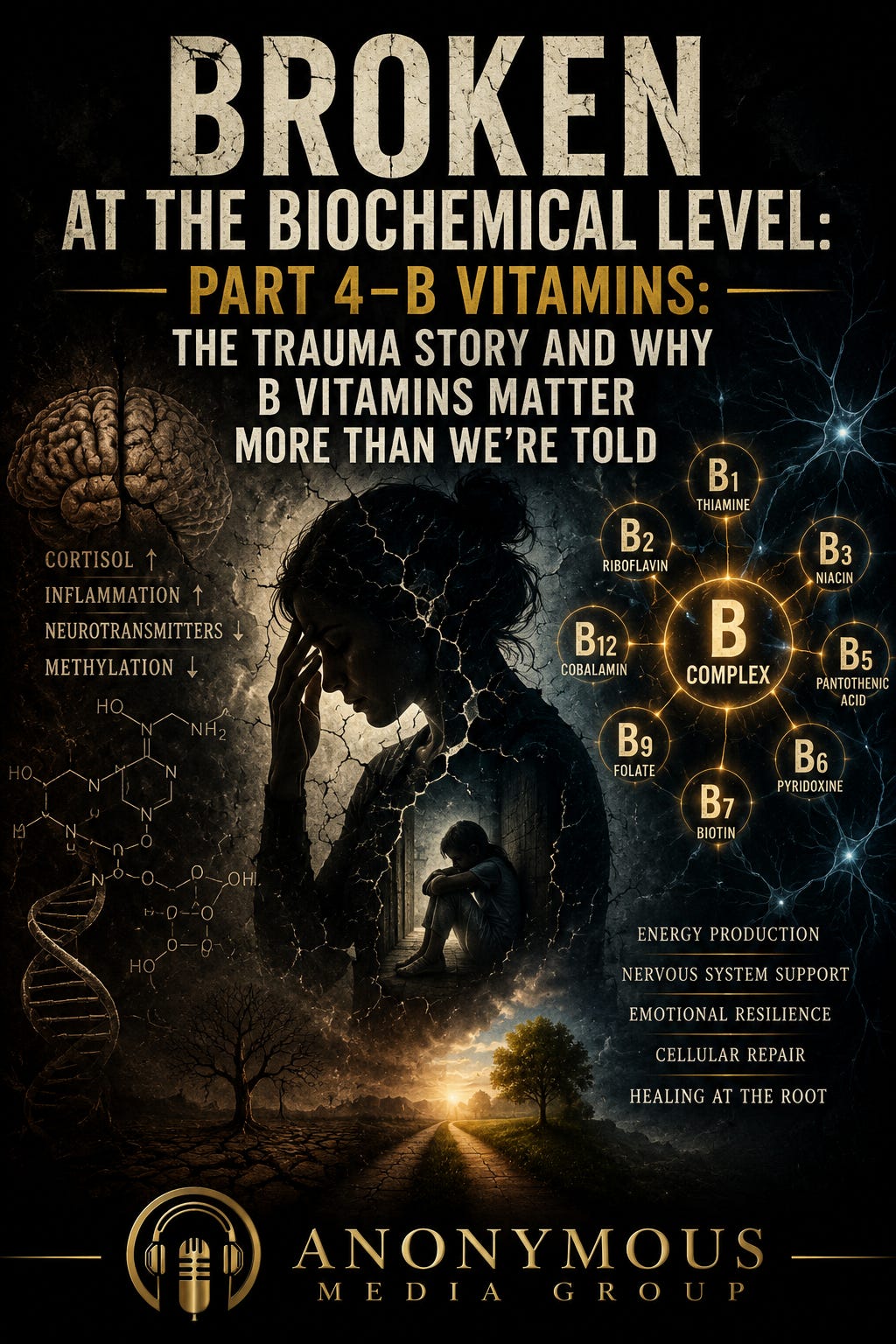
There is a biological cost to survival that most people in the medical profession don’t talk about. When the body perceives threat, whether that threat is a car swerving into your lane or a home where a child doesn’t feel safe, it does not pause to ask how long the danger will last. It simply responds. Cortisol rises, and adrenaline floods the bloodstream. Blood is redirected away from digestion and toward the muscles. Every system reorganizes itself around one task, which is getting through the next moment alive.
This response was built for short bursts. A predator appears, the body mobilizes, the danger passes, and the system returns to its baseline. But trauma, especially trauma that unfolds over months or years rather than minutes, does not give the body that chance to return. The fight or flight machinery stays partially engaged for far longer than it was designed to, running in the background waiting for the next time it needs to protects itself. And that machinery requires fuel. Specifically, B vitamins, and it requires them in quantities, the average diet was never built to replace under sustained stress.
Comments
Nothing yet. Say the first thing.
Sign in to join the conversation.