
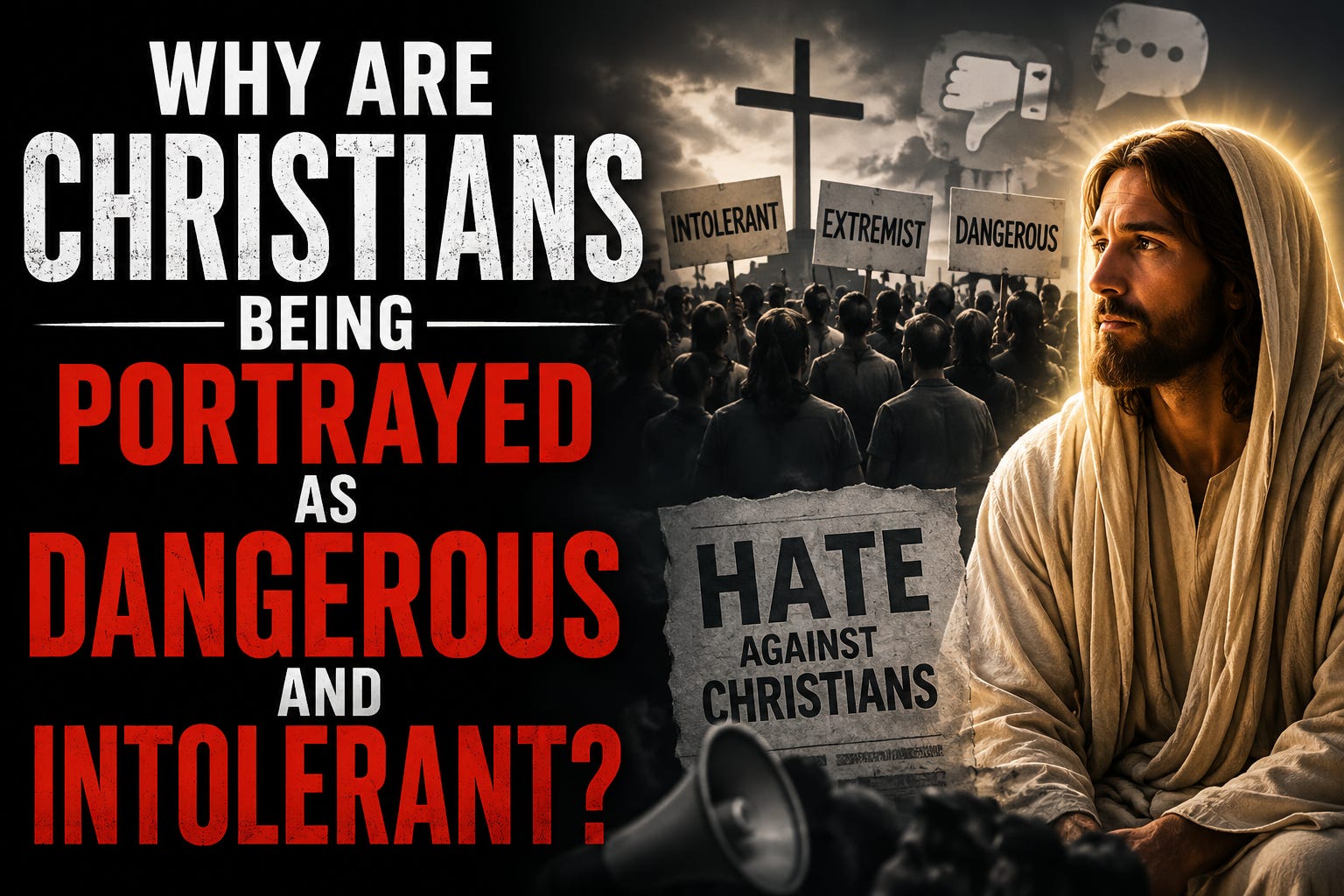
In many parts of the Western world, an increasing number of Christians believe they are being portrayed not as neighbors, volunteers, parents, or people of faith, but as extremists, intolerant, or even dangerous. Whether that perception is entirely accurate or not, it is a topic worthy of thoughtful discussion.
Christianity has shaped laws, charities, hospitals, universities, and countless acts of compassion throughout history. Millions of Christians quietly serve their communities every day by feeding the hungry, caring for the sick, fostering children, supporting disaster relief, and helping those who have nowhere else to turn. These stories rarely dominate headlines because kindness is seldom considered newsworthy.
Instead, public attention often focuses on conflict.
When individuals who identify as Christians commit crimes, abuse power, or speak hatefully, their actions rightly receive scrutiny. However, many believers argue that the failures of a few are sometimes used to define the character of an entire faith consisting of more than two billion people worldwide. They ask why similar generalizations are often discouraged for other groups but seem more acceptable when directed toward Christians.
Some of the tension also comes from changing cultural values.
Many traditional Christian beliefs regarding morality, marriage, sexuality, and the sanctity of life differ from views that have become more widely accepted in many societies. When deeply held religious convictions intersect with public policy or cultural debates, disagreement can quickly be interpreted as intolerance. At the same time, Christians often argue that disagreeing with an idea is not the same as hating the person who holds it.
This distinction is important.
The teachings of Jesus consistently emphasize loving one’s neighbor, praying for one’s enemies, forgiving others, caring for the poor, and extending mercy even to those who oppose you. Christians are called to speak truth as they understand it while also demonstrating humility, compassion, patience, and love. When believers fail to live up to those teachings, criticism is understandable. Yet those failures should not automatically define Christianity itself.
Media also plays a role in shaping public perception.
Stories involving controversy, outrage, and conflict naturally receive more attention than stories of ordinary faithfulness. A missionary building wells, a church feeding thousands after a hurricane, or volunteers providing shelter to the homeless rarely generate the same level of coverage as public disputes or scandals. This imbalance can leave many people with an incomplete picture of what most Christians actually believe and practice.
There is also a growing concern among some believers that expressions of Christian faith are increasingly viewed with suspicion in certain academic, entertainment, and political circles. Whether discussing prayer, biblical ethics, or religious liberty, some Christians feel pressure to remain silent rather than risk being labeled intolerant or extreme. Others would argue that Christians continue to have broad freedom to practice their faith while public criticism often arises from disagreements over how religious beliefs influence public life. Both perspectives are part of an ongoing conversation in democratic societies.
For Christians who study biblical prophecy, these developments are not entirely unexpected.
Jesus warned His followers that a time would come when they would be hated because of His name. In Matthew 24, He said, “Then you will be hated by all nations because of me.” He went on to describe a period in which many would fall away from the faith, betray one another, hate one another, false prophets would deceive many, wickedness would increase, and “the love of many will grow cold.” In Luke 21, Jesus also warned that His followers would face persecution from governments, religious authorities, friends, and even members of their own families because they belonged to Him.
The Apostle Paul echoed this warning. He wrote that before the return of Christ there would come “the falling away,” a great departure from the faith. He also warned that in the last days people would become lovers of themselves, lovers of money, proud, arrogant, ungrateful, unholy, without self-control, and lovers of pleasure rather than lovers of God. Peter likewise warned that scoffers would arise, questioning God’s promises and mocking those who believed.
From a biblical perspective, many Christians believe increasing hostility toward biblical teachings, declining church attendance in many regions, moral confusion, and growing opposition to Christian convictions are not isolated events but part of a broader prophetic picture described throughout Scripture. Not every cultural disagreement fulfills prophecy, nor should every headline be viewed as a direct sign of the end. Nevertheless, many believers see these broader trends as consistent with what Jesus and the apostles said would characterize the age before His return.
Yet the message of Christ was never one of fear.
Jesus never instructed His followers to respond to hatred with hatred. He commanded them to love their enemies, pray for those who persecute them, forgive without limit, and remain faithful regardless of the cost. The Christian response to persecution has never been revenge. It has always been faithfulness.
If Christians wish to change how they are perceived, the most powerful witness will never be an argument on social media or a television debate. It will be lives that consistently reflect the love, truth, humility, mercy, and courage that Jesus taught.
Whether one agrees with Christianity or not, every individual deserves to be judged by the content of their own character rather than by the actions of those who merely claim the same label.
“The darker the world becomes, the brighter genuine faith has the opportunity to shine. Christ never promised His followers popularity. He promised them His presence.” ~ Anonymous
Comments
Nothing yet. Say the first thing.
Sign in to join the conversation.