
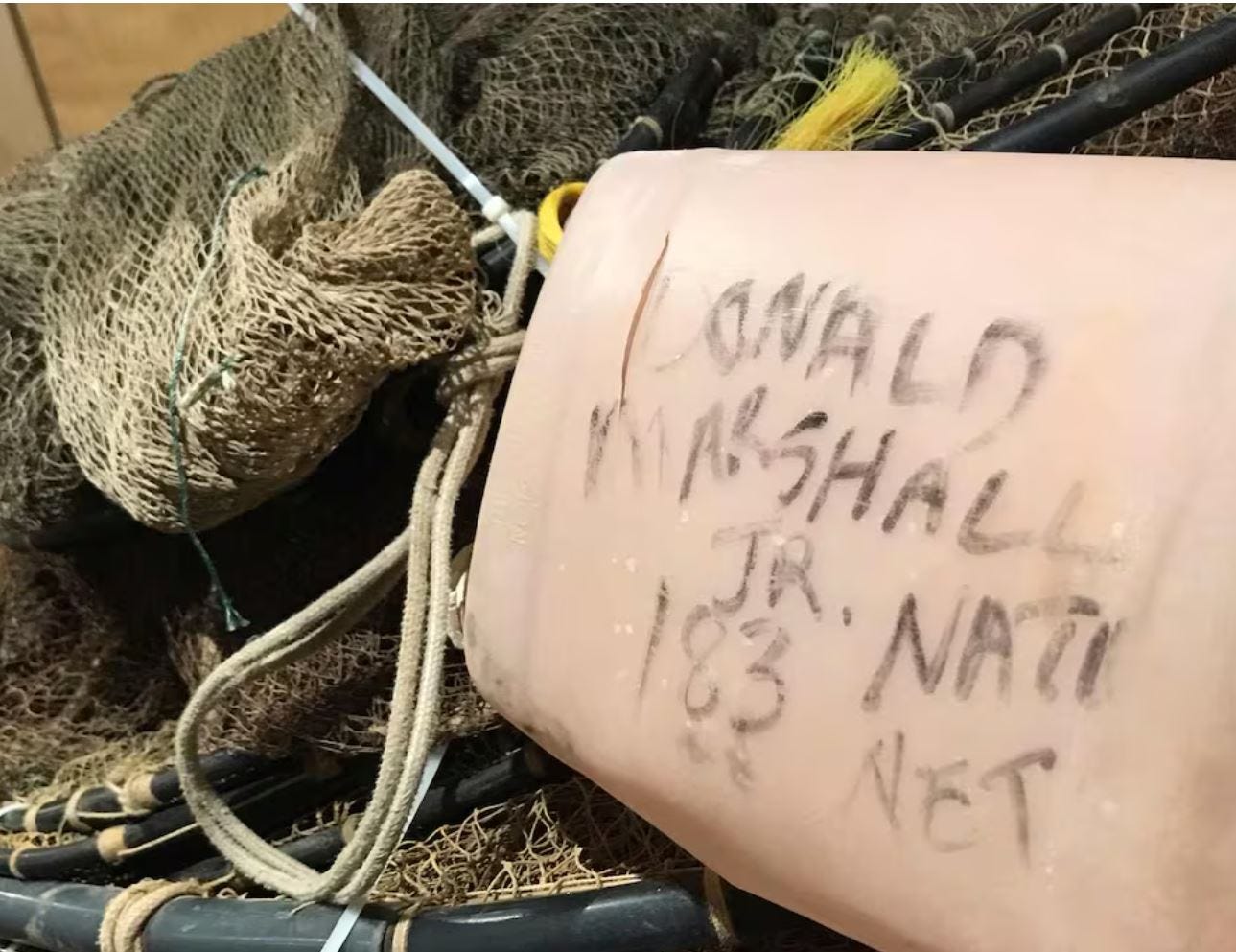
Image Source: Union of Nova Scotia Mi’kmaq. Submitted by Jeff Ward.
Canadian opinions on Indigenous people are deeply divided and evolving, characterized by growing support for reconciliation, yet significant conflict over land rights and the perceived special positive status some believe has been conferred on Indigenous people. While awareness of Indigenous issues seems to be improving the significant division in opinions remains problematic. We see some issues leading to major conflicts including at times violent confrontations. In many cases this may be the result of misinformation and the lack of a full understanding of the context and the nuances related to the issue at hand.
The sharp division of opinion is not trivial. It will not go away on its own It demands attention. In order to properly defend the Canadian identity, to remain united and protect our sovereignty it is an absolute necessity to reconcile these differences and establish a positive relationship between Canada and the Indigenous people we share the land with.
A case in point is the violence witnessed in the Maritimes between non-indigenous commercial fishers and members of the Mi’kmaq Nation in Nova Scotia. The Mi’kmaq have specific treaty rights to fish that override the rights of commercial fishers. Those rights have literally been in place since time immemorial and were entrenched in a series of Treaties that have become known as the Peace and Friendship treaties. Despite the fact that the Crown has at times failed to live up to these treaties they remain in force and are protected under Section 35 of the Constitutional Act of 1982.
Moreover, the fishing rights of indigenous people in the Martimes was specifically addressed by the Supreme Court of Canada (SCC) in a case called R. v. Marshall (1999). Donald Marshall Jr., a member of the MI’kmaq First Nation, had been convicted of catching eels out of season, without a licence, and selling them, contrary to the federal Fisheries Act. He admitted the offences, but appealed his conviction to the Nova Scotia Court of Appeal and then to the SCC on the grounds that the 1760–61 treaties between the Mi’kmaq and the British recognized his right, as a Mi’kmaq, to catch and sell fish, and that this right was protected under the guarantee of Aboriginal and treaty rights in the Canadian constitution.
The SCC overturned Marshall’s conviction at lower courts and affirmed that treaty rights based on the 1760–61 treaties allowed the Nation to catch and sell fish, including eels. The original SCC decision was appealed and upon rehearing the case the court affirmed its original decision but clarified that the treaty rights could be limited for conservation reasons or other compelling and substantial public objectives. The Supreme Court also explained that the Government of Canada could take into account economic and regional fairness among other similar considerations when regulating commercial fishing. The Government of Canada continues to work with First Nations in the Maritimes and Quebec to implement this right.
Given the potential environmental issues that could arise from over-fishing this latter decision is important. The Crown has a legitimate authority to limit fishing by anyone in order to protect fishing stocks and to protect the environment. It also means the Crown can impose regulations in order to achieve these objectives. The Crown is also obliged to consider the overall public interest in using its power to regulate. However, that is not an unfettered power. The Crown is obliged to consult with the First Nations impacted by any potential regulations and to give primacy to the treaty rights. These obligations are part of upholding the “Honour of the Crown” and are an essential part of reconciliation efforts.
For some Canadians this creates a “Special Status” for Indigenous people contrary to the ideal in a liberal democracy that all people should be treated equally. However, that ideal ignores the reality that Canadian democracy is founded on various treaties that afforded special or differential treatment to different groups of people and the fact that these treaties have been incorporated into our Constitution. A case in point is the special status afforded Quebec which is an obligation under the Treaty pf Paris that ended the Seven Years War. Treaty Rights are an essential part of what makes Canada’s democracy unique. It is imperative that rather than attempting to nullify or ignore our collective obligations under treaties and our agreements with France after the 7 Years War that we instead educate all Canadians on what is in the treaties and was is not in the treaties.
The Peace and Friendship Treaties impact the Maritimes and the Gaspé region of Quebec. They are important historical documents that should be treated as founding documents for the development of Canadian democracy. The Treaties were signed between the British Crown and the Mi’kmaq, Maliseet and Passamaquoddy First Nations prior to 1779. Treaties are solemn agreements that set out long-standing promises, mutual obligations and benefits for both parties.
First contact was made between Europeans and the Mi’kmaq, Maliseet and Passamaquoddy First Nations as early as the 1500s. Over the next 200 plus years the British in particular engaged in trade with the Indigenous people, shared resources and began to establish settlements in the Maritimes. One might say that a certain symbiosis was established and balance maintained for an extended period. However, in the early 1700s the British became concerned about relationships between Indigenous people and the French Crown. As a result, the British sought to establish treaty relationships to secure “Peace and Friendship”. These treaties created a series of laws which were designed to normalize relations between the British and the region’s three aboriginal societies.
The first of the treaties was signed in 1726, formally bringing to an end a three-year long war between New England and the Wabanaki. The Wabanaki was a political alliance of the major aboriginal communities living in the Atlantic region. The alliance was composed of four societies: the Mi’kmaq, the Maliseet, the Passamaquoddy and a loosely-allied group of communities living between the Penobscot and the Kennebec Rivers.
One of the primary concerns of the Indigenous alliance was the potential encroachment of New England fishermen who were consistently and aggressively trying to push their way into Nova Scotia’s coastal waters.
It should be noted that that land entitlements were dealt with under this treaty to the extent that the Indigenous alliance accepted the fact that the British Crown could through legal means establish settlements in the region. It did not clarify what those legal means were. However, importantly the treaty in no way provided for any form of land surrender. The reciprocal promises included preserving the Indigenous people’s right to hunt and fish on their traditional lands.
Admittedly the 1726 treaty left some questions unanswered and there are few notes supporting the original negotiations that might aid interpretation. Notwithstanding it seems quite evident that there was an intent to treat it somewhat as a living document and to negotiate terms and conditions further over time.
The ensuing period was marked by hostilities between the French and the British and the Indigenous groups often sided with the French. This led to a series of additional treaties (1749, 1752, and 1760/61) but none of these nullified the original 1726 treaty nor modified its provisions in any appreciable way.
There is no doubt some degree of complexity in interpreting these treaties because they were intended to deal with the establishment of relationships in a particular context. However, it is clear that the underlying theme was co-existence and a promise not to molest the established rights and traditions of the Indigenous people of the region. These treaties are further misunderstood precisely because the Crown tried to ignore its obligations and at times argued that they had somehow been nullified.
The Marshall case decisions and Section 35 of our Constitution together have affirmed that those treaties must be treated as valid documents and implicitly suggest that they are foundational documents. The continued attacks on indigenous fishers in the region are not only examples of pernicious racisms but are also attacks on the unique nature of Canadian democracy founded on principles of shared values and peaceful coexistence.
Comments
Nothing yet. Say the first thing.
Sign in to join the conversation.