
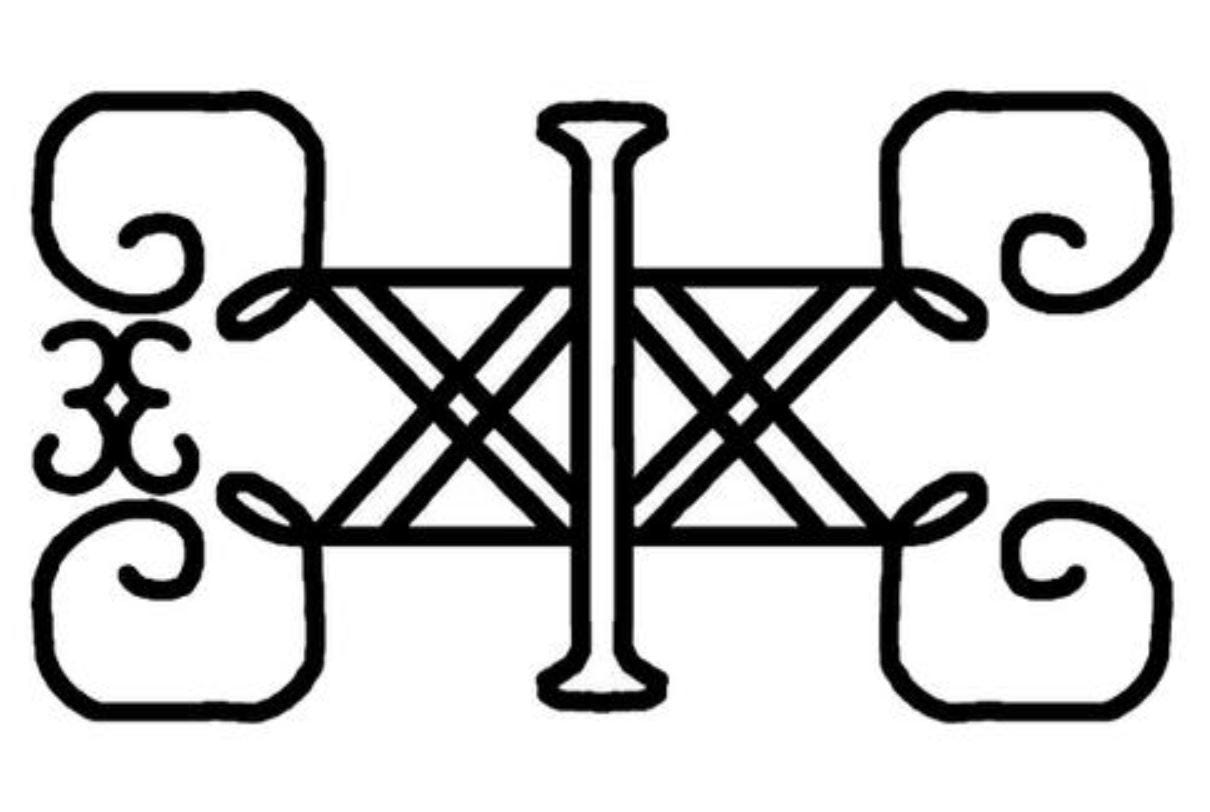
Image Source: https://picryl.com/media/wabanaki-union-symbol-9eaf3d Public Domain Media.
Note re image: The symbol from a traditional collar cape is from the 1927 book by Frank Speck “Symbols in Penobscot Art.” It was a symbol worn by leading Chiefs when the tribes of the Wabanaki came and assembled together for a ceremony. This would also be accompanied by talks of political, economic, and social matters. The double loop is still used to this day in the Wabanaki community.
In very general terms we can distinguish between three different sets of treaties established between the Crown and Indigenous people in Canada, particularly with respect to dealings between the Crown and First Nations People. The three groupings include: modern treaties negotiated in the latter part of the twentieth century and continue to be negotiated today; the numbered treaties negotiated post-Confederation; and treaties negotiated between the British and First Nations people prior to Canadian Confederation. Amongst this latter set were a series of treaties known as Peace and Friendship Treaties which included the Wabanaki Treaties signed between 1725 and 1779 between the Crown and the Wabanaki Confederacy (Mi’kmaq, Maliseet, and Passamaquoddy). Unlike later treaties, these did not involve land surrender. Rather they focused on peace, trade, and sustaining Indigenous rights to hunting, fishing, and self-governance.
Despite the assumption that both parties entered into these agreements in good faith, Canada post-Confederation adopted a policy under which a “treaty” was considered to be an agreement in which an Indigenous people gave up land rights to the Crown. The official list or collection of Indian Treaties and Surrenders1 contained only land transactions. All other agreements were considered null and void.
As a result, for decades after Confederation many of the treaties struck in the 17th and 18th centuries in what is now the Maritime Provinces, southern Quebec and southern Ontario, were ignored and/or rejected by the federal government and the courts. In one particularly egregious case in 1929, an acting County Court judge decided that the Mi’kmaq had no treaty rights at all!
In R. v. Sylliboy, [1929] 1 DLR 307, a landmark Nova Scotia County Court case Mi’kmaw Grand Chief Gabriel Sylliboy was convicted for possessing pelts out of season. Sylliboy argued that under the Treaty of 1752, the Mi’kmaq possessed the right to hunt and trap at all times and were not subject to Nova Scotia’s Lands and Forests Act. However, the county court judge, George G. Patterson, ruled the Mi’kmaq were not a “sovereign people” capable of making treaties, thus upholding provincial game laws. In his decision, which stood for nearly fifty years, he confirmed the Doctrine of Discovery.
“Treaties are unconstrained acts of independent powers. But the Indians were never regarded as an independent power. A civilized nation first discovering a country of uncivilized people or savages held such country as its own until such time as by treaty it was transferred to some other civilized nation. The savages’ rights of sovereignty even of ownership were never recognized. Nova Scotia had passed to Britain not by gift or purchase from or even by conquest of the Indians but by treaty with France, which had acquired it by priority of discovery and ancient possession, and the Indians passed with it.”2[2]
Unfortunately, the impact of the Syliboy conviction, as mentioned above, lasted for more than fifty years. As late as the 1970s and 1980s, oddly the Government of Canada refused to negotiate with Indigenous nations in the Maritime Provinces, even as it accepted “comprehensive” claims in the north and British Columbia. It held firmly to the position that Aboriginal title and rights had been “superseded by law,” displaced and replaced by de facto settlement of the area by Europeans.
For example, in a 1974 memorandum, Nova Scotia’s deputy Attorney-General wrote to the president of the Union of Nova Scotia Indians asserting that:
“The law in Nova Scotia would appear to be basically summed up in the decision of R. vs. Syliboy (1929), 50 CCC 389, a decision of the County Court. In that particular case the court decided that the treaties referred to were not made between competent contracting parties and did not extend to the particular people in question.”
In 1985 the Supreme Court of Canada finally set the record straight in its decision in a case called Simon v. The Queen, [1985] 2 S.C.R. 387. The court described the case as follows:
“The appellant, a registered Micmac Indian, was convicted under s. 150(1) of Nova Scotia’s Lands and Forests Act for possession of a rifle and shotgun cartridges. Although appellant admitted all essential elements of the charges, it was argued that the right to hunt set out in the Treaty of 1752, in combination with s. 88 of the Indian Act, offered him immunity from prosecution under the provincial act. Article 4 of that Treaty stated that the Micmacs have “free liberty of Hunting & Fishing as usual” and s. 88 provided that provincial laws of general application applied to Indians, subject to the terms of any treaty.”
The appeal was upheld. And in its award document the SCC court found:
“The Treaty of 1752 continues to be in force and effect. The principles of international treaty law relating to treaty termination were not determinative because an Indian treaty is unique and sui generis. Furthermore, nothing in the British conduct subsequent to the conclusion of the Treaty or in the hostilities of 1753 indicated that the Crown considered the terms of the Treaty terminated. Nor was it demonstrated that the hunting rights protected by the Treaty have been extinguished.”
It is particularly noteworthy that the Supreme Court had this to say about Judge Patterson:
“It should be noted that the language used by Patterson J., illustrated in this passage, reflects the biases and prejudices of another era in our history. Such language is no longer acceptable in Canadian law and indeed is inconsistent with a growing sensitivity to native rights in Canada. With regard to the substance of Patterson J.’s words, leaving aside for the moment the question of whether treaties are international‑type documents, his conclusions on capacity are not convincing.”
Grand Chief Sylliboy, received a posthumous free pardon and apology from the province of Nova Scotia on February 16, 2017 for his conviction for hunting illegally. Grand Chief Sylliboy died in 1964.
In issuing the pardon and apology Lt.-Governor J.J. Grant said this:
“The wrongs of the past can never be undone, but we can work together to do better for the children of this generation and of those that follow. This pardon addresses a conviction against the late Grand Chief in the pursuit of his aboriginal and treaty rights, and it helps us acknowledge and learn from the struggles of the past and memorialize those who sought to exercise their rights.”
A free pardon is based on innocence and recognizes that a conviction was in error. A free pardon is an extraordinary remedy and is considered only in the rarest of circumstances.
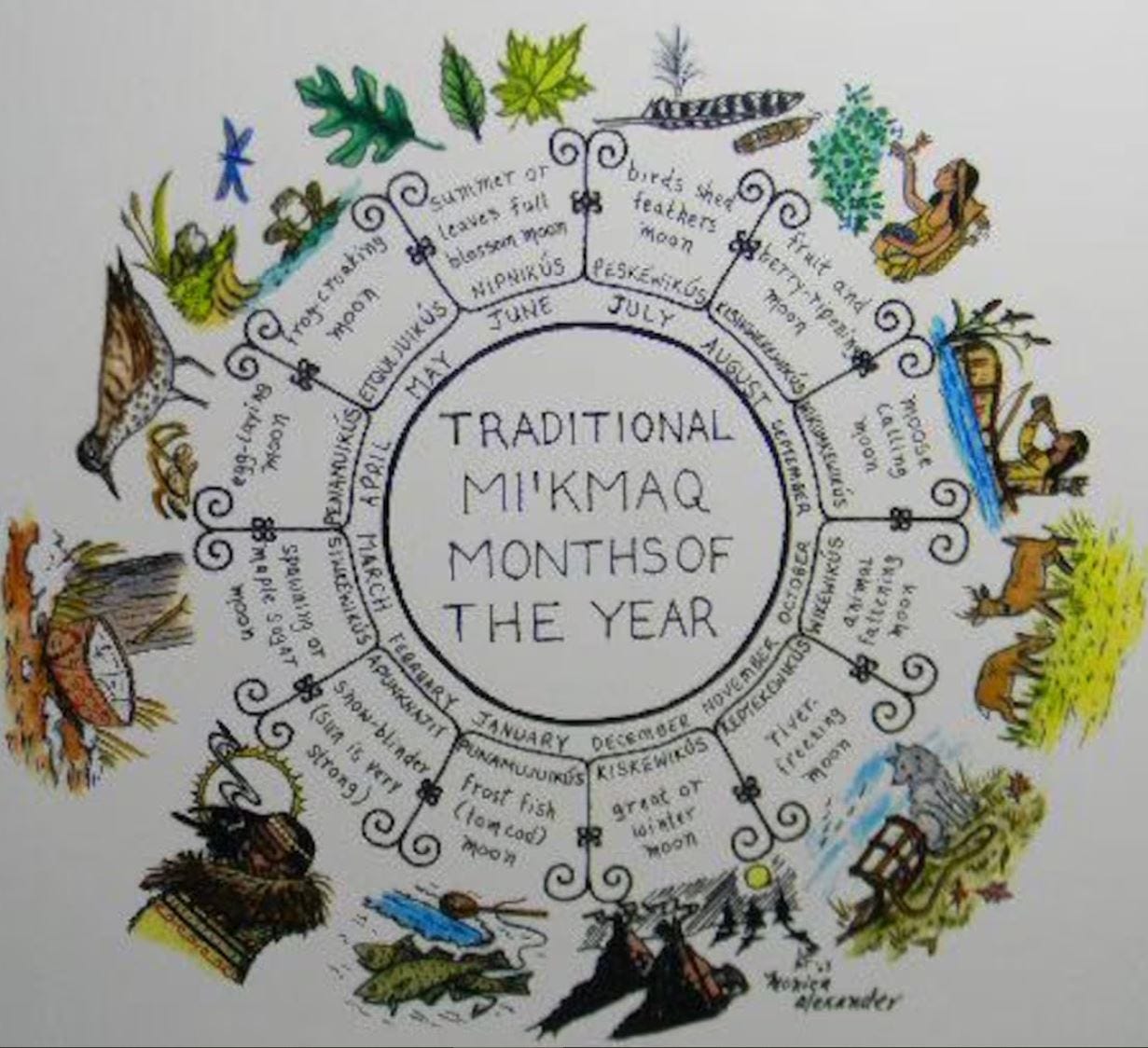
Note the use of the traditional Wabanaki double loop curl imagery in this contemporary Mi’kMaq art.
Image Source: hfmade - Etsy Canada
Made by hfmade: https://www.etsy.com/ca/shop/hfmade
Indian Treaties and Surrenders, from 1680 to 1890, Ottawa: B. Chamberlin, 1891. The Wabanaki Treaties are not included in this volume. The listing of treaties in the book really begins with the post-1783 land transactions in southern Ontario.
R. v. Syliboy, [1929] 1 DLR 307 (County Court). In 2016, the Canadian Conference of Catholic Bishops repudiated the Doctrine of Discovery, stating: “We firmly assert that there is no basis in the Church’s Scriptures, tradition or theology, for the European seizure of land already inhabited by Indigenous Peoples; we reject the assertion that the principle of the first taker or discoverer, often described today by the terms Doctrine of Discovery and terra nullius, could be applied to lands already inhabited by Indigenous Peoples.
Thanks for reading Canadian Indigenous Facts, Stories and Learnings! This post is public so feel free to share it.
Comments
Nothing yet. Say the first thing.
Sign in to join the conversation.