
The digital world is exciting territory for me, a woman still on a voyage of discovery. It was only in January after I finished working on my recent book that I finally immersed myself in ‘YouTube’ - and what wonders it has revealed!
Then along came Instagram - which, as a substacker, was still unchartered digital territory for me. A recent clip (posted by the Decolonisation Forum) neatly encapsulates the theme of my latest book: The Global Casino. Because the clip has (apparently) and at this point, been seen by more than 158,000 viewers - it has given my heart something of a fillip. The numbers alone are awesome, but so are the comments that pop up underneath it. “Who is this sage woman?” one asked.
The clip is taken from my contribution to the World Decolonization Forum held, ironically, at the Atatürk Cultural Centre in Istanbul, Turkey in May, 2026. I purposely use the word ironically, because some of those attending were determined to overturn the modernisation of Turkey by President Atatürk (1923- 1938). He had, amongst other reforms, established legal equality and granted women the right to vote and run for office, but he had also encouraged the adoption of a European way of life, with Turkish written in the Latin alphabet and with citizens adopting European-style names.
Atatürk’s legacy, argued Walter Mignolo, Distinguished Emeritus Professor of Romance Studies and Professor of Literature at Duke University, was nothing less than
The concept of coloniality, Mignolo argues, seeks to grasp modernity’s darker side and to illuminate the underlying logic shaping historical conjunctures.
Concealing coloniality from view were the constant promises of modernity for newness, change, progress, and development. Each of these goals of Western modernity presupposed domination, exploitation, and oppression, and generated conflicts.
Anne Norton, Distinguished Professor of Political Science, emerita at the University of Pennsylvania argued in her contribution to the Forum that we are accustomed to treating colonialism as history. But what if colonialism is not behind us? What if the logics of dispossession, surveillance, extraction, and domination continue to organize the contemporary world, often under new names and in new forms?
Bracing stuff.
I am no scholar on decolonisation and so felt a little out of place in the company of these distinguished academics. But I am clear that financialised globalisation follows Anne Norton’s point: that colonization is not behind us. Instead, financial globalisation follows the logic of dispossession, surveillance, extraction and domination - as a new form of colonization. And so I argued as follows:
We are no longer colonized by states. Instead we are colonized by markets, in particular capital markets. And they are world markets. We need a world decolonization process where we decolonize global markets. Not just markets in money, markets in energy, markets in food, markets in property. We must decolonize them and restore sovereignty over the economy to nation states.
The exaggeration of that opening sentence is of course wrong - and any Iranian or Greenland citizen would be right to pull me up on that point. The United States of America is perhaps the most imperialist of all colonial empires and continues to use its mighty military power to extract and dominate countries across the North and South. But I wanted to shift the debate to the global financial sphere - a territory seldom explored, in my view, by both academics and the wider public.
And the Instagram clip reveals that thousands of viewers share that perspective…Namely the power of invisible, unaccountable and ruthless global markets to exploit and extract both society’s and nature’s scarce assets. The power to colonize and acquire wealth not by creating it, but by effortlessly extracting wealth from another.
Global Markets and Food Security
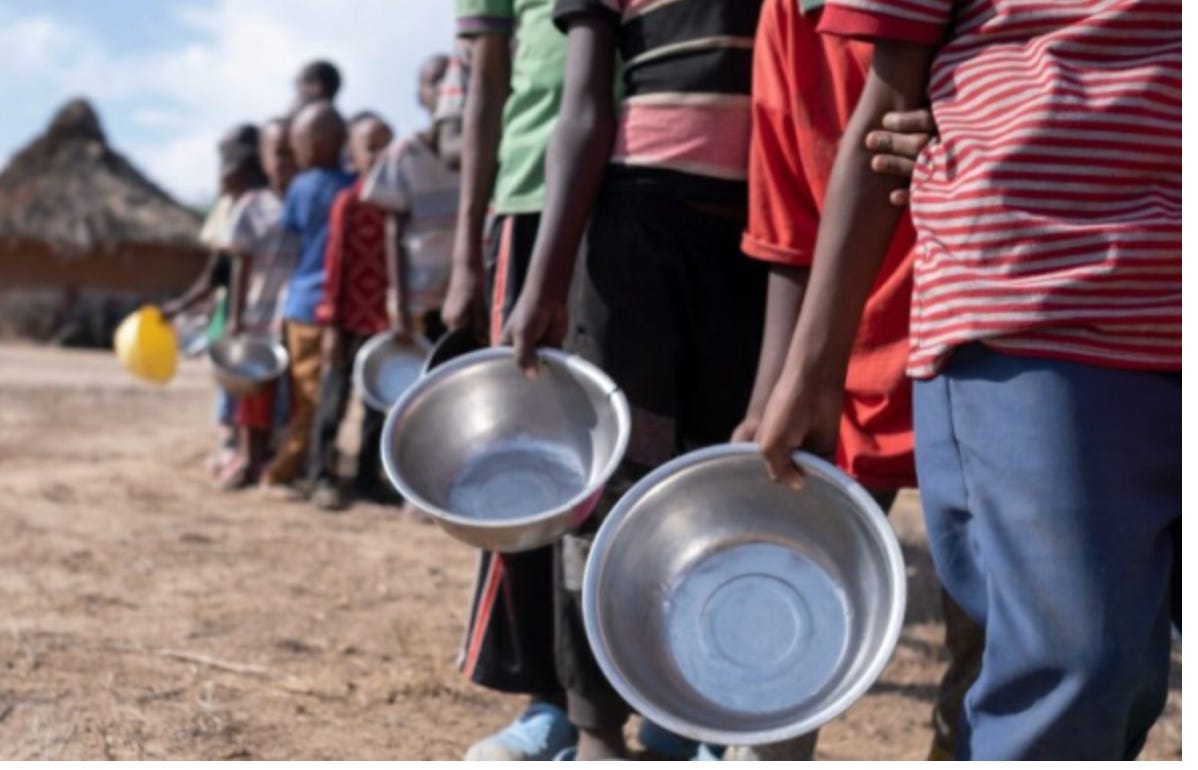
The most important commodities traded in global markets and essential to our survival are wheat, soybeans and rice grains. These agricultural products are now instruments of global financial speculation - that inflate and deflate food prices. By inflating prices, sustained speculation can trigger hunger on a worldwide scale. A form of colonization that disposesses democratic governments and their citizens of power, that extracts from, and dominates societies.
Globalised food markets were designed to elevate the power of ‘free markets’ and to strip countries of the policies, institutions and tools needed to restore economic sovereignty - and in particular food security.
How to restore a nation’s sovereignty over food markets?
To regain power over markets will require governments to rebuild the public institutions that enable governments to respond to widespread concerns about ‘the cost-of-living-crisis’ and the affordability of food.
Democratic food governance will require countries to re-legitimize controls over cross-border flows of capital. Capital flow management tools could help governments manage price volatility.
Next governments should re-build and restore ‘buffer stocks’ - grain and other food reserves that help ensure survival in times of shortages and other shocks. Buffer stocks of vital commodities were effectively abolished by the process of globalisation - except for one vital buffer stock: The United States’s Strategic Petroleum Reserve.
[By the way, that buffer stock is running low. It has not held so little crude since April of 1983, according to S&P Global. When signing the MOU with Iran in June 2026 President Trump said he was motivated to finalize the memorandum of understanding (MOU) with Iran to prevent “economic catastrophe” if the war was not resolved soon.
So rather than possibly going into a depression, rather than having your favorite president be Herbert Hoover, he was always the one I didn't want to be," Trump said of the 31st president whose policies are often blamed for starting the Great Depression.
Since then, Trump has re-started the war against Iran, and and like Hoover, once again threatens the world with “economic catastrophe.”]
Supporting farmers and food growers
With regard to food, urgent action is needed. Governments need to provide additional resources for the growers and producers of our food. These include the re-establishment of public marketing boards and the provision of affordable credit for farmers. As researchers at the Bretton Woods project argue in their report Hardwiring Hunger:
These (public) bodies were essential in stabilising prices, supporting producers, and ensuring the availability of affordable food.
Above all, as Britain’s Professor Tim Lang argues - It shouldn’t take a war for countries to wake up to the need for food sovereignty and security. His report for the National Preparedness Commission Just in Case, summarised why Britain should be diversifying supplies, growing more of our own food, coming off the oil-based farming treadmill and engaging the public in protecting itself for the inevitability of coming shocks.
As I write this, wildfires caused by the breakdown of the world’s climate systems are scorching farmlands across the globe. They are the loudest wake-up calls for governments to act - to de-colonize and transform global markets.
No posts
Comments
Nothing yet. Say the first thing.
Sign in to join the conversation.