
There have been a slew of excellent Substacks on the topic of screen time in young children, starting with Dorota Talalay who points out the very obvious dangers of screen overuse with The results are in: we have been way too complacent about screens, followed by my neighbor Drunk Wisconsin who is sure that Screen time for kids is good, actually. Then there are practical takes from people like Darby Saxbe, who gives tips on How to use screens strategically with your kids.
But my favorite take came from Cartoons Hate Her, who makes an important point that too many people overlook: caring for young children who seem to be on a mission to kill themselves five times a day is really, really exhausting. And sometimes screens can help.
She called her essay Screen free parenting is risky: Or, in defense of everyone’s least favorite parent: the helicopter mom.
But I am definitely NOT a helicopter mom, nor am I a typically anxious or neurotic person, and I could still completely relate to this:
In order to raise kids without screens and avoid the headache of 24/7 anxious supervision, some of these tradeoffs will need to happen. Either you have to become much more tolerant of various accidents, property damage and ER visits (or worse!) or your kids have to be too scared of you to do anything risky. I’m sure some parent will come in to inform me that they’ve never had to punish their eight perfect screen-free kids, who spend all day peacefully and silently playing with corn husk dolls, but for the other 99.9% of people living in reality, screens exist to keep children safe and in one location during times when parents can’t be directly supervising them (while cooking dinner or breastfeeding a baby, for example.)
While my kids’ young childhoods did not involve a ton of screen time, I did sometimes use it strategically to avoid horrible accidents or big messes when I was, for example, putting the baby down for a nap or cleaning up the kitchen after lunch. And each child ended up with more screen time than the one before because my hands were increasingly tied each time another small human was added to the mix.
My oldest daughter barely used screens, and when she did, the content was almost 100% educational and supervised. By contrast, I once walked in on my third child watching a wildly inappropriate YouTube video of Caillou being spanked for “being a bad boy,” which autoplayed immediately after a different Caillou video. Oops.
I often hear the argument that…no need to occupy your little one with a screen! Toddlers and young children should simply shadow you throughout the day, absorbing important life skills through observation and imitation. But in my experience, they mostly just unfold your piles of folded laundry and slam their fingers in the washing machine. Don’t get me wrong—I’m sure this parenting hack works great for some people—especially those who: A) have one child, or B) have very compliant children (and, usually, girls—but we’ll circle back to that later).
At the risk of piling on, I would like to add something to the discourse. We tend to assume that parents use screens because they are lazy. But is it possible they just have harder kids? Furthermore, my children have all reached adolescence and are still alive. And I guess I just want some credit for that, because….
Some Kids Really Are Harder To Keep Alive Than Others
When I wrote Ok, But My Kids Are Harder Than Yours, it was mostly to vent about my youngest son’s “poor sleep”—which I later came to understand was really just a biological difference in his sleep needs compared to other children his age. At every stage of development, he slept about an hour less than any chart said he should. This meant that my husband and I got 2-4 fewer hours of freedom from the kind of hyper-vigilance necessary to avoid toddler accidents and destruction of property.
One of the most interesting comments on the piece came from Jayne, who works in the infant/toddler sleep space, and said the following:
There’s no evidence of any difference in developmental outcomes between low and high sleep needs kids - the low sleep needs babies just have more sleep deprived parents. And anecdotally, I feel like I tend to see them hit milestones early simply because they often have several additional hours a day to practice!
This was another moment of epiphany for me! All three of my kids walked early—at 10 months, 9 months, and 10 months, respectively. So apparently, while they weren’t sleeping, they were busy learning to be extremely mobile. As you can imagine, a baby who walks at nine months has even less sense than one who starts at twelve or fifteen. And once they were mobile, an attentive adult had to be within arm’s reach during every waking moment.
With my kids spaced two and a half to three years apart, that meant nearly nine consecutive years in which vigilance was constant and breaks were few and far between. Also, we live far from family, so no one helped us with our kids who wasn’t being paid.
What does this have to do with screens? Leaving the room to say, change a load of laundry, wipe another kid’s butt, or clean up a spill could have major consequences in terms of accidents or messes. And when I had overlapping babies, toddlers and preschoolers…well, you can guess what one of my hacks was. It starts with WILD and ends with KRATTS.
Even with all this vigilance, my kids basically had a perma-bruise on their foreheads from age 10-18 months. This generated a lot of comments from strangers and friends who made subtle accusations of poor supervision, yet never offered to come over and babysit. The irony is that for every bruise you saw, there were probably 20 to 30 prevented. During this stage, we were saving our kids’ lives several times a day. We had baby gates, cabinet locks, padded corners, etc. But it was never enough.

I feel that other parents were given a three to six month longer honeymoon period with their minimally mobile munchkin that I didn’t get. And the stats back me up: most children start walking at twelve to fifteen months. As you can see, my children were harder to keep alive from a very young age.
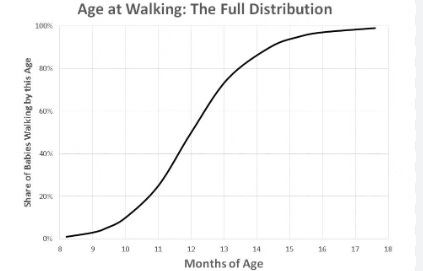
Maybe you think this is some kind of subtle mom brag. Um, no. My kids are older now, and I have way better material than early walking (did I mention my son made podium at the Wisconsin State Wrestling Tournament???)
Places We Could Not Live, Places We Could Not Go
When my husband and I looked at houses, we only had one child, and she was one. Even then, when our realtor showed us a house that backed up to a huge river, it was a non-starter. I can’t imagine the level of vigilance (or excessive screen use!) that would have been required with a river in the backyard. I also never would have considered a house with a pool. Beyond the fact that pools are money pits and we live in a state where an outdoor pool is usable maybe two months a year, I would have certainly lost a kid to a drowning incident.
Childhood drowning is the leading cause of unintentional death for children aged 1-4, and my kids were not cautious, “let’s stay close to Mom so we avoid getting hurt” types. I never would have trusted any gate or lock I could have built or bought. My kids climbed out of cribs at 18 months and scaled fences up to eight feet high starting at age four. Maybe I should care more that I couldn’t trust my kids to sit quietly where I put them, but mostly I just tried to avoid situations where their lives depended on obedience to me. Even a house on a busy road would have been a terrible idea, given the number of times I had to prevent them from running into the street on our not-that-busy block. One mistake, and…yikes. I don’t even want to think about it.
It was the same in parking lots. I loathed taking my kids to the grocery store for this reason. This is another example of when I feel frustrated by advice like, “Take your kids with you when doing adult chores—they’ll learn by watching!” That all sounds fine and dandy, but if your toddler doesn’t make it to adulthood because they darted in front of a Chevy Suburban in a grocery store parking lot, imitation didn’t help much, did it? There was simply no safe way to unload all three kids at once, locate a cart, and make it into the store. It might seem obvious to anyone with multiple children, but research actually backs it up: the presence of an older sibling is associated with an increased risk of childhood injury, particularly when the children are very closely spaced.
In my case, if my hands were full with the baby, the toddler could bolt at any second, and the six-year-old was prone to wandering off if she saw a cool pigeon. And don’t even get me started on returning the shopping cart—I did it, but it was NOT easy. So when the debate broke out over a viral video of a mom refusing to return her shopping cart due to the logistical gymnastics required, I personally found it very validating. Her frustration in the video was palpable, and I couldn’t help but cheer her on even while others judged her.
She was naming what many of us parents experience: an expectation to participate in polite society and “do your part,” with no acknowledgment that we are already doing our part—by caring for little humans with developing brains, who will one day become functioning adults funding other people’s Social Security checks. So, if those same people wanted to, I don’t know, actually help those children stay alive instead of judging their parents in a scary public place with zero margin for error, that would be super helpful. Thanks!
“Child-Friendly” Spaces That Weren’t Child Friendly Enough
While trying to keep my kids alive and off screens, I would frequently take them to places like zoos, playgrounds, and children’s museums. Perfect spaces for children, right? Well—not always. At the local zoo there were these two animal statues: a cow and an elephant. Great size for climbing! The elephant even had a slide for an ear. My kids could have entertained themselves for hours!

Except, they couldn’t. Because next to the statues was this sign:

So, parents: Don’t be confused. These attractive, fun play structures are NOT playground equipment. Why is this so hard for your toddlers to understand?? Why have you not trained them better??

When it came to REAL playgrounds, I was a big fan. Finally, a space specifically designed for physical, rambunctious children like mine! But they had to be in the right neighborhood. By that I mean, far away from judgy upper-middle class parents who constantly hover and give you the side-eye when you let your kids take reasonable risks. I just wanted to sit on the bench and enjoy my coffee, not tail my kids and reprimand them for going up the slide while sweet little Suzy is trying to go down—or scaling the roof of the playground equipment. Like I said, they were climbers! I learned to visit playgrounds at odd hours—like 7:00 am, when everyone else’s kids were still asleep even though mine had been awake for two hours—or to seek out parks in more humble parts of the city, where parents had bigger things to worry about than my kids climbing too high.
At the same time, there were moments when other parents’ concern was completely justified. On one occasion, my son (probably around eight at the time) climbed a tree next to the playground—and not just a little way up—we’re talking maybe thirty feet. The other parents started panicking, especially as their own kids tried to follow his lead. I was scared too. I believed he was capable, but I also knew that if he fell, it would not be a small accident. I tried to coax him down, but for a solid five to ten minutes, he pretended he couldn’t hear me—taking in the view from the top, calmly ignoring the crowd of anxious adults below. Eventually, he came down on his own, unharmed and very impressed with himself. What a little #$%@!
Here’s one last example: Several years ago, we took a road trip to Colorado with our kids—three, six, and nine at the time—and our twelve-year-old niece. We rented a two-bedroom Airbnb near the mountains that advertised itself as “child-friendly.”
It wasn’t.
Tiny glass and ceramic knick-knacks were everywhere—coffee tables, benches, low shelves. Not just breakable, but sharp. To protect the owner’s belongings—and to keep our children from getting cut by shards of glass—we moved the items to the tops of the kitchen cabinets, fully intending to put everything back exactly as we found it before we left.
But the night before checkout, my youngest was up all night with a bad cough, which ended with a 4 a.m. trip to the ER for croup. My husband was left behind to manage the other three kids, pack up the minivan, and clean the condo by himself. By the time my son and I returned from the hospital around 9 a.m., it was time to check out and we were both sleep-deprived and completely overwhelmed—and we forgot to put the nick-nacks back where we found them.
Much to our embarrassment, the Airbnb owners gave us a one star review, complaining that we’d “hidden their collectibles.” We wrote them back apologizing and explaining the situation, but they didn’t respond. Their complaints were warranted, but their condo was definitely NOT child-friendly and I have no clue what made them think that it was! In shame, we ended up deleting our Airbnb account and haven’t used it since.
I Don’t Want To Go There But…Girl Moms Don’t Always Understand
Sometimes I see takes from moms who are certain that other parents must be doing something wrong. After all, their child doesn’t make a mess everywhere. Their child can sit quietly in the corner coloring for an hour. Their child likes to sit and look at books. Their child doesn’t endanger themselves constantly. Their child is compliant when redirected.
Not always, but often—their child is a girl.
Sorry, not sorry, but there are often real behavioral differences between boys and girls. And I love boys! This is not a dig at boys. After attending my goddaughter’s Nutcracker rehearsal (yawn), I felt deeply relieved that I get to watch wrestling meets, soccer matches and robotics competitions on the regular rather than ballet.
I say this as someone who also has a daughter who is not at all girly (she’s the one busy with robotics): the two boys who followed were orders of magnitude harder to keep alive. Here are some examples of things my boys have done:
gotten out of a booster seat before the car came to a complete stop
skateboarded down an incredibly steep hill
tried a black diamond the day after a first snowboarding lesson
rode scooters and bikes barefoot and helmetless
And this is not an exhaustive list! Even my daughter recognizes their (occasional) idiocy. One afternoon, we were watching the boys play in the backyard. They were being ridiculous—tackling each other in the mud and throwing handfuls of dirt and sticks in each other’s faces. My daughter turned to my husband and said, “Dad, thank you so much for giving me an X chromosome.”
So here’s what a screen-light summer looks like for teenagers. This summer, my daughter mostly practiced piano, studied for the ACT, and read novels off her AP Lit/Lang summer reading list. In contrast, my son:
ding dong ditched the neighbors, leading to a visit from an irate elderly man (it’s always good to meet the neighbors!)
rode his bike to a town 15 miles away, then texted me from a friend’s phone to ask for a ride home
snuck in the middle school when a door was left open “to get a drink of water,” leading to a call from the principal
sliced open his foot during a scooter accident, requiring nine stitches, the day before his 13th birthday
chased down a criminal who stole his friend’s bike on his own bike, only giving up the pursuit when the thief (who was probably 5 years older than him) turned around and threatened to “beat his ass”
I am sure the comments will be loaded with examples of little boys who are extremely tranquil and compliant. Probably people will come after my parenting too: “Well, if you were just stricter, your son would both stay off screens and stay out of trouble!” Maybe their kids are easier? I’m not trying to stereotype, but I don’t think I’m alone in my experience. There is evidence showing that, at all ages of childhood, boys are more prone to accidents and injuries — a pattern seen across many countries. According to global child injury data, boys tend to have both more frequent and more severe injuries than girls, with injury death rates for boys under 15 roughly 24 % higher than girls.
Look—I’m proud of my boys. They are strong and brave and wonderful. I could see them being wonderful firefighters, paramedics or ER physicians. I could also see them falling victim to a sports betting addiction, trying some “Free Solo” adventure that ends poorly, or spending a night in the slammer because they felt the rules only applied to other people. While I don’t want to squash their rambunctious spirits, in all honesty, it has made them extremely hard to keep alive.
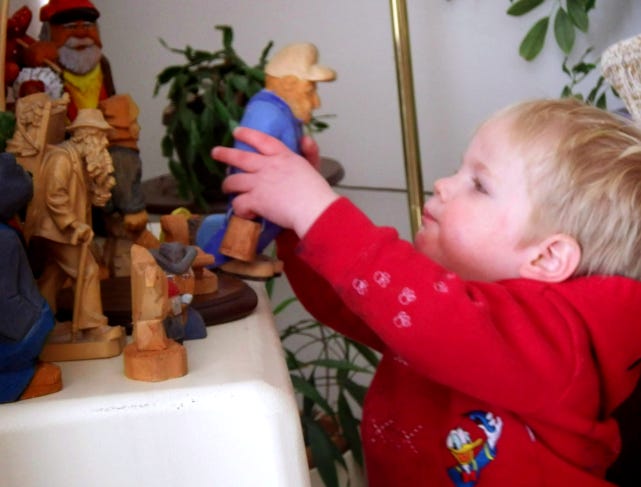
Actually, My Kids Are Awesome
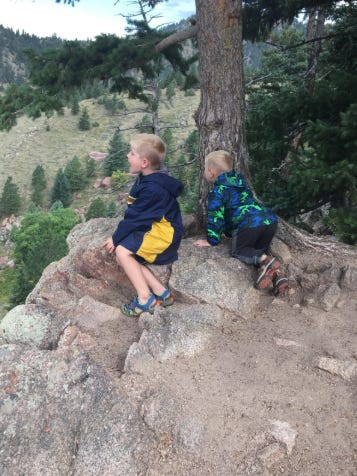
Since I’ve now written three essays about how hard my kids are, I worry a bit that I’ve given the wrong impression. Actually, my kids are awesome. Remember that 1-star Airbnb rating? Well, on that same trip, my children tackled three grueling hikes—putting in around 15-20 miles of hiking on very difficult terrain even though they were only 3, 6, and 9 at the time. My youngest spent some time in the hiking backpack (my husband is awesome too!) but for the most part he did it on his own. Best of all, no one fell off a cliff. I guess what I’m saying is, my kids may be hard to keep alive but I wouldn’t have it any other way.
No posts
Comments
Nothing yet. Say the first thing.
Sign in to join the conversation.