
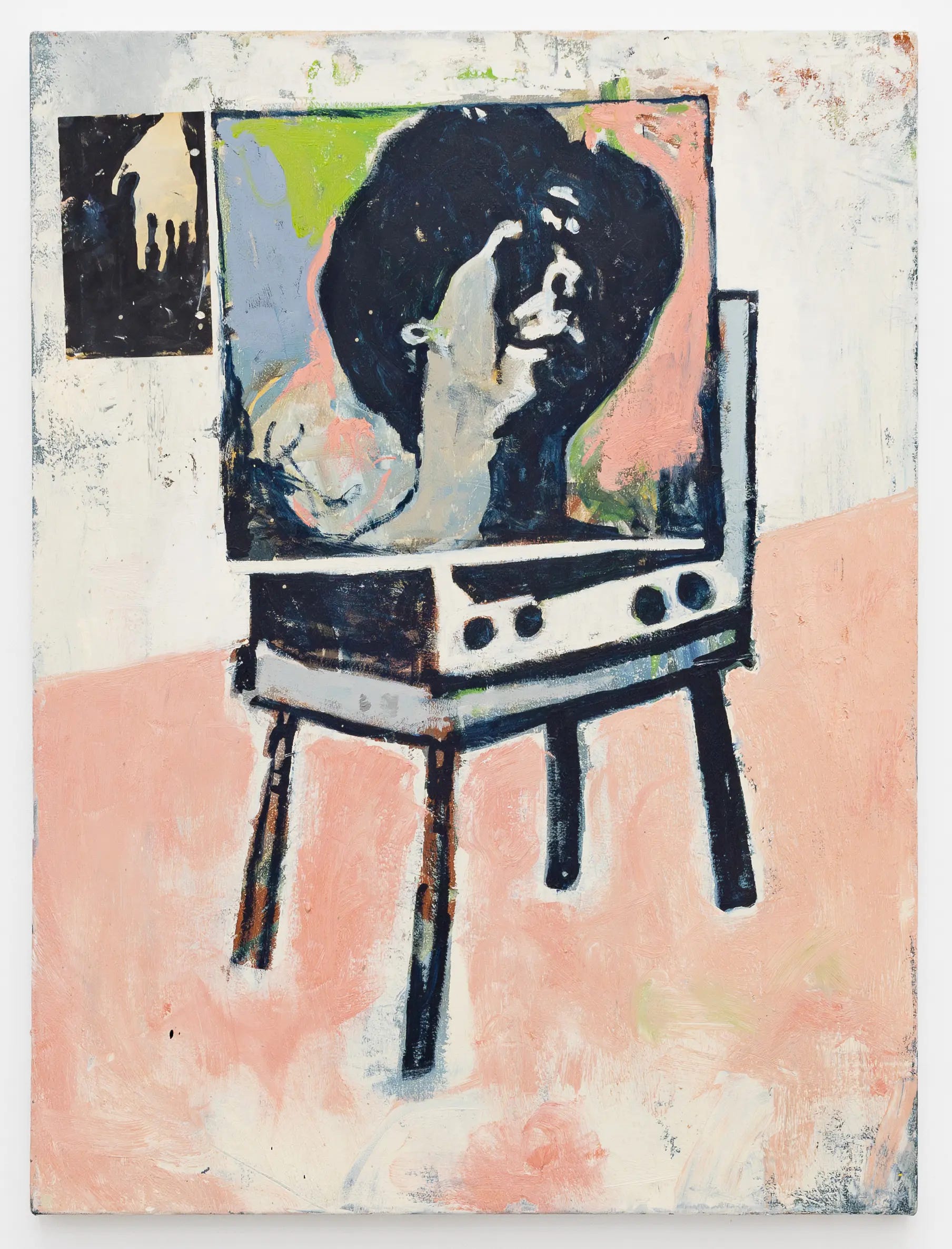
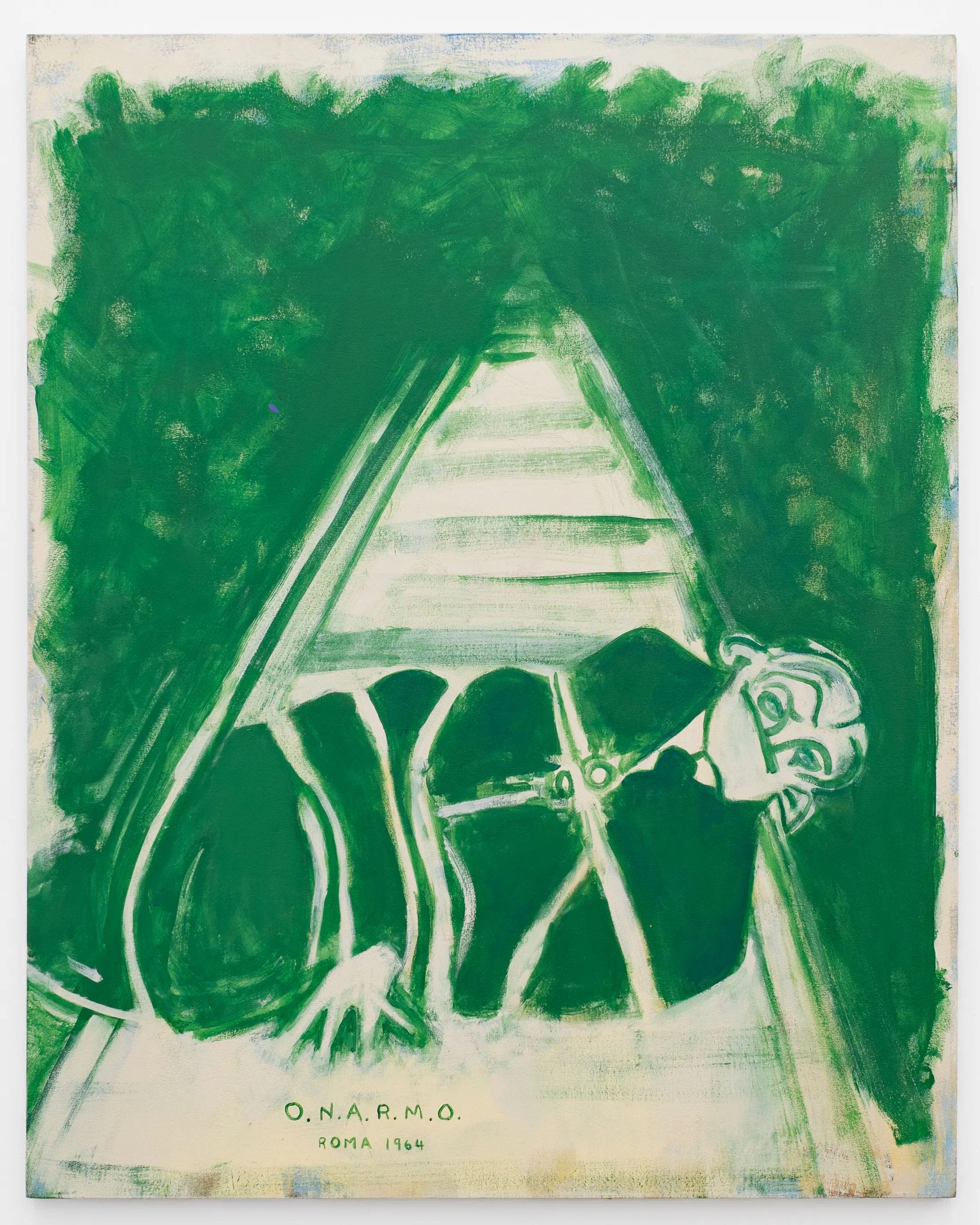
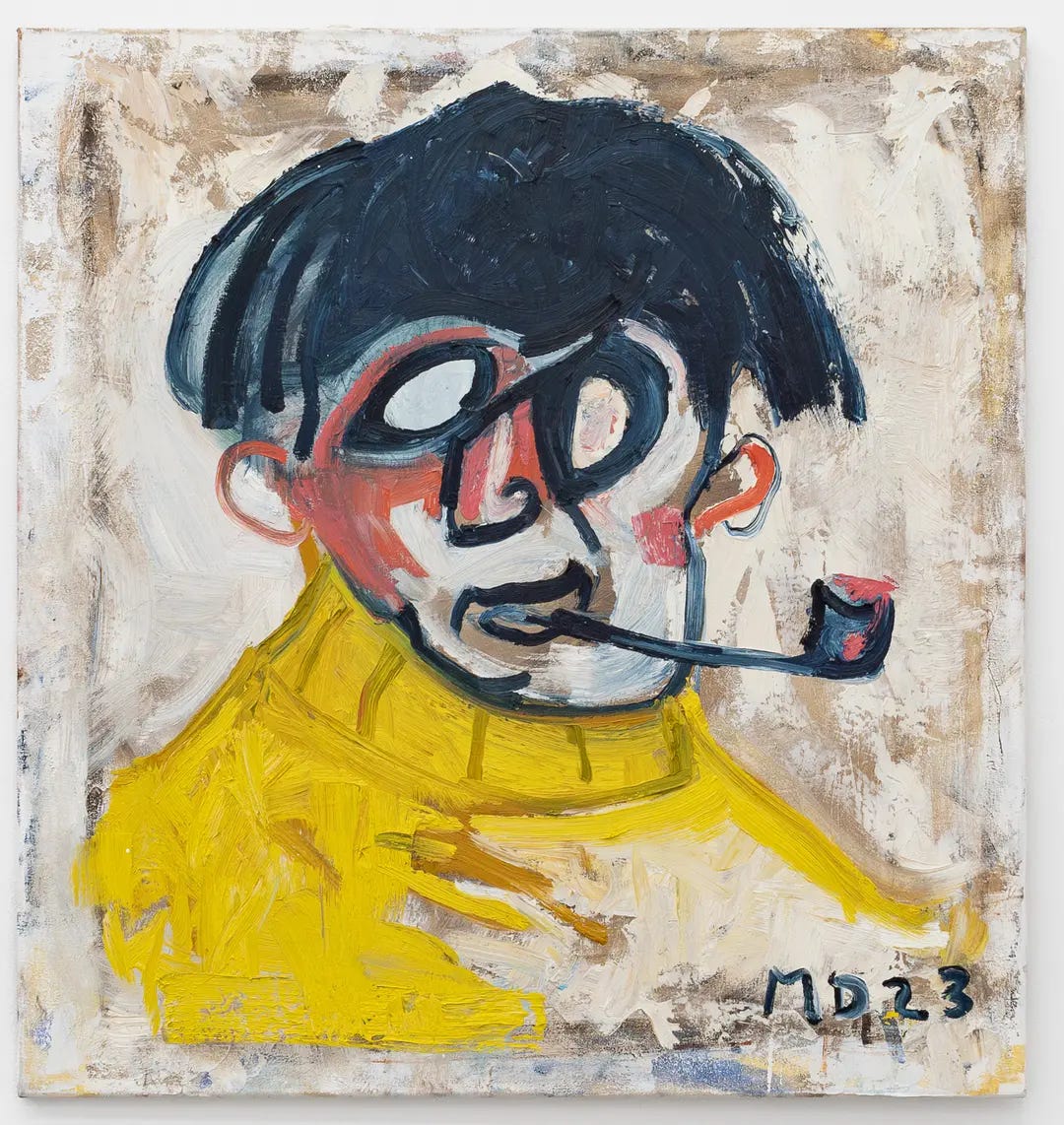
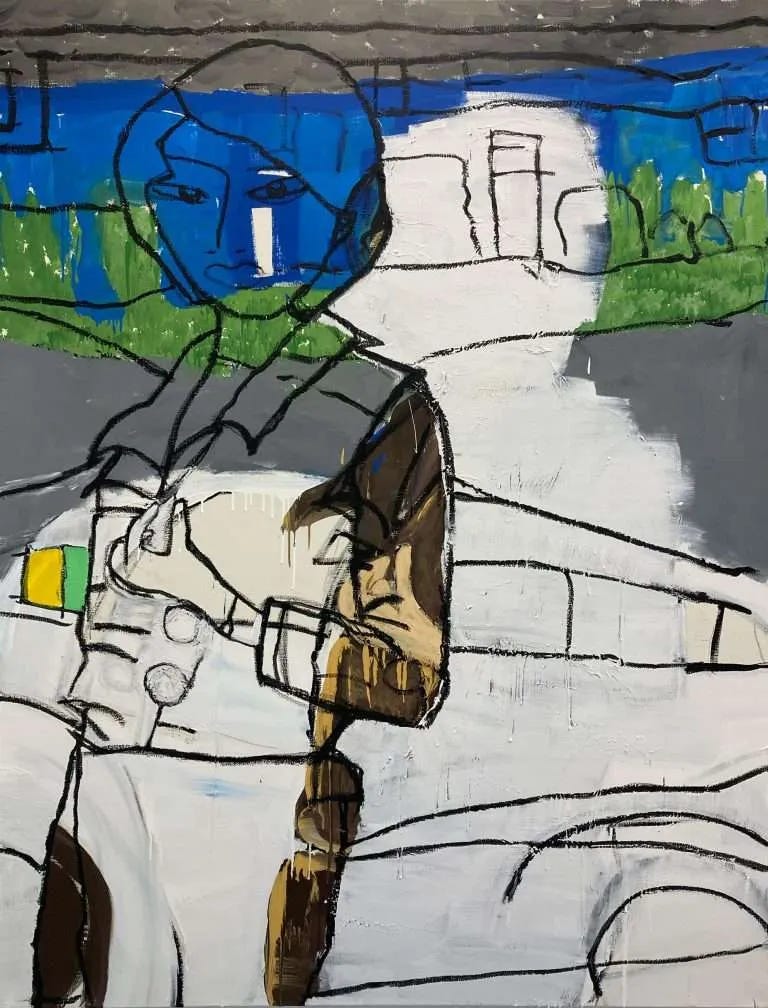
Every six months or so it seems like T, the New York Times style magazine (or some other arbiter of good taste) draws our attention to yet another celebrity artist who is exorcising his or her talents in the studio in between casting calls and movie shoots. And thus it was that Matt Dillon appeared in mid-May in a flattering profile about his “lesser known life as a visual artist.” Dillon, now 62, came of age playing angsty adolescents in such 1980s films as Rumble Fish and Drugstore Cowboy. “His art takes cues from the Neo-Expressionism of that time as well,” says the Times reporter, who is not on the roster as an art critic. “He paints in a brushy, textural style, nodding to Julian Schnabel’s gnomic marks, Martin Kippenberger’s deadpan distortion and A.R. Penck’s and Jean-Michel Basquiat’s faux-naïf primitivism.”
Dillon began making large-scale pieces about a decade ago, and has been in several exhibitions in Germany, as well as group shows in Brattleboro, VT, and Watermill, NY. His most recent show was at Journal Gallery in New York. “Dillon’s style that has emerged in a steady clip of gallery exhibitions in recent years is spontaneous, textured, and gestural,” wrote a critic for Artnet. “He paints bold, flat works marked with mercurial figures, recurring symbols, and unexplained words. When on set and away from the studio, Dillon makes do with what’s at hand, lathering acrylic on loose paper and repurposed notebooks.”
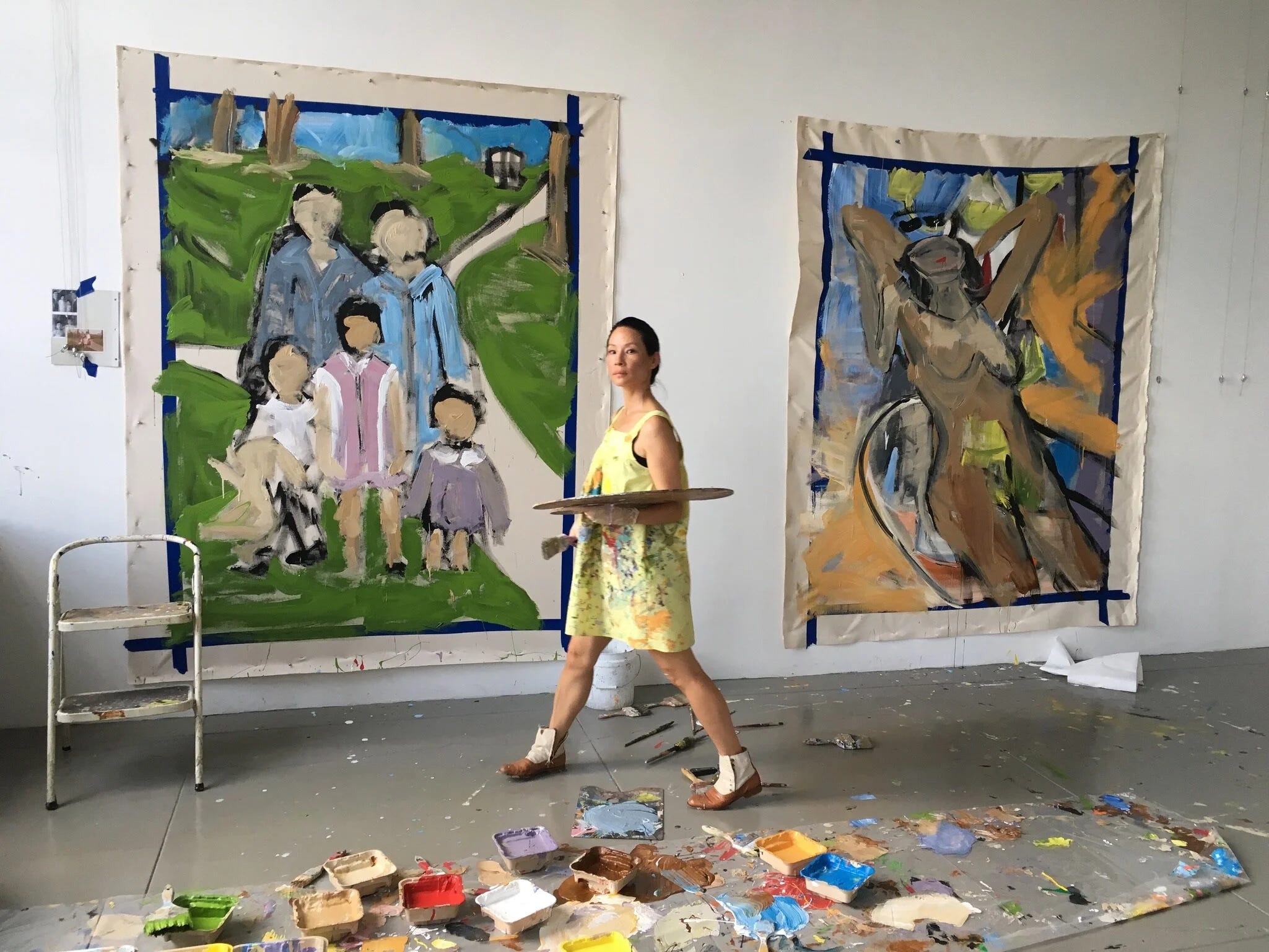
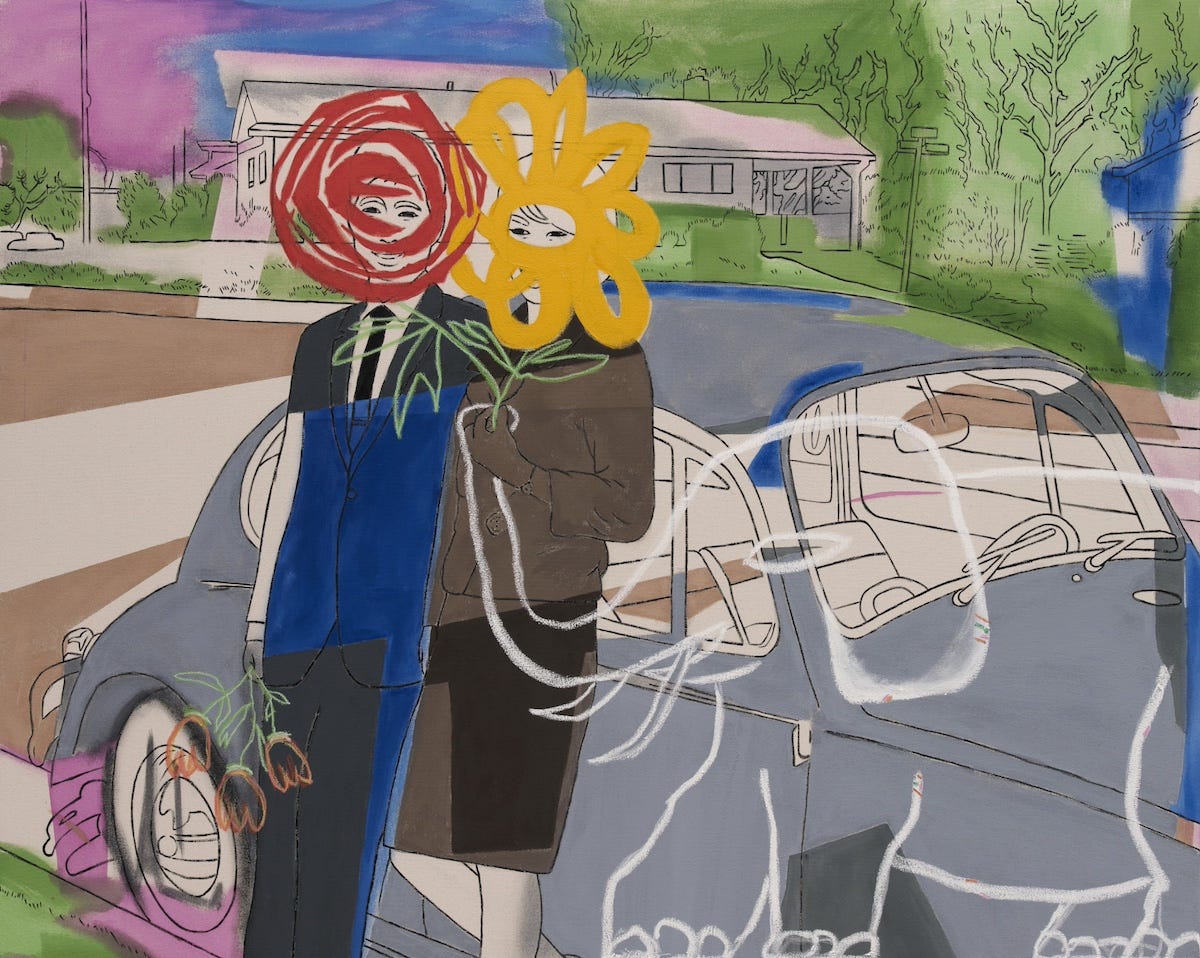
Lucy Liu, the veteran of a slew of “Charlie’s Angels” movies, has been painting for more than three decades. She is inspired by cast-off treasures she finds in dumpsters and by the Kabbalah, the ancient school of Jewish mysticism that attracts other celebrity believers. The work has inspired homages from Deepak Chopra and earned a lengthy review in Artnet for her show at Alisan Fine Arts (through June 5).
“A decade ago, following the death of her father, Liu excavated her family photographs to confront and process difficult childhood memories,” writes Artnet reporter Min Chen. “These images—and emotions—would become source material for Family Portrait [below], as well as her “what was” series, which unpacks the complex, rocky landscape of her own history, identity, and inheritance.”
Liu studied at the New York Studio School, famed for its rigorous curriculum, between 2004 and 2007, and has been part of shows at the NYSS, the Popular Institute in Manchester, England, and the National Museum of Singapore. As of 2019, the works were selling for $10,000 to $50,000.
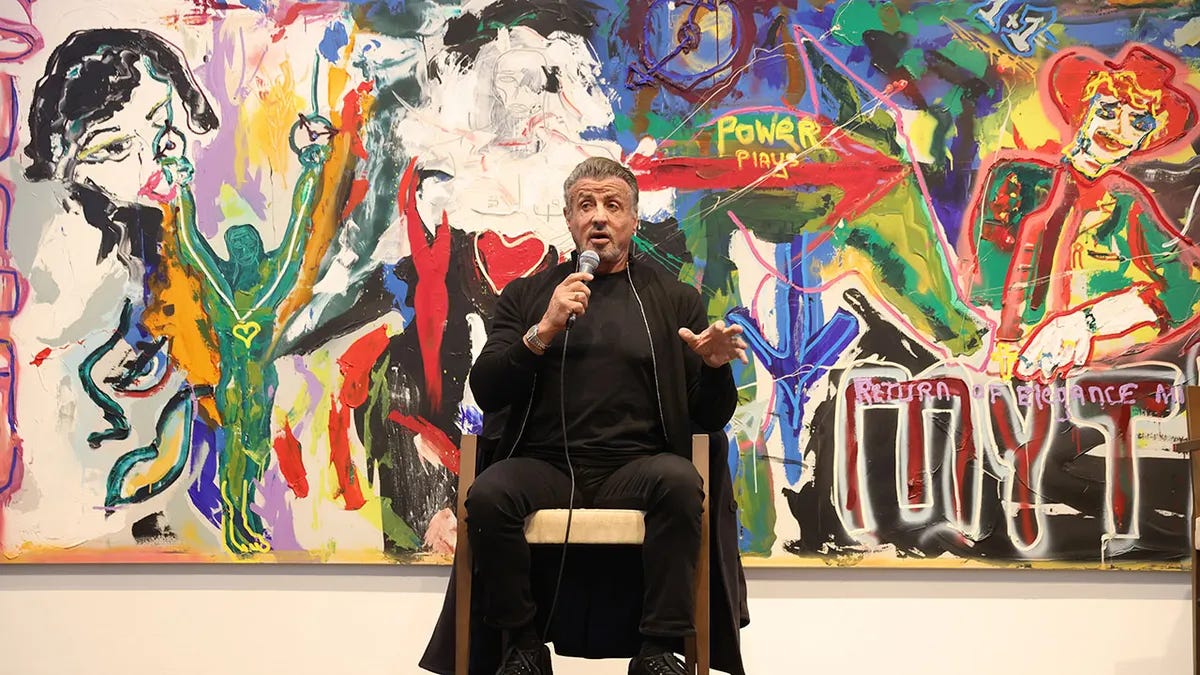
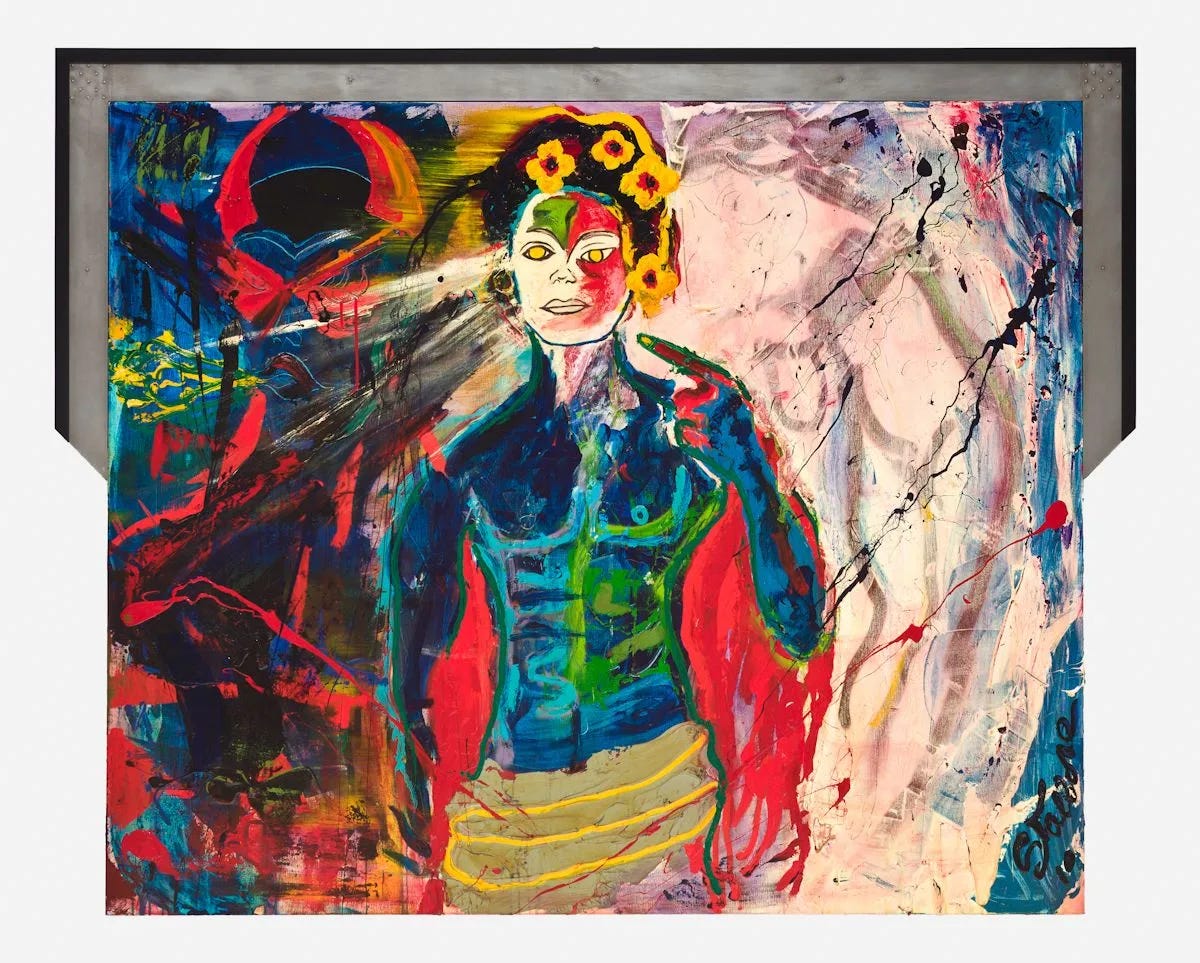
It’s probably no surprise that Sylvester Stallone makes paintings as blustery and pugnacious as his onscreen roles in the “Rocky” franchise and Rambo. I couldn’t find out much about his background and training, but his dealer in Palm Beach, FL, says on its website: “His practice began in childhood and has remained a central form of expression throughout his life. Drawing inspiration from Expressionism, Surrealism, and abstraction, Stallone’s works are charged with heroic figures, poetic symbolism, and recurring motifs that reflect his belief in the power of time and transformation. His art has been exhibited internationally, including at the Russian Museum in St. Petersburg and the Museum of Contemporary Art in Nice, France, affirming his place as a serious and dynamic contemporary artist.”
Writing in The Guardian a dozen years ago, critic Jonathan Jones opined: “In photographs [the paintings] look lurid and bombastical and not very good. But of course—I am seeing the art through the distorting lens of my dislike for the macho Stallone persona.”
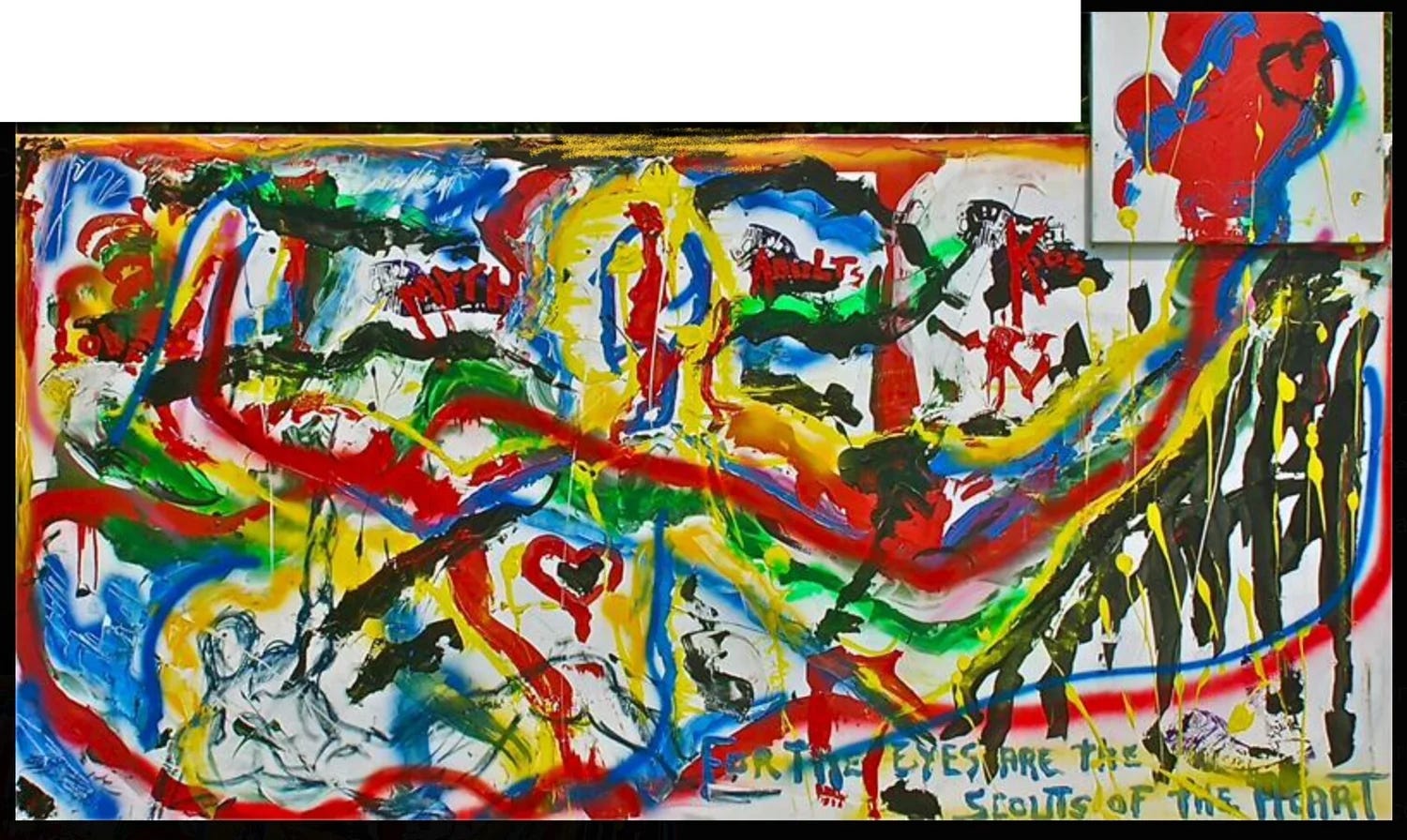
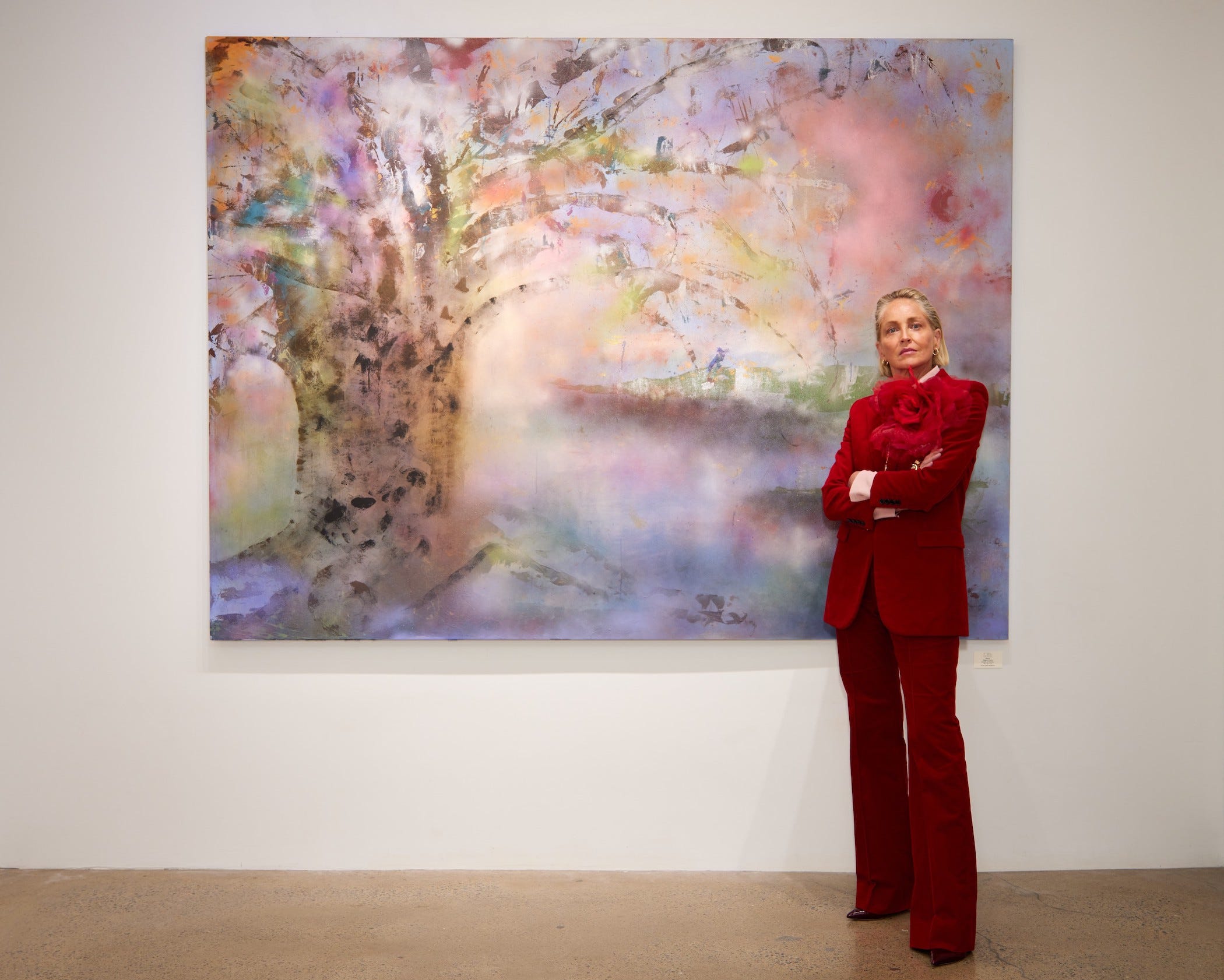
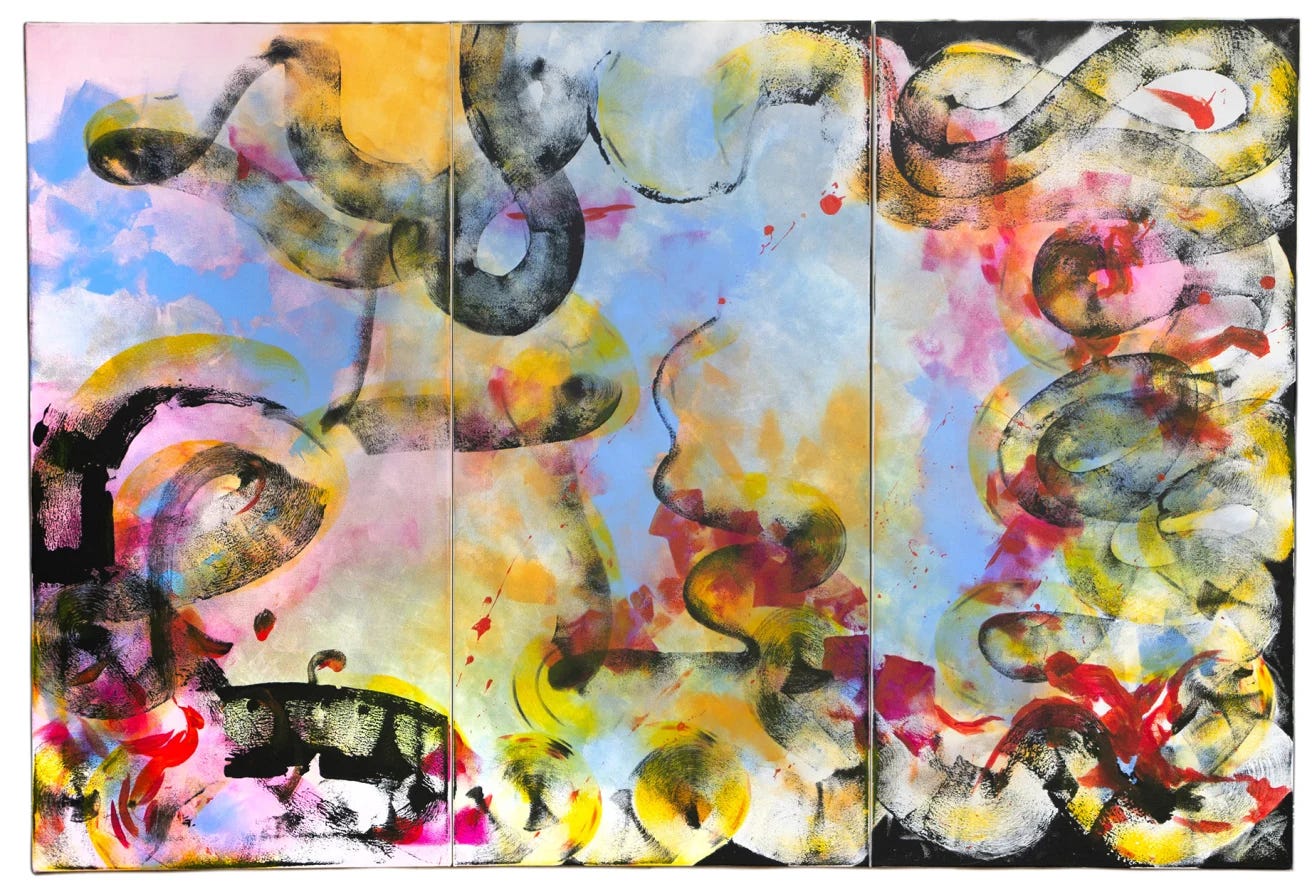
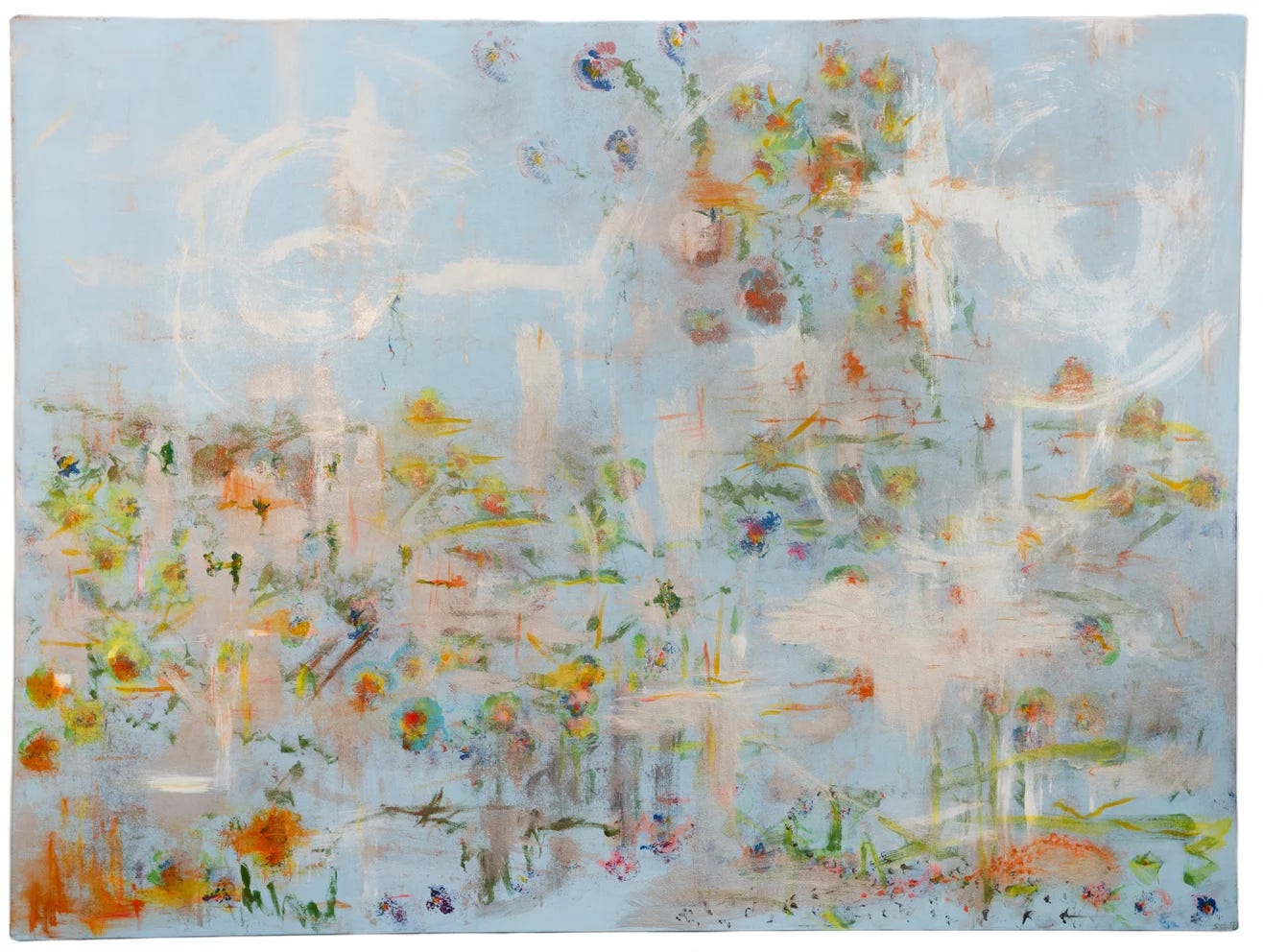
One is inclined to forgive Sharon Stone just about anything she chooses to commit to canvas. The actor, who became famous for roles in Basic Instinct and Casino, suffered a subdural hematoma in 2001 that left her with 23 platinum coils in her brain. Three years later, she lost a child in a vicious custody battle. In an interview with Jerry Saltz in 2023, she talked about being hit by lightning as a child and nearly decapitated by a wild horse she was training. She is, in short, very much a survivor.
Though the brain hemorrhage caused her to begin seeing colors with a heightened sensitivity, Stone really set to work during the years of the pandemic, when “a friend’s gift of a paint-by-numbers kit during lockdowns spurred a burst of creativity that led Stone to fill her bedroom with her artworks, before turning a guesthouse on her Los Angeles property into a home studio,” reported CNN. “Stone now dedicates several hours a day to painting.”
For all the trauma in her life, her paintings are surprisingly, affectingly lyrical. Occasionally there are political underprinnings. About a six-foot-high work canvas featuring a ghostly serpentine form coiled around carefully rendered flowers, she told CNN, “The planet is our garden. I think that many people are disrespecting the planet, pretending that there isn’t climate change, there’s no environmental climate crisis. And they believe if they just ignore it, that it will go away.”
Other works are inspired by a visit to Monet’s gardens in Giverny and the plight of Amelia Earhart. She noted in one interview that she thought a great deal about what it must have been like for Earhart—navigating vast, open spaces without modern instruments and facing the unknown. Snakes are a recurring motif in her work: “Snakes are the only animal that sheds its skin constantly,” she told Saltz. “What I like about that is that it’s the one that changes and grows and just keeps shedding as it continues to change and grow. So I put this shape in a lot of my paintings because it’s very interesting to me that this is about changing and growing.”
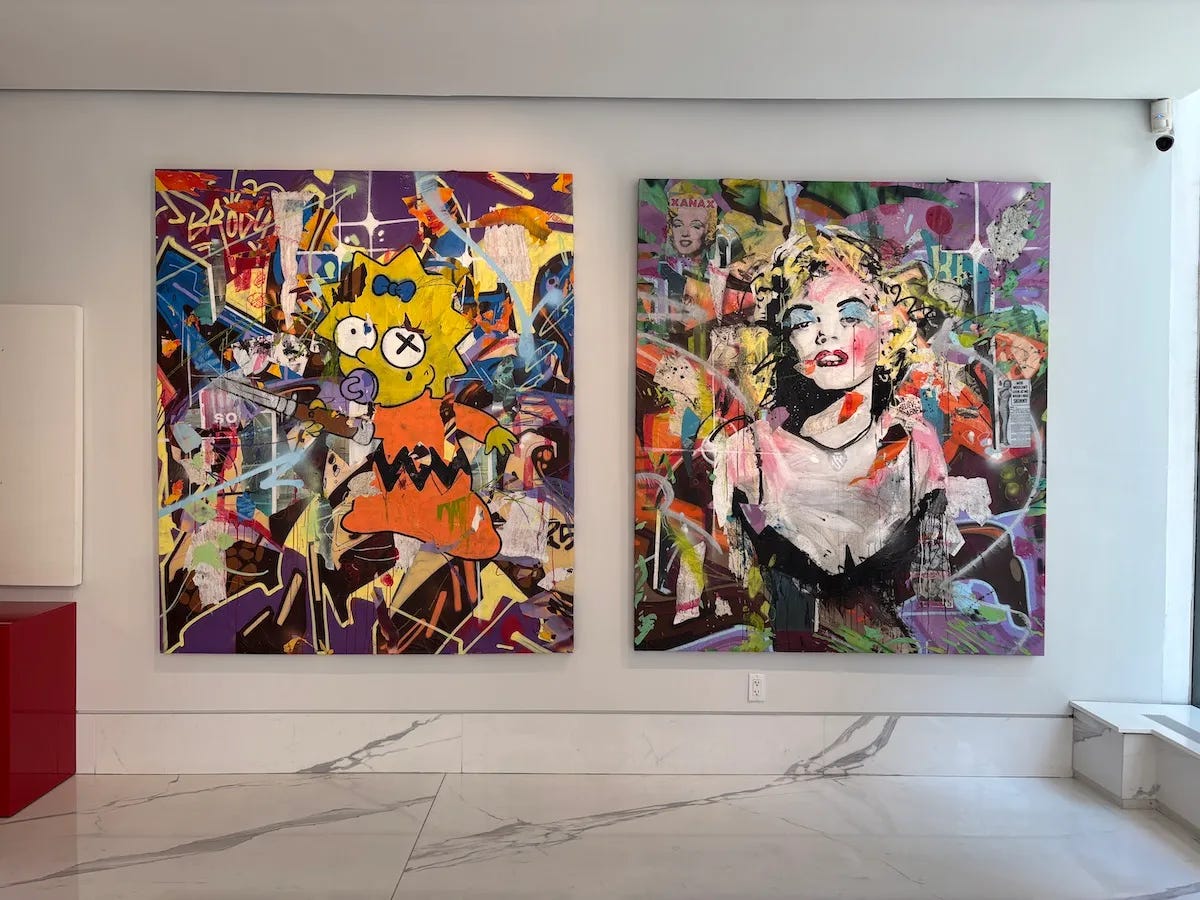
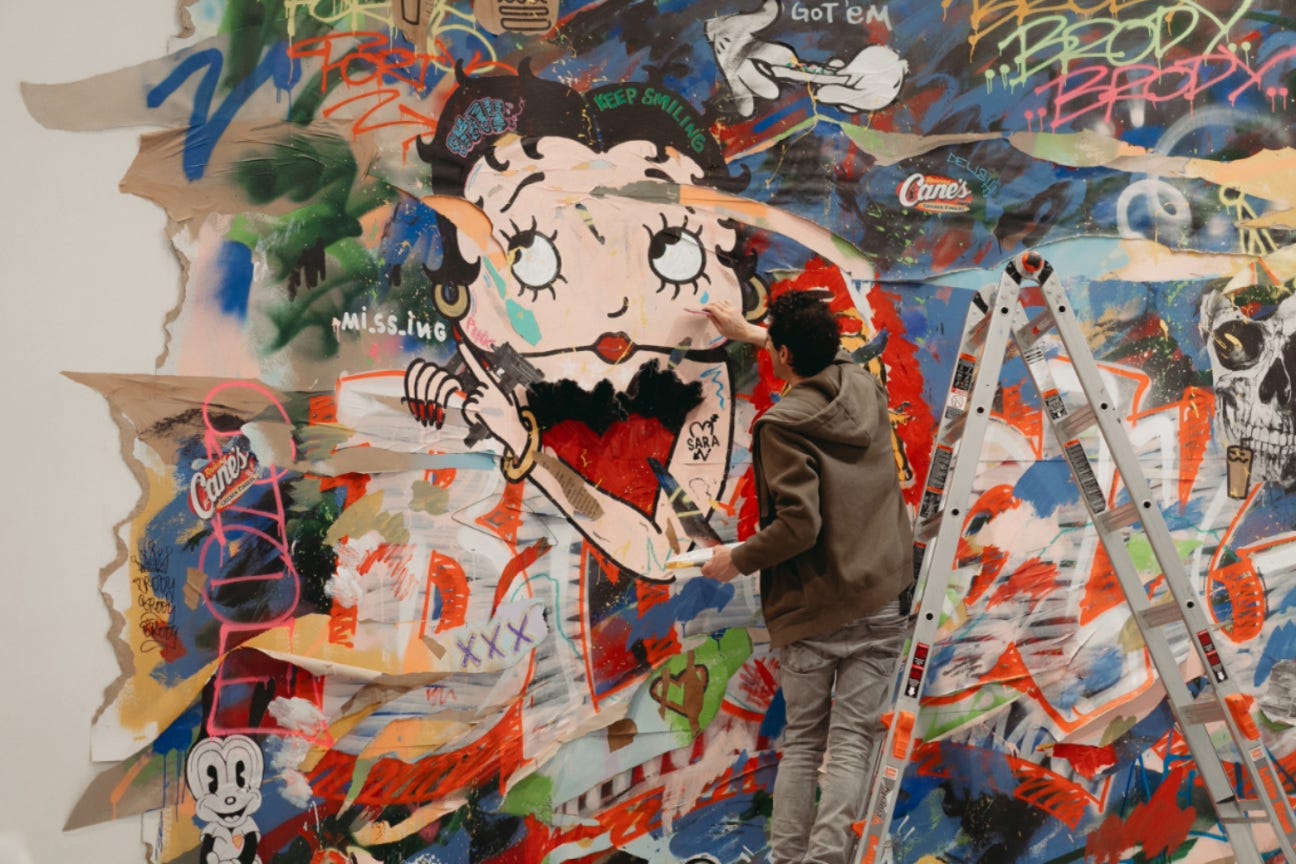
Perhaps no celebrity artist has inspired as much critical vitriol as Oscar-winner Adrien Brody. ARTnews’s Alex Greenberger summed it up in a headline review of the actor’s 2025 show at Eden Gallery in New York: “Adrien Brody’s Art is Horrendous. Why Are Some People Pretending It Isn’t?” Greenberger elaborates: “Brody is trying hard to put a contemporary spin on modes recognizable from Pop art from the 1960s…. The pictures of cartoon characters are about as subtle as a sledgehammer, making no attempt to add any nuance to his commentary on the American zest for carnage. One glib painting features a gleeful Scrooge McDuck toting an automatic weapon beside two speared people and a skull. For some reason, Brody has included a printed biography for Josef Ptacek, a Czech model, amid a painted brick wall with the word ‘NYC’ on it.”
Greenberger sums up: “With its faux naive aesthetic and mediocre production value, Brody’s works beg the question: Why are we still talking about them?”
Presumable because of the celebrity, The New York Times published a 1300-word profile that revealed, among other things, that Brody is the son of photographer Sylvia Plachy, who enjoyed a long career with The Village Voice. To its credit the Times included a biting critique from Claire Bishop, a professor of art history at the CUNY Graduate Center: “To say they look like A.I.-generated images resulting from search terms ‘90s LES graffiti’ ‘Americana’ and ‘Disney nostalgia’ would be too generous,” Bishop said. “What they actually resemble is the kind of sanitized street art that’s sold on 53rd Street outside MoMA or on the sidewalk in SoHo — work aimed at tourists seeking an arty yet unchallenging New York souvenir.”
Nevertheless Brody thinks of himself as an artist first, an actor second. “There were years that I was pretty much putting down acting and looking to paint primarily,” he told Interview magazine. “Whether I was showing or selling works, I just wanted to paint. I find great creative autonomy and freedom in creating tangible, visual art as opposed to interpreting the words of others, and then having that reinterpreted through other creative minds—an editor, producer, director, et cetera, and being reliant upon that whole machine to do creative work. Drawing and painting has preceded acting. Since I was a child I’ve been painting.”
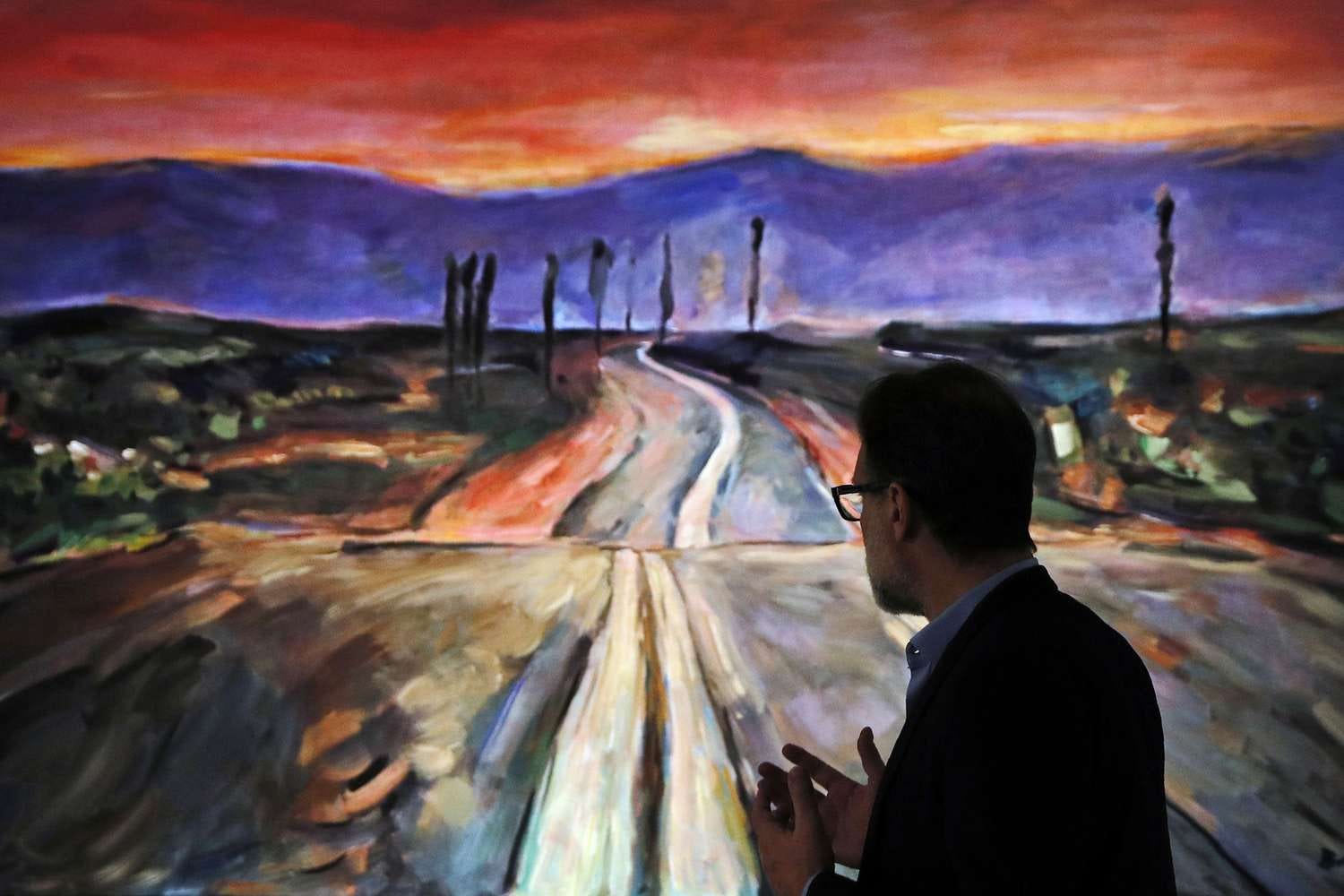
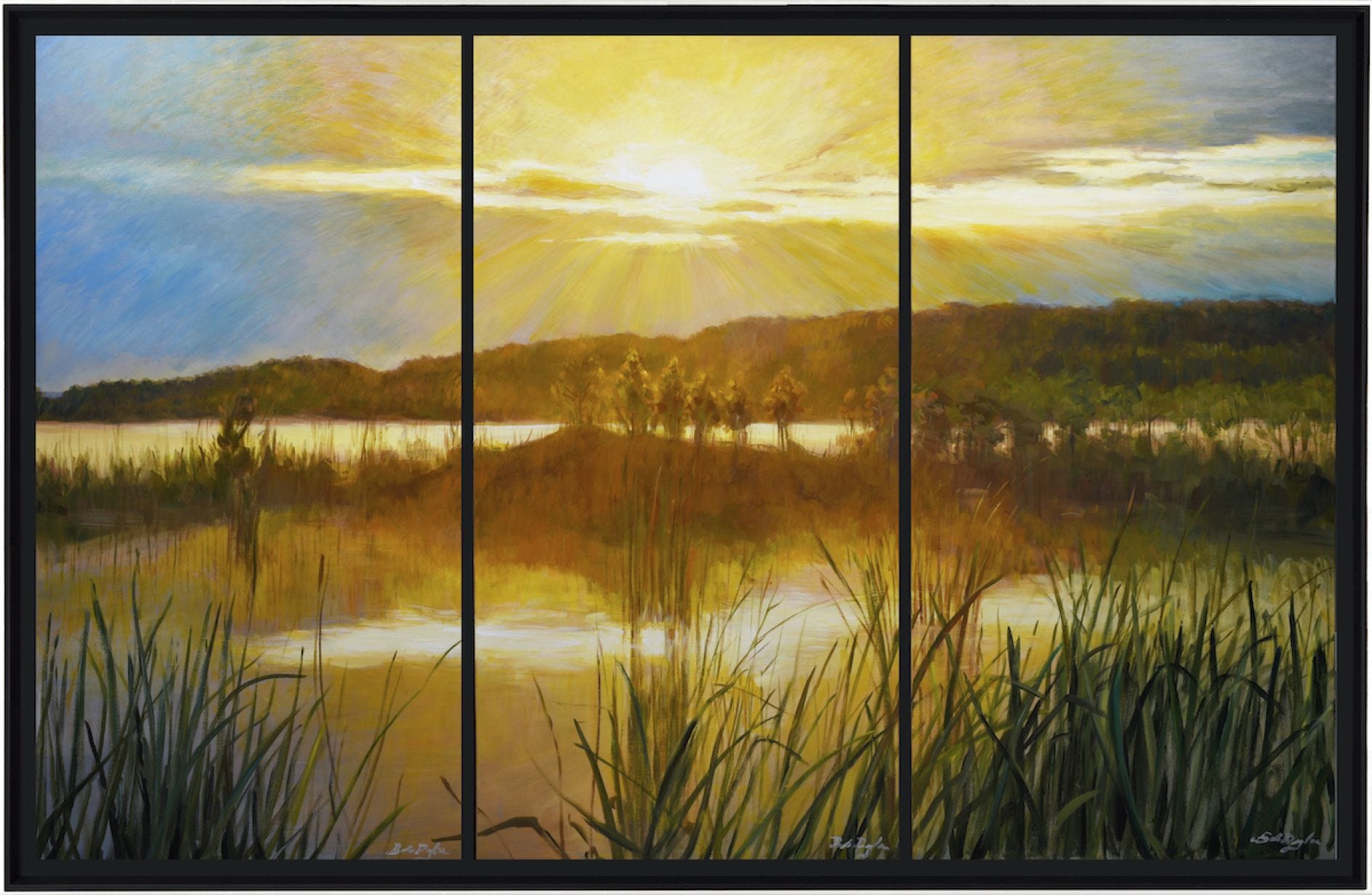
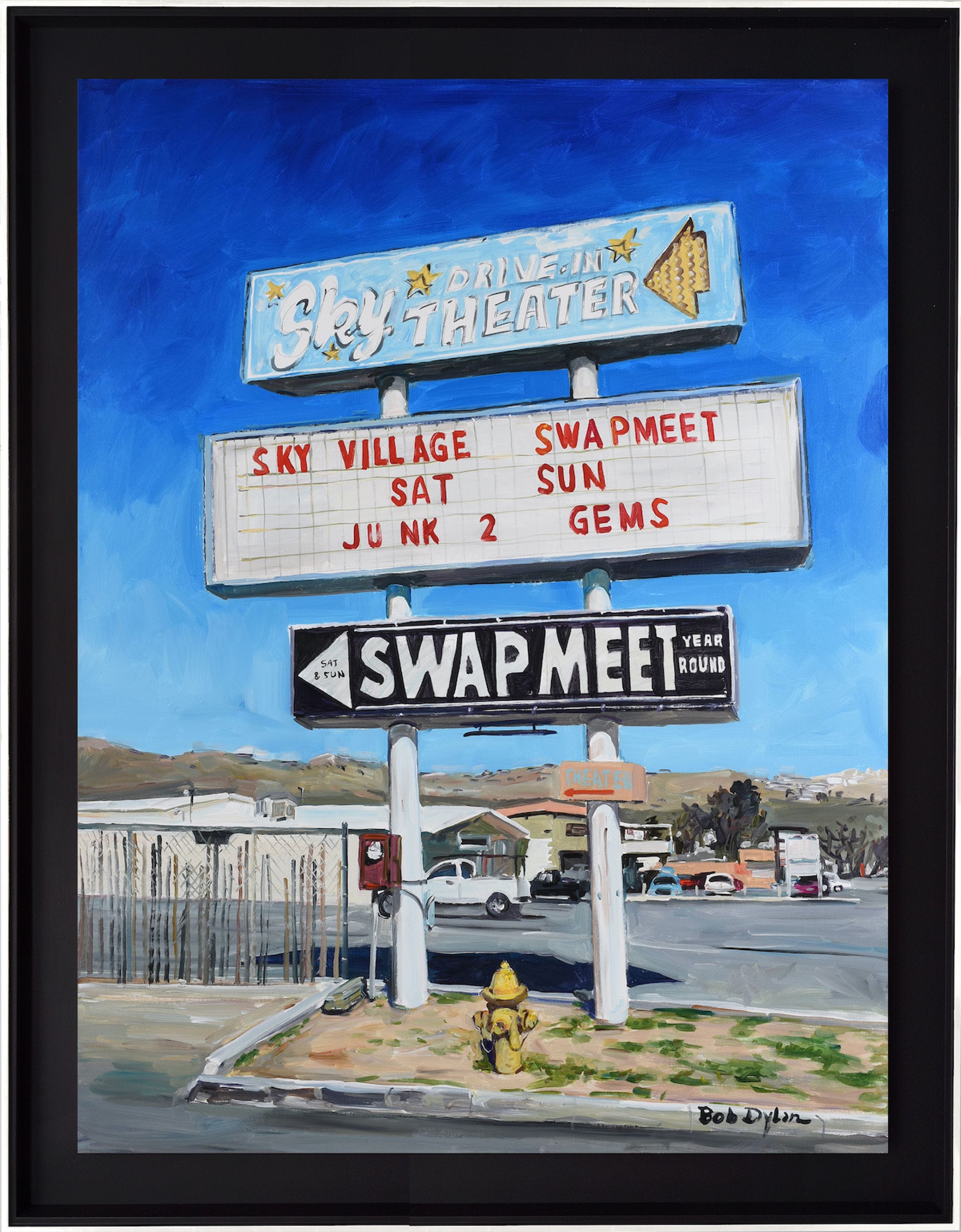
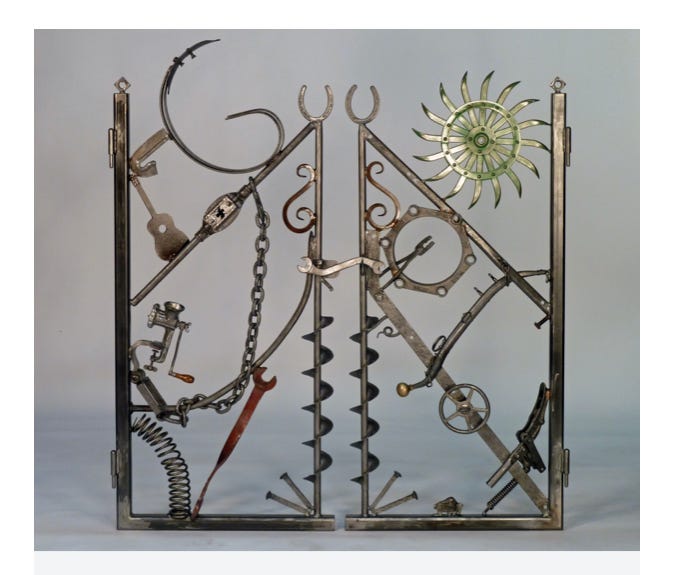
And then we come to Bob Dylan, who has been making art for almost as long as he has been composing and performing music, and whose latest show at the age of 84 was in 2025 at the Halcyon Gallery in London. He paints landscapes, urban scenes, and portraits; his sculptures are mostly “gates” made from repurposed metal items like clamps, chains, and horseshoes. About the paintings, he wrote in Vanity Fair: “I chose images because of the meanings they have for me, and patterns can be seen in the repeating images—roads, shacks, piers, automobiles, streets, bayous, railroad tracks, bridges, motels, truck stops, power lines, farmyards, theater marquees, churches, signs and symbols, etc.—all establishing a certain type of compositional value. I would say the purpose is plain, non-experimental or exploratory.”
He started exhibiting in 2007 at the Chemnitz Museum in Germany, and over two decades “has developed into a rather good, interesting painter,” claims the critic for The Times. The best of his portraits, says another critic of a show in 2013, “carry some of the lyrical mystery of Dylan’s wonderful music.” But his biggest advocate has been The Guardian’s Jonathan Jones who opined in 2016: “A real artist made these drawings and paintings [at the Halcyon Gallery]. Their integrity is compelling. They demand to be looked at, for their awe and wonder at the beauty and grandeur of being alive. These are the pictures of a true poet.”
No posts
Comments
Nothing yet. Say the first thing.
Sign in to join the conversation.