
Laurie Fendrich
Another guest post from our incomparable critic at large
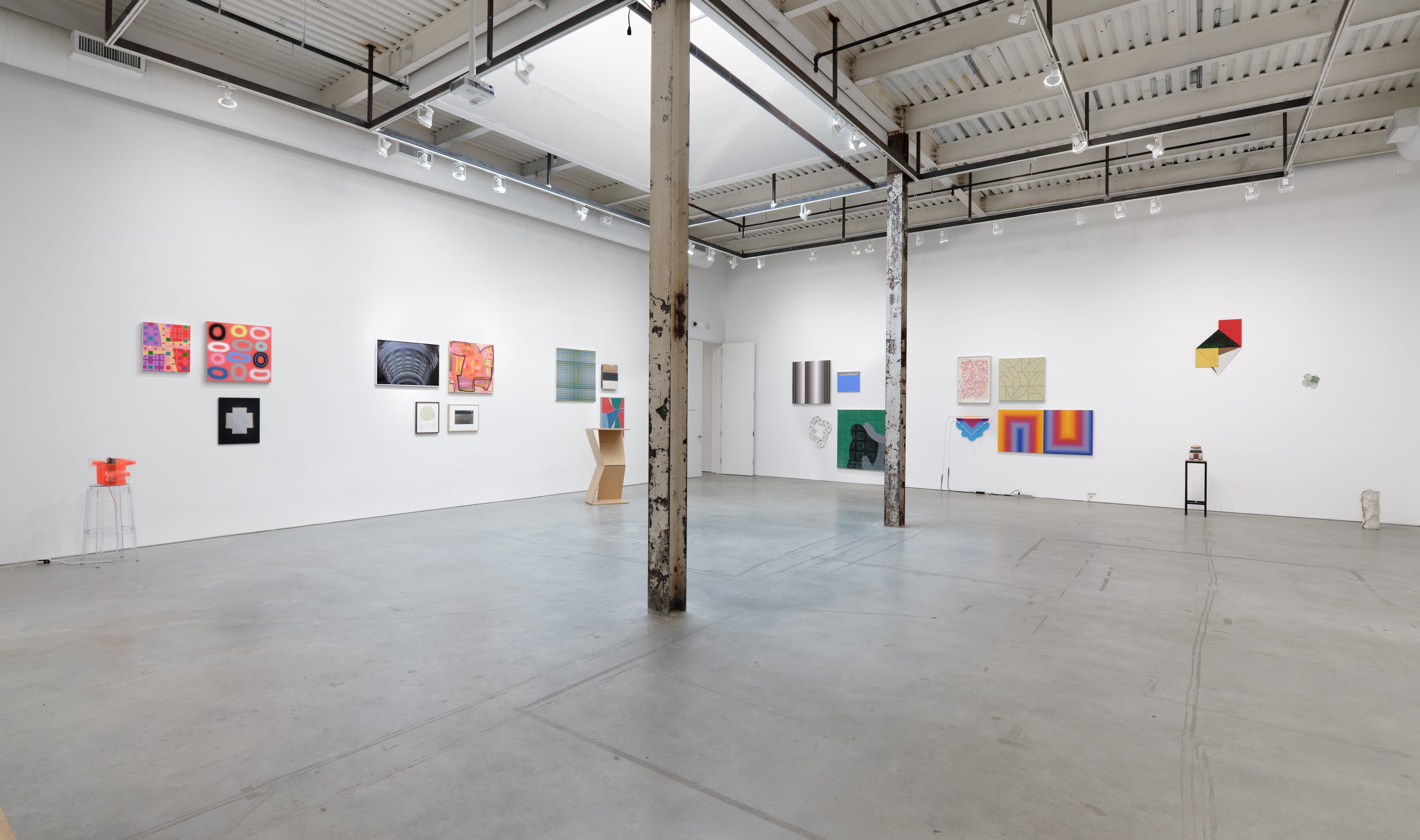
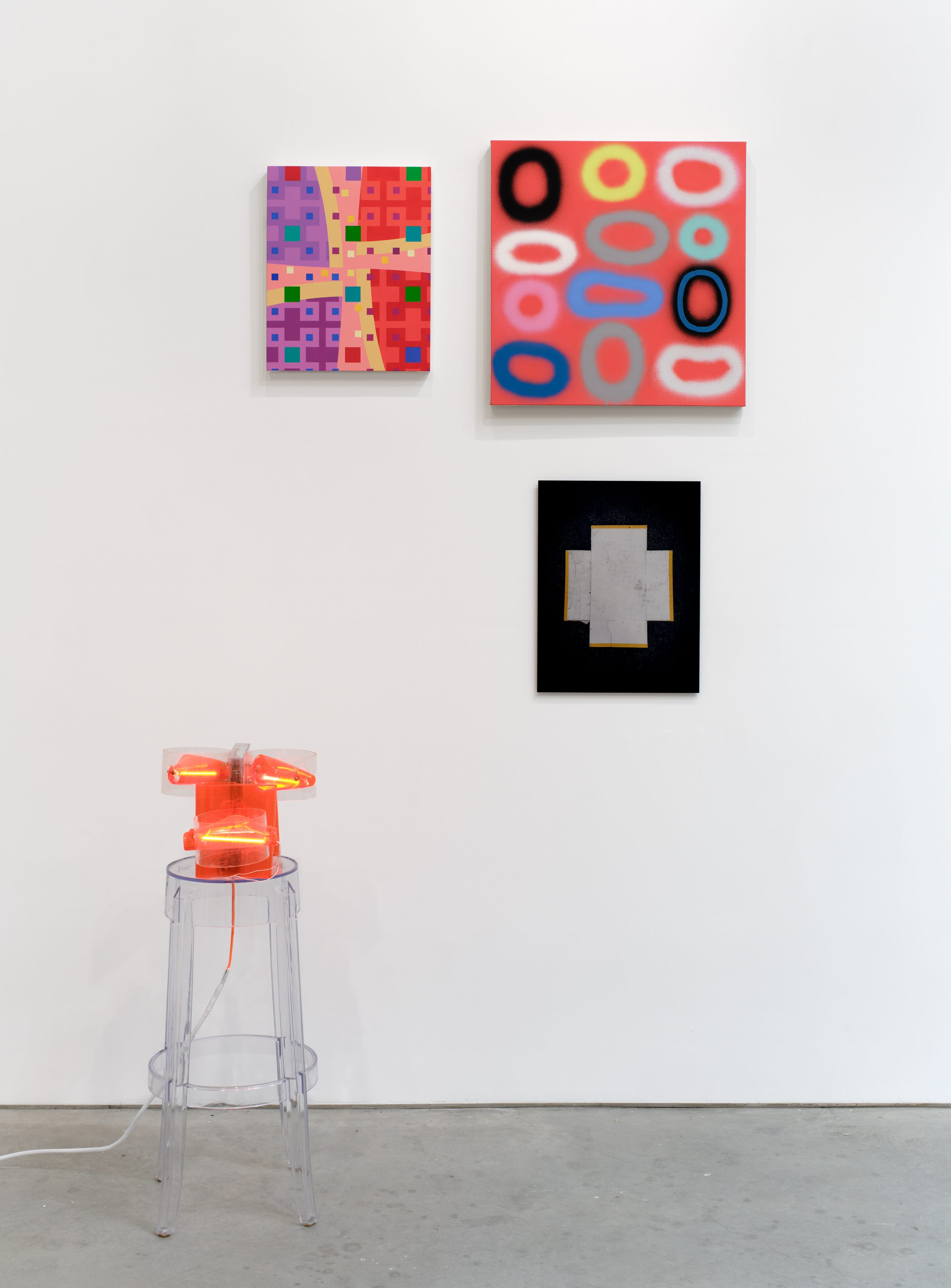
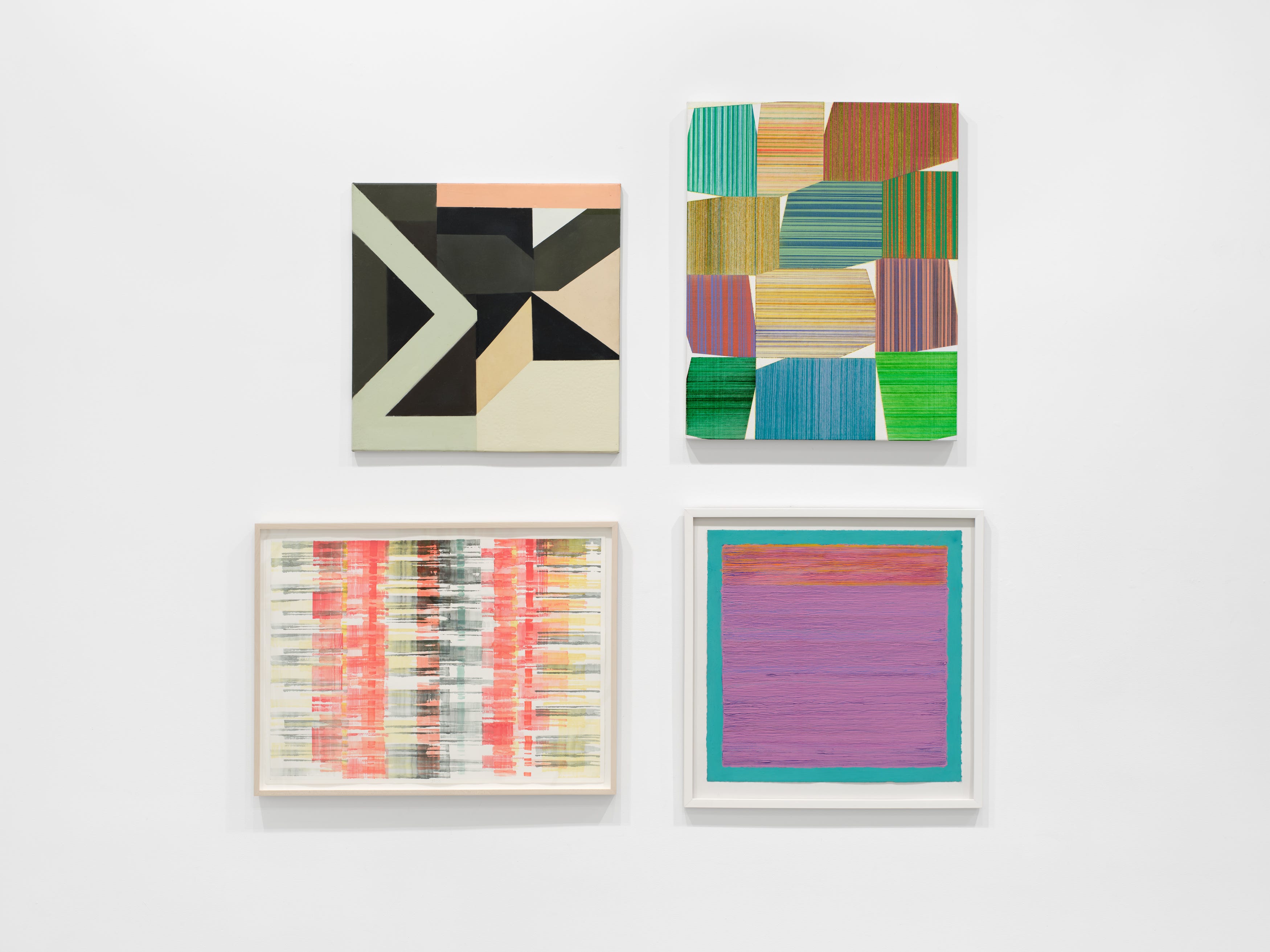
Last weekend, American Abstract Artists (AAA), one of the oldest continually active arts organizations in the United States, opened its 90ᵗʰ anniversary exhibition—Abstract by Definition: An Index. Curated by Saul Ostrow, the show is installed in Art Cake’s capacious, 17-foot-high gallery/events space in Brooklyn, NY. Because of the limitations of space, the 88 works included are relatively small. The art is arranged in pairs determined by the curator; again, because of space limitations, the installation is salon style (i.e., two sets of pairings, one above the other, with each of the five sculptures in the show placed next to its paired painting). About his curatorial pairings, Ostrow writes:
“Abstract by Definition: An Index is an invitation to consider the diversity of what ‘abstract’ means. By juxtaposing contrasting works, the installation is intended to orchestrate an internal dialogue that reflects on the nature of abstract art across several realms—philosophical, historical, etymological, and symbolic.”
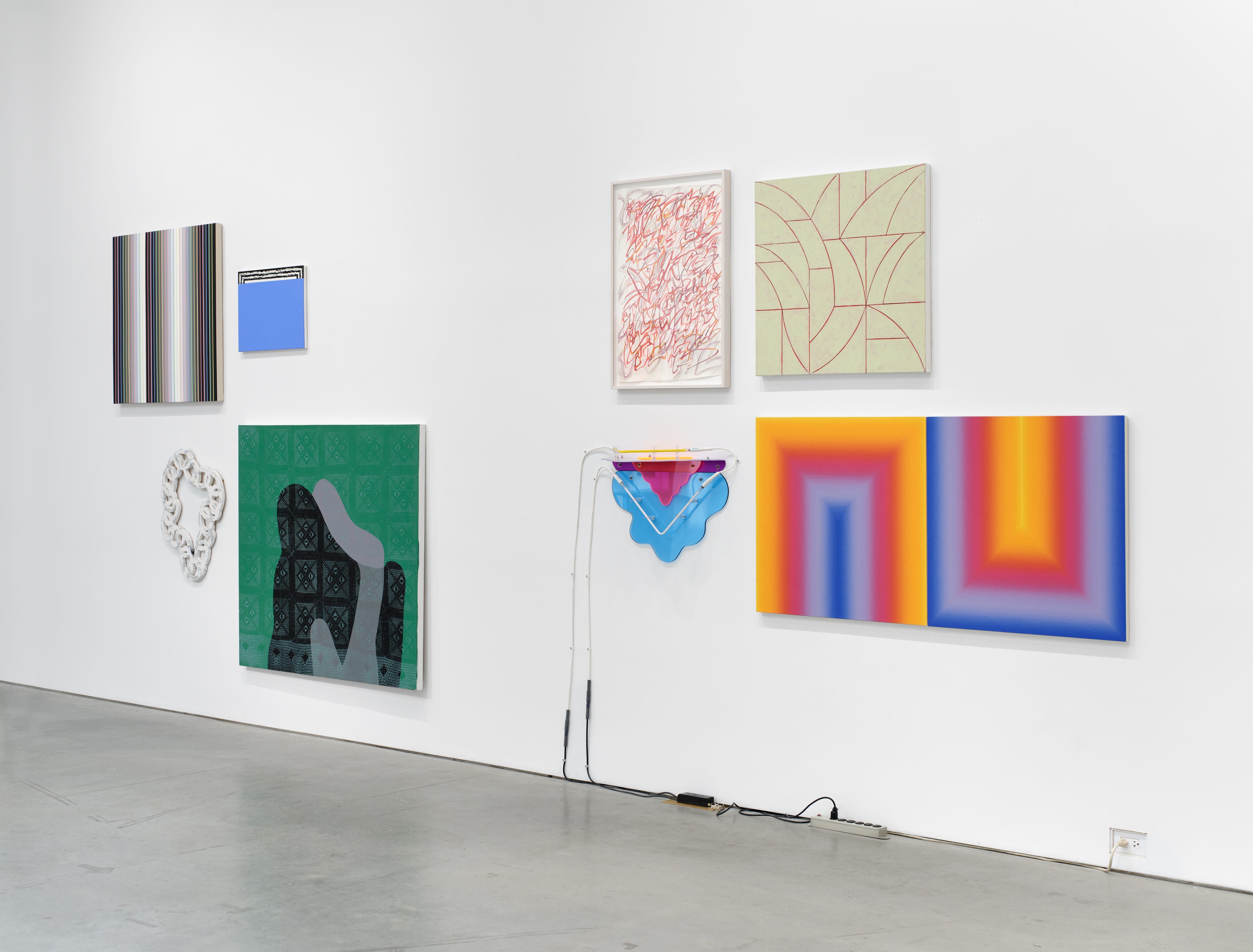
Expanding on this explanation, Jake Cartwright, AAA’s secretary, who helped organize and install the show, offered his own observations:
“[A]s we assembled the groupings designed by our curator Saul Ostrow, it was immediately clear he was creating sparks between the pieces. The show exists in a state of productive tension, due to his approach of contrasting artworks.…[Ostrow] conceptualized each work individually and as a dynamic part of an interrelationship. Working with curators always reminds me of the value that a fresh perspective brings to familiar work.”
I agree with Jake, but with the caveat that the more I thought about possible connections between any given two works I was looking at, the more I struggled to see them individually. That said, Ostrow’s idea played out as a bold, lively, and innovative way to exhibit the widely varying abstract art made by AAA members.
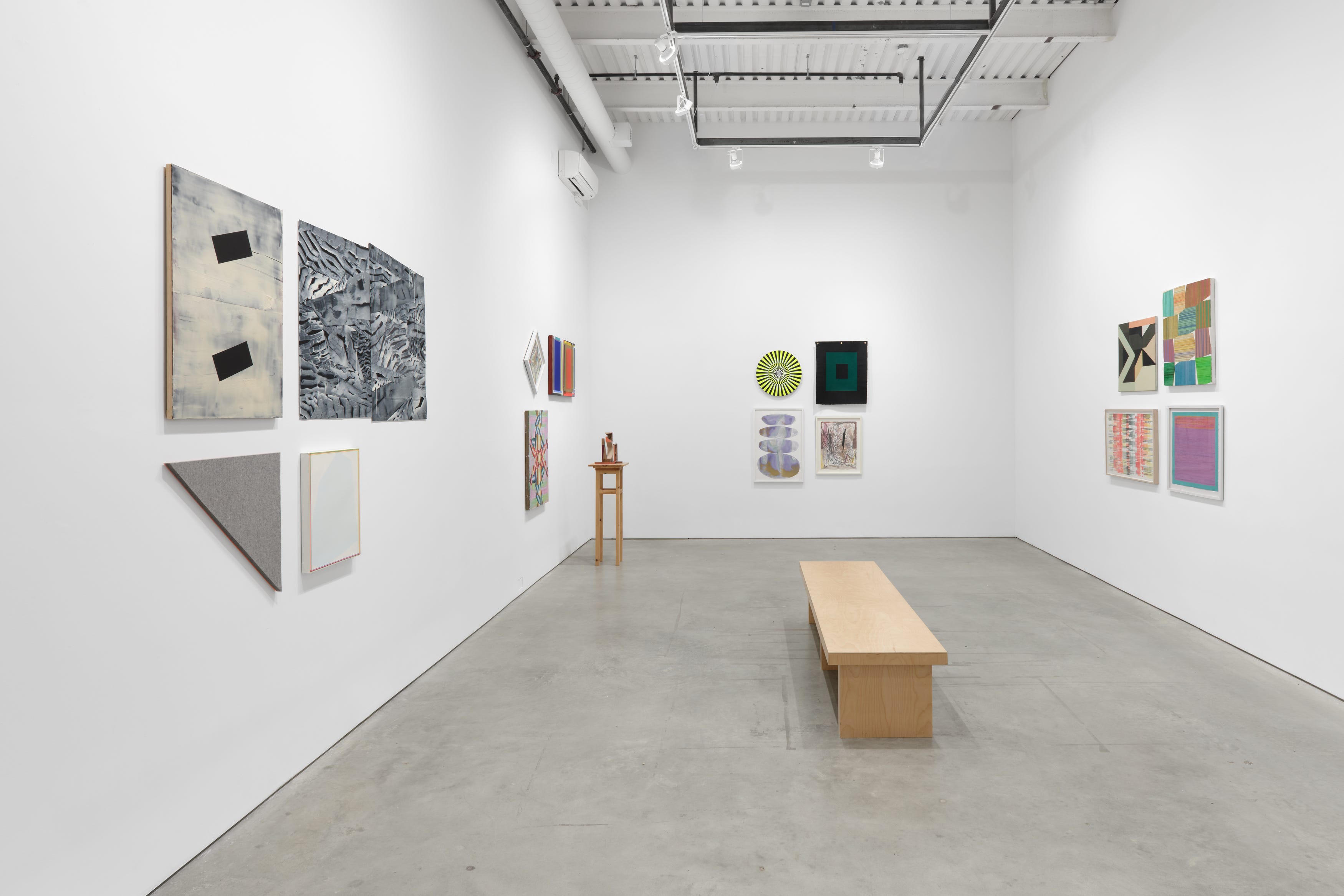
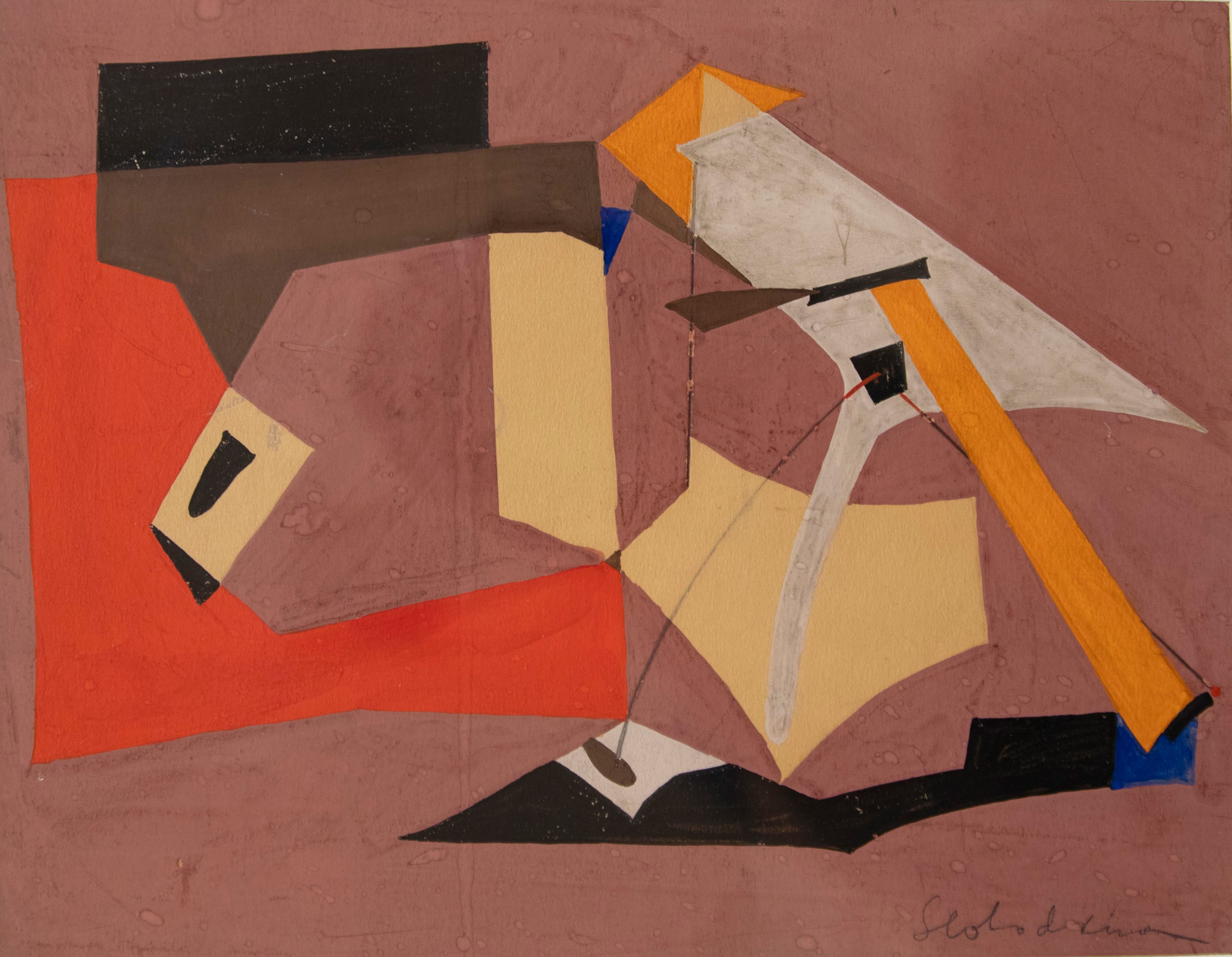
No one I talked to at the opening wanted to talk about their own work but instead wanted to talk about particular groupings that intrigued them, or chose to remark on the handsomeness of the exhibition as a whole. I sensed a palpable pride in AAA, and I have a hunch the founding members who started the organization in 1936 might have felt something similar. The founders—who included Esphyr Slobodkina, Ilya Bolotowsky, Burgoyne Diller, and Alice Trumbull Mason—were a small group of mostly ignored New York abstract artists, each with a distinctive style, who joined together to promote abstraction at a time when it was perceived as avant-garde (aka “crazy stuff”), and reactions to it ranged from dismissive and scornful to outright hostile. Ninety years later, with abstraction now comfortably lodged in hotels and bank lobbies all over the country, all but cultural troglodytes acknowledge it as a legitimate art form.
AAA as it exists now faces far different challenges from those of its precursors. Today’s art world is equal parts in thrall to the backstories of artists and their works of art, making it difficult for serious abstraction, which detests narration and references to “the real world,” to elbow its way to a seat at the A-table of the art world. Abstraction cherishes the possibility, however remote, that it might convey universal pleasure and meaning, and AAA members mostly embrace this aesthetic.
However, AAA’s aging, primarily white, membership is worrying. Can the organization survive if it doesn’t attract younger abstract artists and artists of color? It risks ending up like the Shakers, whose radical celibacy led them to the point where they now have a total of only three living members. The biggest challenge that lies ahead—and no one anticipated it would emerge this fast—comes from AI, which will almost surely make more and more incursions into the art world. Should AAA include abstract artists who use AI, or ban them?
When I joined AAA in 2018, I was fully aware that its days as an avant-garde, semi-revolutionary arts organization were long over. I saw it as a community that could serve as an antidote to the loneliness of the studio. I also thought joining it was a way to push back against the vanity and competition that moils and toils inside the soul of every artist I know (including me). The idealist in me was drawn to AAA because its members, though having careers, don’t play the game as dictated by market forces. AAA’s bylaws require anyone wanting to join AAA be nominated by two current members (admittedly, this is not the best way to get new and younger blood). The applicant’s paperwork and images of their art are studied by current members and talked about during a special new members meeting. Not only does the group judge the quality of the applicant’s work and vita, but it also considers what skills the artist might bring to the organization. Voting on new members, unlike all other business, is done by secret ballot.
My membership in AAA makes reviewing any AAA exhibition impermissible, so for the remainder of this essay I’ll offer a few ideas about abstraction and AAA more generally. AAA is about community, but it’s not like artistic communities that emerge out of friendships. It’s more like ancient Greek assemblies. Granted, those were open-air political gatherings, with thousands of free males (no women, no slaves) gathering to hash out political decisions. AAA, by contrast, is a small arts organization (currently with about 90 members) that generally avoids politics. From the start, it included women as well as men. Yet both offer examples of direct democracy at work, for in both cases every member has one vote that is supposed to be cast for the common good.
As for the looming problem of AI-generated art, AAA has a small voice in the art world, so what it does in this respect won’t be crucial. Yet it would be good for it to take a stand against AI-generated abstraction right now. Refik Anadol’s “Unsupervised,” a huge year-long installation gracing the MoMA lobby a few years ago, used AI to “interpret” two centuries of MoMA collection data. The resulting piece looked like the woozy screen savers of a gigantic computer screen. Apparently, its morphing colors are prompted by lobby activity. I saw it multiple times, and each time I observed that for every person whose gaze was fixed on it, there were two who strolled on by. One could say the same thing about most abstract art in museums, but when a spectacle like Anadol’s can’t hold a large audience, what the hell is the point? If AI invades abstraction, it will probably behave like an invasive species driving out the native flowers (the humans).
A final note: Ostrow argues in his catalog essay that “the opposition between representation and the abstract is nonsensical, because all art—all signification—is representational, in some sense it is a coded or abstracted form of reality.” His is a theoretical approach to art, whereas mine is practical. I doubt I am alone among AAA members in thinking that while there isn’t an out-and-out “opposition between representation and the abstract,” there’s a huge distinction. Unlike abstract art, representational art is tethered, however tenuously, to the artists’ observations of the real world. Abstract art rests by necessity on the quality of the artist’s imagination and inventiveness. AAA can stay vibrant and grow if it sticks to its principles about abstraction and resists the seduction of fancy technology.
Featured Artists:
Alice Adams • Liz Ainslie • Steven Alexander • Eve Aschheim • Emily Berger • Jeffrey Bishop • Susan Bonfils • Power Boothe • Sharon Brant • Marvin Brown • Sharon Butler • Jacob Cartwright • James O. Clark • Beth Dary • Matthew Deleget • Rob de Oude • Gabriele Evertz • Laurie Fendrich • Joanne Freeman • Cris Gianakos • Gary Golkin • Gail Gregg • James Gross • Lynne Harlow • Carl E. Hazlewood • Mara Held • Pinkney Herbert • Daniel G. Hill • Gilbert Hsiao • Rhia Hurt • Phillis Ideal • Julian Jackson • Erick Johnson • James Juszczyk • Cecily Kahn • Marthe Keller • Iona Kleinhaut • Sarah McDougald Kohn • Victor Kord • Jane Logemann • Stephen Maine • Russell Maltz • Nancy Manter • Joanne Mattera • Tom McGlynn • Creighton Michael • Manfred Mohr • Judith Murray • Lisa Nanni • Christian Nguyen • Megan Olson • Jim Osman • Alex Paik • John T. Phillips • Don Porcaro • Corey Postiglione • Lucio Pozzi • Debra Ramsay • David Reed • Leslie Roberts • Dorothea Rockburne • Marcy Rosenblat • Ce Roser • Irene Rousseau • David Row • Anne Russinof • Cordy Ryman • Lorenza Sannai • Karen Schifano • Mary Schiliro • Claire Seidl • Edward Shalala • Sonita Singwi • Susan Smith • Melissa Staiger • Audrey Stone • Jason Stopa • Li Trincere • Kim Uchiyama • Vera Vasek • Don Voisine • Merrill Wagner • Stephen Westfall • Mark Williams • Thornton Willis • Patricia Zarate • Tamar Zinn • Nola Zirin
Art Cake
214 40th St, Brooklyn, NY 11232
April 12–May 30, 2026
Friday–Sunday, 12–6pm
No posts
Comments
Nothing yet. Say the first thing.
Sign in to join the conversation.