
'No one really talks about it. No one really talks about what it is to be a disabled woman, especially a young one … To navigate all the standard parts of life - exams, careers, dating - but with a body that is different from everyone else’s.'
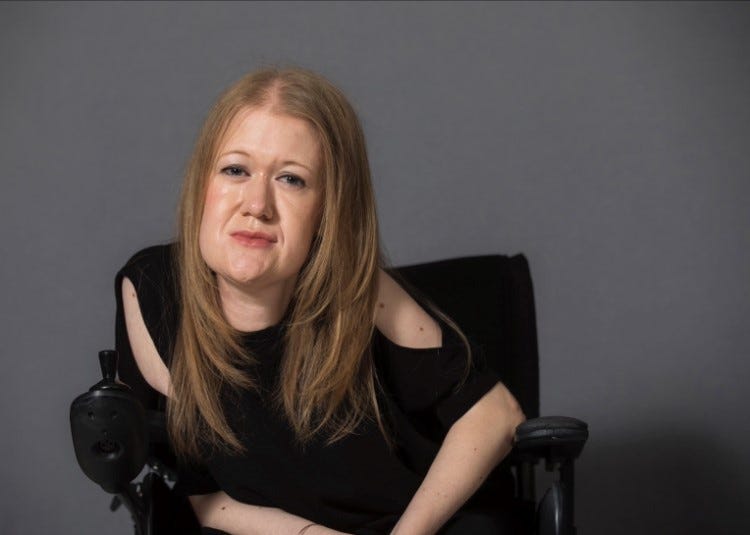
This weeks Changes interviewee is Frances Ryan, an author and an award winning journalist and reporter, whose work has made the front pages of the New York Times, British Vogue and the Guardian, where she has has worked as a columnist and reporter for last decade. Frances is a one of the most influential disabled women in Britain and has campaigned vociferously through her writing and her activism for the rights of disabled people.
‘They don’t make Hallmark movies about someone never learning to walk again. But I think it is a much more important story.’
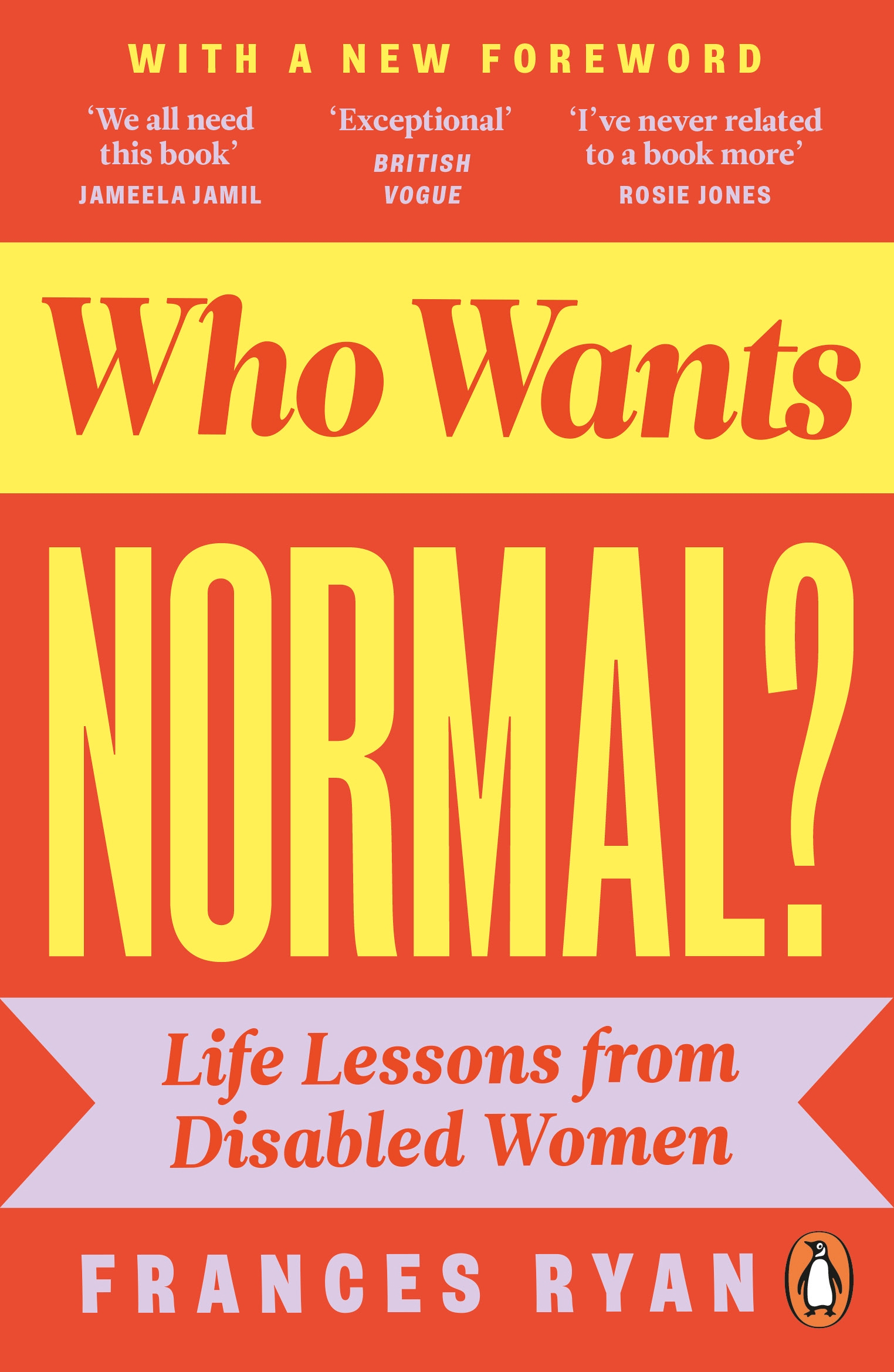
Women with disabilities are still the biggest minority group in the world. Almost one in four women in the UK have some sort of disability. Frances has written a brilliant new novel called Who Wants Normal? Life Lessons from Disabled Women which is out in paperback this week. It is part memoir, part manifesto and attempts to shatter the cliches and stereotypes around people with disabilities and redefine what it means to be a disabled woman in Britain today. Frances does this by interviewing seventy well-known women and experts with physical and mental health conditions, to create a sort of tapestry of voices and experiences of disability.
‘Imagine what it would feel like if women’s disabilities were not just acknowledged, but celebrated..I wanted to take a subject – and a section of society – that is still shrouded in stereotypes and shame to shine a light on it, in all its glory, nuance and pain.’
Who Wants Normal? is incredibly powerful, perspective tilting, mind broadening. It will make you look at the world differently. I’m delighted to welcome Frances Ryan onto Changes this month.
What is your relationship to the word Change?
I think anyone who’s experienced a health issue or any kind of big life event learns fast that there’s two types of change - the ones you ask for and the ones you don’t (and would usually prefer to hand back, thank you anyway!).
It’s easy enough to have a good relationship with change that you choose, I think, and I’ve been fortunate in this throughout my life: from moving from a small town to Nottingham for university to leaving academia after my PhD to try for a career in political journalism. It’s much harder to feel positive about change that you weren’t expecting. The sort that comes out of nowhere on an idle Wednesday. But isn’t a lottery win.
I see change as a natural part of being human. Being born disabled means I’ve learnt to be adaptable, often because the world isn’t. I try to take the changes - especially the vast and unwelcome ones - with humour and lots of self-care. But at the same time, I’m conscious toxic positivity is…well, toxic. If you need to resist change for a while, resist. Fight back even if it’s futile, kicking and screaming until you’re out of breath. Then regroup. Most of us have got an untapped capacity for growth and resilience but acknowledging a change is bloody hard is often a good start.
Who was the last person to change your mind and what opinion/perspective was changed?
It’s interesting that you say “opinion/perspective” because I think the difference between the two is really important. As a broadsheet columnist, I’m contractually obliged to have opinions. I will offer them for cash! But I often think in the age we live in - one that is politically divided, often online, and seemingly ever louder - we’d all be better off listening to a range of perspectives. That is, people who are not all say, from the same generation or private school but who have different life experiences and might look at things differently than ourselves or the dominant voices.
For my book, Who Wants Normal?, I interviewed over 50 brilliant well known women with physical and mental health conditions, from Ruth Madeley, Jameela Jamil, to Rosie Jones. Everyone I spoke to had a disability of some sort but it’s a huge range (from depression, to cerebral palsy to Down’s syndrome) whilst the other parts of our identities - race, class, sexuality - were a real cross-section. Identities don’t define us, of course, but they can massively shape how we view the world and how it treats and responds to us. Talking to these women and non-binary people about anything from dating apps to pay rises was such an eye opener and made me think about life events I’d gone through but from a different way, whilst also feeling such comfort from how much their experiences still resonated with me.
When have you felt the most ‘changed’ in your life?
I can pinpoint the exact moment my life changed, which is helpful. In 2018, I caught a flu that turned into post-viral fatigue. This was before Covid put viruses “back on the map” but the result was as chic: I couldn’t get out of bed, I couldn’t breathe, and I could suddenly recite the weights of gateway opioids. It was a horrific change, of course, and I won’t sugarcoat that (no toxic positivity, thank you). Chronic illness changes your life in an unforgiving manner; a monster that eats away at the life you had and the future you planned and leaves you with remnants, somewhere on the toilet floor.
And yet what I suppose is as important is how little I changed. Sure, the cost to my body was unavoidable - and few of us go through a colossal event without being altered - but I was still largely the same person inside that I ever was. Which, granted, made the whole thing much harder in some ways. Laying in bed at 3pm would be a lot easier if I had lost my ambition as well as my energy. But that you can remain yourself fundamentally even as the walls shift around you is an incredible comfort, I think, and something that I was able to feel pride in. I was still a kind friend. I was still a smart colleague. I still believed Benedict Cumberbatch looked like a spoon. The worst had happened, the shit had very much hit the fan, but I was still myself, underneath the duvet. Even if that was a different version than how I started. Sometimes, I think, noticing what has remained is as important as what has changed.
What book changed you and why?
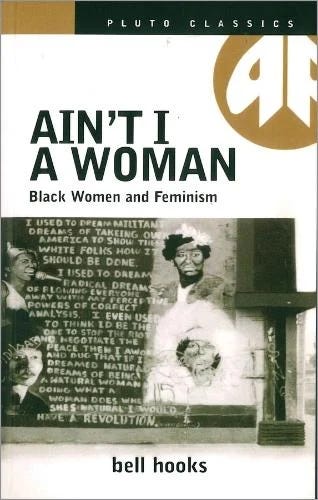
This is so hard to pick! Books can absolutely change us but I think just as importantly as a “wow, that’s new” moment, they change us by confirming or expanding ideas that perhaps we had in some form but couldn’t fully realise or articulate. I remember reading Ain’t I a Woman? by bell hooks during undergrad and just being blown away by her oratory but also the sense that her clarity and courage was validating what I’d been trying to work out as a teenager: that life was actually very different for different women and white (and non-disabled, wealthy) feminism did not serve all equally.
What change are you going through right now?
I’m currently at the end of a three year building project, which has made my home bigger and more accessible as well as a temporary death trap. As a wheelchair user, I’m looking forward to some wider doorways, glass external doors to bring the outside in on bed-days, and a shower I can actually use. This sort of change is so often out of reach for disabled people - in large part because of the expense - but is so important because of how inaccessible most existing housing stock in the U.K. is. I talk in my book about how there isn’t a single friend or family’s home that has been accessible to me in forty years. It’s one of those things that feels entirely ordinary but is remarkable when you write it down.
In some ways, my home renovation is the opposite of change. I’ll be on the same plot of land I’ve lived on for twenty years. But it will also be a very different way of living, one that is finally designed for me and not the majority. We rarely consider, I think, how physical change can lead to emotional change or the way in which an inaccessible environment - from train stations, the local pub, to our own homes - naturally takes a psychological toll on many disabled people. A ramp can create freedom, a bathroom dignity, smart blinds control. That’s something we should all have access to.
What change would you like to make to your life in the future?
I’d like to change - or at least, focus more - what I spend my energy on when it comes to work. I’ve just turned 40, I’m decorating my home office, and I’m always tired so it seemed like a good time. What is the purpose of my column? Who do I want my book to reach? What am I actually hoping to achieve with my time? I don’t know if it will change what I work on ultimately but it seems a good start to be conscious - or I suppose the pretentious term would be ‘intentional’ - about what I’m using my (limited) energy and platform for. Other than to pay the builders.
Buy Who Wants Normal? Life Lessons From Disabled Women by Frances Ryan HERE.
Comments
Nothing yet. Say the first thing.
Sign in to join the conversation.