
By Annie Dance | Lake Lure News | Cops & Congress | News & Commentary | Reporting from Rutherfordton, NC
North Carolina Gov. Josh Stein and Vermont Gov. Phil Scott, a Democrat and Republican, respectively, used a bipartisan National Governors Association town hall to make a case for a constitutional division of power between Washington and the states, pointing to disaster recovery and elections as two areas where they say that balance is being tested.
The governors appeared July 31 in Oklahoma City during the National Governors Association’s first bipartisan “Common Ground” town hall, hosted with NBC News. The event paired governors from both parties for discussions about national issues and political civility.
“Federalism is the division of power between the national government and the states,” Stein said.
He said the system was designed in part to prevent power from becoming too concentrated.
“When power is concentrated, it can corrupt and it can lead to tyranny or the oppression of the people,” Stein said. He added that government generally is best positioned to make decisions closest to where those decisions take effect.
Scott offered a similar definition, describing federalism as part of the constitutional framework established by the nation’s founders to balance power.
“They did it to protect Americans,” Scott said. “Make sure that everyone is treated the same.”
Scott said states should not view themselves as subordinate to Washington.
“We’re not the junior partner here,” he said. “We’re partners.”
Disaster aid tests the balance
The governors used disaster response to illustrate how federalism can work, while also identifying disagreements over federal conditions attached to disaster assistance.
Stein said North Carolina, Vermont, and 22 other states had sued the federal administration over conditions involving disaster preparedness and relief. He said the dispute involved both federal funding and an attempt to connect disaster assistance to election-related requirements.
“When a disaster strikes, our objective, whether it’s local government, state government, or federal government, must be to do everything in our power to save life and to help people get their lives back together,” Stein said.
He argued that conditioning disaster assistance on election-related requirements was inappropriate.
“The second was what they were wanting us to condition it to had to do with elections, which has nothing to do with disaster recovery,” Stein said. “Also offends federalism because elections administration is to be left to the states.”
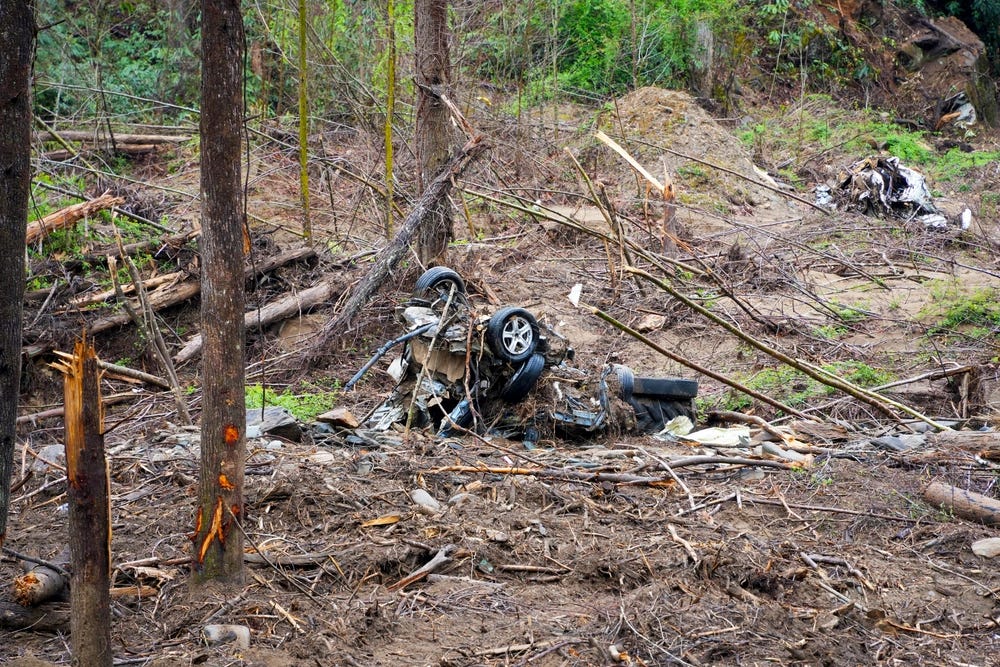
The comments come as North Carolina continues its recovery from Hurricane Helene, which Stein described as the state’s most devastating storm. He said the hurricane caused $60 billion in damage and resulted in 108 state-reported deaths in Western North Carolina.
Stein credited both other states and the federal government with assisting North Carolina following the storm.
“The response to it actually was the way federalism is supposed to work,” Stein said. He noted that states sent assistance and that the federal government provided significant support, including military personnel and FEMA assistance.
Stein summarized his preferred model for disaster response in four words: “locally driven, state managed, and federally supported.”
He said North Carolina had appropriated more than $3 billion for Helene recovery but argued that the scale of the disaster requires continued federal assistance.
“Only the federal government has the resources to be helpful, and we really need the federal government to continue to step up,” Stein said.
Stein said he had a $10 billion request before the Office of Management and Budget, the administration, and Congress. He also said proposed changes to FEMA could provide states with greater flexibility and faster access to federal money.
Scott agreed that disaster recovery presents an area where federalism can work better.
“We know best in our states what we need, and we know where we need it,” Scott said. He argued that federal agencies can become slowed by regulations and procedures during recovery.
“If they can forward the money to us under guidelines, we can do it better,” Scott said.
At the same time, Scott said federal assistance remains important for states facing major disasters.
“A rural state like ours, we would be bankrupt without some help from the federal government,” he said.
Elections and state authority
The governors also addressed the role of states in administering elections, another area where Stein argued Washington should not assume authority traditionally held by the states.
Stein criticized President Donald Trump’s call for nationalizing voting and said the federal government’s approach to elections could damage public confidence in the democratic process.
“I think what the president is doing when it comes to elections is immensely damaging to the health of our democracy,” Stein said.
He argued that candidates and political parties should accept election outcomes rather than attempt to change rules after losing.
“In a democracy, when you lose, you have to be able to accept that truth,” Stein said.
Scott approached the issue from a constitutional perspective.
“Again, I think we go back to the Constitution,” Scott said. “You know, it’s the Tenth Amendment. It’s pretty clear. On the role of the states in terms of elections.”
Scott also pointed to differences among states as a reason for preserving state authority over election administration. He noted that mail-in voting is popular among Republicans in rural Vermont and said it has helped increase participation there.
The exchange illustrated the broader theme of the town hall: The two governors did not agree on every policy issue, but they agreed that the Constitution establishes a meaningful role for states.
For Stein, that principle applies to disaster recovery and elections, as well as other policy areas where state governments have direct responsibility.
He cited his work as co-chair of the Council of Governors, a group that includes five Democratic and five Republican governors, as an example of federal and state governments working together. Stein pointed to legislation addressing state and local law enforcement’s ability to respond to malicious drones as an example of what he considers effective federalism.
“That’s federalism working exactly the way it’s supposed to,” Stein said, describing a process in which the federal government engages states, listens to their concerns, and responds.
States, Stein said, can serve as “laboratories of democracy,” allowing governments to experiment with policies and learn from one another.
As Stein put it, “when you have divided power between the federal and the state governments,” and then divide power among the legislative, judicial, and executive branches, the system is designed to make it harder for “any one actor” to assume all power.
A version of this story was first published by The Carolina Journal.
—
This newsletter is supported by readers like you. Paid subscribers have access to the full archive.
—
🏛️ All those mentioned are presumed innocent until proven guilty.
Learn more about this newsletter, ethics policy, how you can help shape this work, and support it. Follow on X and Facebook. Send constructive criticism, fan mail, and tips with public documents for future stories: CopsandCongress@gmail.com
Comments
Nothing yet. Say the first thing.
Sign in to join the conversation.