
By Annie Dance | Cops & Congress | Reporting from Rutherfordton, NC
Republicans in Western North Carolina are facing a compressed and potentially consequential candidate search after U.S. Rep. Chuck Edwards ended his reelection campaign following a House Ethics Committee report that recommended he be censured.
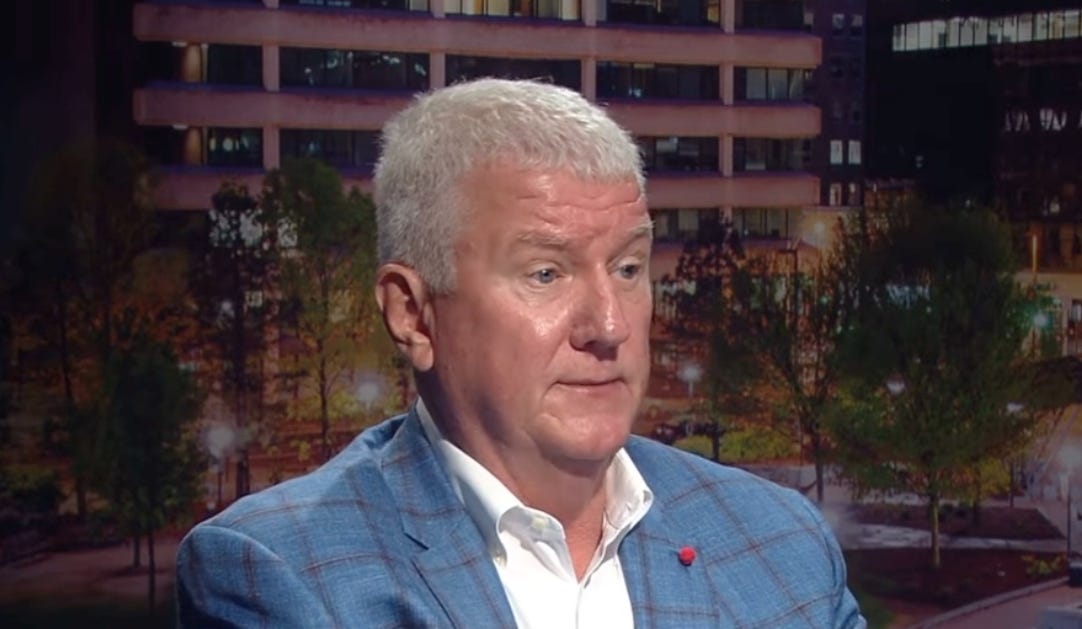
The political fallout was a central topic on the Aug. 7 episode of PBS NC’s State Lines, where panelists discussed the rapidly changing race, possible Republican replacements and the broader political implications for the heavily Republican 11th Congressional District.
Edwards announced Aug. 5 that he would not seek another term, saying he had reached the decision after “prayer and reflection.” He said he would complete his current term.
The decision came shortly after the House Ethics Committee released its report concerning Edwards’ conduct toward two female congressional staffers. The bipartisan committee concluded that Edwards engaged in persistent “unprofessional and inappropriate conduct” and recommended that the full House censure him. The committee also found no evidence that Edwards propositioned either staffer for sex.
Edwards has disputed the characterization of his conduct and maintained that there was no quid pro quo or sexual propositioning.
Paul Shumaker, a Republican political consultant who worked with Edwards, argued on State Lines, hosted by Kelly McCullen, that the congressman faced an unusually compressed process.
Shumaker said Edwards’ attorneys received a preliminary report late Friday and were given until midnight Sunday to respond.
Then, Shumaker said, Edwards was informed Monday morning that the report would be released.
By Tuesday, according to Shumaker, congressional leaders were calling Edwards and urging him to step aside.
“The D.C. establishment is a meat grinder of American politics,” Shumaker said.
He argued that Edwards had not been afforded sufficient time to publicly make his case before the report became a political issue.
The House Ethics Committee, however, had publicly announced its investigation in May, saying it was reviewing allegations that Edwards may have created or fostered a hostile work environment and engaged in sexual harassment. At that time, the committee specifically cautioned that an investigation did not itself mean a violation had occurred.
The final report changed the political equation.
Edwards’ withdrawal leaves Republicans with less than 100 days before the November election to settle on a replacement candidate, according to the discussion on State Lines. The 11th District Republican Executive Committee is responsible for selecting the new Republican nominee rather than holding another primary election.
Democratic nominee Jamie Ager enters the scramble with a significant financial advantage and an established campaign organization.
Maggie Barlow of Maven Strategies, a Democratic consultant, said on the program that Ager had raised more than $3 million and had approximately $2 million cash on hand.
She described Ager, a fifth-generation family farmer and small-business owner, as one of Democrats’ strongest recruits.
Ager’s campaign has also emphasized Hurricane Helene recovery, an issue with particular resonance across Western North Carolina nearly two years after the storm.
Barlow argued that the district’s political environment could be changing.
“Western North Carolina is starting to trend more Democratic,” she said.
That assessment is politically significant, but the district remains Republican-leaning. Edwards won reelection in 2024 with about 57% of the vote, and the district covers much of Western North Carolina.
The race could therefore become a test of whether Republican voters remain firmly aligned with the GOP in a district where Republicans have traditionally held the advantage, or whether the combination of Helene recovery concerns, candidate turnover and national political conditions creates an opening for Democrats.
The panel discussed several potential Republican names. Because the Republican nominee will be selected by party officials rather than through another primary, candidates have little time to build a traditional campaign.
Shumaker said he was not currently interested in taking on the race, noting that there are fewer than 100 days remaining.
“I don’t have an interest unless there’s great value for me to have that interest,” he said.
That comment underscored the challenge facing Republicans: finding a candidate with sufficient name recognition, fundraising ability and organization to immediately step into a congressional race that was already underway.
The Edwards controversy was not the only issue discussed on State Lines.
The panel also examined an elections bill passed by the North Carolina House that would make several changes to election administration.
House Bill 958, Election Law Changes, passed 28-13 on a party-line vote. House Bill 834, SBOE Administrative Changes, passed 42-0, as reported by the Carolina Journal.
Among the provisions discussed were reducing early voting for primaries and special elections from 17 days to 10 days, expanding the time available to challenge certain ballots, and giving the state auditor greater authority to conduct post-election audits.
The bill also addresses information sharing between the Division of Motor Vehicles and the State Board of Elections.
State Sen. Paul Lowe (D) expressed particular concern about the provision involving Social Security numbers.
“Social Security numbers, that is one of the more sacred things that all of us have,” Lowe said.
State Sen. Michael Lee (R) defended the legislation, arguing that the changes were intended to strengthen voter rolls and election procedures.
He emphasized that the proposed post-election audits would occur after certification and would examine processes rather than overturn election results.
The bill is now before Gov. Josh Stein.
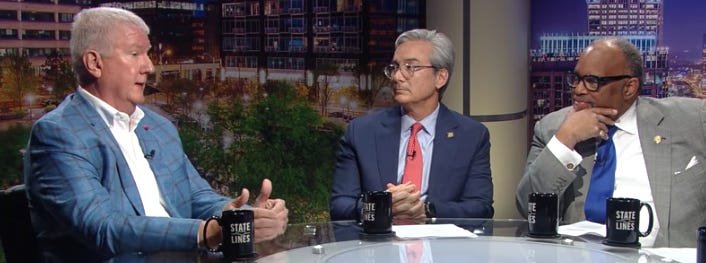
The panel also discussed legislation dealing with hemp and THC products that was pulled from the House calendar.
Law enforcement organizations and conservative lawmakers have pushed for tighter THC limits, while hemp businesses argue that the proposed restrictions could effectively eliminate much of the legal hemp industry.
Rep. Reece Prytle held a very well-attended press conference of law enforcement officials ahead of a possible vote last week, but it was not brought to the House floor by Speaker Destin Hall. Prytle lost his primary election to Seth Woodall.
Lee said lawmakers had attempted to create a broader regulatory structure, including testing requirements, age restrictions and rules governing where hemp products could be sold.
Shumaker, who said he consults with members of the hemp industry, characterized the proposal differently.
“This was clearly a prohibition on a product,” he said.
The disagreement highlights a larger divide among Republicans over how aggressively the state should regulate hemp-derived intoxicating products.
Both sides appeared to agree on at least one point: products should not be readily available to children.
But lawmakers remain divided over whether the answer is tighter regulation, stricter THC limits, or broader prohibition.
The immediate political question is who replaces Edwards.
The larger question is whether Republicans can quickly stabilize the race.
Edwards’ departure removes an incumbent with an established campaign operation and forces the Republican Party to make a high-stakes decision on a compressed timeline.
For Democrats, the opening is clear.
For Republicans, the district’s history provides a significant advantage — but history does not put a candidate’s name on the ballot.
With the Republican nominee expected to be selected by party officials and Ager already holding a substantial campaign war chest, the next several days could determine whether the 11th District remains a relatively safe Republican seat or becomes one of North Carolina’s most closely watched congressional races.
Cops & Congress will continue following the Republican selection process, the Edwards ethics proceedings and the 2026 race for North Carolina’s 11th Congressional District.
Read the show’s transcript on my DocumentCloud.
—
This newsletter is supported by readers like you. Paid subscribers have access to the full archive.
—
🏛️ All those mentioned are presumed innocent until proven guilty.
Learn more about this newsletter, ethics policy, how you can help shape this work, and support it. Follow on X and Facebook. Send constructive criticism, fan mail, and tips with public documents for future stories: CopsandCongress@gmail.com
Comments
Nothing yet. Say the first thing.
Sign in to join the conversation.