
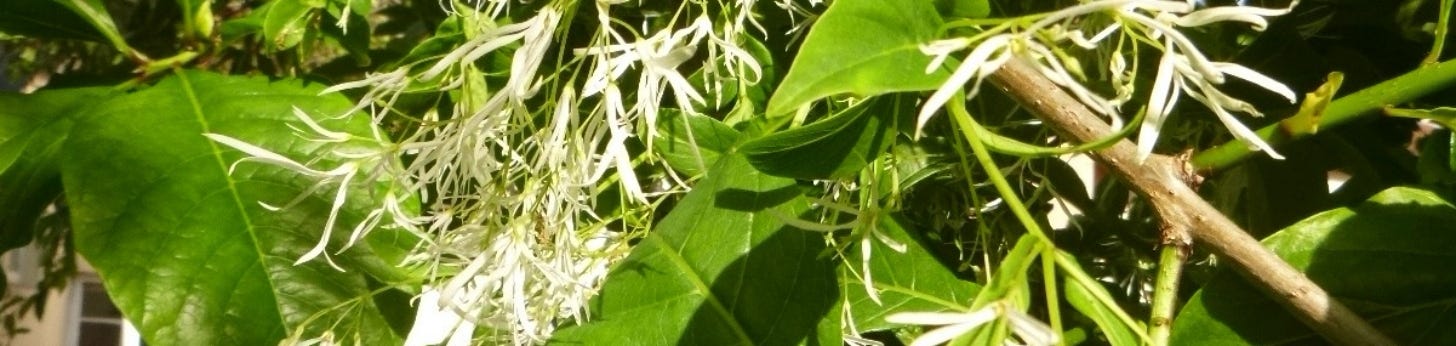
Fringe tree (Chionanthus virginicus) is a small North American tree with snowdrop-like fragrant white flowers. The medicinal part of this tree is usually reported today as the roots, particularly the root bark, for gallbladder and related complaints. In the past preparations based on the roots were widely used by indigenous North American groups for treating skin complaints and later favourably viewed by herbal practitioners in liver disorders. In this post I review more sustainable ways to harvest and use this plant with several recipes, including a decoction and a tincture beneficial for digestion and elimination.
Fringe tree is part of the Ash family

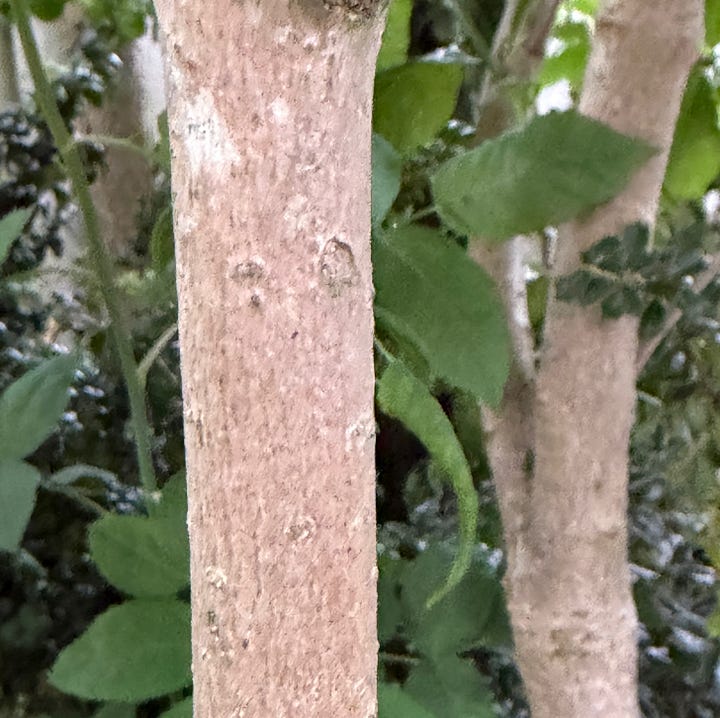
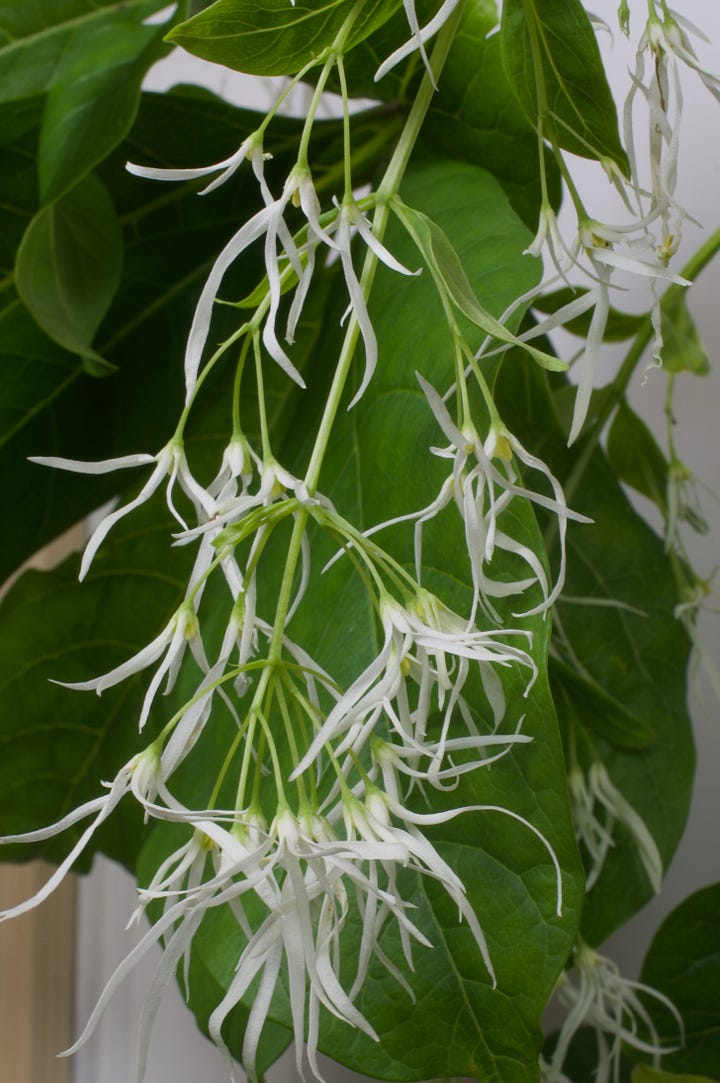
The fringe tree originates from south-eastern North America, especially damp woods and stream banks. It is a deciduous small tree or multi-stemmed large shrub growing up to 5 m tall with large leathery leaves, somewhat like a magnolia. The pure white flowers with long white petals appear in May-June when the plant is 5 to 8 years old. It is dioecious with both male and female plants, the males regarded as having longer flower petals. Seeds ripen to olive-like bluish fruits in October if both male and female plants are grown.
We are lucky to have this rather unusual flowering tree introduced into our English cottage garden in Devon some 20 years ago. It is regularly pruned back to maintain a large shrub size and the white dangling flowers occurring in late May and early June are delightful. Sadly, we have not seen fruits yet, so presume that there is not an opposite sex plant in the vicinity. I was fascinated to realise that this tree is related to both the olive (Olea europea) and the European ash (Fraxinus excelsior). The olive has similarly attractive sprays of small white flowers. You may see a flowering ash tree such as the manna ash (Fraxinus ornus) and this too has somewhat splendid clusters of flowers.

Traditional use and modern potential of fringe tree
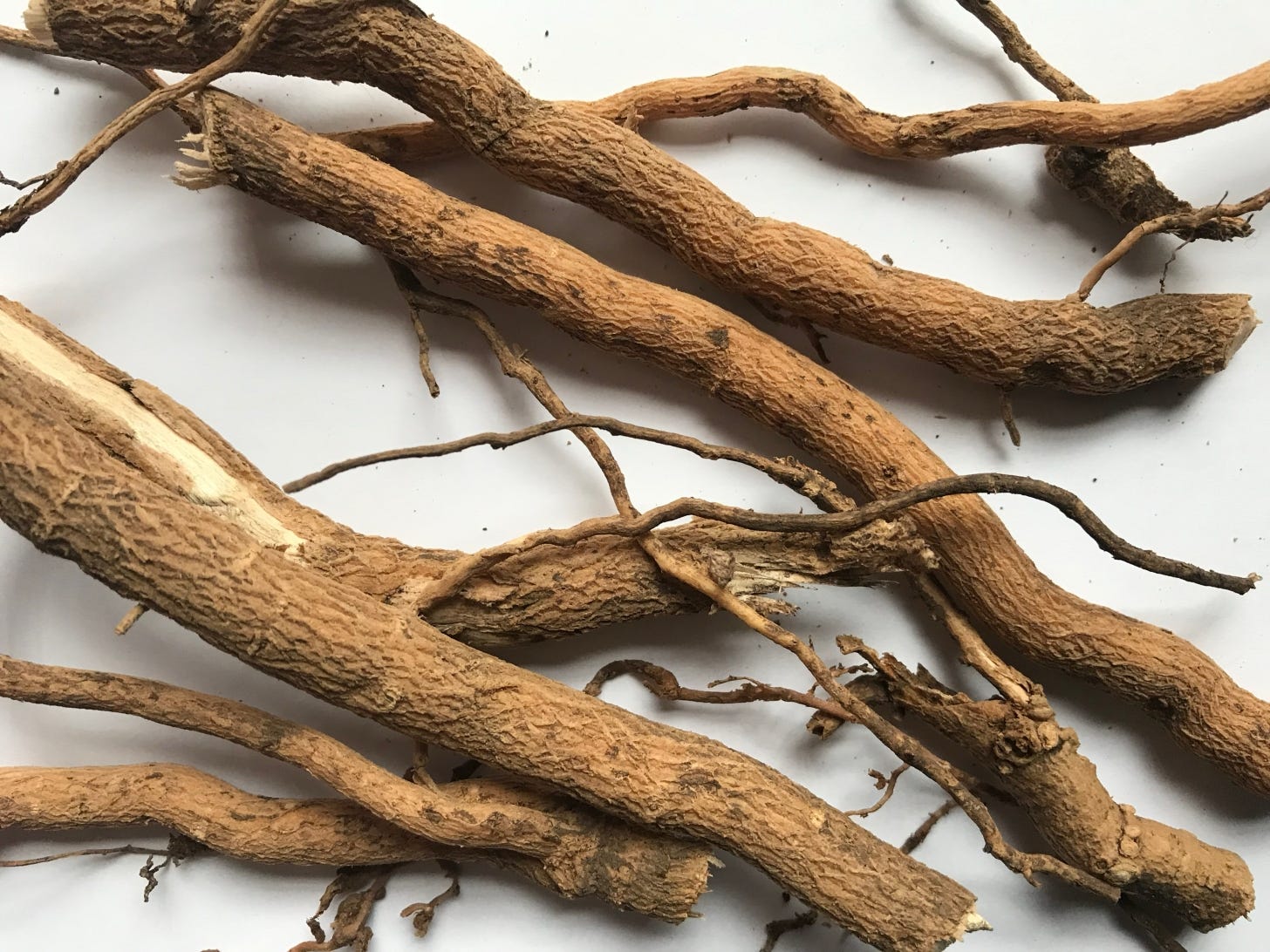
Medicinally, the root bark of fringe tree has herbal actions including as a cholagogue, digestive, diuretic, febrifuge, laxative and tonic. I first learned about this tree when training in Western herbal medicine. Much of the training drew on Eclectic herbal medicine practices in North America. In the nineteenth century, American clinical practitioners widely discussed the use of the root bark as an alterative ‘relieving congestion’ in a number of ways, as described in King’s American Dispensatory of 1898 (Felter and Lloyd, 1898). Related plants have been used in traditional medicine including against fever, as treatment for palsy and diarrhoea in Oriental medicine. Chinese fringe tree (C. retusa) leaves from Asia also contain flavonoids with antioxidant activity (Wang et al., 2022) and are considered to have potential for use.
The root bark contains saponins, secoiridoids and lignans including phillyrin. The leaves contain flavonoids, lignans, triterpenoids and polysaccharides. The bitter and astringent remedy based on the roots was traditionally used in fevers or externally as a poultice for inflammations and wounds, including eye and mouth complaints. It could be used to stimulate the appetite. In present use by herbal practitioners, it is most likely given as a tonic and for liver and gallbladder-related complaints such as gallstones, jaundice, hepatitis and cirrhosis. Fringe tree is also used by homoeopathic practitioners as a liver remedy.
Polyphenolic lignans, phillyrin and pinoresinols in root bark extracted with alcohol have been shown to have considerable antioxidant activity (Gülçin et al., 2006). Otherwise, little research has been carried out on the fringe tree. There may be much more to discover about other parts of the tree such as the flowers and the leaves. A Korean study of the use of flowers of the related Chinese fringe tree suggested that flavonoids in the flowers have significant potential in inflammation and neurological disease (Lee et al., 2019). A further study of several Chionanthus species in Ecuador found high flavonoid content especially in the leaves of the native species of C. pubescens (Mihai et al., 2023)
Growing your own fringe tree
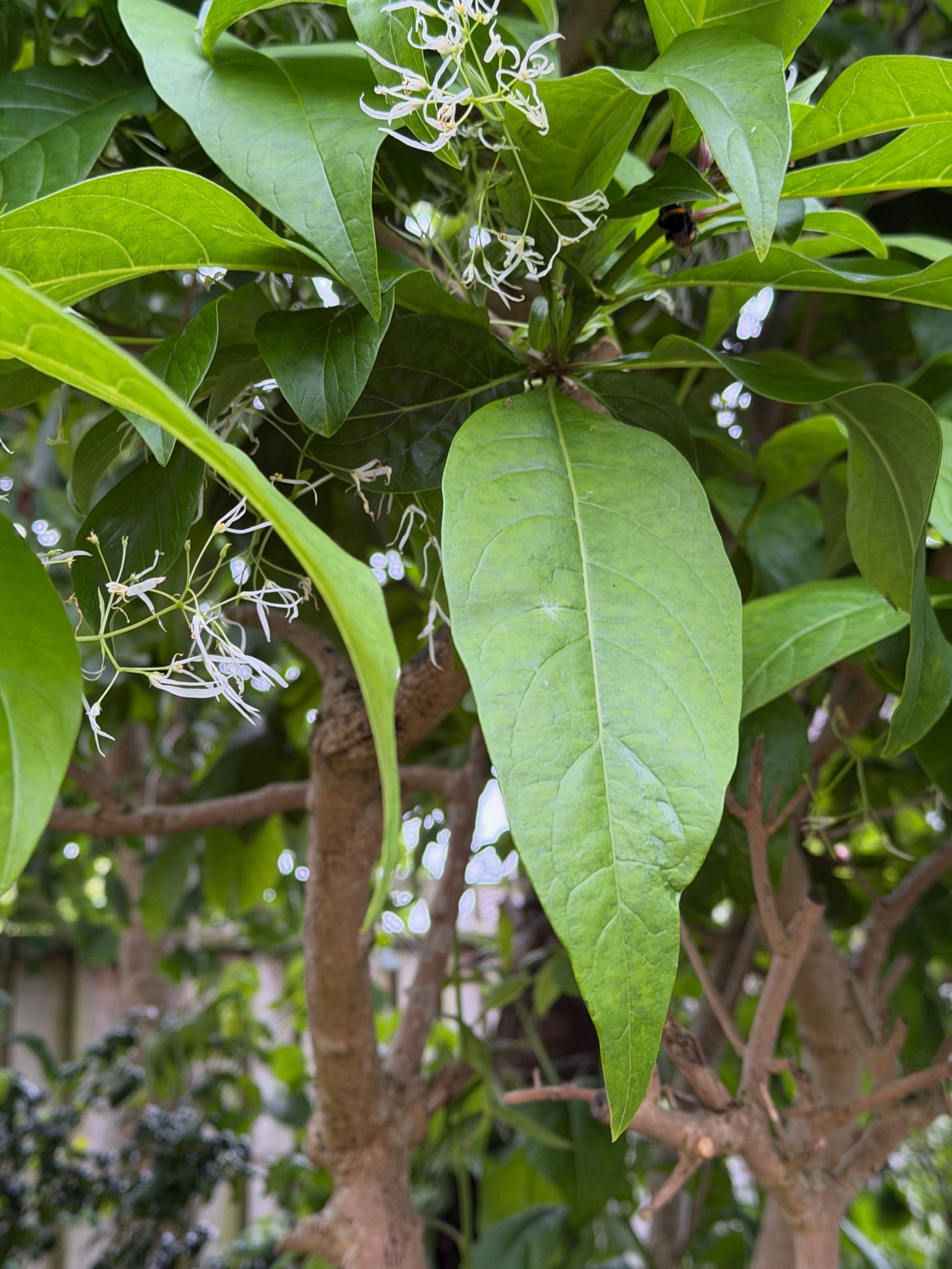
The fringe tree is said to prefer a rich moist soil which is well drained and it can grow in acidic and neutral soils. While fringe tree can grow in sun or light shade, it is supposed to do best in full sun. Our cottage garden tree is surviving under neighbouring trees in an alkaline soil! Fairly slow-growing, fringe tree tolerates pruning well and can be cut back to one main stem or a number of branches. It is intolerant of wind but tolerant of air pollution and drought.
Somewhat like its close relative, the ash, the fringe tree can be pruned. Sadly, members of the Oleaceae family are vulnerable to ash dieback which is caused by the fungus Hymenoscyphus fraxineus. If infected then plants show dying twig ends, leaf loss, blackened or wilting leaves, and lesions on the stems. However, infection may be rare unless a fringe tree is growing right next to a diseased ash tree.
This plant can be difficult to obtain, or at least you may only find it as a large and costly specimen in some up-market nurseries rather than as a starter seedling. Doing your own propagation is not easy, I have discovered that fringe trees are very very hard, if not impossible, to propagate from cuttings. I have tried seeds and I have finally germinated a single plant from seed! If it turns out to be a male then I might (in about 5 years) have fruits on the original plant in our garden - yay!
When to harvest and how to use
Since the root bark is traditionally used there is a problem with harvesting fringe tree as the whole plant has to die if the roots are dug up. This is not a sustainable practice with a plant that is difficult to propagate. One way forward might be to prune the roots lightly in successive years. Fortunately, studies have shown that the stem bark can be used as an alternative to the root bark as it has similar constituents (Penman et al., 2008). Pruning branches provides a much more sustainable way to use this plant. Thus, the stem bark can be harvested when pruning back branches in winter/spring, then dried for later use. A bark decoction can be made for improving digestion, although some significant constituents are not wholly dissolvable in water. An alternative is to make a tincture with dried bark, up to 40-45% alcohol.
Cautions in use of fringe tree
It is important to note that due to bile stimulation this remedy is not for use where there may be bile duct obstruction and professional guidance is advised for use in breastfeeding or pregnancy. Do not take for long periods. Despite longstanding recommendations of herbal use, little research has been carried out on fringe tree. None of the suggestions here are intended for medical treatment in place of expert advice, so do consult a professional herbal or medical practitioner for individual health planning.
Recipe For Fringe Tree Bark Decoction
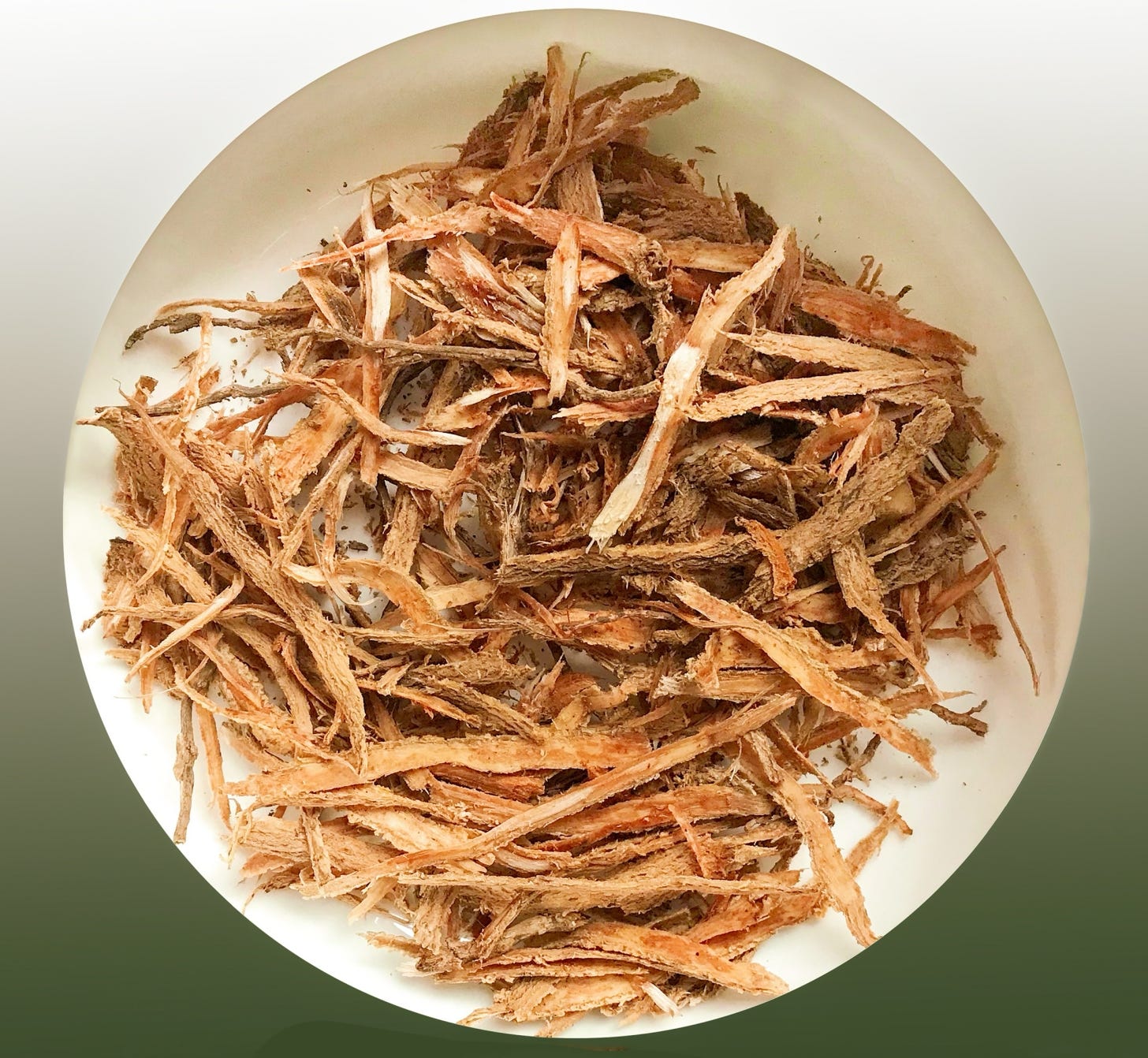
15 g fresh stem bark chopped (or 5 g dried bark)
200 ml of water
Place the bark in a pan and add water, bring to the boil and simmer for 20-30 min, then strain. Sip a cupful before main meal of the day to stimulate appetite and support digestive processes.
Recipe For Fringe Tree Bark Tincture
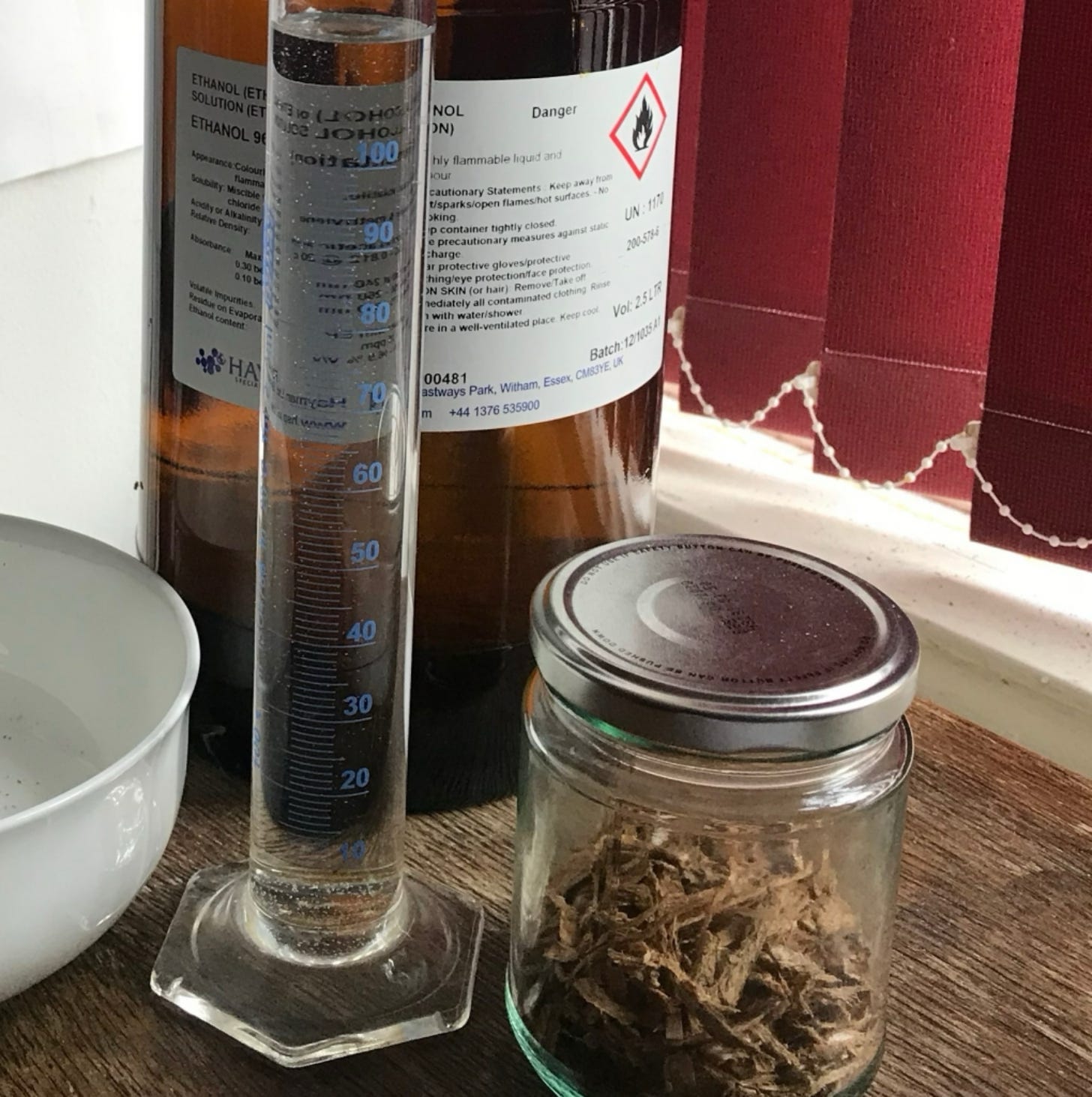
50 g dried root or stem bark (or 100 g fresh bark)
500 ml spirit 40% alcohol (such as gin or vodka)
Harvest the fresh bark in strips from pruned branches and chop up and allow to dry until crisp which may take 2-3 weeks. Place the dried bark pieces in a glass preserving jar with the spirit. Ensure the bark is kept submerged and stand for 4-6 weeks, shaking daily. Strain the liquid into a clean dark glass bottle, and label. Take 2 ml up to three times daily in water for constipation and to stimulate bile flow.
A very useful small tree ideal for a smaller garden
Fringe tree is a beautiful small tree with fragrant flowers. It deserves more notice. If you have fringe trees of both sexes than fruiting is possible from age 5-8 years. The fruits are said to be very attractive to birds, and they can be pickled like olives.
References
Felter HW and Lloyd JU. 1898. King’s American dispensatory. 18th ed. 2 vols. Cincinatti: Ohio Valley Co.
full text available, courtesy of Henriette’s herbal website, here...
Gülçin I, Elias R, Gepdiremen A, et al. 2006. “Antioxidant activity of lignans from fringe tree (Chionanthus virginicus L.). European Food Research and Technology 223: 759.
Lee YG, Lee H, Jung JW, et al. 2019. Flavonoids from Chionanthus retusus (Oleaceae) flowers and their protective effects against glutamate-induced cell toxicity in HT22 cells. Int J Mol Sci 20(14). doi: 10.3390/ijms20143517.
Mihai RA, Espinoza Caiza IA, Melo Heras EJ, et al. 2023. Comparative assessment of antioxidant activity and functional components of Chionanthus virginicus and Chionanthus pubescens from the Andean region of Ecuador. Pharmaceutics 15(6). doi: 10.3390/pharmaceutics15061676.
Penman KG, Bone K, and Lehmann RP. 2008. Fringe tree (Chionanthus virginicus L.) stem bark offers a sustainable alternative to root bark. Australian Journal of Medical Herbalism 20: 107–111.
Wang Z, Yang S, Gao Y, et al. 2022. Extraction and purification of antioxidative flavonoids from Chionanthus retusa leaf. Front Bioeng Biotechnol 10: 85562. doi: 10.3389/fbioe.2022.1085562.
Comments
Nothing yet. Say the first thing.
Sign in to join the conversation.