
There was a time in Scotland when governments at least pretended to want evidence.
Reports were commissioned. Experts consulted. Statistics examined. Occasionally someone even asked whether a policy had worked before expanding it nationwide at three times the cost.
Those days now feel as distant as a calm debate on BBC Scotland in which nobody accuses disagreement of being a form of violence.
Today, we have “lived experience”.
This phrase now hovers over Scottish public life like incense in a declining cathedral. It is uttered with ritual solemnity by ministers, consultants, charities, academics, civil servants, and every third LinkedIn profile in the country. No strategy document survives without references to “centering voices”, “amplifying narratives”, and “creating safe spaces for storytelling”, which usually means paying six people in lanyards to discuss “trauma-informed pathways” beside trays of hummus & focaccia while Scotland quietly deteriorates outside.
Somewhere in Edinburgh at this very moment, a communications officer on 45K is designing an infographic about “empowering marginalised communities” while an exhausted grandmother in Possilpark raises the third generation of children damaged by addiction.
This, in miniature, is modern Scotland.
A nation permanently trapped in emergency mode, mistaking the ambulance siren for civilisation itself.
A remarkable new academic paper, The Rhetoric of Lived Experience in the Scottish Government’s Policymaking, by Sebastian Monteux, Mark Smith, Marion MacLeod and Jane Fenton, finally dares to ask a question modern Scotland has become oddly frightened of asking:
What exactly do we mean by “lived experience”?
Not emotionally.
Not therapeutically.
Not performatively.
Actually.
And in doing so, the paper quietly exposes something much larger than policy jargon. It exposes a civilisation increasingly uncertain about what human beings are for.
Because once you begin examining the language carefully, something strange becomes visible.
Modern Scotland increasingly knows how to narrate suffering, administer suffering, validate suffering, and fund suffering, but becomes deeply uncomfortable around words like flourishing, virtue, restoration, agency, responsibility, transcendence, or even hope. Indeed, the moment such language enters the conversation, a subtle shift often occurs. The person speaking is no longer treated as compassionate but faintly suspect. Calls for recovery, expectation, order, or transformation are quietly recast as “stigmatising”, insufficiently trauma-informed, or lacking in empathy. Expectations themselves begin to look vaguely oppressive.
In this moral atmosphere, it becomes safer to affirm permanent vulnerability than to speak confidently about human flourishing. Hope itself becomes suspect because hope implies the possibility of change, and change inevitably reintroduces the uncomfortable idea of human agency into systems far more comfortable with the permanent management of suffering.
Faces & Voices of Recovery UK is itself a lived experience-led organisation, so let me be absolutely clear.
This is not an argument against lived experience.
Nor, importantly, is it the argument made by Monteux, Smith, MacLeod and Fenton. Their paper does not dismiss lived experience. It asks a far more serious and uncomfortable question about what happens when institutions begin confusing testimony with expertise, emotional resonance with evidence, and compassion with the permanent administration of suffering.
Some of the wisest, funniest, bravest, and most morally serious people I have ever met are men and women whose understanding was forged through addiction, prison, grief, violence, recovery, and rebuilding shattered lives from almost nothing. Recovery communities understand things about despair, dignity, dependency, forgiveness, and human nature that entire departments of public policy somehow manage to miss while producing 400-page strategy documents with titles like Trauma-Informed Relational Pathways Toward Inclusive Stakeholder Engagement.
The problem is not listening to suffering people.
The problem begins when suffering itself becomes a form of institutional currency.
Because there is a profound difference between listening carefully to human beings and constructing an entire political theology around trauma.
Experience matters.
But experience is not the same thing as wisdom.
If it were, every man at the end of a pub bar would qualify for a professorship in political philosophy by closing time on a Friday.
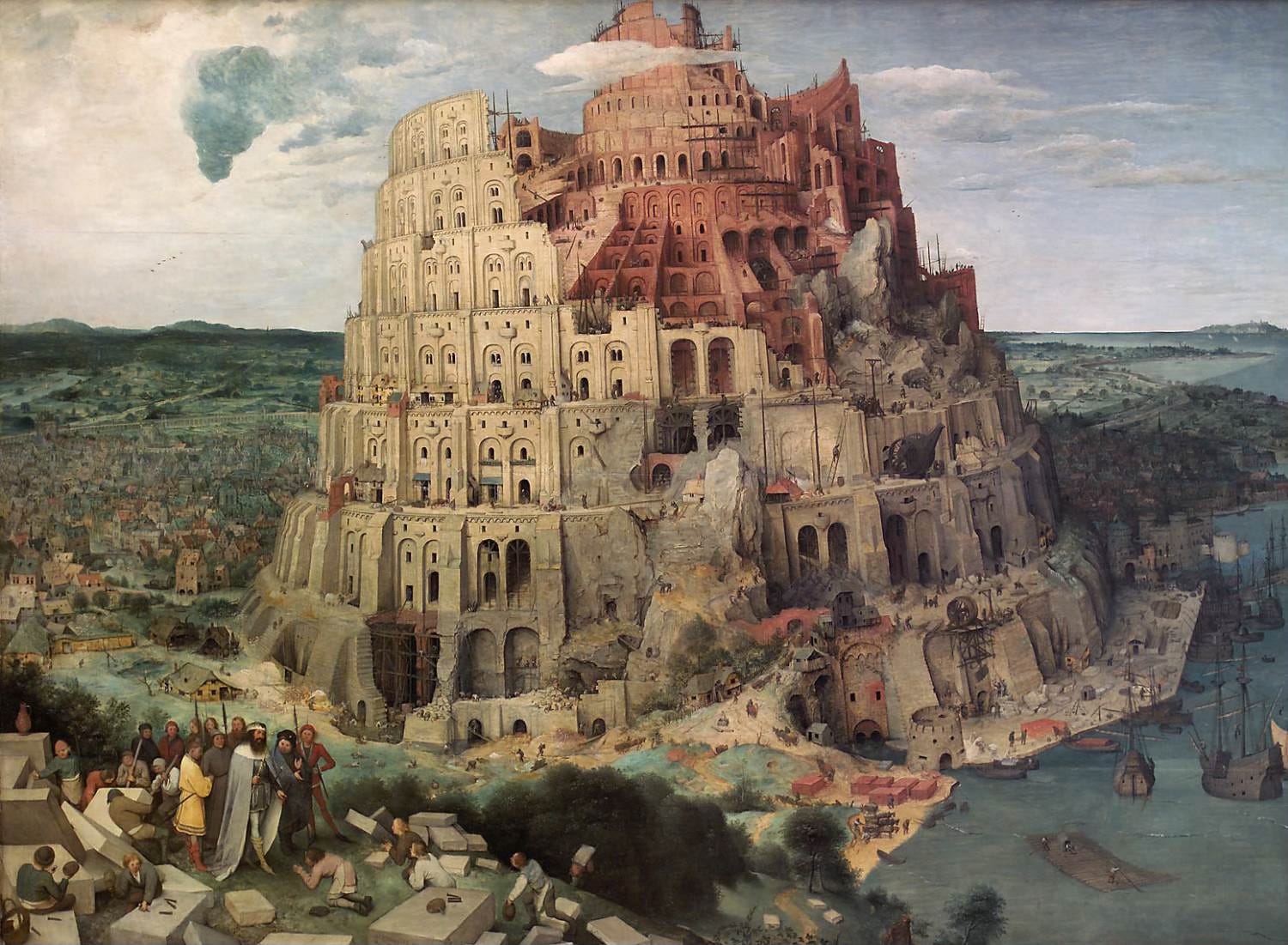
The academic paper traces how the Scottish Government increasingly elevated “lived experience” above traditional forms of expertise across social policy. Ministers now speak about “experts by experience” with the sort of reverence medieval Europeans reserved for fragments of the True Cross.
Scottish policymaking increasingly resembles a secular séance in which middle managers attempt to summon moral legitimacy through ritual invocation of the phrase “lived experience” every seven minutes.
But this all sounds wonderfully compassionate until you notice a slight practical difficulty.
Experiences conflict.
The activist academic advocating for a safe consumption room on behalf of the poor addict has “lived experience”. The frightened pensioner living beside it also has lived experience.
Curiously, however, when either the addict or the pensioner says what they actually want is detox, rehab, recovery, safety, and some semblance of order restored to their community, they are suddenly informed they are insufficiently educated to understand what is really best for them. At this point the soft sneer enters the conversation. Little remarks about “stigma”, “ignorance”, or “lack of education or compassion” begin drifting across the table from members of the highly credentialed therapeutic class who, naturally, know better.
The activist demanding legalisation has lived experience.
The mother who buried her son after an overdose has lived experience too.
So whose experience wins?
Well, rather revealingly, the experiences aligning most neatly with prevailing ideological fashions tend to receive the loudest microphone, the funding, the conference invitations, and occasionally a Scottish Government consultancy contract.
A cynic or “lived experienced” veteran like myself might conclude that “lived experience” increasingly functions less as a search for truth than as a moral smoke machine for decisions already made elsewhere.
What makes the paper by Monteux, Smith, MacLeod and Fenton so important is precisely that it avoids the lazy extremes dominating modern debate. It neither dismisses lived experience nor sanctifies it. Instead, it asks the far more difficult question of what happens when institutions begin confusing testimony with expertise, emotional resonance with evidence, and compassion with the permanent administration of suffering.
And that question matters because the issue here is ultimately not procedural but civilisational.
What kind of society are we trying to build?
A society organised around flourishing?
Or a society organised around managed suffering and vulnerability?
The modern policy world increasingly seems capable only of imagining the latter.
A man still injecting heroin in a Glasgow lane is immediately recognised as possessing “valuable lived experience”. He may sit on panels. Advise policymakers. Feature in documentaries narrated in mournful BBC tones over slow piano music while drone footage circles abandoned shopping trolleys beside the Clyde.
But let us imagine the same man twenty years later.
Sober.
Working.
Paying taxes.
Married.
Quietly making tea at a recovery meeting on a Tuesday night.
Coaching youth football at the weekend.
Driving across the city at midnight because another addict says they are finally ready to ask for help.
No longer defining himself primarily through catastrophe.
Strangely, his lived experience often becomes less visible and not welcome to the system.
Why?
Because recovery embarrasses systems built around the maintenance of suffering.
Recovery implies agency.
Recovery implies responsibility.
Recovery implies moral seriousness.
Recovery implies change.
Recovery implies that human beings are not permanently reducible to wounds.
Across parts of Scotland, male healthy life expectancy has fallen to levels that would once have triggered a national moral panic. Men are dying younger, sicker, lonelier, and more broken while conference suites fill with artisan pastries and discussions about “co-producing trauma-informed relational pathways”.
That sounds flippant until you realise it is recognisably true and you have probably attended a few of these events yourself if you are reading this.
In some communities, men barely reach retirement before illness, addiction, despair, economic exhaustion, or social collapse begin grinding them down. Yet the language surrounding this catastrophe becomes ever more therapeutic, managerial, and abstract.
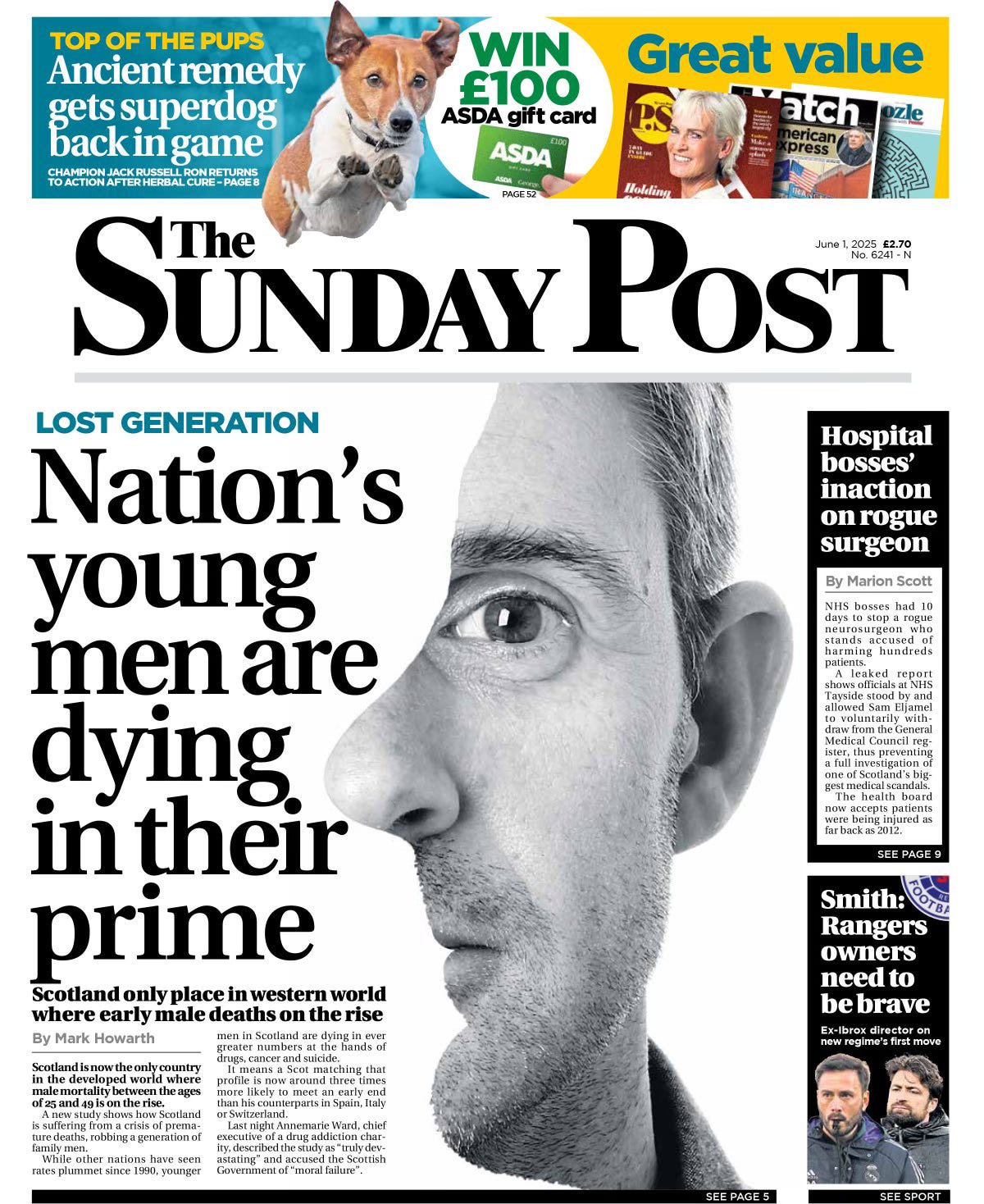
Scotland is now the only country in the Western world where death rates for men aged 25–49 are rising. Not stalled. Rising.
While the rest of the UK and every other wealthy nation sees younger men living longer, ours are dying younger.
What’s killing them? Not cancer. Not heart disease.
Drugs, suicide, and alcohol.
Nearly 80% of under-50 male deaths in Scotland come from these preventable causes.
This isn’t about “despair.” Despair didn’t kill these men.
Neglect did.
They died waiting for treatment that never came.
They died in a system that’s bloated, gatekept, and ideologically broken.
We have become extraordinarily skilled at discussing suffering while growing strangely incapable of describing what human flourishing actually looks like.
Their paper quietly observes that we may have created a “professional” class condemned to the formulaic repetition of their often sad life stories.
And in doing so, it raises a deeper and far more unsettling question that modern Scotland increasingly struggles to answer: beyond the administration of suffering, what vision of human flourishing are our institutions actually aiming toward?
That sentence should stop every policymaker in Scotland dead in their tracks.
Because once you see it, you start seeing it everywhere.
People are incentivised to narrate themselves perpetually through damage.
Pain becomes identity.
Identity becomes status.
Status becomes funding.
And all the while, actual outcomes deteriorate.
Drug deaths rise.
Communities decay.
Families fracture.
Trust collapses.
Yet somehow the number of strategic framework coordinators for participatory inclusion partnerships & communication officer posts continues expanding like an invasive species nobody can quite eradicate.
I have spent enough years in recovery communities to know the difference between genuine compassion and institutional theatre.
I have watched men arrive in recovery unable to look anyone in the eye. I have watched them slowly learn how to become fathers again. I have watched women once written off by every service in Scotland become the person other terrified women call at two in the morning because they know they will answer.
None of this fits neatly into modern policy language because recovery embarrasses systems built around the maintenance of suffering.
The recovery fellowships understood something profound that modern policymakers increasingly struggle to grasp. The purpose of telling your story was never to remain trapped inside it or to turn it into a permanent identity.
Testimony was not treated as a performance of victimhood or a claim to moral authority. It was an act of witness. People stood up and told the truth about addiction, prison, shame, violence, and despair not so they could remain forever defined by the worst chapter of their lives, but so others might glimpse the possibility that life could still be rebuilt.
The point was never simply:
“Look what happened to me.”
The point was:
“Look what I survived. Look what can change.”
And beyond even that, there was another message quietly embedded within every honest testimony:
“You do not need to go as far down as I did. You can stop now. There is a way back. There are people here who will help you.”
That was the deeper purpose of sharing experience, strength, and hope. Not merely to describe suffering, but to interrupt it. To reach back toward the person still descending into chaos and say:
“We have walked this road. There is another way to live.”
In the recovery fellowships this is called sharing experience, strength, and hope. Not merely experience. The suffering mattered, but it was never supposed to be the destination. The story was meant to move somewhere. Toward honesty. Toward responsibility. Toward healing. Toward freedom.
The story mattered precisely because it pointed beyond itself. Beyond addiction. Beyond prison. Beyond self-destruction. Beyond neglect & despair.
But the modern system increasingly seems interested only in the first chapter. The trauma. The wound. The collapse. It remains fluent in the language of injury while growing strangely uncertain and in many cases ignorant around restoration & healing.
Recovery culture understood that the most important part of the story was never simply how far somebody had fallen.
It was that they got back up.
And perhaps that is the deepest difference of all.
Modern therapeutic culture increasingly encourages people to organise an identity around suffering. Recovery culture, at its best, treated suffering as something to heal from & move through.
One vision quietly says:
“This terrible thing happened to you and therefore you will always fundamentally be defined by it.”
The other says:
“This terrible thing happened to you, but it does not get to own your soul forever. Infact no matter how far down the scale you have gone, your experience will help others”
Modern therapeutic culture increasingly asks people to remain forever fluent in the language of injury while growing strangely silent about recovery, transcendence, forgiveness, responsibility, or grace.
That is not merely a policy disagreement.
It is an entirely different vision of the human person.
Recovery communities, at their best, still believe human beings are capable of moral and spiritual transformation. They still believe pain can be transformed into wisdom, suffering into compassion, and despair into purpose.
In other words, they still believe in flourishing.
That should not be a radical idea.
Increasingly, it is.
And perhaps that is ultimately what the paper by Monteux, Smith, MacLeod and Fenton has exposed so effectively. Not simply a fashionable policy language, but a society increasingly uncertain about restoration itself.
Many of our institutions now speak the language of compassion while quietly operating from a profoundly pessimistic vision of humanity. Permanent addiction. Permanent vulnerability. Permanent dependency. Permanent grievance. Permanent service provision.
A compassionate society should absolutely run ambulances.
But it should not mistake permanent ambulance mode for a vision of human flourishing.
The tragedy is not that Scotland began listening more carefully to suffering people.
The tragedy is that it increasingly forgot to ask what human beings are capable of becoming beyond suffering.
Because human beings do not merely need their pain acknowledged.
They need meaning.
Agency.
Responsibility.
Belonging.
Purpose.
Love.
Hope.
They need the possibility that suffering can be redeemed rather than endlessly narrated.
That is why the paper by Monteux, Smith, MacLeod and Fenton matters far beyond the language of policymaking itself. Beneath its careful academic analysis lies a much larger and more unsettling question modern Scotland increasingly struggles to answer:
Do we still believe human beings are capable of transformation?
Because once a society loses confidence in recovery, restoration, agency, responsibility, and human flourishing, it eventually stops trying to lift people out of suffering and begins organising itself around the permanent management of despair.
The recovery movement understood something many modern systems seem close to forgetting.
The purpose of compassion is not to institutionalise suffering indefinitely.
It is to help people move through suffering toward dignity, meaning, freedom, and hope.
Its message was never:
“Remain wounded forever and we will build a system around your wounds.”
Its message was:
“Get up. Your life is not over.”
Scotland urgently needs to recover the moral imagination to say those words again.
You can read the full paper here:
No posts
Comments
Nothing yet. Say the first thing.
Sign in to join the conversation.