
Happy are the painters, for they shall not be lonely. Light and color, peace and hope, will keep them company to the end of the day.
— Winston Churchill
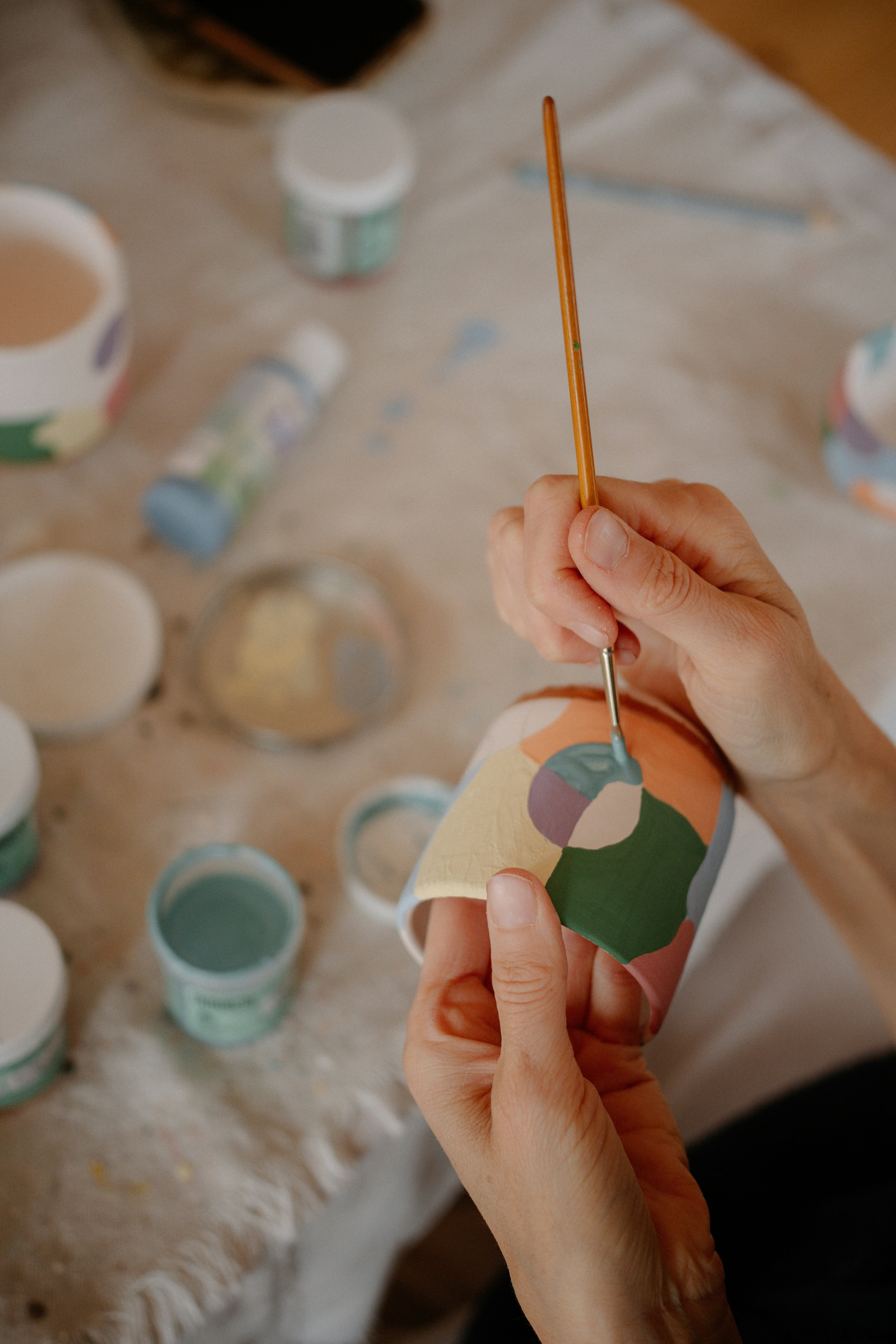
Between the end of my discouraging high school principalship and before the Chapman University appointment the following spring, I decided I needed one thing — anonymity. Something meaningful I could do alone. Alone was key. No groups, no committees, no project teams, no political wrangling. An art class might be the answer. I was wrong. Not wrong about the class. Wrong about what I needed.
***
The china painting session began in January. Pulling into the crowded Community Center parking lot, I snagged the last slot, farthest from the building. The rain and angry gray slashing clouds turned noon into night. Soaking wet and grumpy, I ducked into the lobby. Opposite the glass entry doors, the Center’s fluorescent lights crisscrossed the art room ceiling like a giant tic-tac-toe game, piercing the gloom. Dripping my way across the floor, I hesitated in the doorway. The smell of paints, alcohol, oils, and turpentine swirled out, taunting. Should I go in? Go home?
A break in the clouds sent shafts of light streaming through the skylight above onto tables below stacked with brushes, rags, design books, and blank china plates. A tiny Chinese lady looked up from her seat. “Come in,” she said. “There’s a place right here.” Seven words. Simple. Short. Sincere. Stepping inside, I thought to myself, “If this doesn’t work out, it’s only eight weeks.”
“I’m new. I’m not sure what to do.”
“I’ll help you,” she said. “And the teacher will too. You’ll see.”
***
Her name was Mandy. Through that first winter and spring, she encouraged me, answered questions, loaned me supplies I didn’t have. The mother of two young children, painting class was her “time away.”
“Do you mind if we visit while we paint?” she asked. “I want to practice my English.” Did I mind? What about my idea of being left alone?
I considered. What about the kindness she had shown me? After the lesson presentations, the dozen or so students worked independently as they waited for the teacher’s help and critique. Most knew one another already, understood the basic techniques, and were involved with their own conversations. “No,” I decided. “I don’t mind.”
It was the start of a trip with destinations beyond painting. I didn’t expect to have much in common with a young Chinese mother thousands of miles from her home and culture. Something else I was wrong about.
Years later, Jim and I attended a talk by the Economist writer Robert Guest. Held on the 47th floor of the massive San Francisco Bank of America building, the view of the city’s famous lighted bridges was the perfect backdrop for the author’s latest book, “Borderless Economics.” Some in the audience — consultants, business people, policy leaders — grappled with Guest’s assertion, “We are all brothers under the skin.” Not me. I wasn’t thinking of trade implications or business prospects — I was thinking of Mandy and our long-ago conversations about children, family, women’s roles, loneliness in new places. I didn’t have to read his book to know he was right.
***
As the Wednesday painters spent hours together, laughing and struggling with projects, little pieces of our own stories began to trickle out.
Vera gave up an Ohio home she loved when her husband became ill. She moved “temporarily” into a room adjacent to his in a nursing home she hated. “Temporary” lasted seven years until his death. A cellist in the Cleveland Symphony, nursing home life sapped her creativity. The leave of absence she took for her husband morphed into her resignation when she moved almost immediately after his passing to Pleasanton. She began caring for her 50-year-old dying son. Painting was respite time away from his bedside. She continued with it after his three-year struggle ended. The first eight-week session she returned, she spread her paints out around her, and then sat motionless for the entire class. She didn’t paint. None of us commented. The following term she brought a colorful blue and yellow paper napkin, pointed to it and said, “It’s time to begin again. I’m going to paint these sunflowers. They remind me of home.”
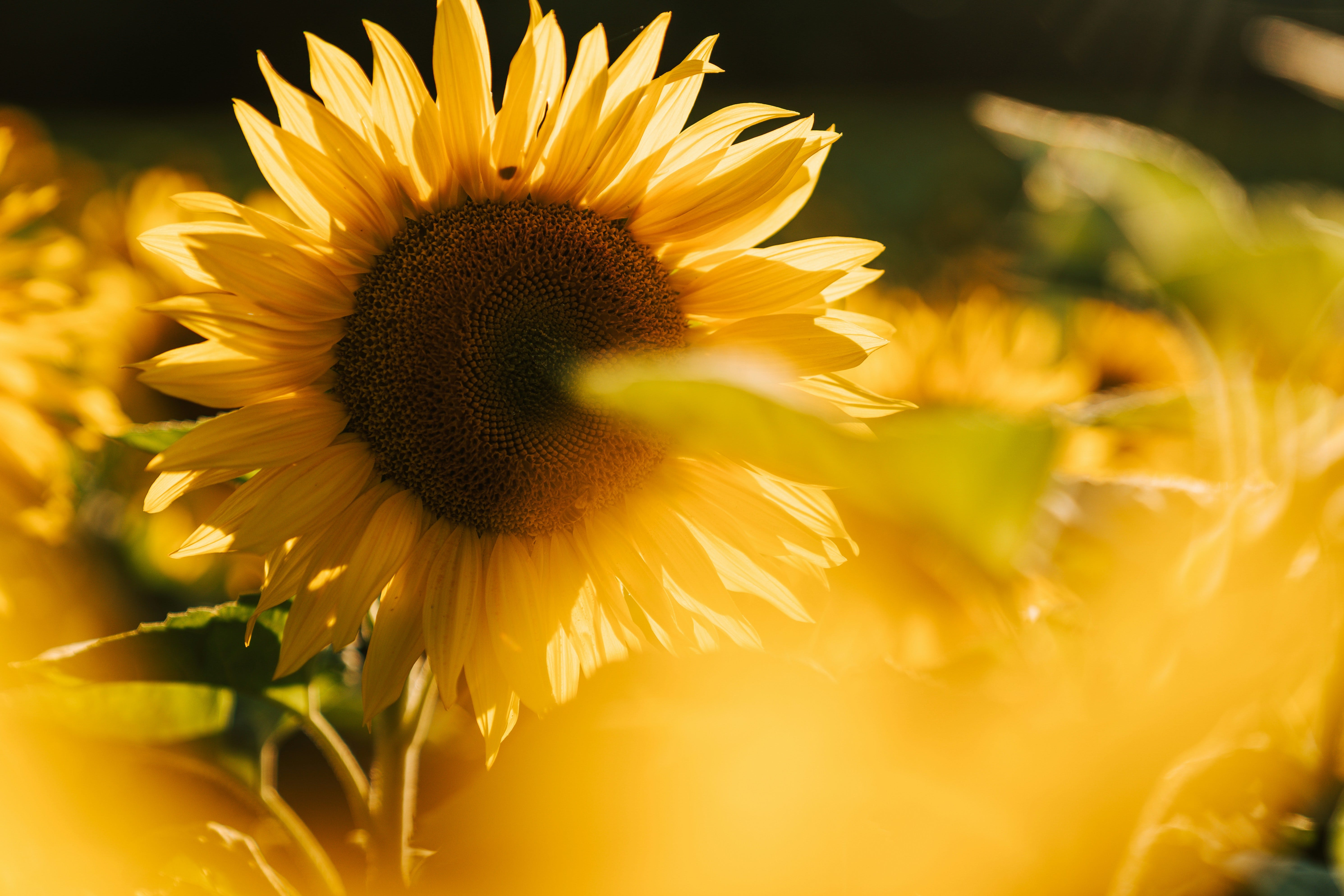
Sunflowers were the emblems of the religious order that owned the school where I spent so many unhappy days as principal. In my office had been a large picture of them with a quote from the foundress, St. Julie Billiart, imposed over it. “Turn your face to the sun,” it said. “God will always assist you.” It was a coincidence I couldn’t ignore. Vera’s courage inspired me.
Three weeks before Vera died in her sleep at 80, we visited a former classmate who had retired to nearby Manteca. Anita, a quiet Filipina neonatal intensive care nurse, worked the night shift in a San Jose hospital for years. On Wednesday afternoons she painted, on four hours sleep. I couldn’t understand why she always looked so disheveled and tired. When she explained what her job was, I saw her in a different light. What looked like disorganization shifted to commitment.
Arriving back in Pleasanton, Vera invited me in for a martini. “I still enjoy one every afternoon,” she smiled. I’d never tasted a martini. It seemed impolite to decline. I offered a toast to her long life. “Thank you,” she said. “I’ve been very lucky.” Humbled, I knew “lucky” wasn’t the word I would have chosen if Vera’s story had been mine.
***
Gentle, white-haired Bernadette raised five children, graduated from UCLA when Los Angeles was still a manageable town, and taught home economics. Slipping into Alzheimer’s, she sat next to me for several years, entertaining us with stories of women’s lives in the 1940s, until she disappeared into a world we could no longer visit, and she couldn’t escape.
Bernie was one of the few men who painted with us. Retired from Lawrence Livermore Labs, he was a taciturn engineer whose interest, besides oil and china painting, was a fierce dedication to restoring America’s almost extinct chestnut trees. Bernie grew seedlings in his backyard, hundreds at a time. Every fall he would load his old Volvo, drive across country to meetings of the National Arbor Foundation, and deposit his treasured tiny trees.
Bobbie lived on an 80-acre ranch, raising and training horses. Sometimes we painted at the ranch, surrounded by her memories of growing up at racetracks where her father had been a jockey.
Everyone had a story. They were unique, textured, funny, sad. The years unfolded. New painters joined the Wednesday group. Others moved on. We painted through the death of a spouse, divorces — their own and even their adult children’s, job losses, problems with teenagers, problems with elementary children, financial setbacks, new homes, health scares, family dramas. People would bring books they had read to share. Sometimes they brought food from their holiday celebrations… Eid, Chinese New Year, or Christmas baking. Often they remembered one another’s birthdays.
***
On the surface we couldn’t have been more different. The youngest of us was in her 20s, the oldest in her 80s. We had been or still were engineers, nurses, teachers, human resource and marketing managers, mortgage brokers. Some were wealthy; others struggled. Almost no one had been born in California. Some came from the Midwest or the East Coast. I was born in Florida. Many were from much farther: Pakistan, India, the Philippines, China, Colombia. Some had children at home, some had no children, many had grown children. Some wore the traditional clothes of their homeland. Some wore pearls. In the evening class, people came in their office clothes. Anita always looked suspiciously like she was in her pajamas.
***
The Best Canadian Film Award at the 1990 Vancouver Film Festival was a semi-documentary, “The Company of Strangers.” The next year it was released in America as “Strangers in Good Company.” It is the story of eight women on a bus, all but one elderly, who are stranded in a cottage when the bus breaks down. Strangers at the start, they tell stories from their own lives. In the process they realize they have more in common than they imagined. The variety and texture of their lives wasn’t the same, but thrown together they found something they hadn’t been looking for — the surprising unity their individual experiences created. It gave them the courage to persevere.
***
Seventeenth-century Flemish painter Peter Paul Rubens was a master who understood contrasting texture and used it in a storied career of religious murals, portraits, and hunting scenes. In his work, texture created energy: soft, long, straight lines in clothes paired with more complicated curly beards or collars, smooth skin of voluptuous maidens against rough landscapes, austere, cold marble draped with warm, extravagant fabrics.
Everyone had a story.
Texture is important for china painters too. Sometimes it is achieved by using raised paste to create actual dimension. More often it is done with brush techniques and tools: Saran Wrap, Q-tips, mop brushes, erasers.
The teacher realized the differences in her students — their backgrounds, their painting skills, their interests. Most subjects she chose didn’t appeal to everyone, but she chose them anyway. She wanted us to master texture — fur, feathers, water, rocks, clouds, grass. Rough and smooth. Opaque and clear. Someone was always grumbling. In the end, we became better painters for the effort it took to understand things we didn’t think we needed to know. The bonus was spending time with people we wouldn’t have encountered in any other circumstance. People who made the texture of our lives more interesting by sharing parts of their own. People who became friends.
***
Fifty years ago John Glenn became the first American to orbit Earth in a five-hour mission that helped us feel better about the evil USSR’s early lead in the space race. Glenn was a hero. The only rumblings were about the name of his Mercury capsule — “Friendship Seven.” We didn’t want to be friends with the Russians. Glenn is 90 now, still a hero. When asked about his ship’s name in an anniversary interview, he said, “My children picked it. Turned out to be a good choice, didn’t it?” It did. Children know many things grown-ups forget. I had forgotten friends come from all sorts of backgrounds, stations in life, ages. Or maybe it is something I hadn’t known before my years in porcelain.
Whenever I see a hand-painted piece, usually in a musty antique store, I wonder who painted it. I know they made their world more attractive. I like to think there were other benefits for them. I signed up for a painting class, but ended up with much more.
I hope they did too.
Comments
Nothing yet. Say the first thing.
Sign in to join the conversation.